
LG Energy Solution reports progress on LMR batteries
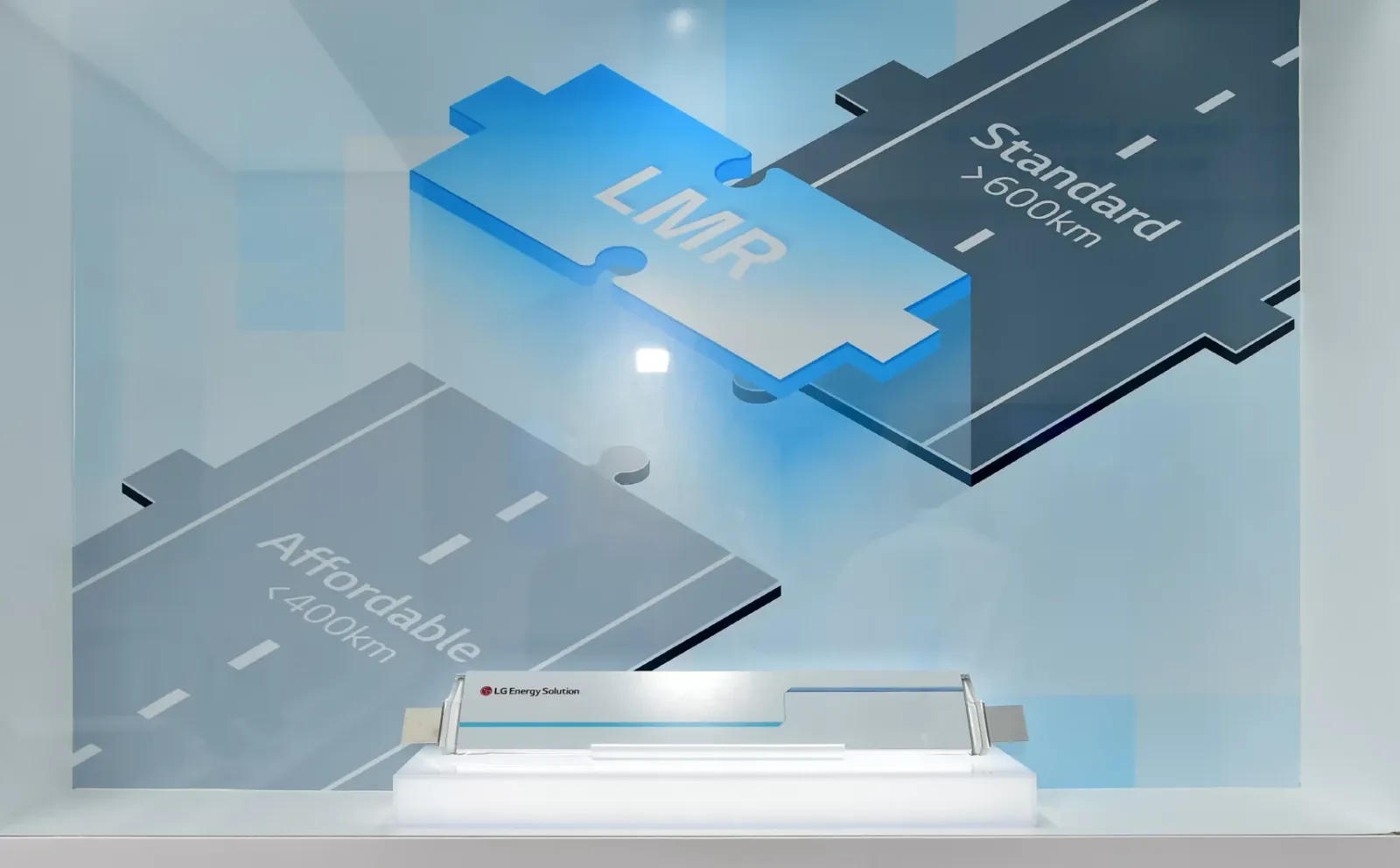
LG Energy Solution and Seoul National University have developed an approach to stabilizing LMR batteries. Tests showed that larger cells exhibited higher cycle stability as a result.
LMR battery cell from LG Energy Solution at the InterBattery 2026 battery exhibition.
Image: LG Energy Solution
The team investigated gas formation and capacity loss in the cells and subsequently adjusted their operating conditions and formation process. The results were published in the scientific journal Nature Communications.
LMR cathodes rely primarily on manganese and do not require cobalt. In addition to transition metals such as nickel and manganese, oxygen also plays a role in energy storage. LGES expects high energy density along with potentially lower material costs as a result. However, if the oxygen that oxidizes during charging does not fully return to its original state during discharge, it can damage the cell structure and cause gas formation. This can increase internal pressure and reduce performance, especially in large-format cells.
The research team therefore examined various charging and discharging voltages. According to LGES, the recovery of oxidized oxygen increased from 86% to 97% when the upper charging voltage was reduced from 4.6 volts to 4.3 volts. Lowering the discharging voltage from 3.0 volts to 2.0 volts also restored the oxygen almost completely to its original state.
LMR Technology for Large-Format Cells
Based on these results, LGES adjusted the voltage range and formation process for 40-Ah class LMR cells. This involved using a lower temperature during formation to reduce gas generation. According to the battery manufacturer, the optimized cells retained 92.2% of their original energy after 883 charge and discharge cycles.
The values thus initially indicate the performance under the selected test conditions. LGES does not provide information on energy density, charging capacity, or a direct comparison with current commercial chemistries in its announcement. The company has also not yet given a timeline for mass production or specific vehicle projects.
The development of new cell chemistries is important for LGES amid increasing competition in the battery market. Although the South Korean manufacturer remained the world’s third-largest supplier of batteries for electric and hybrid vehicles in the first half of 2026, its market share dropped from 9.6% to 8.6% according to SNE Research. CATL and BYD combined accounted for 54.3% of the market share.
LMR could potentially be interesting for LGES mainly due to its high manganese content. The research results now published address one of the obstacles to its use in large-format cells by addressing gas formation. However, this does not yet indicate an imminent commercialization.