
The record-breaking summer of 2026: extreme heat, dried-up rivers, and boiling seas
It’s official: summer 2026 set new climate records in Western Europe, even surpassing the previous record from 2003. Data released today by Copernicus show exceptional temperatures, severe heat stress, rivers at their lowest levels, and unusually warm seas. All of this has already affected energy production, transportation, and water availability. More impacts are expected as autumn approaches.
We’re already 2.5 degrees above the 1991-2020 average
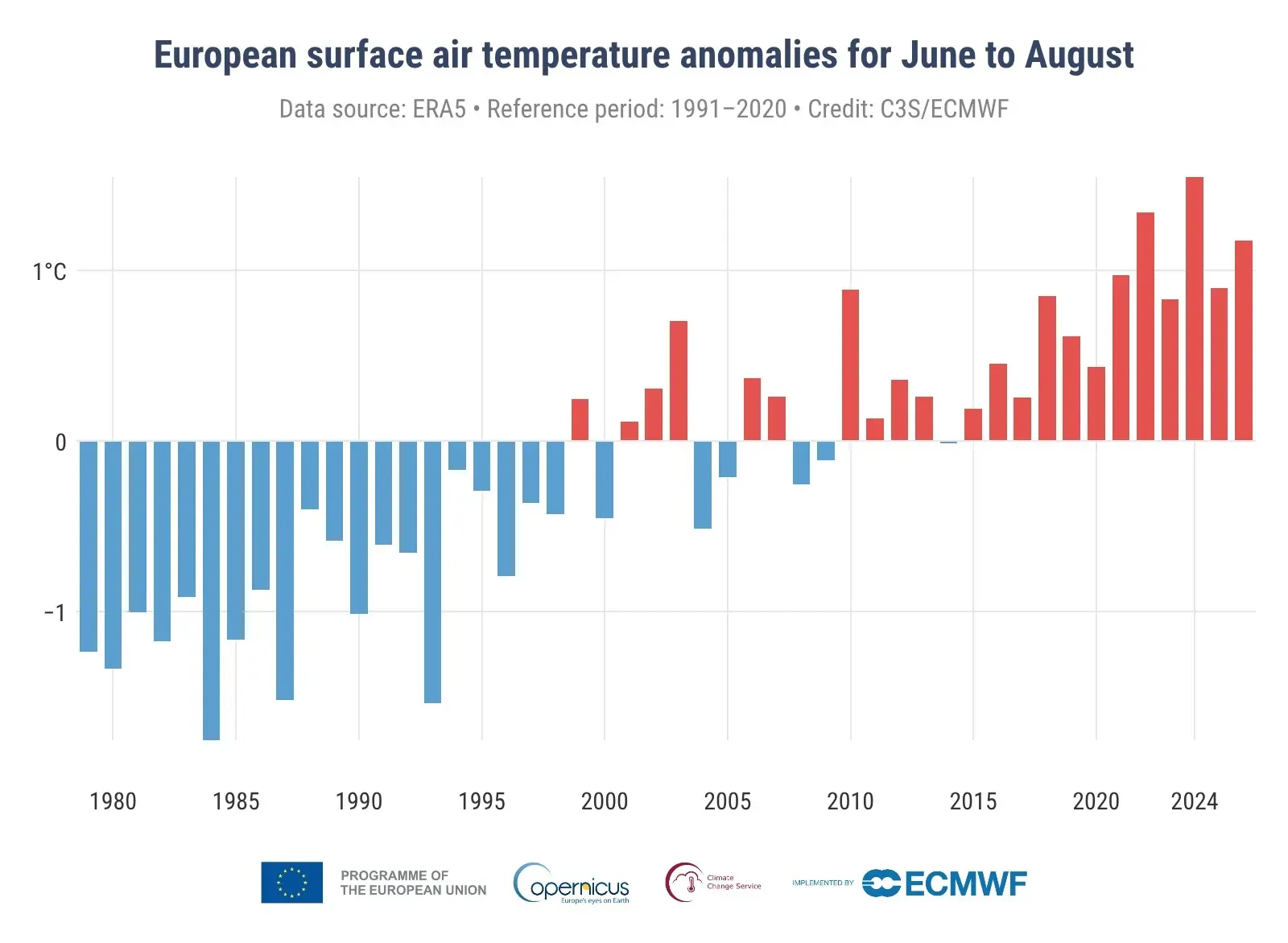
According to data from the European Earth observation program, the average summer temperature in Western Europe reached 21.7 °C, 2.5 °C above the average for the 1991-2020 period. The previous record, set in 2003, has thus been broken. The heat was not confined to the middle months of summer: exceptional daily temperatures were also observed in May and September.
The recently concluded summer highlighted how the effects of climate change can extend far beyond just temperature readings. In 2026, there were 17 days when at least 60% of Western Europe experienced temperatures above 30 °C, compared to 11 days in 2003 and 7 days in 2025.
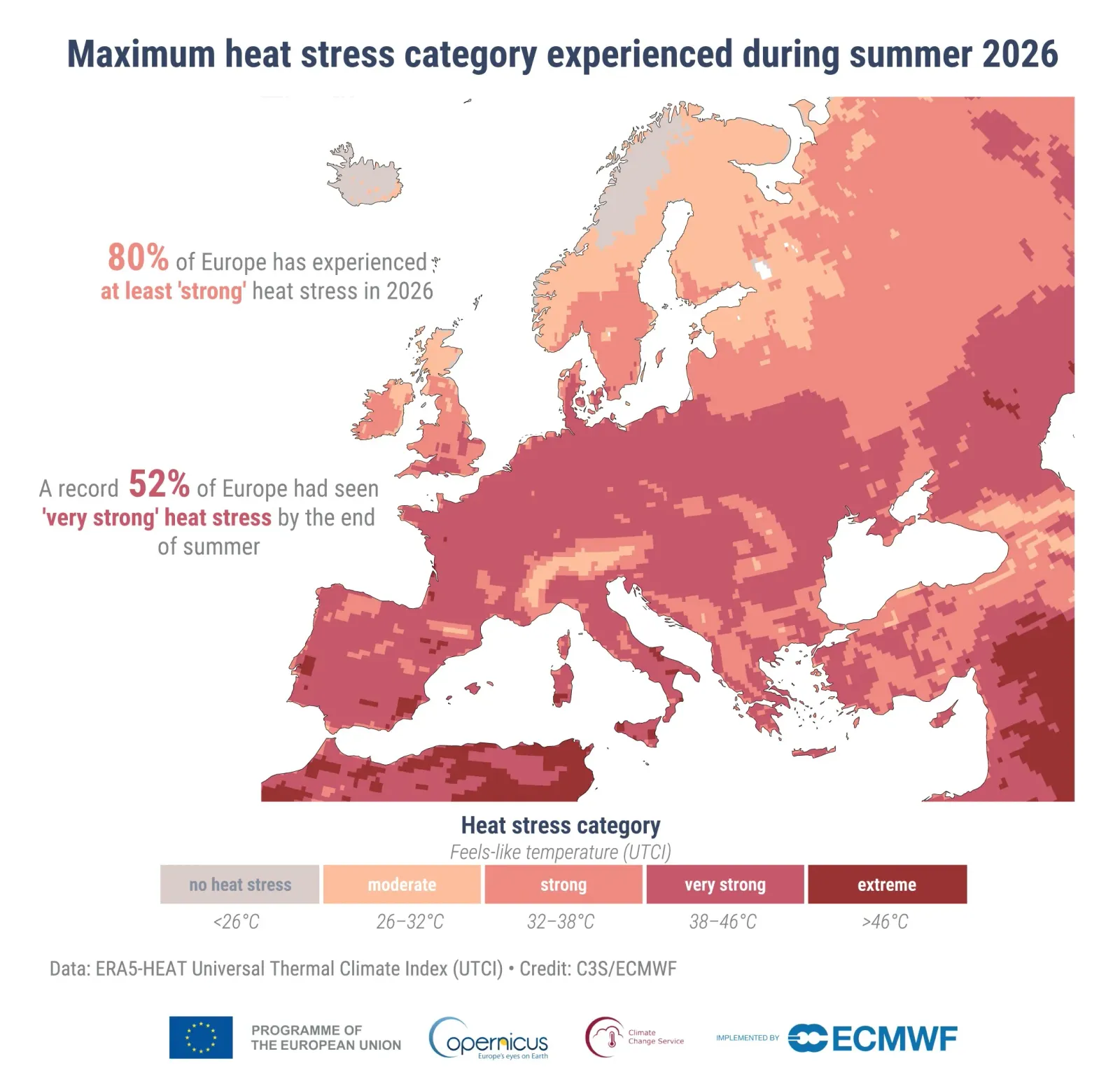
The data on heat stress is also particularly significant: 41 days with conditions causing severe stress for the human body, up from 36 days in 2003.
An additional problem for the energy system
For the energy system, high temperatures and water shortages can create simultaneous pressures. Low river levels have indeed made it harder to cool thermal and nuclear power plants and reduced the availability of water for hydroelectric generation. This is also a significant factor for the energy transition: the growing adoption of renewable sources must be accompanied by grids, storage systems, and management capabilities capable of handling increasingly variable weather conditions.
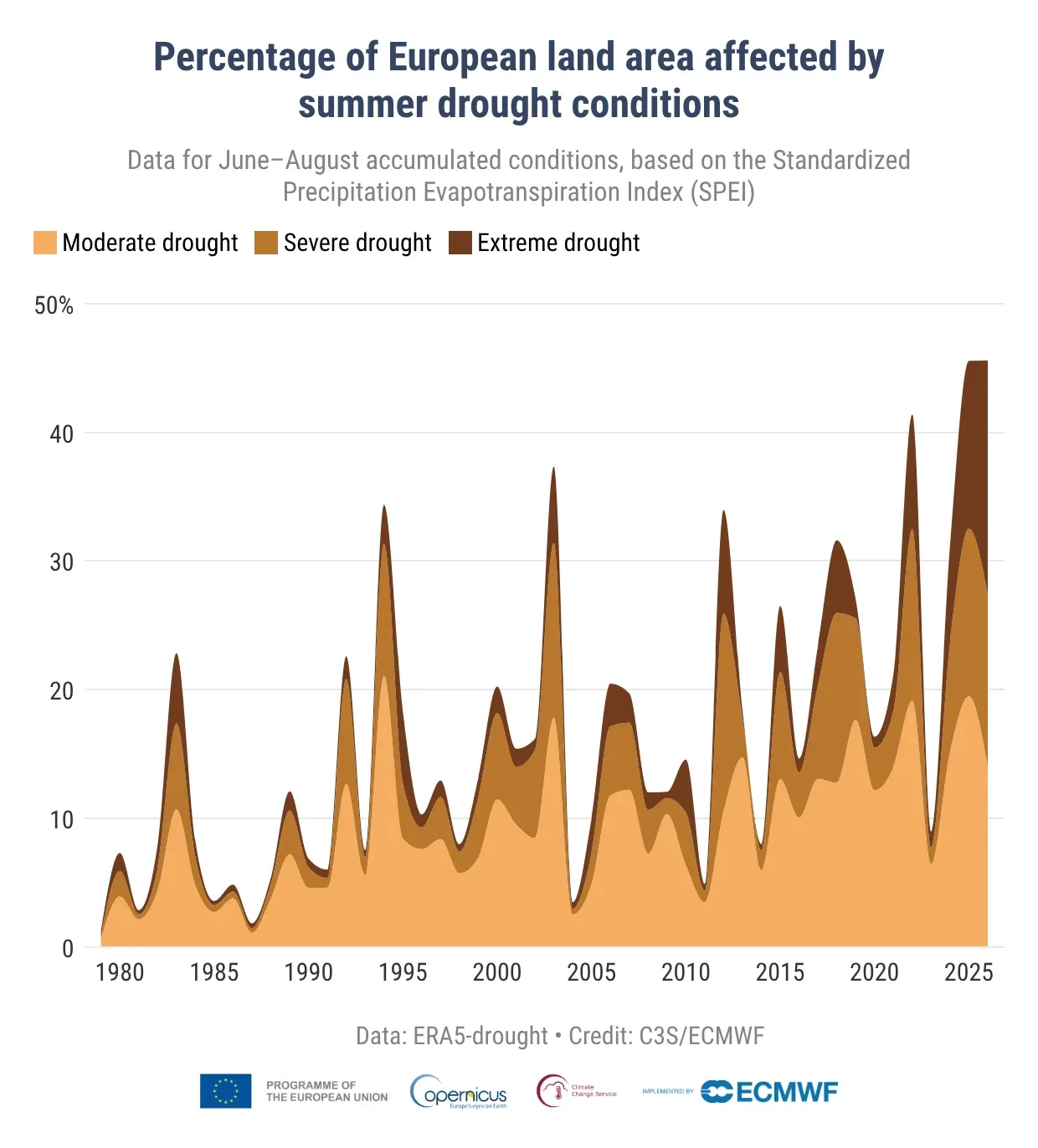
Drought was one of the most critical issues during the summer. According to Copernicus, July and August saw simultaneously minimum or near-record-low water levels in several major European rivers, including the Rhine, Danube, Po, Loire, Rhone, and Seine.
The consequences affected not only goods transportation but also energy production and freshwater availability. For a continent aiming to strengthen rail and waterway transport to reduce emissions, the increasing variability in hydrological conditions thus introduces an additional vulnerability factor for transportation infrastructure.
Prolonged heat has also contributed to an especially intense wildfire season. As of September 2, the area burned in the European Union was nearly double the average for the same period from 2006 to 2025, with Spain and France among the hardest-hit countries.
The impacts go beyond direct damage. Wildfires can disrupt road and rail connections, damage infrastructure, increase costs for managing and restoring affected areas, and reduce the natural absorption of CO2.
Hot Mediterranean: Focus shifts to autumn
For Italy, one of the most significant factors relates to the Mediterranean Sea. Greenpeace’s Mare Caldo project has detected several waves of marine heatwaves in monitored areas since May, with peaks reaching almost 5 °C above the 30-year climate average.
According to Cnr climatologist Antonello Pasini, the heat accumulated in the Mediterranean can contribute to intensifying weather phenomena, as evaporation adds more moisture to the atmosphere. The events cited include supercell thunderstorms, strong wind gusts, marine trombes and tornadoes, as well as so-called medicanes.
Energy crisis and transition: enough with emergency solutions
The record heat of summer 2026 thus also becomes an issue related to infrastructure resilience. For electric mobility, distribution networks, renewable energy production, and storage systems, the challenge is not only to increase installed capacity but also to design systems that can continue functioning in the face of extreme heat, drought, wildfires, and intense precipitation.
In other words, the energy transition is taking place in a climate that is changing faster than the conditions for which many infrastructure projects were designed.
READ ALSO: “Climate change is here. Enough talking, let’s address it” and watch the VIDEO
Previous Article
Tesla performs better than expected: 486,000 units sold in the 3rd quarter
