
Are European electric cars truly more efficient than Chinese ones?
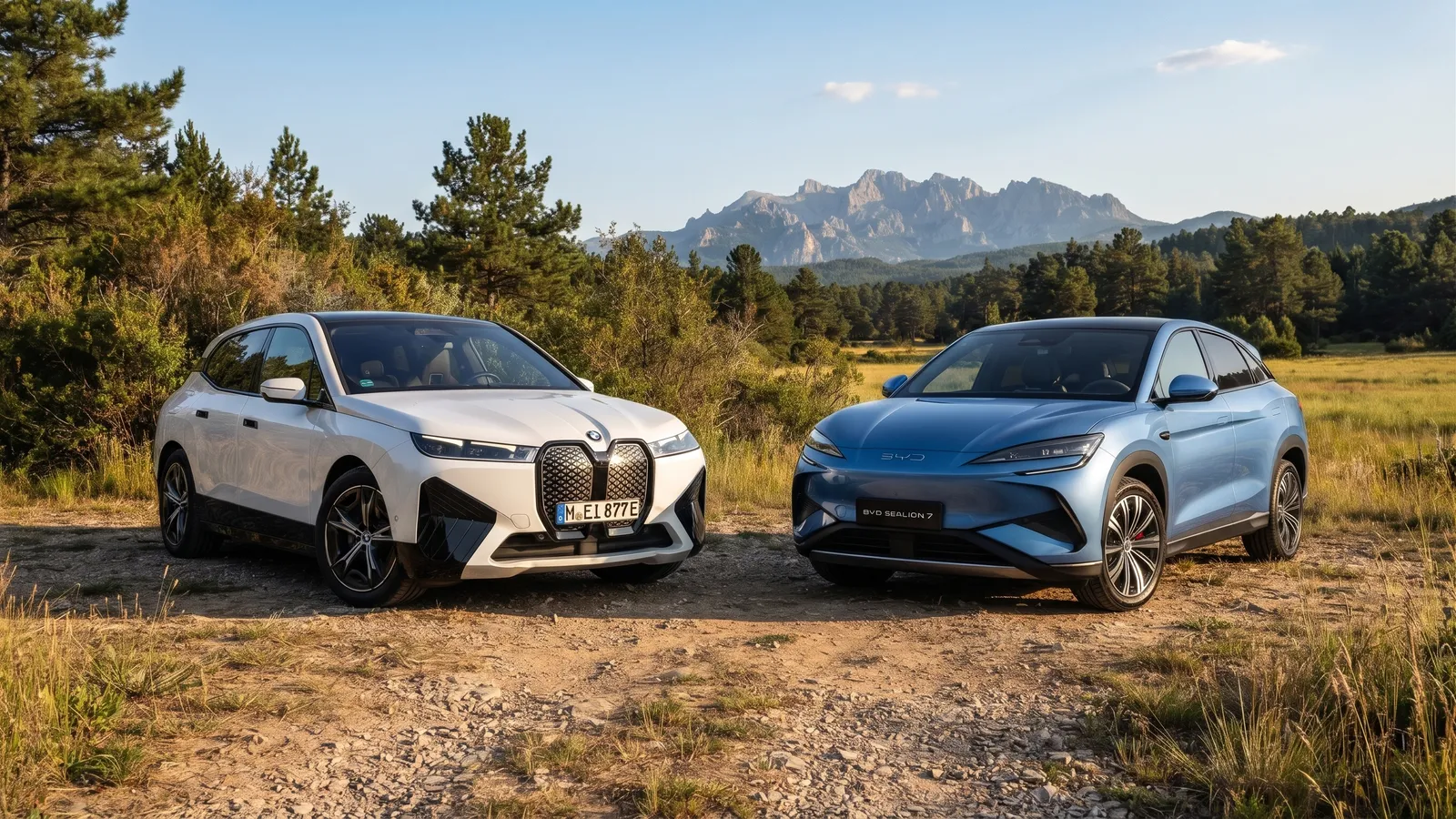
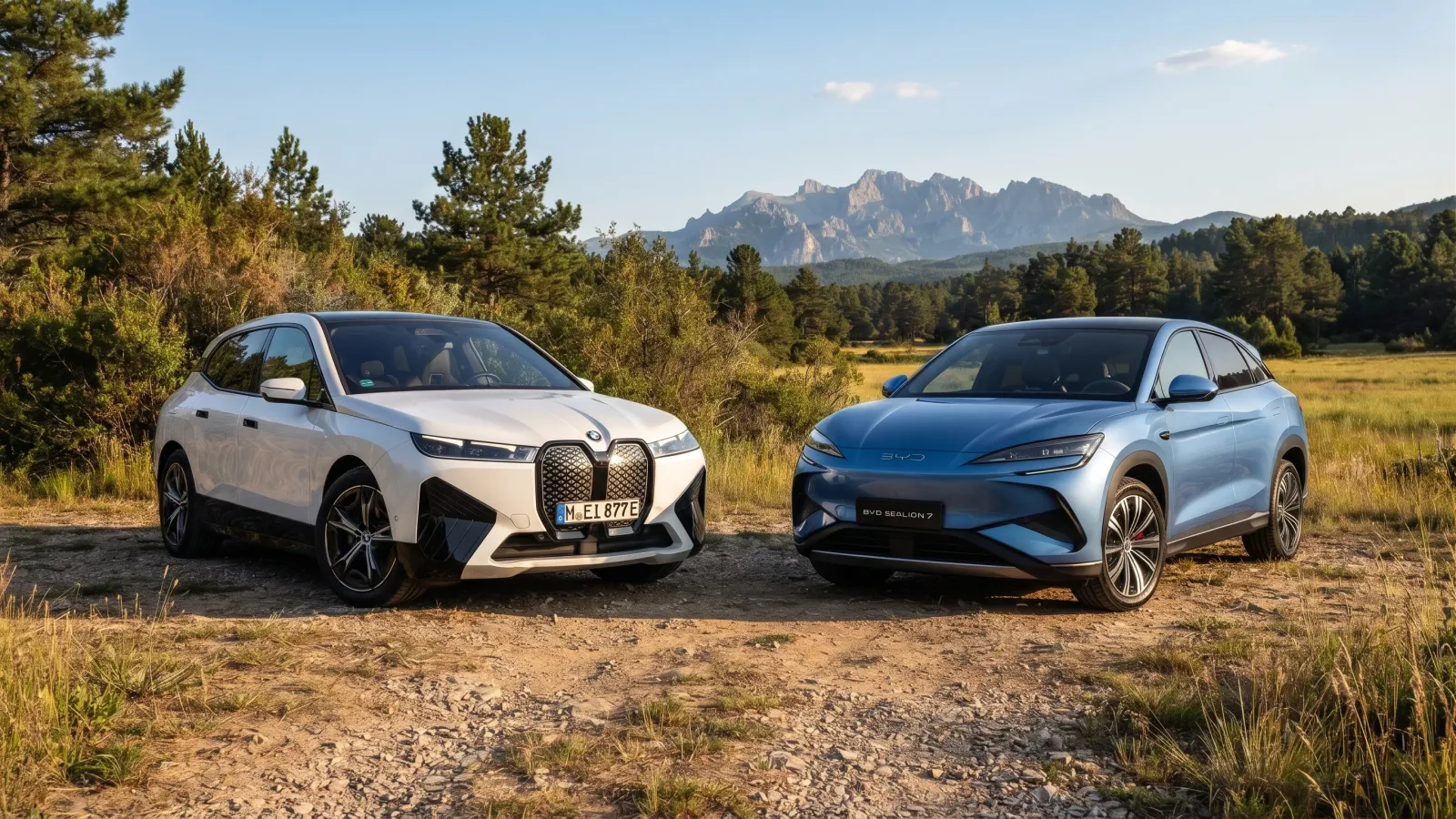
Chinese electric cars are known for having highly equipped standard features and being technologically advanced, but their low efficiency due to high energy consumption is often highlighted. What is the reality? Here is our comparative review with equivalent European models.
In the endless (but fascinating) debate over the relative advantages of Chinese versus European cars, the former often win the technical battle when it comes to standard equipment and technological advancement. There are few or no options available because everything is built in by default, with screens everywhere and luxury features present even in the smallest models, such as electric seats on a BYD Dolphin Surf.
But once this excess of comfort is accepted, discussions arise about range and efficiency. Here, it must be admitted that the trend reverses, and critics of Chinese cars have every reason to point out that the math doesn’t add up: the heavy and sometimes clunky vehicles from the Middle Kingdom often turn out to be electricity drains compared to their European counterparts. And we’re not talking about Tesla, which continues to lead the pack with its Model 3s and Ys’ camel-like fuel consumption (as for the Roadster, I’m not sure, but its motors don’t seem to offer much range).
All of this still deserved to be verified, and that’s what I tried to do in the most accurate way possible by comparing several European and Chinese models based on their official technical specifications, and thus their WLTP fuel consumption. As usual, we know these figures are quite optimistic and don’t reflect reality accurately, but since the error is the same for everyone, it still provides an idea of the relative efficiency of the different models.
What does Europe’s top 20 list of best-selling electric cars tell us?
To avoid creating a tailored list, our initial sample is based on the twenty 100% electric cars with the highest registration numbers in Europe between January and September 2026, within the scope of the European Union, the United Kingdom, and EFTA countries as per the ranking used. This represents a total over nine months, rather than an annual figure. The starting assumption is quite simple: we are interested in cars that drivers actually purchase.
The principle involves checking their official WLTP combined consumption, expressed in kWh/100 km, on the manufacturers’ websites and documentation. The lower this figure, the less electricity the car needs to cover the same distance. Battery capacity and charging speed are other factors: a large battery can provide good range for a power-hungry car, while fast charging can shorten charging stops without necessarily improving its efficiency.
A clarification is needed regarding my starting point. WLTP provides a common protocol, but this does not mean the discrepancy from reality is identical for all cars. Temperature, speed, heating, and charging conditions can affect models differently. Our figures allow comparison of certified fuel consumption values, but they do not guarantee the same ranking under all driving conditions. In fact, ADAC’s measurements show varying differences between certified values and actual tests.
Another factor to consider is that the WLTP fuel consumption of an electric vehicle includes the charging losses specified by the protocol. It therefore does not reflect only the energy drawn from the battery during driving or as shown by the dashboard display. Dividing the battery capacity by the claimed range does not allow for an accurate reconstruction, and it is the value published by the manufacturer that we have used.
This initial ranking reveals a trend: several European models perform well, while the Chinese models in our selection tend to occupy the higher-end of the consumption scale. The Leapmotor B10 has a reported consumption of 17.2 or 17.3 kWh/100 km depending on its battery size, while the BYD Sealion 7 range is between 19.9 and 21.9 kWh/100 km.
The raw ranking also has two pitfalls. First, it mixes city cars, sedans, and SUVs: a Leapmotor T03 and a Sealion 7 serve different needs. Second, the registrations refer to models, while fuel consumption figures pertain to specific versions. An entry-level powertrain is different from another version sold with two engines and larger wheels.
Finally, it’s necessary to clarify what is meant by a European or Chinese car. For this comparison, we focus on the brand’s origin, noting special cases such as Volvo, a Swedish brand owned by the Chinese Geely group. The place of assembly is another factor to consider. As for Tesla, Kia, or Toyota included in the ranking, they are there to provide useful benchmarks for comparison.
Are the new entrants changing the game?
Since commercial success always lags behind launches by a bit, we expanded our search to include a selection of new models. This second set includes fourteen European and Chinese models, and while it isn’t a ranking of the best-selling Chinese vehicles, it allows us to see recent offerings, some of which haven’t yet made it into the top twenty registrations.
Notable models included are the Volkswagen ID. Polo and ID. Cross, the Cupra Raval, the Škoda Epiq and Peaq, the new Twingo, the Leapmotor B03X and B05, the Geely EX2, and the electric Jaecoo 5.
The smaller European models confirm their efficiency on paper. Renault reports fuel consumption of 12.2 to 12.7 kWh/100 km for the new Twingo. The ID. Polo, with a power output of 155 kW, shows figures between 13.4 and 14.7 according to Volkswagen’s September report. The Raval Endurance ranges from 13.6 to 14.8, while the Epiq 55 falls between 13.7 and 14.1. These figures show that the European automotive industry still knows how to produce efficient cars in the electric era, just as it did during the oil era.
In contrast, the newly documented Chinese models show relatively tight ranges: 15.5 to 15.7 for the B03X, 15.8 to 15.9 for the B05, 15.5 to 15.9 for the Geely EX2 in its British specification, and 16.5 for the Jaecoo 5 electric model in France. There is a difference, but these cars don’t all fit the image of oversized, inefficient SUVs we’ve seen recently.
This research also reminds us that a manufacturer’s specification sheet is a photograph from a specific date. Fuel consumption varies depending on the model year, equipment, or technical updates. The current French specification sheet for the T03 shows 15.8 kWh/100 km, compared to 16.3 as recorded in our first table. Some international Leapmotor pages also provide values different from those on the French site. We have prioritized these latter values for the French versions whenever possible.
For the B03, on the other hand, we found an announced range but no sufficiently documented manufacturer’s WLTP fuel consumption figure. Therefore, it remains outside our calculations.
In comparable categories, Europe has an advantage
We therefore compared the two samples by matching categories, power outputs, and transmissions. A four-wheel-drive BMW must compete against a similarly all-wheel-drive BYD, while a front-wheel-drive compact car naturally faces off against another compact car with the same layout. Note that batteries, dimensions, tires, and equipment still differ.
With all these preliminary considerations taken into account (I know you commentators), here are the selected head-to-head comparisons. All values correspond to the WLTP combined fuel consumption, in kWh/100 km.
Category
European model and version
Fuel consumption
Chinese model and version
Fuel consumption
Small city cars
Renault Twingo Evolution, 16-inch summer tires
12.2
Leapmotor T03 95 hp
15.8
Small SUVs
Škoda Epiq 55, 211 hp, front-wheel drive
13.7–14.1
Leapmotor B03X ProMax, 197 hp, front-wheel drive
15.7
Small SUVs
Volkswagen ID. Cross 211 hp, front-wheel drive
14.3–16.9
Leapmotor B03X ProMax, 197 hp, front-wheel drive
15.7
Compact cars
Volkswagen ID.3 Neo 58 kWh, 190 hp, rear-wheel drive
13.9–14.9
Leapmotor B05 Pro, 218 hp, rear-wheel drive
15.8
Compact SUVs
Škoda Elroq 60 Selection, 190 hp, rear-wheel drive
15.2–16.8
Leapmotor B10 Pro, 218 hp, rear-wheel drive
17.2
Compact SUVs
BMW iX1 eDrive20, 204 hp, front-wheel drive
14.3–16.1
Jaecoo 5 electric, 211 hp, front-wheel drive
16.5
Family SUVs
BMW iX3 50 xDrive, 469 hp, all-wheel drive
15.1–17.0
BYD Sealion 7 Excellence AWD, 530 hp, all-wheel drive
21.9
In terms of small city cars, the Twingo has a significant advantage: 12.2 kWh/100 km compared to 15.8 kWh/100 km for the T03, a difference of 3.6 kWh. This means the Leapmotor has 29.5% higher fuel consumption compared to this Renault model. Nearly 30% more when comparing equivalent vehicles is quite substantial.
In the segment of compact SUVs, the comparison between the Epiq and B03X is particularly interesting. Their power outputs are similar, both vehicles are front-wheel drive, and the Epiq has lower fuel consumption across its entire reported range. The additional fuel consumption of the Leapmotor model ranges from 11.3% to 14.6%, depending on the Škoda model used as a reference. However, simply replacing the Epiq with the ID. Cross, which has the same power output (and belongs to the same group), changes this outcome. With a fuel consumption of 15.7 kWh/100 km, the B03X falls within Volkswagen’s range of 14.3% to 16.9%. Thus, it can consume more or less fuel than its European competitor, depending on the latter’s equipment.
In the compact segment, the ID.3 Neo with 190 hp shows fuel consumption figures of 13.9 to 14.9, compared to 15.8 for the B05 Pro with 218 hp. The German model still has an advantage, but the Chinese version’s extra cost is limited to 6 to 13.7%. The Leapmotor is also longer and more powerful.
The same pattern holds for compact SUVs. The B10 Pro has higher fuel consumption by 2.4 to 13.2% compared to the Elroq 60 Selection, depending on the Škoda’s equipment. Against the BMW iX1 eDrive20, the Jaecoo 5 consumes 2.5 to 15.4% more fuel. In both cases, the minimum difference is only 0.4 kWh/100 km.
The iX3–Sealion 7 duel is much more decisive. The BMW 50 xDrive shows consumption levels between 15.1 and 17.0 kWh/100 km, compared to 21.9 for the BYD Excellence AWD. Even when using the most fuel-intensive BMW configuration in this range, the BYD still requires 28.8% more electricity. Against the most efficient model, the gap reaches 45%. Be careful with the meaning of this percentage: “45% more for BYD” does not mean “45% less for BMW.” The reference point for the calculation changes. It’s also worth noting the additional 61 horsepower of the Sealion 7.
These results thus support part of the reputation of European models. In several categories and for the selected versions, they show lower certified fuel consumption. However, our selection is not a comprehensive list of all Chinese or European offerings. Several models are missing, some models have no direct competitors in our tables, and part of the fuel consumption data relates to currently available versions rather than all models registered since January. Therefore, it would be somewhat risky to derive a universal percentage indicating an overall European advantage.
This leads us to this brief microeconomic aside: over equal distances, a difference of 3 kWh per 100 km amounts to 450 kWh over a year of 15,000 km. At an assumed price of 0.25 euros per kWh, that totals 112.50 euros; at 0.60 euros per kWh, it’s 270 euros. Of course, each person can recalculate using their own rates as well as their usage patterns.
European manufacturers therefore have an argument to defend and highlight, in addition to style, which can significantly influence decisions by helping to offset higher costs compared to equivalent equipment.