
Are Chinese electric trucks really a threat to Europe?
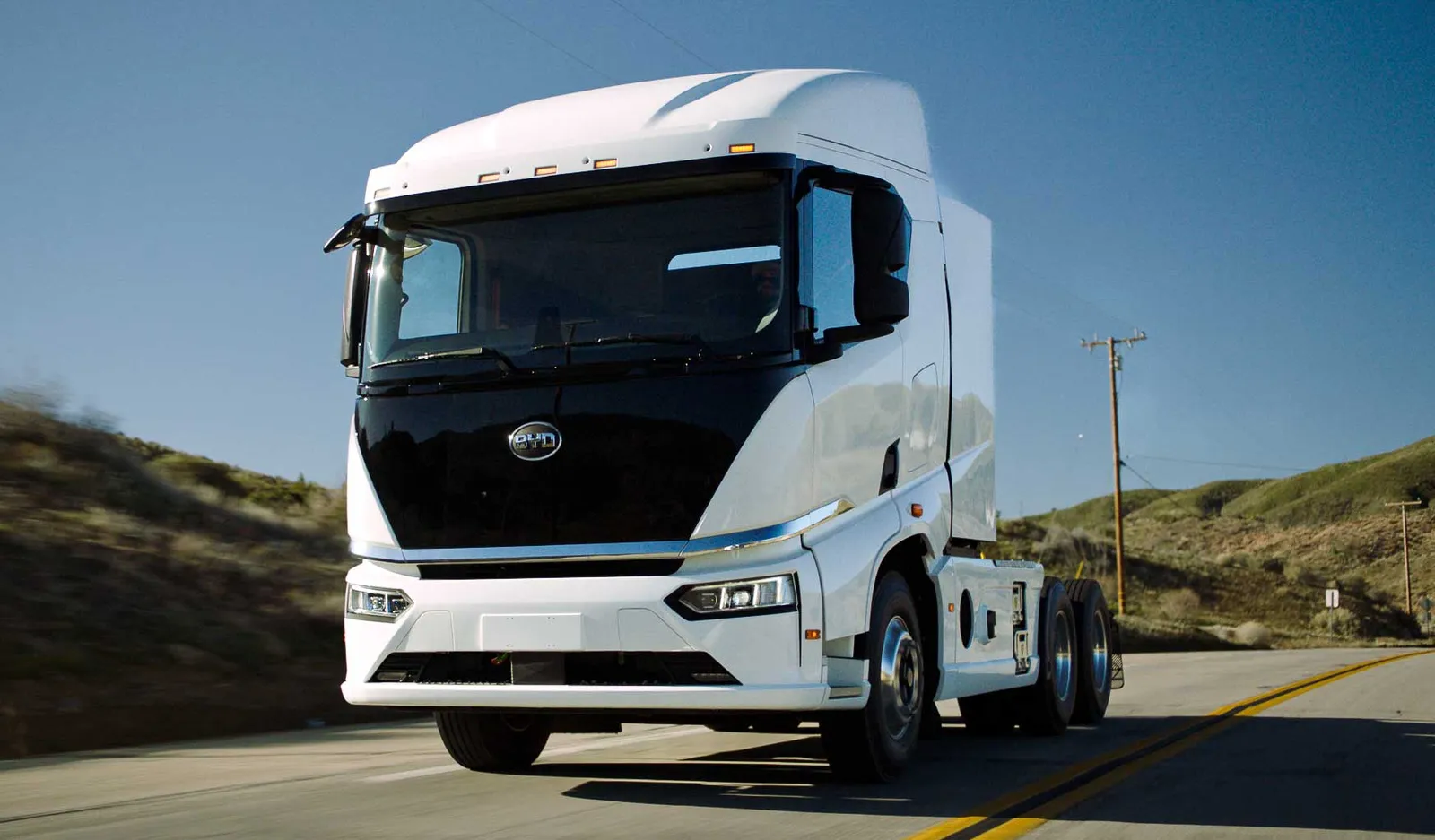
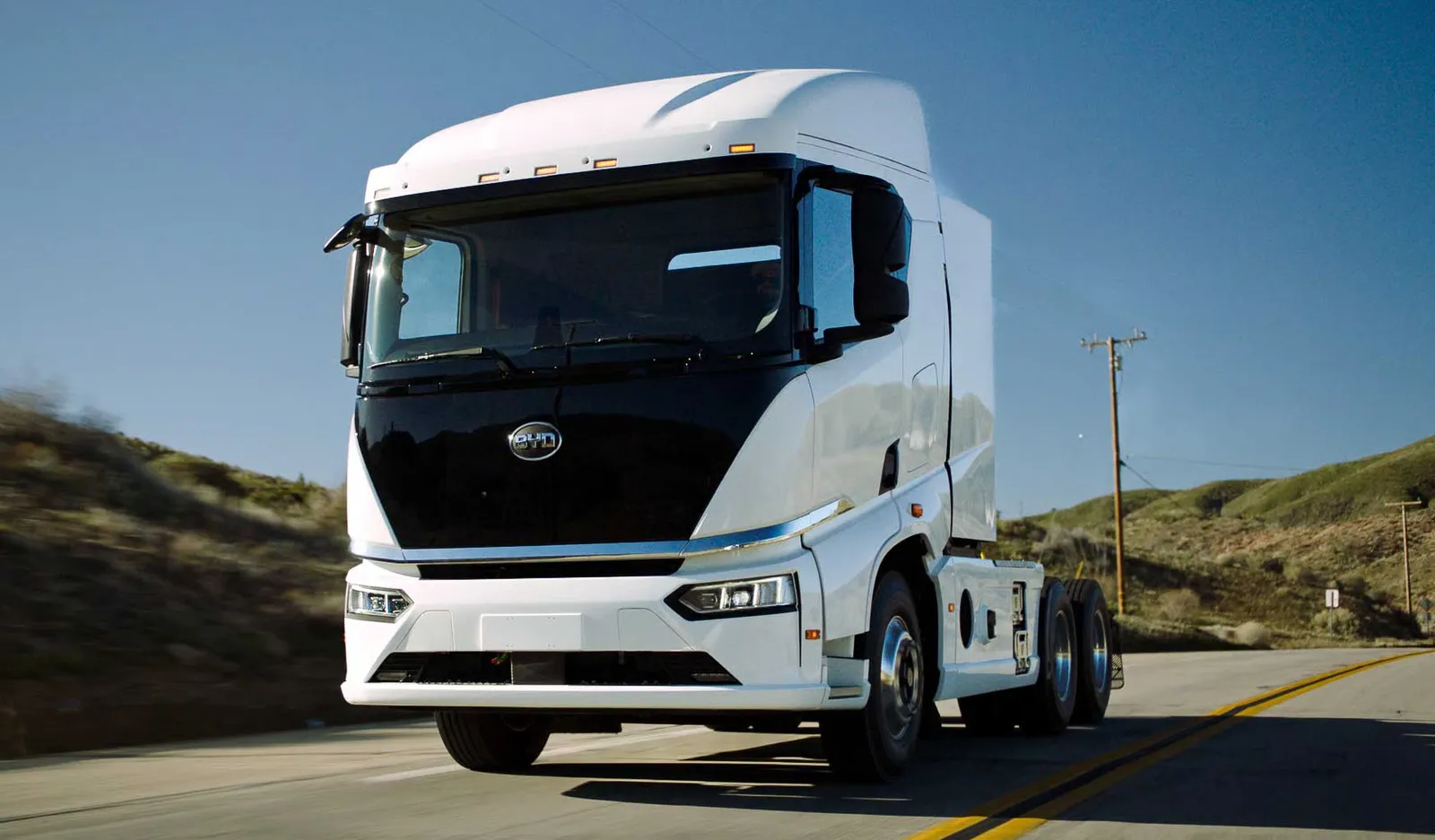
After cars, Chinese manufacturers are making moves in the European heavy truck market. Should we be worried? On October 22 in Lyon, Mercedes-Benz Trucks, Scania, BYD, Superpanther, Michelin, and CSIAM all said no. But behind this unanimous refusal, each party points to the real battleground: after-sales service, total cost of ownership... and especially the rules set by Brussels...
They made a strong presence at the IAA exhibition in Hanover in September, showcasing everything from electric tractors to hydrogen trucks. Previously focused on passenger cars, Chinese brands are now targeting heavy vehicles at a time when CO2 regulations are pushing the industry toward electrification. This strategic move was the focus of a panel discussion at the Rencontres de la Filière by Solutrans+ on October 22nd.
Scania: “A challenge, not a threat”
Christian Levin, CEO of Scania and Traton, who was absent in Lyon, had recorded his speech a few days earlier near Stockholm. From the start, he sets the tone: “Am I afraid of the arrival of the Chinese? No, not at all. Competition is a good thing. It needs to be taken seriously, but it’s not a threat.” In his view, this approach is “quite logical.” Scania also started in its small Swedish market before expanding to Europe and then the world.
The Swedish executive is well acquainted with China as well. Scania opened its factory in Rugao, north of Shanghai, in 2025, initially to serve the Asian market. He draws a lesson from this: there, the time between an idea and a truck delivered to the customer is “cut in half.” He compares this pace of industrialization to that of Toyota in the 1980s and 1990s.
"The threat to our industry today is Brussels."
According to him, the real obstacle to electric vehicles isn’t the availability of such vehicles. It’s primarily the cost of energy. In fact, electric trucks are more expensive, and only a competitive kWh price compared to diesel can bridge that gap. Today, only a few countries like Norway or Switzerland allow for a “positive outcome.”
Next is charging. Approximately 2,000 stations in Europe can serve heavy trucks at an acceptable speed. However, studies estimate that 11,000 to 35,000 such stations will be needed by 2030. “2030 is tomorrow. It took us ten years to set up these 2,000 stations, and suddenly we’re supposed to add 500 per month? Unfortunately, that’s not going to happen.” He recalls that Milence, the charging joint venture formed with Daimler Truck and Volvo, was never intended to cover all of Europe: “If that’s what policymakers expect, it’s completely wrong.”
Thus his most blunt statement: “The threat to our industry today is Brussels,” he says, lamenting that Europe has not implemented certain aspects of the Green Deal, leaving them pending or applied in a fragmented manner. Extending the carbon market to road transport (ETS2), delayed until 2028, or introducing a CO2-based Eurovignette across Europe could have changed how transport companies operate. “The only thing that has been implemented is that manufacturers will face quite severe fines starting in 2030,” he summarizes bitterly.

BYD: The Battery as the Key Asset
On the other side, newcomers are revealing their cards. After 22 years at Iveco, Stéphane Espinasse joined BYD a few months ago as vice president of sales for coaches and buses in Europe. “I wasn’t very keen on going there. It took them four months to convince me,” he admits. Technology was the deciding factor, as was the company’s ability to move quickly.
While BYD is just beginning its foray into the heavy truck market in Europe, it already has a head start in the bus sector. The company has around 8,000 electric vehicles in use on the European continent and over 3,000 in the United Kingdom. It relies for this on a factory that has been operating in Hungary for ten years. In the truck category, it claims only “a few hundred” units in Europe so far, but around 145,000 electric trucks worldwide.
Its main advantage remains the battery, its original specialty. Yet, lowering prices is not an option: “It’s not about the vehicle’s purchase price. The goal is to compete on total cost of ownership.” Additionally, the company has hired European management and opened a design center in Milan. It aims to have a lineup covering “all missions in all European countries within three years.” BYD has not yet announced truck production in Europe, but it seems inevitable.
Also read
The surge in Chinese electric trucks could deal a heavy blow to European manufacturers
Superpanther: one model, designed for Europe
Superpanther, on the other hand, starts from scratch. Born in China in 2022, the brand enters the market with just one model: the eTopas 600, a road tractor developed specifically for Europe. Christophe Bastenaire, the brand’s sales manager for France since late August and bringing over 30 years of experience in industrial vehicles, highlights a 620 kWh battery, a range of 500 to 600 kilometers, and most importantly, two CCS connectors, one on each side. During a test with a transporter in the north, the truck achieved over 650 kW when charged simultaneously, reaching 80% charge in just 35 minutes.
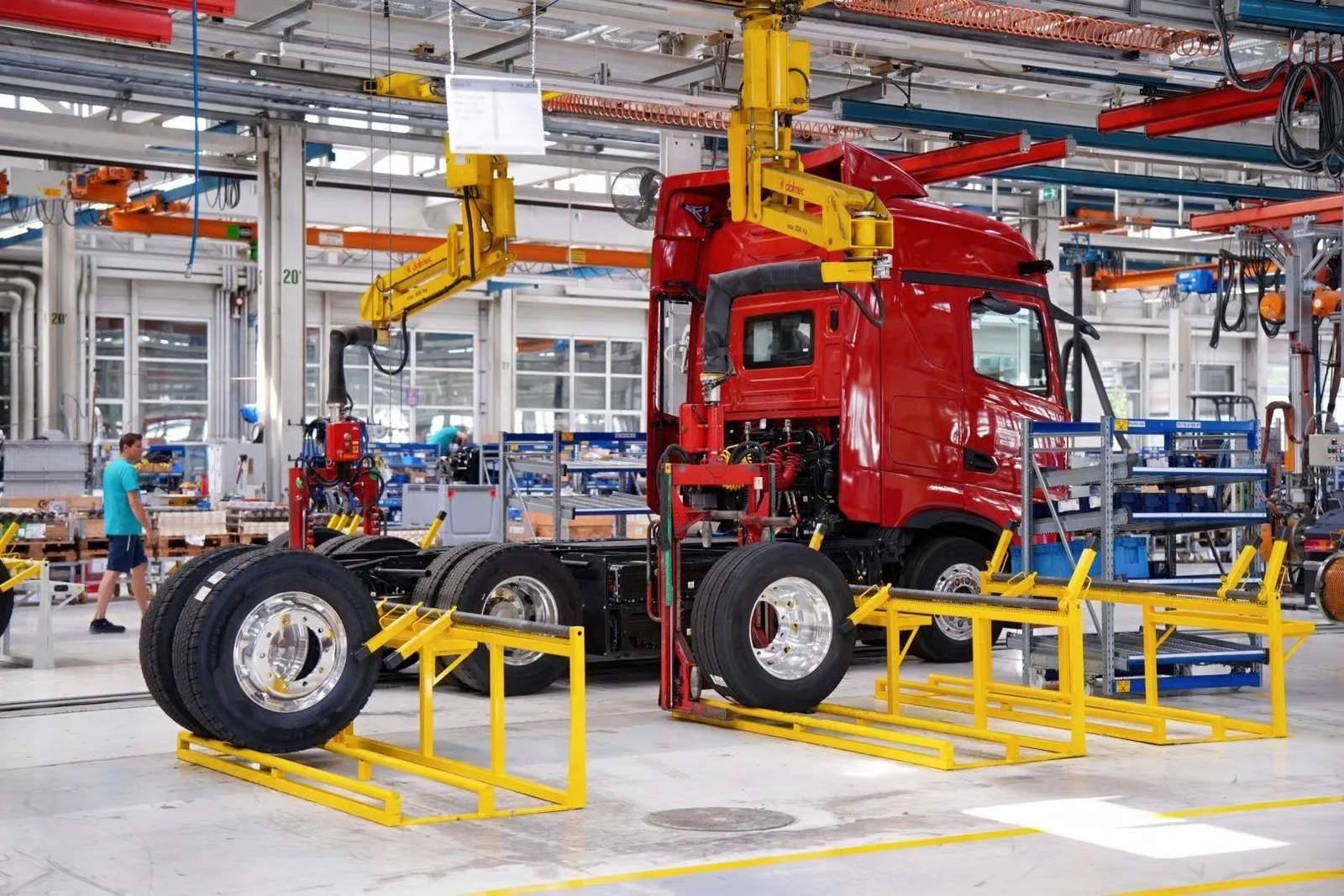
The batteries come from CATL, but the brand develops its own drivetrain and power management systems. Steyr assembles the truck in Austria, and it has received approval in France. For after-sales support, Superpanther relies on the AllTrucks network, which includes 650 to 700 service points across Europe. The first customers are DHL, who received the truck in July, and an Austrian logistics company that signed a deal at the IAA exhibition. Christophe Bastenaire also avoids focusing on price: “We will base our positioning on TCO rather than price.”
The traditional players’ countermove: quality over branding
Jean-Marc Diss has long advocated for this talk on TCO. The sales and marketing director at Mercedes-Benz Trucks puts it this way: “Today, people no longer talk about the price of a truck, but about the total cost of ownership.” This includes factors such as resale value, energy consumption, maintenance contracts, financing, and digital services.
His main argument is the network. “I’ve never met a customer who buys a truck just to visit a workshop. But when after-sales support is needed, it has to happen quickly.” It is precisely in this area that Mercedes-Benz Trucks stands out compared to new entrants. Specifically, it operates 2,500 service points across Europe.
The manufacturer also highlights its experience—five years in the electric vehicle sector and 160 million kilometers traveled—as well as its digital services featuring “data that is not stored in China.”
An opportunity for Michelin
As the only supplier in the panel, Michelin is already familiar with Chinese competition. For over a decade, this competition has exerted pressure on the replacement market, which is most price-sensitive. Sylvie Masclaux, head of global marketing for heavy trucks and buses, counters this with superior service and multi-life tires.
For her, the arrival of Chinese manufacturers is even an opportunity. Their electric trucks, which are heavier and have more torque, wear tires more quickly. They also need well-known brands to reassure European transporters. “On the vehicles of the many Chinese manufacturers at Hanover, there were plenty of Michelin tires,” she notes.
Many applicants, few chosen
The number of contenders is staggering. “For a very long time, the market has only had seven manufacturers,” recalls Christophe Bastenaire. At the IAA in Hanover, there were 14 or 16 Chinese manufacturers: “That’s twice the number of manufacturers in Europe today,” he says.
Also read
2026 World Motor Show: Chinese Foton launches its push into electric vans and trucks in France
Yet not all of them will survive. In trade shows, the showroom effect is at full strength. Some display trucks that are not approved in Europe or that are poorly suited to the requirements of European transporters. Between a prototype under the spotlight and a truck that is sold, delivered, and repaired in less than a day, there is a whole industry involved. Just as is likely to be the case in the automotive sector, Jean-Marc Diss predicts a selection process between “the Chinese companies that will establish themselves permanently in Europe and those that will leave soon.”
This is a view shared by the International Chamber of Automotive and Motorcycle Trade (CSIAM), which is well aware of this scenario. Its general delegate, Marie Defrance, recalls the many Chinese two-wheeler manufacturers that arrived in France in the 2010s. “They greatly disrupted the market, failed to establish a lasting presence in France, and left again.” BYD itself experienced an initial failure in Beauvais about a decade ago before returning through Hungary.
The reality of the market also calms things down. “As of the end of September, there have been no registrations of Chinese electric heavy trucks over 12 tons in France,” recalls Marie Defrance. Electric trucks still account for only 2.6% of heavy truck registrations. To succeed, new entrants will need to sell “not just a heavy truck, but a mobility solution.” In other words, this requires components, a network, trained staff, and support for electrical connection.
The real competition lies in the rules
If they are not afraid of technical comparisons, established brands fear an uneven playing field. Marie Defrance highlights two imbalances. The first relates to government support, which is “significantly different between China and Europe.” To address this, CSIAM advocates for the requirement of assembly within the European Economic Area that is mandated for energy efficiency certificates (CEE). It even calls for this requirement to be strengthened: not just “simple assembly,” but genuine manufacturing with added value in Europe.
The second imbalance is regulatory. Traditional automakers must reduce CO2 emissions from their vehicles by 45% by 2030, 65% by 2035, and 90% by 2040, under threat of heavy penalties. According to CSIAM, new entrants without a sales history are not subject to these same requirements. This “competitive disadvantage” has led automakers to unanimously request that the 2030 target be postponed to 2033. A Mercedes representative summarized the issue: “If we all have the same rules of the game, we compete on equal terms. Otherwise, we end up in unfair positions.”
Less incentives, more transparency
The issue of subsidies remains. For Jean-Marc Diss, the electric truck is justified on its own merits: “With energy costs below 25 cents per kilowatt-hour, the total cost of ownership is lower than that of diesel trucks,” he says. While subsidies are still welcome, they mainly create delays and interruptions in progress. In the Netherlands, their suspension halted orders for months. Eventually, the country decided to tax diesel trucks on roads to fund electric ones.
CSIAM reminds that the shift from Ademe’s project calls to CEE programs has already brought more stability. Therefore, it calls for maintaining this clarity until 2030, beyond the next presidential election. Brussels is also discussing a local content requirement under the Industrial Accelerator Act. On this point, CSIAM advocates for an approach specific to heavy trucks, separate from that for cars.
In the end, it’s not so much the Chinese manufacturers that are concerning as what Brussels and Paris decide. On the track, the established teams say they are ready to compete on equal terms. It remains to be seen whether the rules will allow that.