
Is the electric bike still just something for city dwellers?
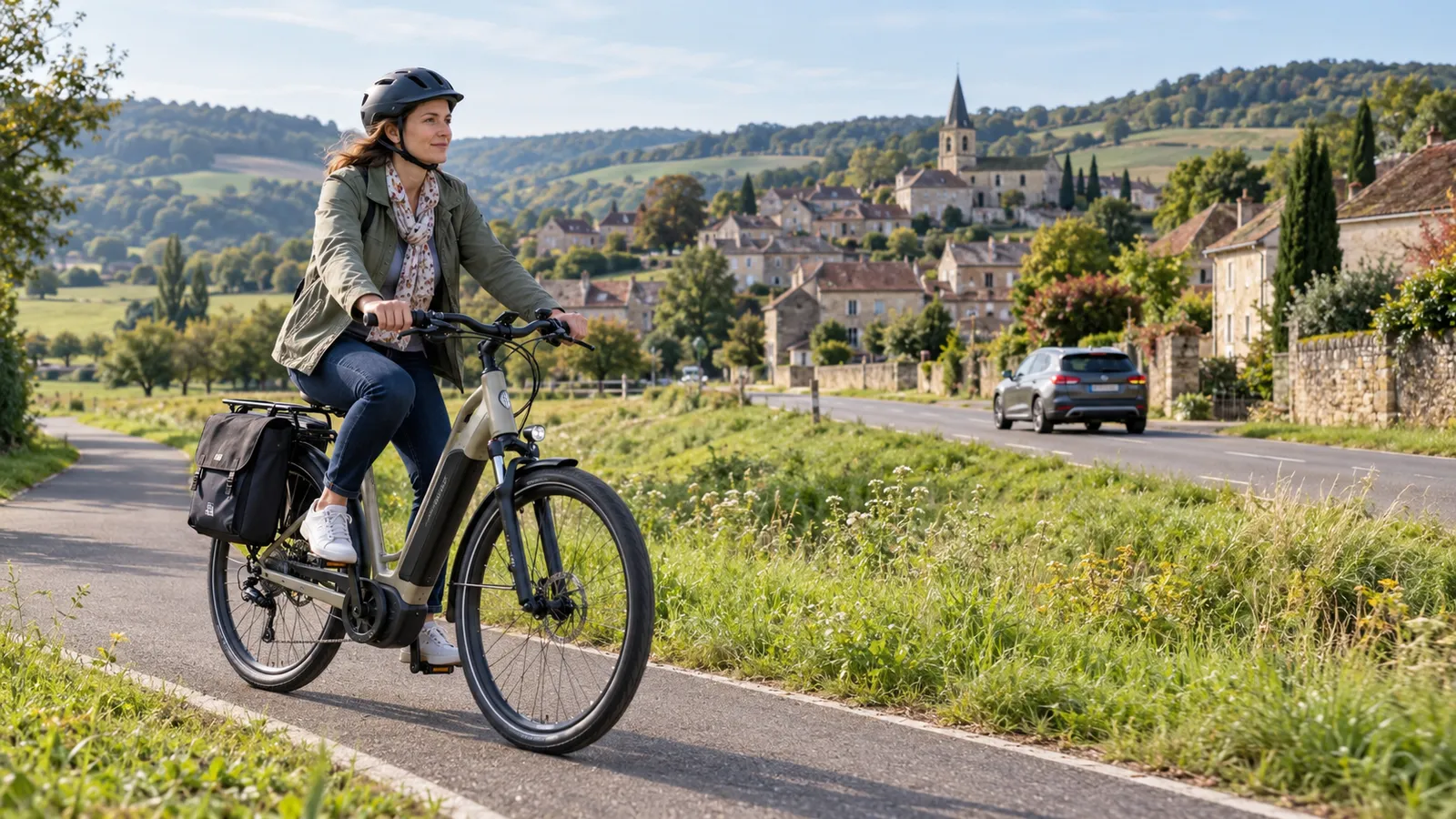
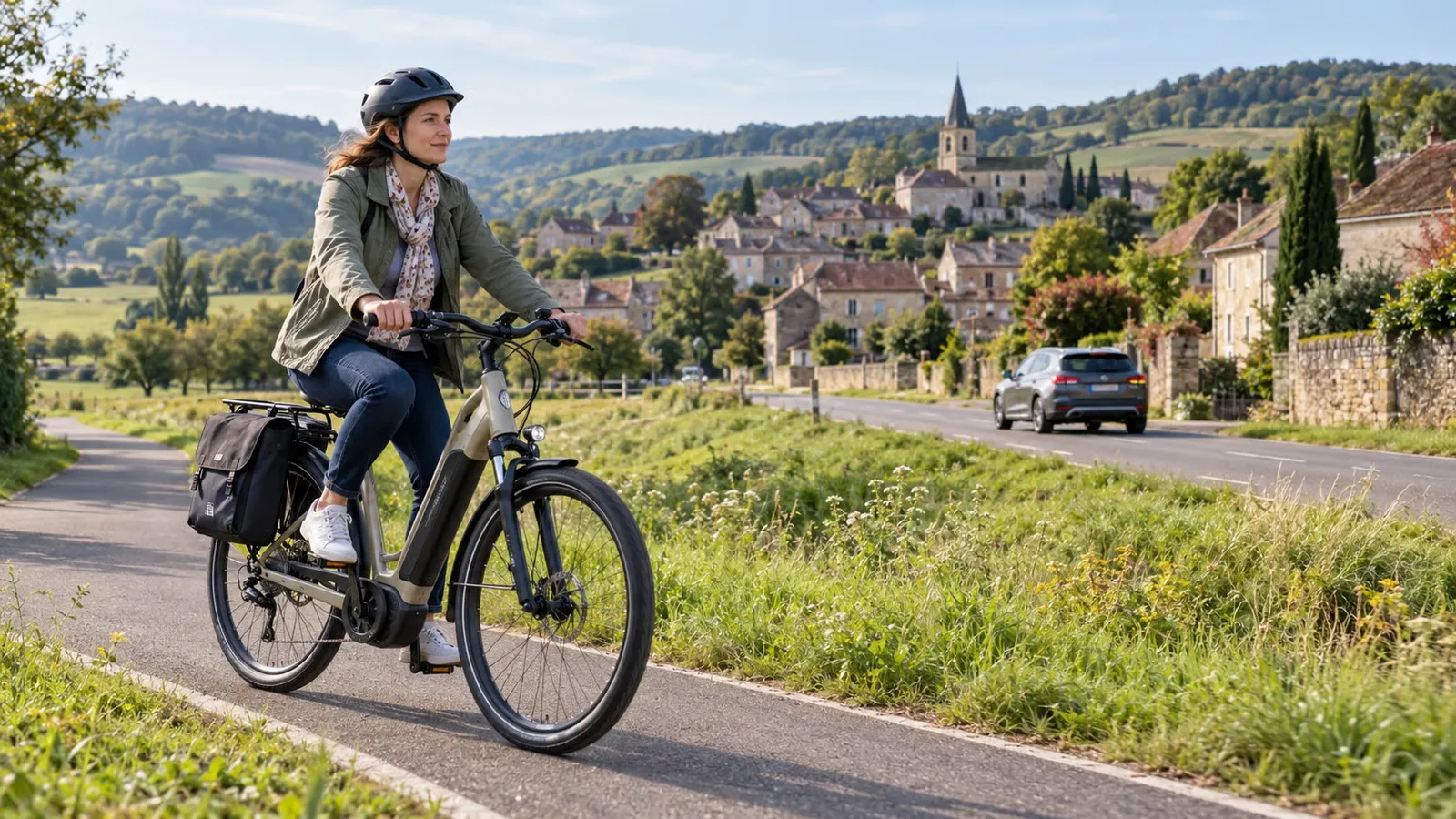
Electric assistance makes it possible to travel on routes that would be difficult to cover with a regular bicycle. This could attract residents of small towns and rural areas, provided they are offered something other than poorly maintained and unsafe county roads to reach the nearest town.
When talking about electric assist bicycles (EABs), two images usually come to mind: on one hand, urban bike couriers aged 35–45 who ride their bikes daily for practical and utilitarian reasons, and possibly also for environmental considerations. On the other hand, there are boomers who have returned to cycling thanks to electric bikes, for enjoyment and to maintain their health, mainly for leisure rides and hiking, often on weekends and only in good weather.
Between these two groups, there is likely a whole world where EABs could also find their place, but about which little is said, or at least it seems to be underexplored in discussions on sustainable transportation.
In my humble opinion, it is this intermediate group that deserves more attention. Those rural or suburban residents who still rely on their cars to reach a nearby town, train station, sports facility, or workplace just a few kilometers away from home. While electric bicycles could play a role in some of these trips, and indeed do so in certain cases already, we still need to consider the conditions under which users are expected to pedal.
Rural trips less suitable for bicycles
We suspected it a bit, but nothing beats some numbers to prove it: rural residents cover longer distances. According to an analysis by the statistics office of the Ministry of Ecological Transition, based on the 2018-2019 National Mobility Survey, 40% of trips taken by residents in rural areas are between 10 and 100 kilometers, compared to 18% in urban areas.
It’s not surprising, then, given that jobs, shops, and services aren’t necessarily located near home. However, we should be cautious of the assumption that all short car trips could be replaced by cycling. Even a short trip can have various destinations and constraints, such as dropping off a child at school before heading to work.
That said, there is some room between replacing all car uses and not replacing any at all.
Electric bikes are already starting to move out of city centers
Is an electric-assisted bike just another bike? Yes and no. Yes, because you still need to pedal. No, because one of the advantages of electric assistance is precisely making hilly routes or the prospect of arriving at work needing to change less discouraging. It doesn’t eliminate effort or rain, but it can significantly alter the way one views a journey. With an E-bike, you either arrive at the same time as with a regular bike by exerting less effort, or you arrive faster by putting in the same effort as with a regular bike. In either case, you benefit, as does your health and the environment.
There is also the issue of travel time. In urban and suburban areas, the average speed difference between e-bikes and cars can be significant. It should be noted that on an e-bike, it is very easy to maintain a steady pace of 20 km/h. In fact, without straining, the assistance system can help reach speeds of up to 25 km/h, which becomes a natural cruising speed unless there are very steep slopes. This average speed is even easier to maintain when cycling infrastructure avoids traffic lights, and when sign M12[1] allows one to bypass them, of course with extreme caution.
In a car, under the same conditions, the average speed is also 20 km/h, but the travel time is longer because it is often less direct, and also because additional time is needed to find a parking spot, park the car, and then walk to the final destination, etc.
A study by Cerema published in May 2024, based on surveys conducted between 2021 and 2023, offers some interesting insights. In the regions studied, e-bike users are less concentrated in large urban centers compared to traditional bike users. Their usage is also geared toward very practical purposes, as aside from commuting home, half of the observed e-bike trips are to work, compared to about one-third for traditional bikes. Yes, even outside urban centers, people prefer using e-bikes over regular bicycles to get to work.
However, caution should be exercised regarding the scope of these results, which cover multiple surveyed regions with 626 people using an e-bike on the day of the study, and which do not constitute a strictly representative sample of all of France. The analysis still shows that e-bikes have already gone beyond being used for leisure and in urban centers alone.
What remains to be determined is why some people took the step while others did not, and whether it is due to infrastructure issues or region-specific factors.
The few kilometers that make a difference
Imagine a house located five kilometers from a train station. The distance seems reasonable by electric bike, the terrain poses no major challenges, and there is parking available upon arrival. However, to get to this train station, one must take a narrow department road where cars and trucks travel, then pass through a roundabout designed to handle vehicle traffic.
In this slightly discouraging scenario, one might still love their e-bike but prefer to drive if they value their physical safety. One may also feel comfortable riding this route personally without wanting their teenager to use it to catch the train.
This type of difficulty corresponds to the obstacles identified by Cerema in its studies on cycling in sparsely populated areas. Lack of infrastructure and a sense of insecurity are among the identified barriers, along with terrain, hardship, climate, and theft risk. The analysis emphasizes how a public space primarily designed for cars can make cycling difficult to consider. In fact, just a few hundred meters of uncomfortable terrain can render an otherwise pleasant route unattractive, especially when it must be taken every morning.
A green path can also lead to work
Fortunately, there are more encouraging examples. In Tarn, the Passa Païs green path shows that the same route can be used to explore a region as well as for daily commuting.
In its experience report on rural and suburban rail services published in February 2025, Cerema states that the Tarn sections serve six town centers, an industrial area employing around 300 people in 45 companies, as well as a forestry high school located eight kilometers from the Mazamet train station. These destinations give this former railway line value that goes beyond weekend use. The source does not provide data on the number of car trips replaced, and it would be speculative to claim that all affected employees or students now commute by bike. However, it shows how a rail route can connect living, working, and educational locations.
To illustrate this example, I use an old towpath that runs along the banks of the Rhône to get to the center of Lyon. This path is quite busy with delivery cyclists during the week, as well as walkers, joggers... and fishermen on weekends. It isn’t currently well-maintained or upgraded, but if the pavement is repaired someday, it will likely become a bike highway on weekdays.
This also raises the issue of proper planning and maintenance. A chaotic path full of holes filled with water, which becomes unusable after just the first showers, certainly doesn’t encourage people to give up cars for bikes.
This also leads to viewing pathways in a different way than just based on their length. Where do they lead? How can one reach them from residences? Is it necessary to return to the middle of traffic when approaching one’s destination?
Having a bicycle is not enough to make it a means of transportation.
It is also necessary to distinguish between cycling as a hobby and its use for everyday commuting. The 2024 national survey on bicycle usage, conducted by CSA among 12,582 people aged 11 to 85, shows that 44% of households own at least one bicycle and 9% own an e-bike. Nationally, recreational riding accounts for about half of the total cycling distances. These results apply to the entire country, not just rural areas.
One can therefore have a bike in their garage, enjoy using it on weekends, but fail to find a satisfactory solution for commuting during the week. Working hours, items to transport, parking, or the possibility of returning after dark all change the conditions of commuting.
This is also why a route should not be evaluated solely under ideal conditions, on a beautiful spring day. In winter, visibility, road surface condition, wet leaves, and maintenance take on greater importance. Additionally, there is the issue of arranging storage upon arrival, as one needs to be able to leave their bike in acceptable conditions. All these details become crucial when one wants to rely on it several days a week.
Being able to try before committing
The price of an electric bike is also a crucial factor, especially when one is still unsure of its role in their daily life. In such cases, having the option to test it in real use might ease the transition, though this would naturally involve paying for a loan.
The long-term rental services examined by Cerema offer an interesting solution. They allow people to try using an electric bike without immediately taking ownership, and they are suitable for both non-motorized individuals and drivers who want to experience an alternative transportation method.
A few-minute trial in front of a store gives insight into the comfort and performance of the assistance. It’s nice but insufficient. One should be able to conduct the test on their own routes, which would allow answering much more personal questions. Is the travel time acceptable? Can one carry what they need? Which route does one prefer to take ultimately? And does one still want to ride a bike when conditions become less favorable?
This opportunity to try it out seems important because it allows everyone to judge based on their own experience. Some will discover they can replace more trips than they thought, while others will find the constraints still too great, which will also provide useful indications for needed improvements.
In fact, electric bikes don’t need to completely and permanently replace all car uses to find their place outside cities. It can start with a few trips on certain workdays or a ride to the train station, and then become a habit if the experience is satisfactory.
But one thing is certain: with safe and proper infrastructure, trips under 10 kilometers are a breeze on an e-bike, take no more time than driving (or even less), and offer such pleasure that it becomes hard to give up later on.
[1] Little known to the general public… and drivers alike, the M12 sign—a small red-bordered triangle pointing downward—represents a yellow bicycle with one or more arrows. Frequently placed at intersections, it allows cyclists, including those on electric-assisted bikes, to cross red lights only in the directions indicated. Used cautiously and in accordance with rules, it helps streamline bicycle traffic and maintain a smoother flow. Those who criticize cyclists for often running red lights fail to realize that most of the time they are doing so legally, thanks to this sign.
