
The surge of Chinese electric trucks could deal a heavy blow to European automakers
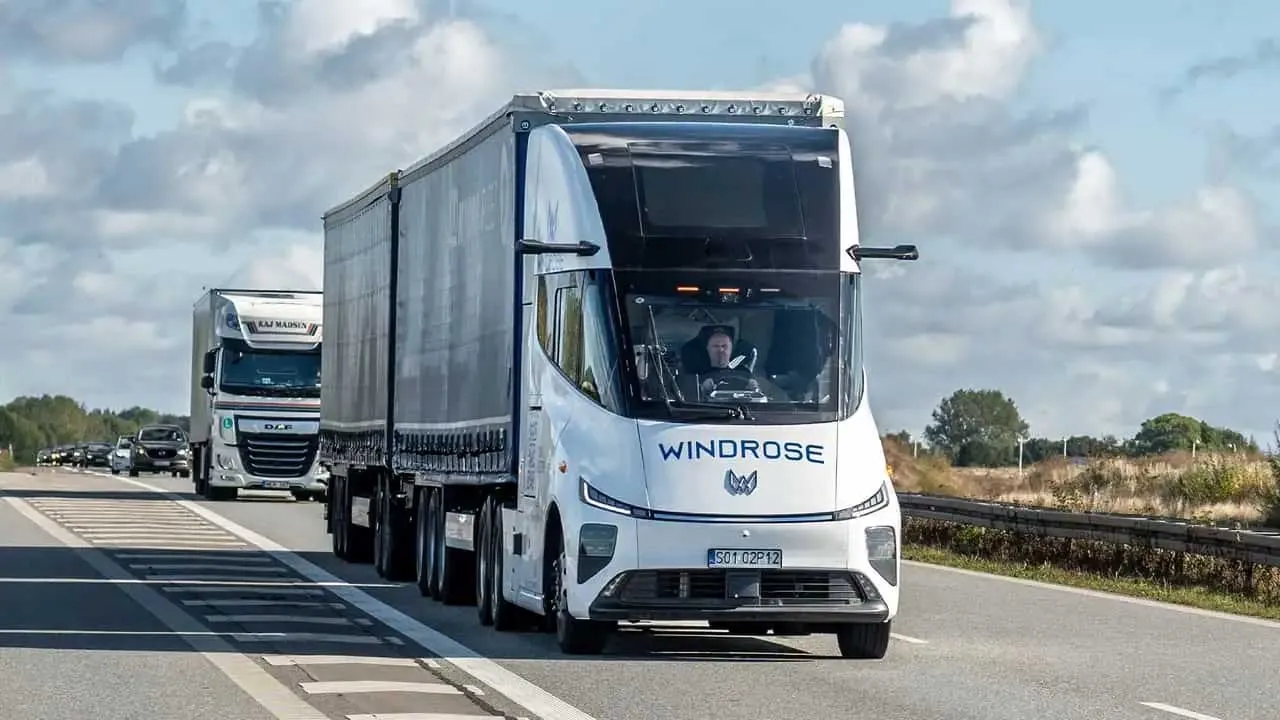
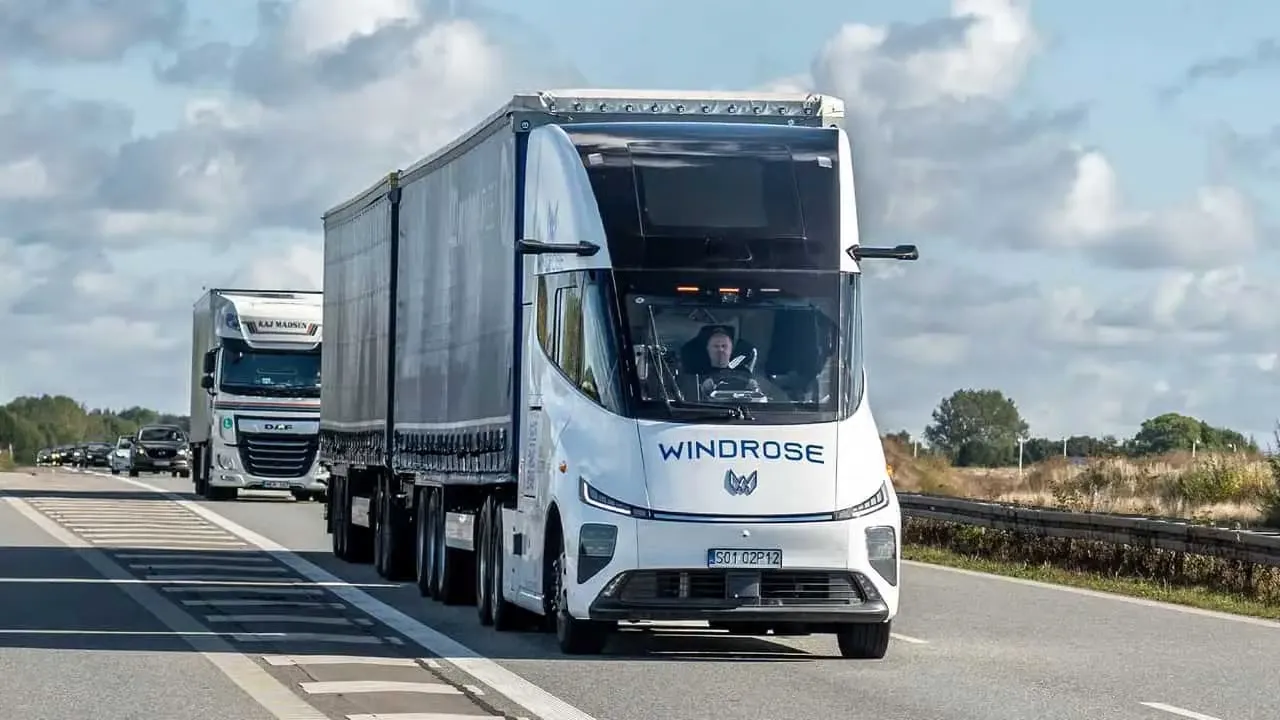
Electric trucks are rapidly gaining ground in Europe, and established manufacturers may see a significant share of this new market slip away from them. According to a study by Transport & Environment, Chinese and American newcomers have a powerful advantage: total cost of ownership that can be significantly lower than that of European models.
The European heavy truck market may be on the verge of a major upheaval. An analysis published by Transport & Environment (T&E) highlights the concerning rise of foreign manufacturers in the electric truck sector. While Daimler Truck, Traton, IVECO, DAF, and Volvo Group currently dominate a European market of around 245,000 vehicles per year, their position could weaken as electrification accelerates.
An electric heavy truck market starting to take off in Europe
In 2025, zero-emission heavy trucks accounted for 5.6% of new truck sales in Europe, double the figure from a year earlier. This acceleration is driven both by evolving European regulations on heavy truck CO₂ emissions and by the gradual decline in battery prices.
In several countries, the transition is already much further along. In Norway, Sweden, and the Netherlands, electric heavy trucks now account for over 15% of new truck sales. These markets give an idea of the speed at which electric trucks can gain traction when regulations, infrastructure, and costs become sufficiently favorable.
Up to 12% lower TCO: the main selling point of Chinese manufacturers
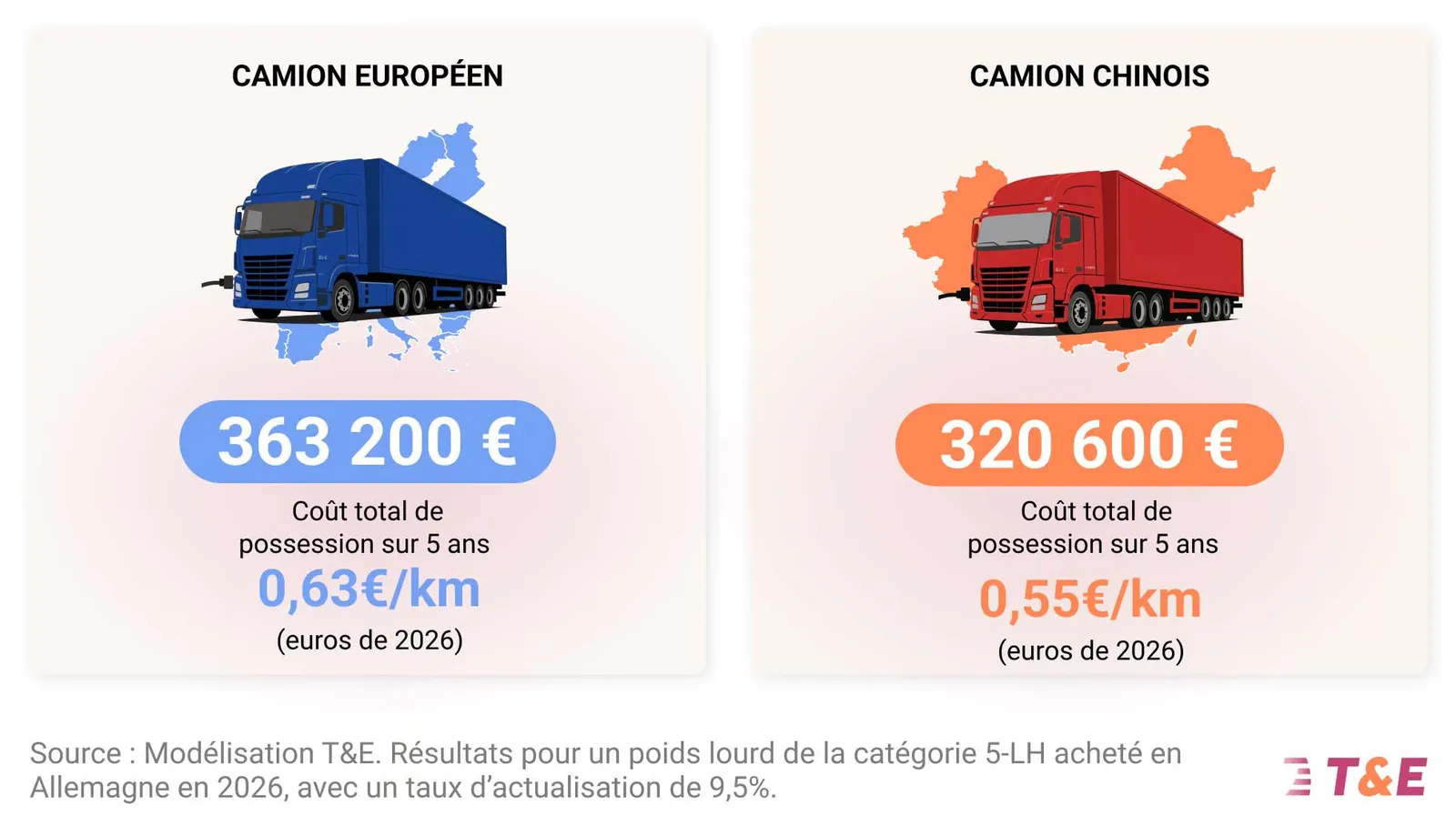
The main threat to European manufacturers could come from operating costs. According to T&E, purchasing and running a Chinese electric truck can reduce the total cost of ownership by 12% compared to a comparable European model. For an average German transporter, the organization estimates this difference at around 43,000 euros over five years. The total cost of ownership would thus drop from 0.63 euros/km for a European model to 0.55 euros/km for its Chinese counterpart.
In road transport, where margins may be limited to just a few percentage points, such a difference is far from trivial. It could become a decisive factor when renewing fleets of dozens or hundreds of vehicles.
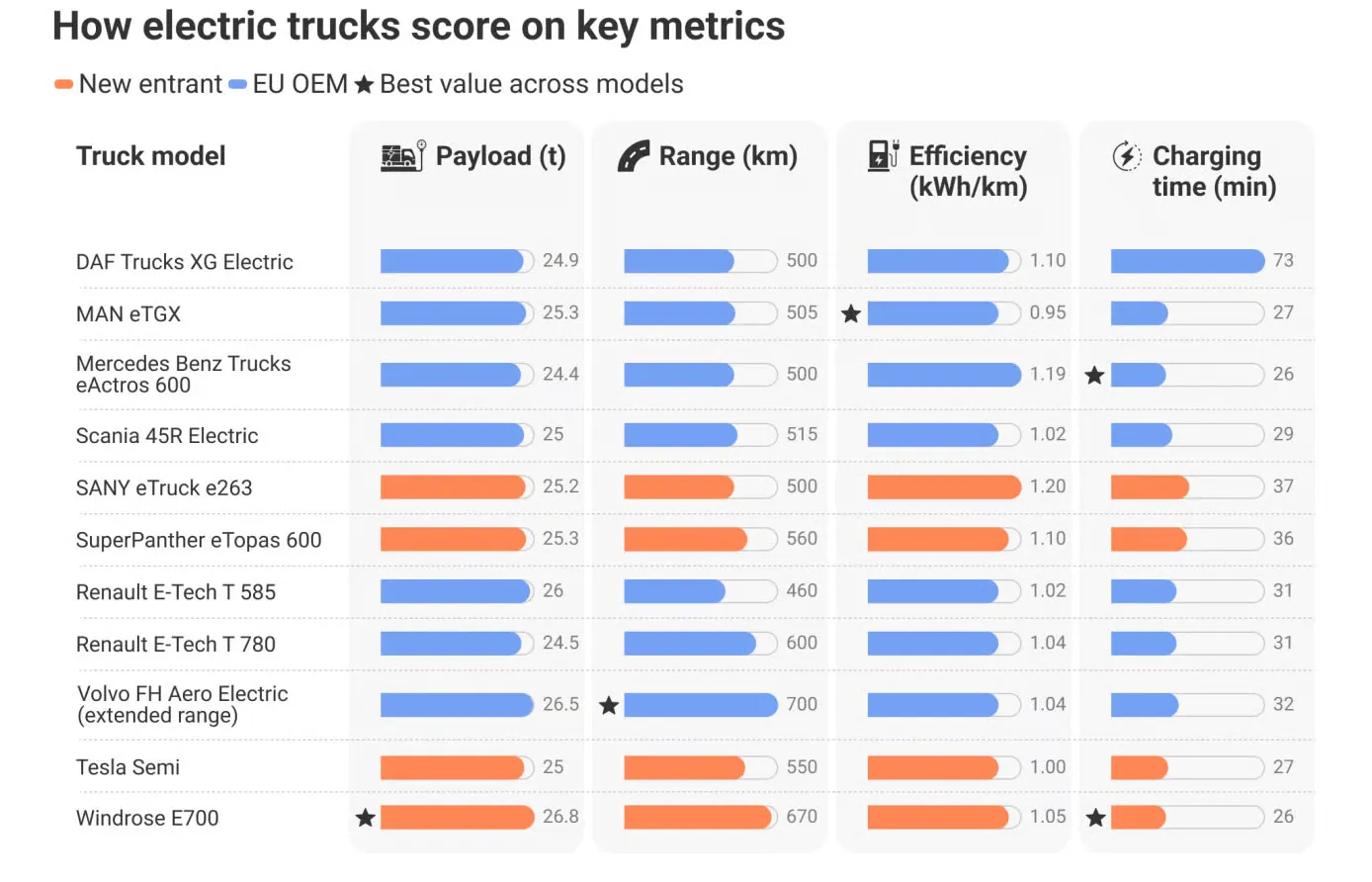
According to T&E, price is not the only factor for new entrants. Chinese models already available or announced show performance comparable to European electric trucks in several key areas: range, charging time, maximum payload, and energy efficiency. Chinese manufacturers, as well as American ones such as Tesla with the Semi, could collectively capture a significant share of the European electric heavy truck market by 2030. This scenario would bring powerful new competitors into a sector that has so far been largely controlled by European companies.
Also read
BYD’s new electric truck achieves up to 400 km of range in just 20 minutes
Up to 31% of the market could escape European manufacturers
According to the scenarios analyzed by T&E, traditional European truck manufacturers could lose 24% to 31% of the electric truck market if their transition does not accelerate sufficiently.
Marie Chéron, interim director of T&E France, believes the industry is at a critical moment: “Some competitive Chinese and American heavy-duty truck models are already on the European market, with many more set to enter soon. This is a crucial moment for Europe’s heavy-duty truck industry, which should learn from what happened in the automotive industry.”
The comparison to electric cars is obviously relevant. European automakers have seen Chinese brands gain rapid visibility in the automotive market thanks to competitive models, often with aggressive pricing. T&E now fears a similar scenario could occur in the heavy truck sector...
Also read
We got behind the wheel of the Tesla Semi, the electric truck aiming to disrupt Europe