
London’s iconic black taxis are set to change in 2027: electric, but possibly also Chinese-made.


The famous London black cab is preparing for its next revolution. LEVC will launch a successor to the TX in the second half of 2027, featuring a new electric generation. But a far more sensitive question remains: will this British symbol still be manufactured near Coventry... or now in China?
The London black cab is part of those rare cars that are immediately associated with a city. Yet behind this silhouette, which has become almost as iconic as the red buses or Big Ben, a major industrial transition is underway.
Once known as the London Taxi Company and now owned by the Chinese group Geely, LEVC must replace its current TX model. The successor is expected in the second half of 2027 and will naturally need to meet the environmental standards imposed on new London taxis. However, as its development progresses, its place of production remains surprisingly uncertain.
The TX at the End of Its Road
Launched nearly a decade ago, the TX significantly modernized the traditional black cab, with the current version relying on REEV technology, standing for “Range-Extended Electric Vehicle”: the wheels are powered electrically, while a gasoline engine can extend driving range. This works similarly to other models on the market such as the Leapmotor C10 REEV.
But extending its career any further becomes complicated. In its 2025 accounts filed with Companies House, LEVC explains that the new regulatory requirements regarding seat strength, anchoring, and headrests can no longer be integrated into the current vehicle. In other words, the TX cannot simply receive an update to continue its service.
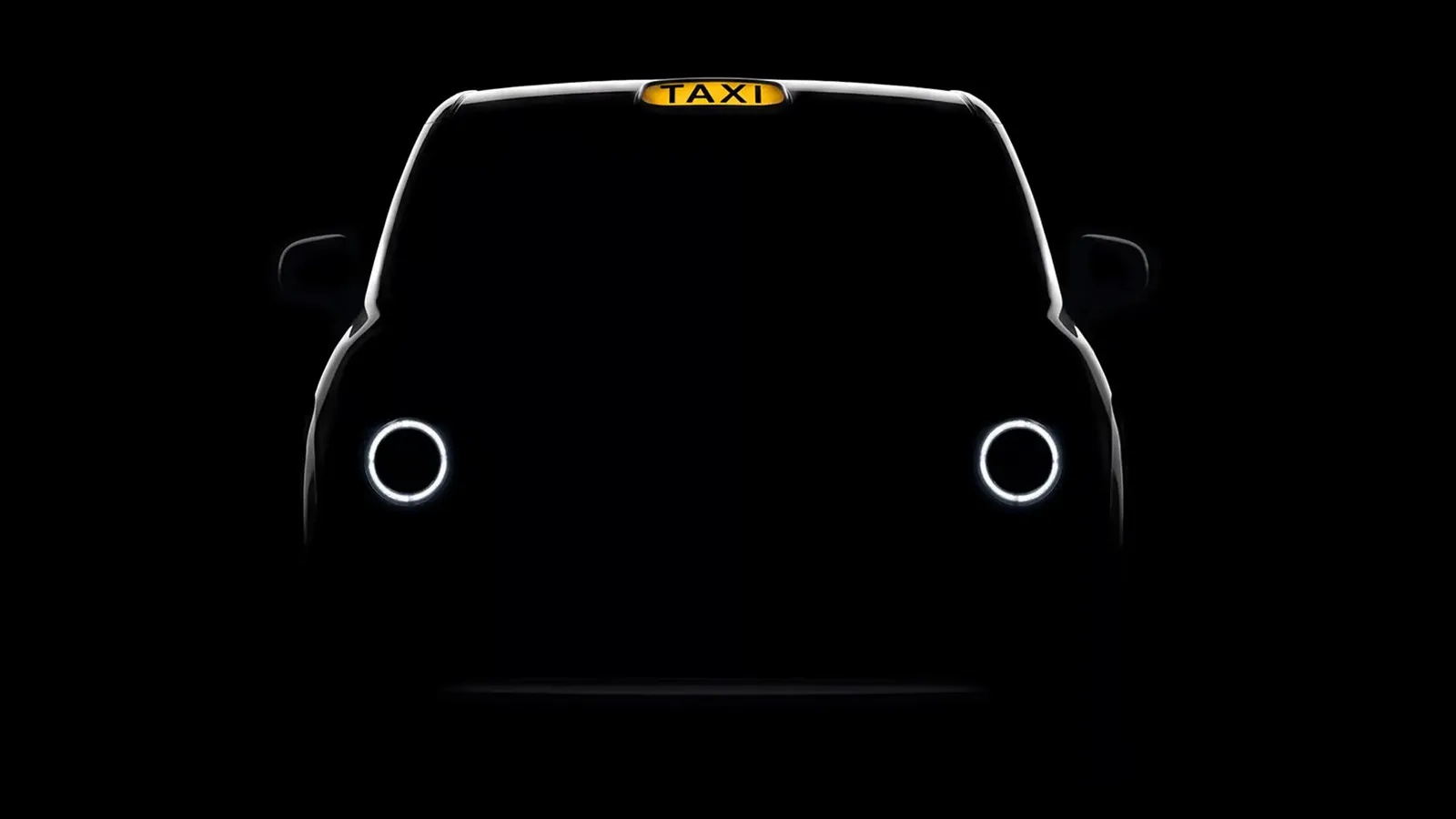
The future black cab is therefore expected to arrive in the second half of 2027. The first sketches released show a clear evolution from the current design, with a more square and robust silhouette, while still retaining the visual elements that make the London taxi instantly recognizable.
Regarding powertrain, LEVC has not yet detailed its approach. One thing is certain: to obtain an initial taxi license in London, a new model must be “zero-emission.” Transport for London’s rules require a minimum range of 30 miles, or about 48 kilometers, with no exhaust emissions. This does not necessarily mean the next TX will be a 100% battery-electric vehicle. The rules still allow for an internal combustion engine, as in the current TX, provided it meets the emission and electric range criteria. LEVC could therefore retain the extended-range option or opt for a fully electric architecture. So far, the manufacturer has not officially announced its choice.
Also read
In London, Uber launches its first robotaxis… under surveillance
Coventry or China: the other major unknown
The industrial issue might ultimately be even more sensitive than the technology itself. LEVC officially claims to be preparing for the future of its plant in Ansty, near Coventry, where the current TX models are assembled. But our British colleagues at Autocar report that the company’s financial documents indicate the decision isn’t yet final.
LEVC states it is working with Geely to “secure the necessary development activities” as well as “future assembly operations at Ansty.” This cautious wording leaves open the possibility of another industrial arrangement.
While LEVC reported a net loss of £54.9 million in 2025, an alternative seems obvious: China. Geely notably has a large manufacturing base in Yiwu, where LEVC has already produced its large electric minivan, the L380. Manufacturing the future taxi at a group facility could potentially allow for greater sharing of components and cost reduction.
From a purely economic standpoint, the hypothesis isn’t absurd at all. LEVC needs to reduce its losses and is simultaneously seeking to expand sales beyond the London market, both in other British cities and internationally. Therefore, scaling up production at a site already used by Geely could offer several advantages. But the black cab isn’t just another car. Its production in the Coventry area is part of Britain’s long industrial history. Moving its production to China would mean transferring abroad the manufacturing of one of the UK’s most famous automotive symbols. This is a story worth watching!