
The Chinese manufacturer Farizon is making a push in France with a new range of electric vans.
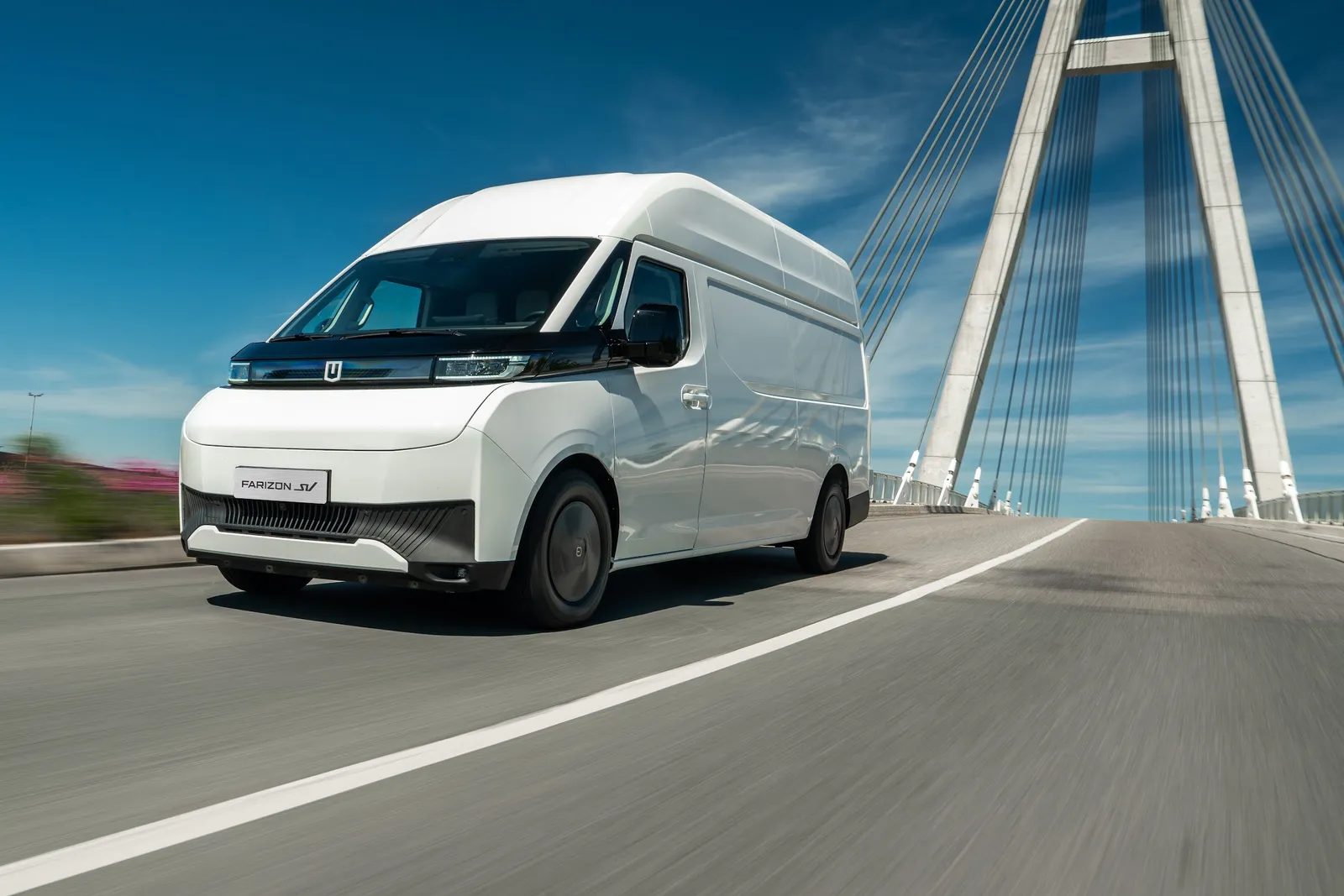
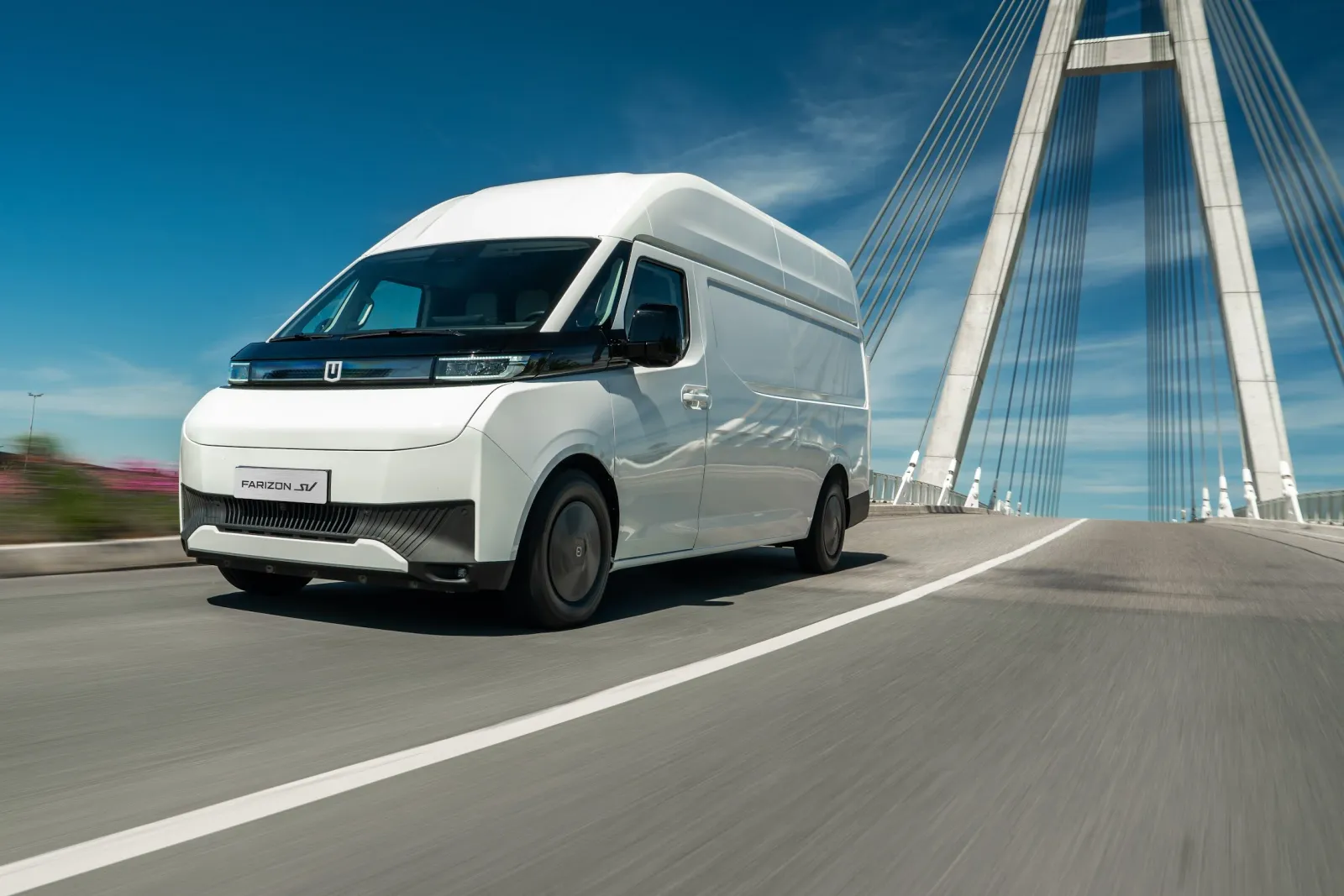
China’s giant automaker Geely is accelerating its push into the French electric utility vehicle market. At an event held in Rungis on October 27, 2026, its Farizon brand unveiled several new models. The company also plans to expand its sales outlets across France. Here’s an overview.
Geely targets professionals in Europe
Geely is best known for its numerous automotive brands, including Volvo, Polestar, Zeekr, and Lotus. But the Chinese conglomerate also has a division specializing in commercial vehicles: Farizon. After officially entering the French market last spring, the manufacturer is now accelerating its efforts. And it clearly doesn’t plan to settle for just one model.
Farizon SV gets upgrades for 2027
The main novelty presented at Rungis relates to the Farizon SV. This large electric van, aimed at competing with models like our Renault Master electric, features several upgrades for its 2027 model year. What sets it apart? Unlike some electric commercial vehicles derived from internal combustion engine models, it is built on a platform specifically developed for electric powertrains.
This technical choice enables optimization of the space allocated for goods. Depending on the configuration, the SV can carry up to 13 cubic meters of cargo and support a maximum payload of 1,290 kg. The loading threshold, located just 520 mm above the ground, should also facilitate work for professionals who make multiple deliveries throughout the day. But it is especially on a technical level that the Chinese manufacturer aims to stand out. The 2027 model of the Farizon SV is now available with two types of transmissions: a two-wheel-drive version equipped with a single electric motor, and an all-wheel-drive variant fitted with two motors.
Also read
New Renault Trafic E-Tech electric vehicle: prices and range finally revealed
This model is aimed at companies operating in mountainous areas or under harsh weather conditions. It occupies a unique position in the electric utility vehicle market, where four-wheel-drive versions are rare.
Up to 500 km of range, but...
Regarding the battery, Geely Farizon offers two capacities: 83 and 100 kWh. The two-wheel-drive version can travel 384 km on a mixed WLTP cycle. In purely urban use, the claimed range increases to 500 km. The AWD version is not far behind. Despite having a second engine, it claims 380 km on a mixed cycle and 495 km in urban conditions. These are solid figures for an electric utility vehicle.
Be aware, however, that these figures correspond to different configurations: the SV 2WD achieves its best performance with an 83 kWh battery, while the AWD model uses a 100 kWh battery. As is usual with electric SUVs, actual range will depend heavily on the load carried, the route taken, and weather conditions. A fully loaded van on the highway obviously cannot expect to reach the ranges achieved in urban driving conditions.
Geely also offers an interesting argument regarding charging. Without specifying the power, the manufacturer claims a 20-80% charge in just 18 minutes. This performance could allow professionals to minimize disruptions during their trips. It remains to be seen if this claim holds up in real-world conditions.
Prices starting at 43,000 euros before taxes
From a commercial perspective, the Geely Farizon offers quite competitive pricing. The new two-wheel-drive SV starts at 43,000 EUR before taxes, compared to 50,500 EUR before taxes for the all-wheel-drive version, representing a difference of 7,500 EUR between the two powertrains. The manufacturer provides several body configurations, from L1H1 to L3H3, with varying lengths and heights. Professionals can thus choose their vehicle based on the volume of goods to transport and their operational requirements.
These new prices represent an interesting development, as when it first arrived in France in spring 2026, the Farizon SV was listed starting at 49,000 EUR before taxes. For comparison, the Renault Master electric starts at 50,000 EUR before taxes in France, before the deduction of the maximum 10,630 EUR CEE subsidy.
Models for Passenger Transport
Geely does not intend to limit its offerings to freight transport only. The manufacturer has also confirmed the arrival in France of the Farizon SV Combi and SV Minibus, two versions designed for passenger transport. The former targets businesses that need a versatile vehicle capable of handling various professional trips, while the latter is aimed at public transportation operators. Both models use the SV’s electric platform but are customized to suit their specific purposes.
Orders are already open in France. Deliveries of the SV Minibus are expected in the fourth quarter of 2026, with those of the SV Combi starting in the first quarter of 2027. However, we do not yet have information on their prices.
The Farizon V7E Completes the Lineup
Another model showcased at Rungis, the Farizon V7E, targets a different market segment. Smaller than the SV, it is primarily designed for urban deliveries and last-mile distribution. This is a market where companies seek vehicles that can navigate cities easily while carrying heavy loads.
With a useful volume of 6.95 cubic meters, the V7E can carry up to 1,373 kilograms of goods. Its range reaches 328 kilometers on a mixed WLTP cycle. This model was previously announced in France in spring 2026, with an initial price of 32,800 euros before taxes.
This model competes with the Renault Trafic electric. It could appeal to small businesses and delivery professionals, provided that operating costs and after-sales service are satisfactory.
Doubling the French network in one year
Beyond vehicles, Geely also aims to accelerate its network expansion, targeting 20 dealerships and 30 after-sales service centers in France by the end of 2026. The goals for 2027 are even higher. By that deadline, Farizon plans to have over 40 dealerships and 80 after-sales service centers in France.
When it entered the French market, the Chinese manufacturer announced plans to achieve 500 sales in 2026, then 5,000 in 2028, and up to 10,000 vehicles per year by 2030. These are ambitious targets for a brand that is still little known among French professionals.
Also read
2026 Mondial de l’Auto: Chinese brand Foton launches its push into electric vans and trucks in France
The manufacturer opened a European spare parts warehouse in Gaggenau, Germany, in April 2026. According to Geely, this new facility now allows deliveries to distributors within one to six business days for regular orders, compared to 40 to 60 days previously. This is a significant factor for businesses, as every lost day can have financial consequences. Therefore, the availability of parts and the proximity of workshops are just as important as fuel efficiency or purchase price.
It is in this area that the Chinese brand will be under the most scrutiny. With attractive technical features and competitive pricing, the manufacturer has strong arguments to attract professionals. However, competing with the well-established networks of Renault, Peugeot, Citroën, or Mercedes, it will need to prove its ability to support customers over the long term.