
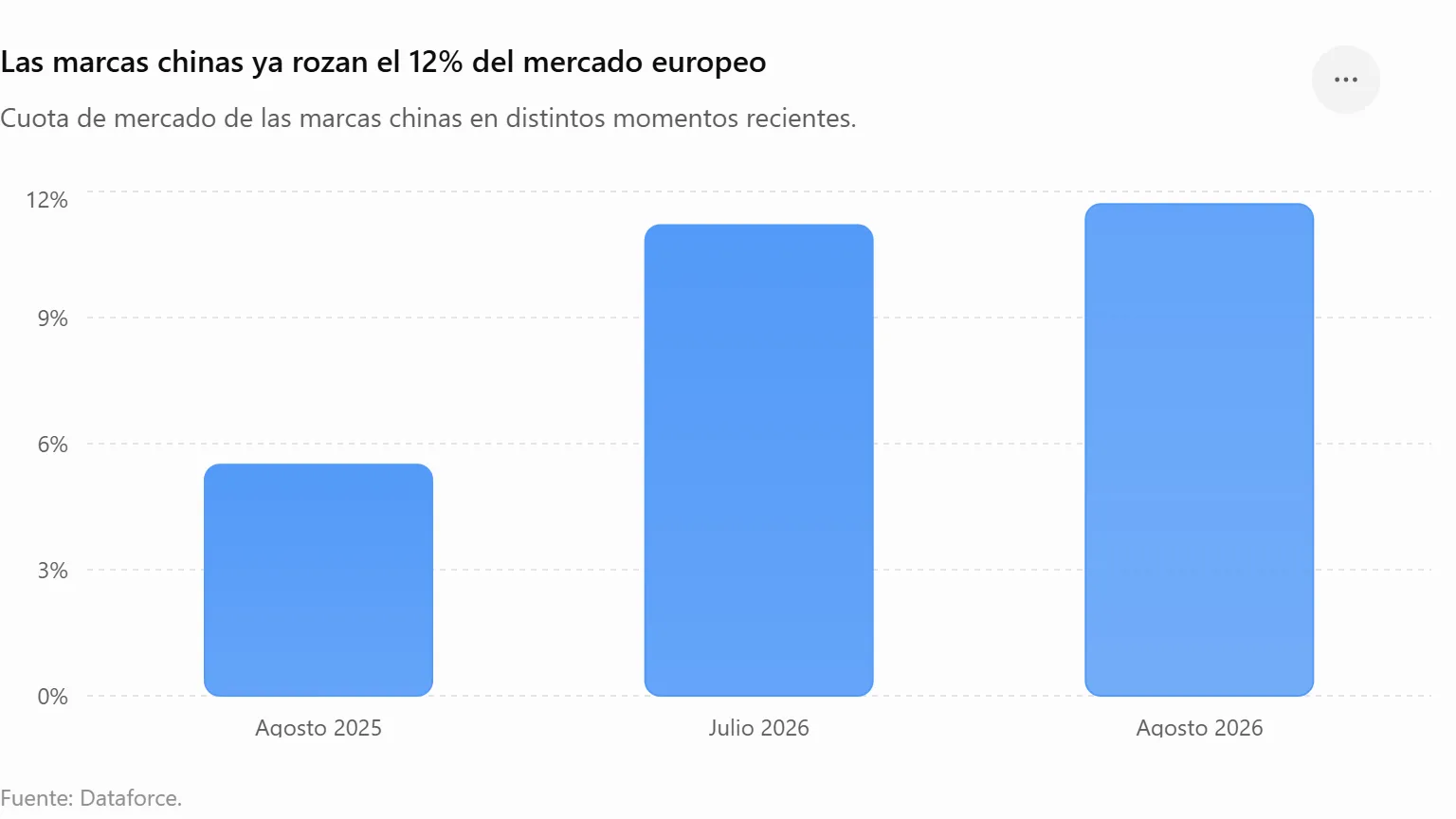
Chinese brands set another record in Europe, now accounting for nearly 12% of the market.
Chinese brands are accelerating their expansion into Europe at a pace that seemed unimaginable just a few years ago. August saw another record high for manufacturers from China in a European market that has also maintained positive growth. But beyond the overall figures, there is a particularly significant change in the ranking of brands that have been competing on the continent for years.
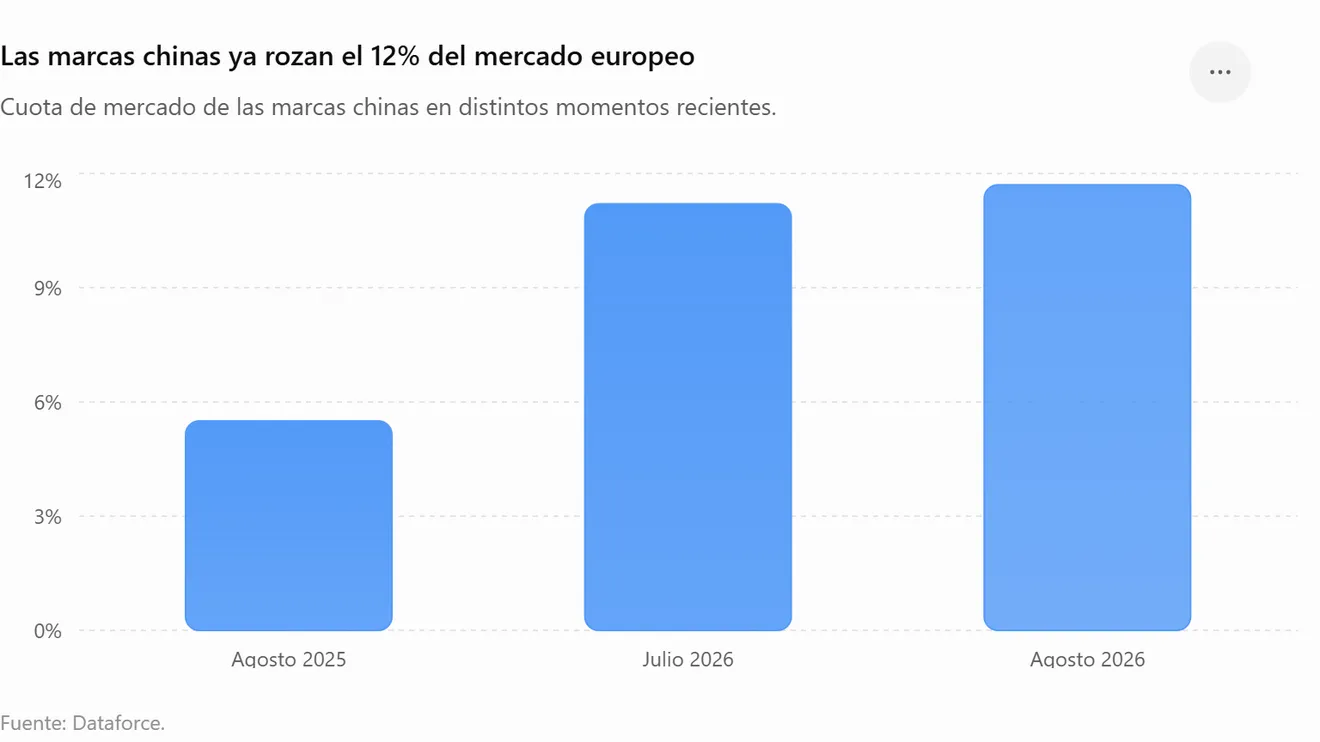
In August, Chinese brands registered 97,639 cars in Europe, an increase of 111% compared to the same month last year. The overall market grew by 4.6%, reaching 835,409 units, so Chinese brands’ share reached 11.7%, setting a new record. Dataforce’s figures cover the European Union, the United Kingdom, Iceland, Norway, and Switzerland.
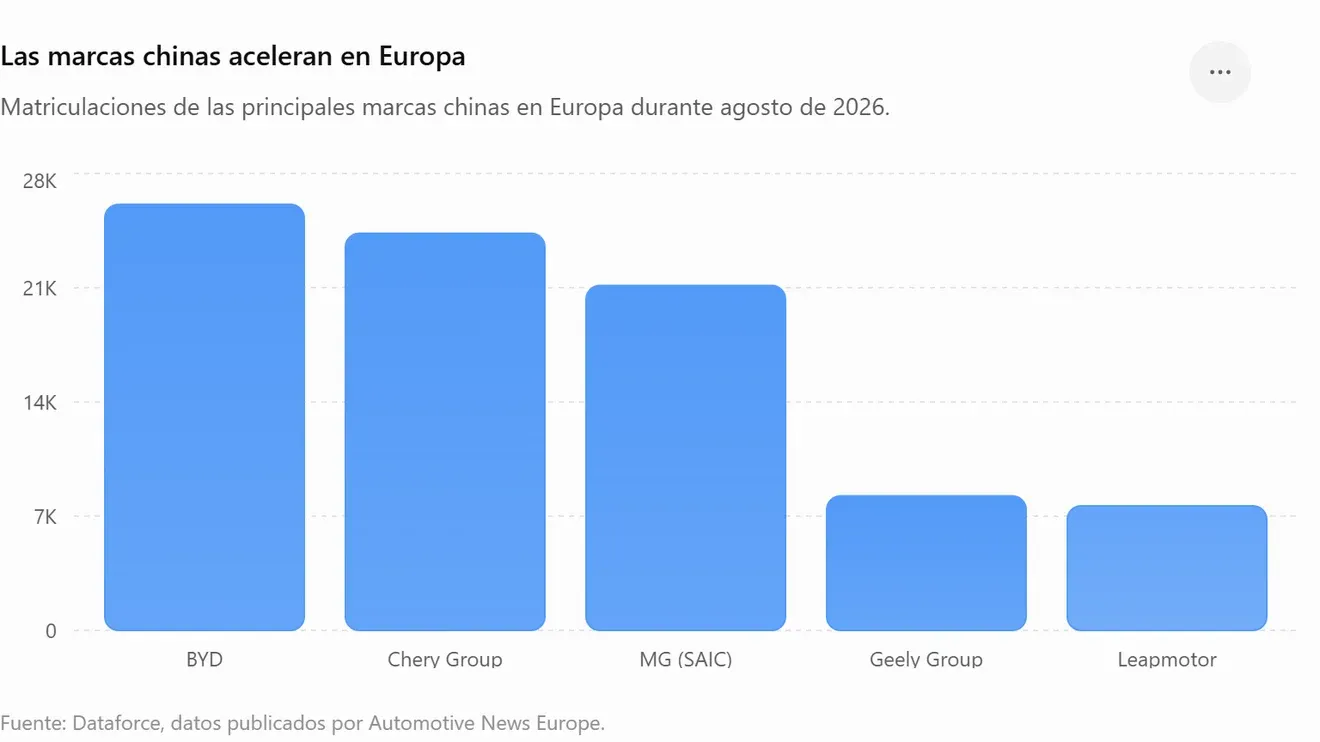
Growth has been particularly strong among some of the more recently established manufacturers. BYD saw its registrations rise by 131% to 26,103 units, while the Chery Group, which includes brands such as Chery, Jaecoo, Omoda, Jetour, Lepas, and Ebro, reached 24,332 units after a remarkable 210% increase. Together, these two companies accounted for around 60% of the overall growth recorded by Chinese brands that month.
The third position went to SAIC, owner of MG, which recorded 21,132 units, a 32% increase. This represents a significant shift in a ranking that MG had dominated since its entry into the European market in 2011. BYD had already taken the lead in May and July, and now does so again in August, while Chery has also managed to surpass MG in monthly figures.
Looking at the first eight months of the year, BYD also leads among Chinese brands with 232,600 units, a 144% increase. MG is in second place with 229,638 units, closely followed by Chery with 226,534 units and an accumulated growth rate of 274%. In total, Chinese brands sold 913,703 units in Europe as of August, raising their cumulative market share to 9.9%, up from 5.2% in the same period last year.
Plug-in hybrids are changing everything in Europe
A key factor behind this growth lies in a technology that has received less attention so far compared to electric cars. Chinese manufacturers are significantly increasing sales of plug-in hybrids, a category that currently enjoys different tariff treatment than electric models produced in China.
In August, Chinese brands sold 33,384 plug-in hybrids in Europe, roughly triple the number from a year earlier. Their share of Europe’s market for such vehicles reached 34%, ten points higher than a year ago. This is a particularly significant development because it allows Chinese manufacturers to gain presence with models that, for now, are not subject to the additional compensation fees applied to electric vehicles made in China.
Electric cars still account for an even larger share of Chinese brands’ sales. 36,301 units were registered in August, almost double the number from a year earlier, although their share of China-based brands’ electric car market dropped from 39% to 37%. Thus, the gap compared to plug-in hybrids is no longer particularly large.
This highlights an important aspect of the European market. Since 2024, the European Union has imposed additional tariffs on electric cars manufactured in China, with rates reaching up to 35.3% depending on the manufacturer. BYD faces a rate of 17%, Geely 18.8%, and SAIC 35.3%, in addition to the standard 10% tariff.
Plug-in hybrids, however, are currently exempt from these specific measures. This has created a situation where Chinese manufacturers can use this technology to strengthen their presence in Europe, while electric cars made in China must bear additional tariff burdens.
The August data show just how well that strategy is working. The growth of Chinese PHEVs is fast enough that Brussels has begun to consider whether to change the treatment they receive. According to The Financial Times, the European Union has asked China to voluntarily limit hybrid exports to around 15% of the European market, down from the current quota of over 30%.
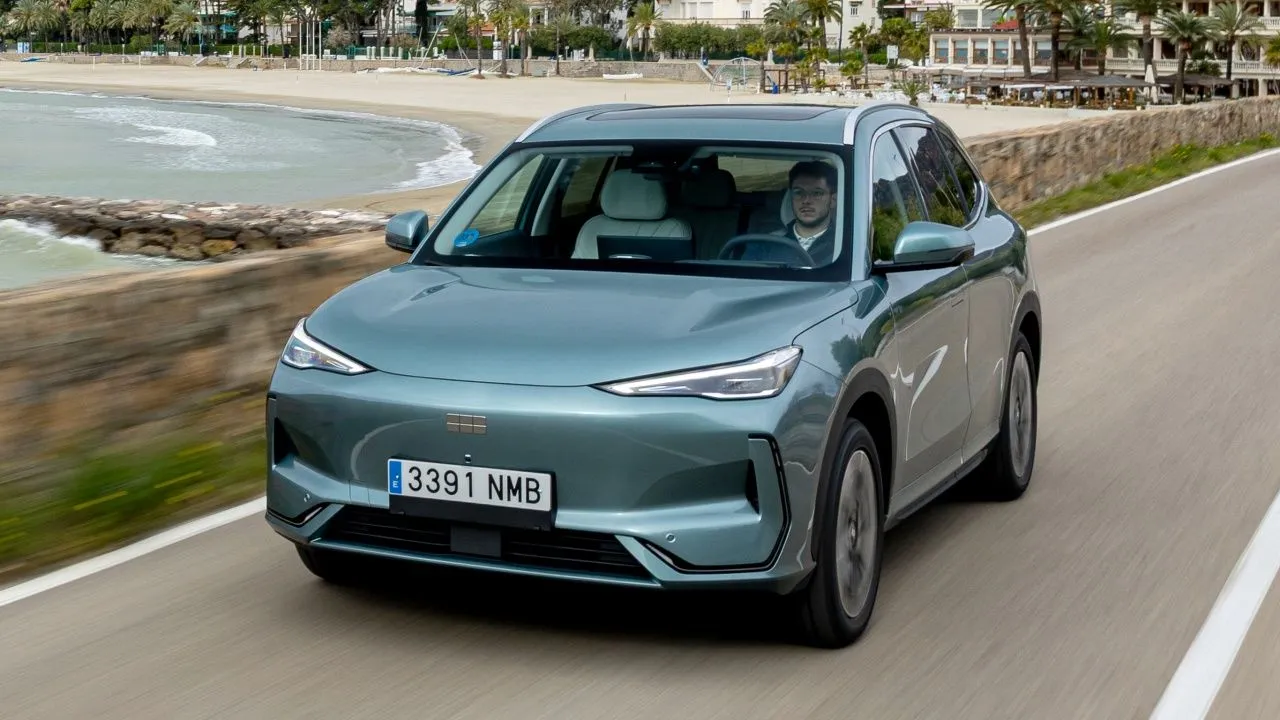
China, for its part, has rejected the idea of voluntarily limiting its exports and stated that any agreement should respect World Trade Organization rules. The Chinese government has also demanded that trade relations remain open and based on international standards.
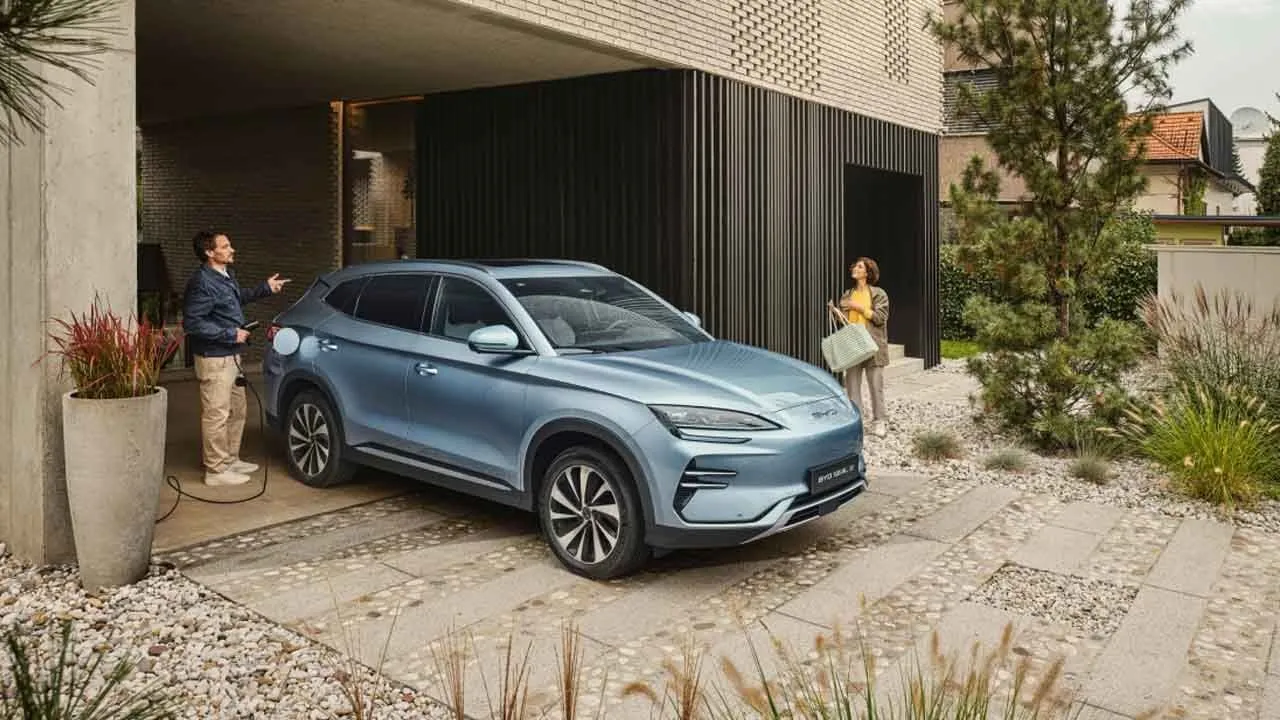
As this debate continues, specific models are beginning to reflect these changes. The BYD Seal U was the best-selling Chinese brand model in Europe in August, with 7,789 units sold and ranking 21st overall in the market. The MG ZS came in at 26th with 6,966 units sold, while the BYD Atto 2 reached position 43 with 5,603 registrations.
The Seal U and Atto 2 also ranked as the best-selling plug-in hybrids from Chinese brands in both August and for the first eight months of the year. Over that period, the Seal U sold 65,934 units, while the Atto 2 reached 53,764 units.
Another manufacturer gaining ground is Geely Group, which includes the brands Geely, Polestar, Lynk & CO, Zeekr, and Lotus. The group sold 8,237 units in August, a 114% increase, bringing its total to 68,551 units in the first eight months, representing a 71% growth rate. Leapmotor also maintains a high pace, with 7,628 units sold in August, a 222% increase, though its growth has slowed since the end-of-June incentive program in Italy ended, which had pushed sales of its small T03 model to astronomical levels.
The result is a European market where Chinese brands no longer compete solely to gain a foothold. In August, they accounted for nearly one in eight cars registered across the markets analyzed by Dataforce, while BYD, Chery, and MG vie for positions that until recently seemed much more stable. And as plug-in hybrids grow so rapidly, the commercial battle could take on a new dimension if the European Union decides to change current rules.