
Solid-state and semi-solid batteries for bicycles are beginning to become a reality: here are the differences from lithium-ion batteries
18/10/2026 17:30
Updated to
18/10/2026 17:30
We discussed this in this report: Giant was making final adjustments to an electric bike that would feature a semi-solid-state battery. It provided a lot of details on this, though it’s true that half a year has passed and we haven’t heard anything more about that launch.
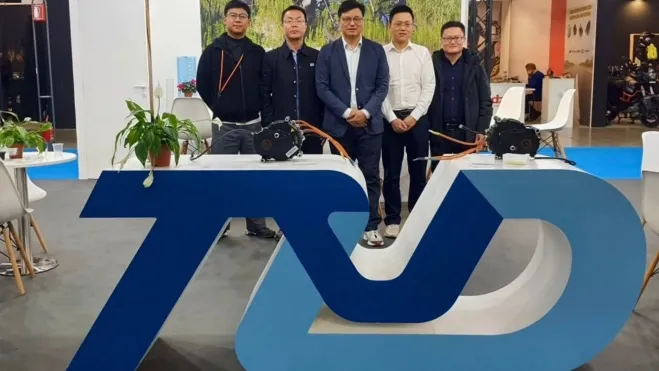
Occasionally, there are news reports about updates regarding this topic. It seems now that the Chinese company T&D, founded by Sunny He and several Bafang designers and acquired by Gallop Electric at the end of 2024, is finalizing the launch of a solid-state battery. So far, we know quite a bit about the semi-solid-state version, slightly less about the ‘solid’ version, but what little is known about it is promising.
What improvements do these batteries offer over lithium-ion batteries?
Lithium-ion batteries, which are those commonly used in current electric bikes, have delivered truly remarkable performance. Their energy density has improved year by year, with the most advanced batteries achieving levels around 210-220 Wh/kg. This means that a battery with an 800 Wh capacity weighs approximately 3.6-3.8 kg.
The charge cycles of a lithium-ion battery range, depending on the manufacturer, from about 500 to 600 cycles, while retaining 80% of its original capacity. However, there are a few manufacturers that claim up to 1,000 full charge cycles.
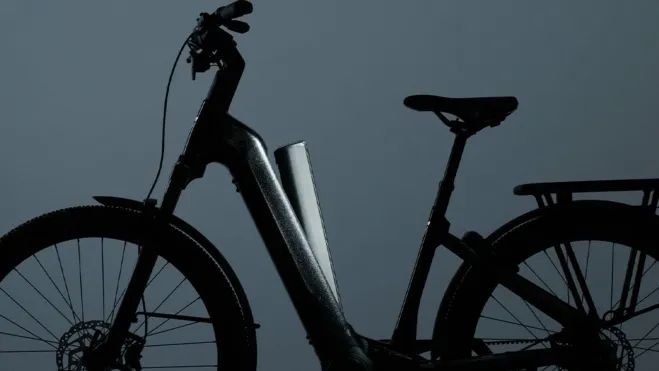
In very brief terms, a lithium-ion battery relies on cells—specifically the well-known 21700 cells—that contain a type of liquid (organic, not aqueous). This liquid transports ions within the cell; although its high flammability is the biggest drawback of this type of battery, it is also what enables its performance.
That’s why there are those (very few) fires mentioned in the press, which tarnish the reputation of electric bicycles. Overheating, especially when charging a battery, is the main drawback of lithium-ion batteries. Additionally, in the event of an impact, that (flammable) liquid can leak out.
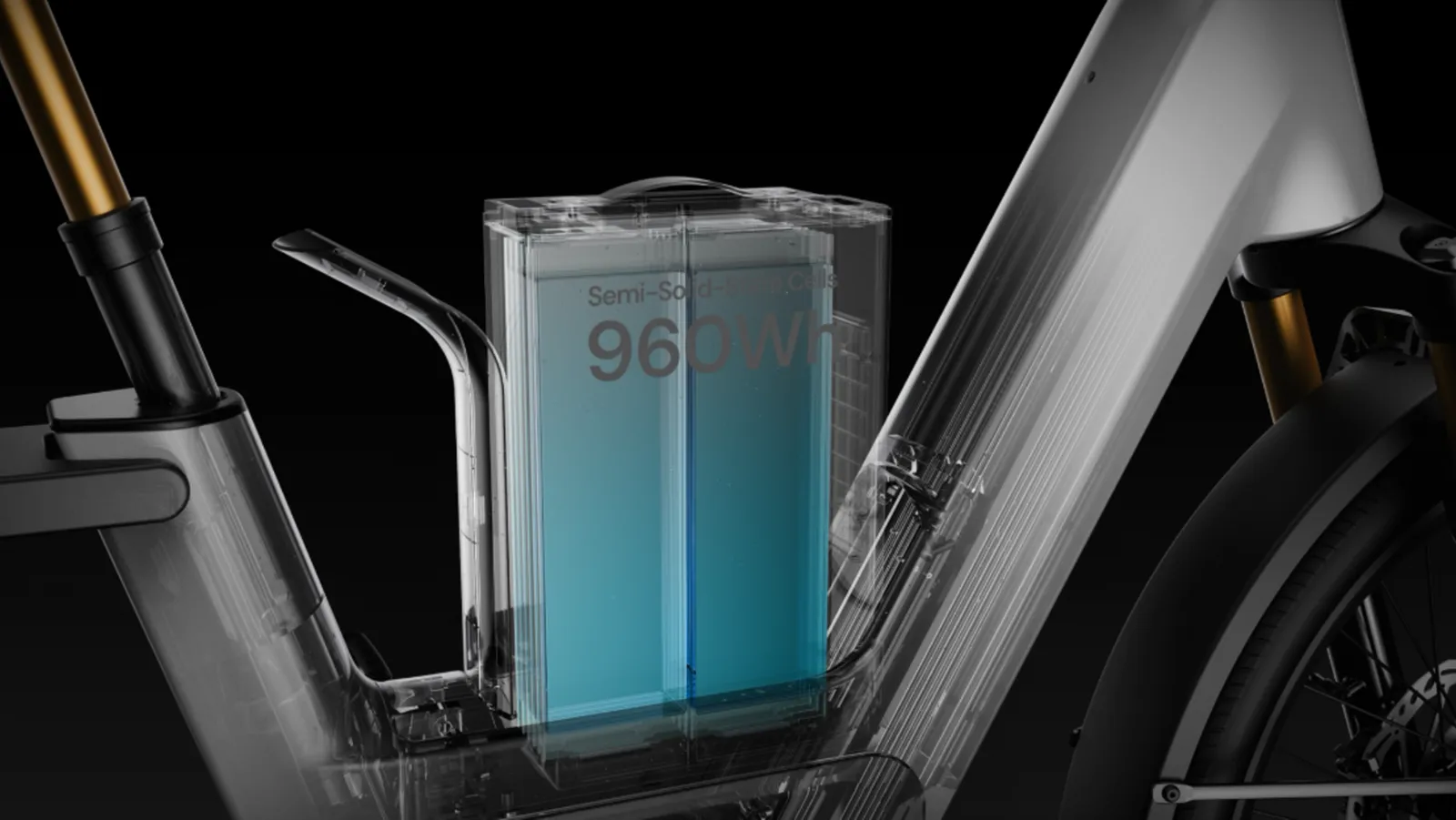
Next are the semi-solid types: these use an electrolyte composed of a gel (in small amounts) and a solid material, which can be ceramic, glass, or a type of polymer. They have greater resistance to high temperatures, withstanding up to 300ºC. Their energy density is also higher, with values reaching 280-300 Wh/kg. For a battery with an 800 Wh capacity, this would result in a weight of approximately 2.8 kg. Finally, regarding charge cycles: they can easily reach around 1,200 cycles while maintaining optimal performance at 70-80% of their capacity.
Last are the solid-state batteries: they represent a major challenge, not only for the cycling industry but overall. The advantage of these batteries is that the electrolyte is completely solid, so there’s no risk of any liquid leaking in case of punctures, eliminating the danger of fire. Additionally, their energy density is even higher—around 350-400 Wh/kg, meaning an 800 Wh battery would weigh about 2.1 kg. The number of charge cycles is also higher, reaching up to 1,500 cycles. Full charges for this type of battery take around 20 to 30 minutes.
So what now?
Giant has shown signs of wanting to launch semi-solid-state batteries. The Lemmo Bikes brand already offers the Lemmo 3, an eCargo model equipped with a 960 Wh semi-solid-state battery, claiming a range of up to 180 km... This list is likely to grow soon.
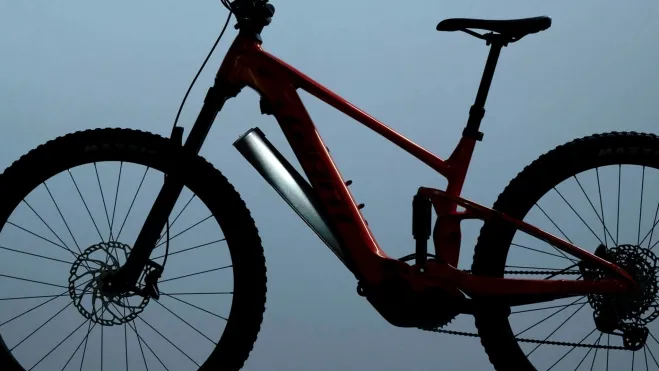
Regarding what is known about T&D: they claim their production processes are based on existing ones with a long track record. Therefore, marketing these batteries should not incur additional costs. For now, they say they are in the process of obtaining the necessary certifications for European and American markets, as well as Chinese markets, of course.