
Charging at 710 kW: Mercedes-AMG unveils the GT SUV
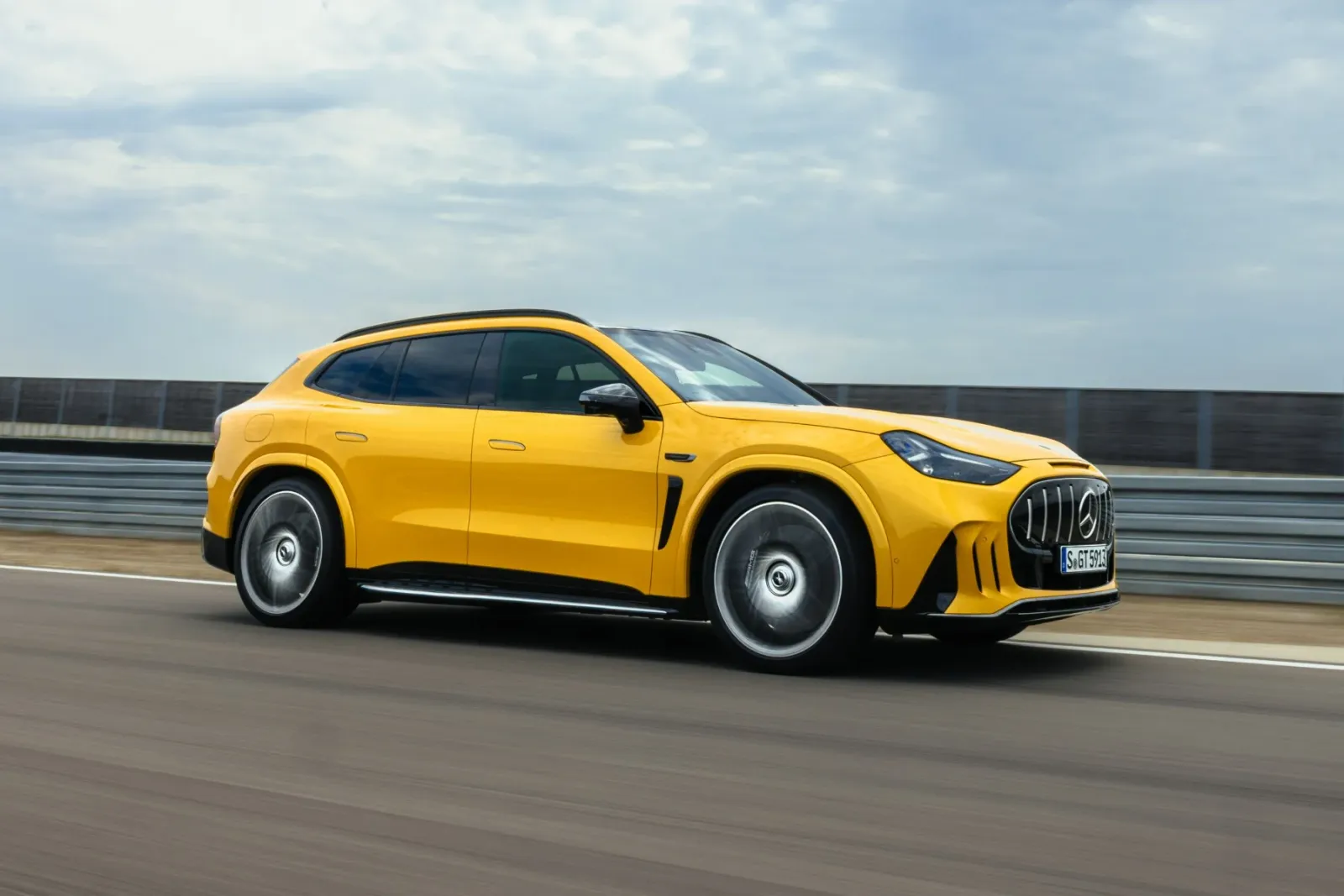
The Mercedes-AMG GT SUV marks the launch of the second series model based on the electric AMG.EA platform, and it falls far short of its predecessor, the 4-door GT coupe. In fact, AMG has even improved on a key technical aspect.
Image: Mercedes-Benz
The Mercedes-AMG GT 4-door Coupe set the standard, and now the AMG GT SUV takes it further. Both models utilize the AMG.AE architecture along with 800-volt technology. The powertrain consists of three highly powerful axial flux motors, which in the top-tier Mercedes-AMG GT 63 SUV can also deliver a peak output of 860 kW. As a result, the SUV accelerates from 0 to 100 km/h in 2.5 seconds, reaching 200 km/h in just 6.8 seconds. The top speed remains at 250 km/h across all variants, or 270 km/h electronically limited with the optional “AMG Driver’s Package”.
Mercedes-AMG GT 63 SUV charges faster than AMG GT 4-door Coupe
The continuous power output is 530 kW, with a maximum torque of 2000 Newton meters. To prevent drops in performance due to heat, the battery consists of directly cooled prismatic cells and features active thermal management. This system enables a very high power density, allowing for sustained and consistent performance delivery. The front-wheel motor acts as a booster motor and is activated to provide additional power or traction at the front axle.
Up to this point, the technology is identical. However, when it comes to maximum charging power, the GT 4-door coupe actually falls short: the GT SUV can charge at up to 710 kW using a fast charging station designed for this purpose, compared to around 600 kW for the coupe.
The optional 128 kWh battery (106 kWh in the base model) can draw energy from a charging station in ten minutes to cover an additional 454 km. A fully charged battery—reaching 80% in 16 minutes at a 400-kW charger—allows the electric AMG SUV to travel up to 700 km. This is made possible by the large battery and an excellent cW value of 0.27 for a SUV. AMG reports a WLTP fuel consumption range of 23.8 to 21.2 kWh per 100 kilometers for the top version.
The Mercedes-AMG 55 SUV also impresses with a continuous power output of 530 kW, but lags behind the 63 model significantly when it comes to peak power of 600 kW. Its torque of 1,860 Newton meters is also slightly lower. No other differences are listed in the specifications. The time to reach 100 km/h is 2.8 seconds.
The Mercedes-AMG 53 SUV features a technically streamlined setup: it is equipped with one permanent-magnet synchronous motor at each of the front and rear axles, delivering 270 kW under continuous operation and up to 400 kW at peak performance. The maximum torque is 800 Newton meters, extending the sprint time by another second to 3.8 seconds. The 106 kWh battery can be charged at a maximum rate of 600 kW, taking 16 minutes to reach 80 percent charge from 10 percent using a 400-kW charger. It can cover 440 kilometers on a single charge in ten minutes, with a combined maximum range of 668 kilometers.
The first SUV “Born in Affalterbach”
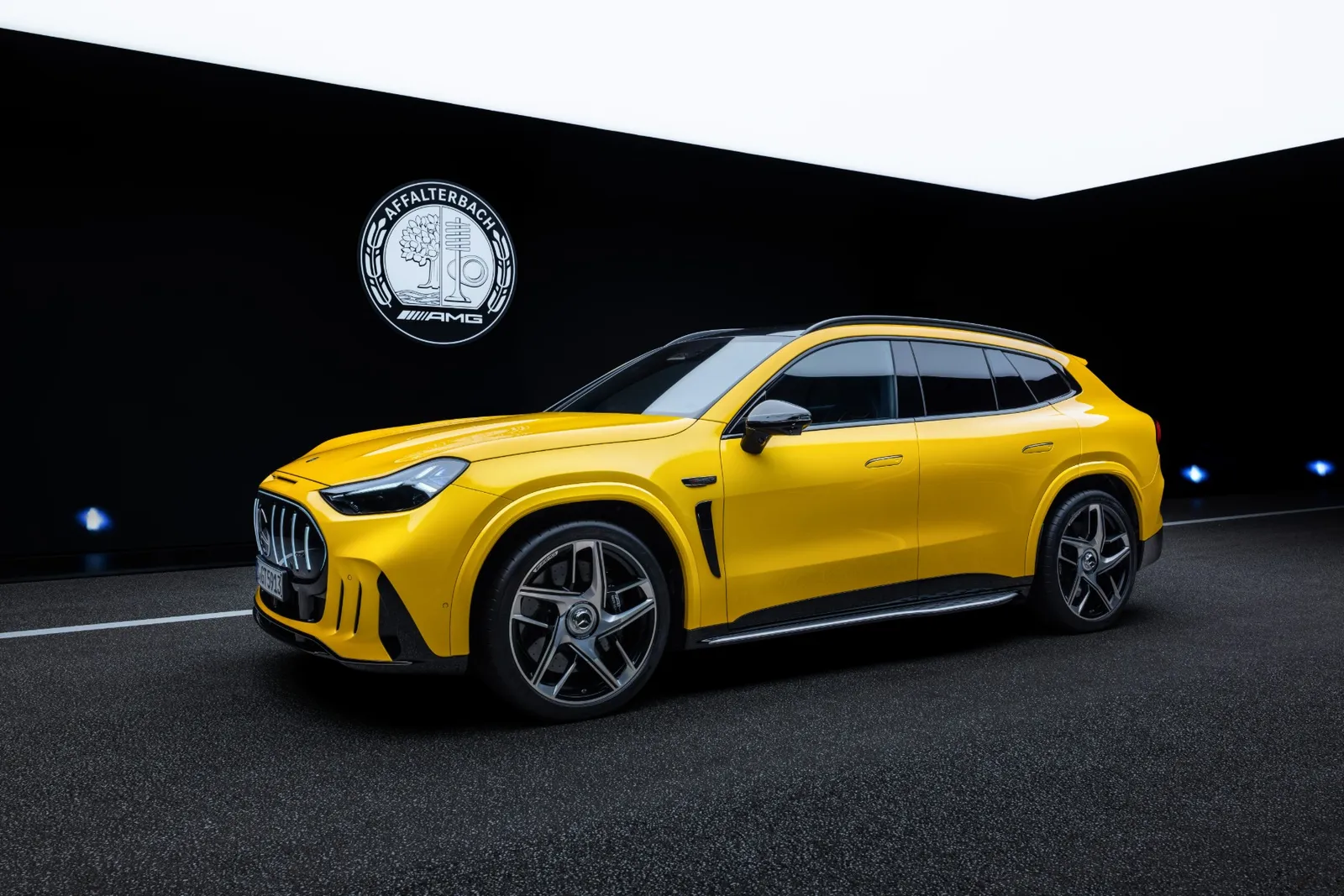
All versions of the Mercedes-AMG GT SUV share a full-size body structure that gives the vehicle a length of 5.08 meters, a width of 2.00 meters, and a height of 1.66 meters. To keep its curb weight of up to 2,695 kilograms well under control even during sporty driving, AMG equipped its first self-developed SUV with the newly designed “AMG Active Ride Control+” suspension system, featuring high stiffness in both vertical and lateral directions, along with roll and pitch stabilization (standard on the 63 series, optional on the 55 series).
The suspension is designed to strike an optimal balance between comfortable riding and highly dynamic driving. This is complemented by the fully variable all-wheel drive, rear axle steering, and the roof spoiler along with the air management panels as active aerodynamic components in the AMG GT 63 & 55 SUV. These elements reduce air resistance up to 150 km/h and regulate cooling. At higher speeds, the system intervenes more quickly to enhance driving safety through improved traction and stability.
The “AMG Race Engineer” control system expands the adjustment options for the suspension and powertrain. Using three physical dials in the center console (_Response_, _Agility_, and _Traction Control_), the response behavior of the electric motor, agility in corners, and wheel slip can be adjusted continuously and individually.
- 1/9
- 2/9
- 3/9
- 4/9
- 5/9
- 6/9
- 7/9
- 8/9
- 9/9
A driver-focused cockpit with numerous track-related features
With its sporty seating position inside and a large storage space of 1,740 liters in the trunk along with 78 liters in the front compartment, AMG aims to combine the qualities of an SUV with the feel of a sports car. To enhance this experience, AMG has equipped its performance SUV with an “AMGForce Sport+” driving program featuring engine sounds. Drivers can choose between an AMG V8 engine and an AMG six-cylinder engine, along with simulated gear shifts, seat vibrations, and a matching display design.
The three-panel display layout based on MB.OS includes a 10.2-inch combined instrument cluster, a slightly angled 14.0-inch central display, and a separate 14-inch passenger screen. High-quality materials such as diamond-stitched upholstery, floating armrests, and optional stainless steel trim for the Burmester 4D sound system define the cabin interior. The atmosphere is further enhanced by a switchable panoramic glass roof along with extensive customization options for seats, wheels, and paint finishes.
The overall system, powered by MBUX and equipped with three integrated AI agents, covers a wide range of usage scenarios from everyday driving to racing. Seven specific driving programs—ranging from “Comfort” and “Eco” to “Race,” including a Boost function via the steering wheel levers—adjust the vehicle’s characteristics accordingly. For track use, specialized submenus along with the telemetry software “AMG Track Pace” provide detailed real-time analyses. The performance features are further enhanced by the Predictive Performance Manager (PPM), which can control energy flow specific to each track section to ensure consistent lap times and maximum efficiency even under extreme conditions.
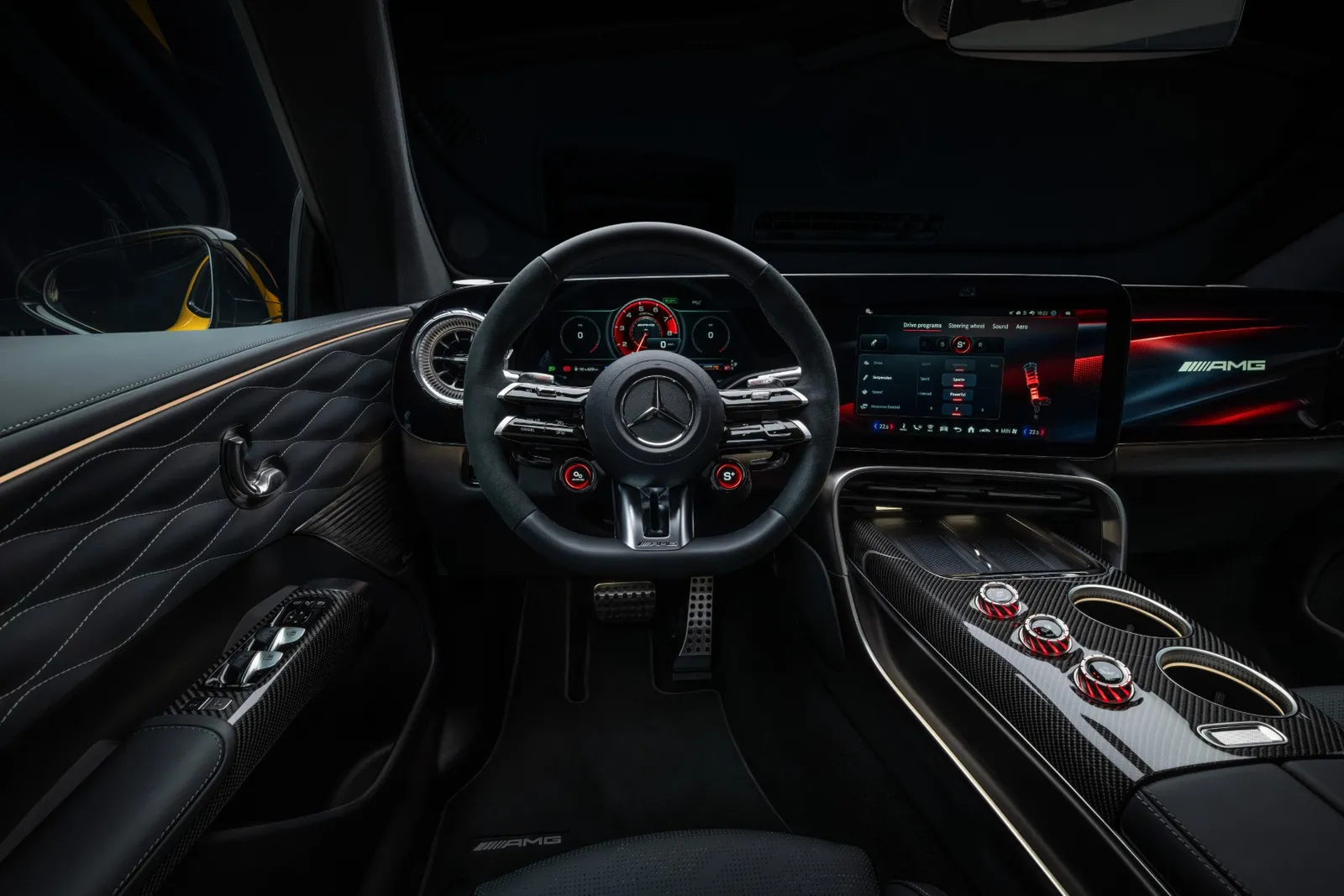
Image: Mercedes-Benz
- 1/3
The entry-level version of the new SUV from Affalterbach will be available for ordering starting October 20, 2026. The price of the AMG GT 53 SUV begins at 113,050 euros. The Mercedes-AMG GT 63 SUV and AMG GT 55 SUV are expected to follow in spring 2027.