
The European Union has it clear: it wants to shut a door that the United Kingdom has left wide open for Chinese electric cars.
04/10/2026 11:00
Updated to
04/10/2026 11:00
The UK wants to re-engage with the European industry without completely giving up on the trade freedoms it gained after Brexit, but that strategy has just encountered a major obstacle. Brussels is willing to include the country in some of its new industrial policies, but it wants guarantees that this will not also facilitate the entry of Chinese products into the common market.
The automotive industry has become one of the sectors where these differences are most evident. The British government is trying to ensure that its manufacturers and suppliers can benefit from the future “Made in Europe” framework, which will give priority to European production in terms of subsidies, public procurement, and certain strategic projects, while the EU demands in return a trade policy that is much closer to that applied within its own borders.
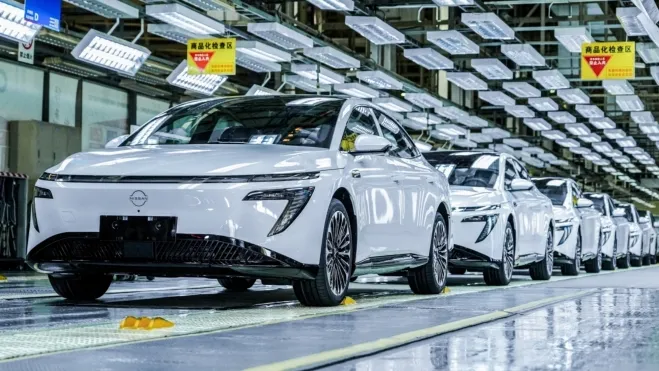
Brussels wants the UK to align its tariffs on China
According to the Financial Times, European officials have told London that one of the conditions for strengthening that relationship is to tighten regulations on electric cars manufactured in China. Among the options discussed is even a customs union, a solution that would reduce much of the existing trade differences between the UK and the Twenty-Seven.
The gap is particularly large in the field of electric cars. Since October 2024, the EU has imposed compensatory tariffs ranging from 7.8% on Tesla to 35.3% on SAIC and other companies that did not cooperate with the investigation. These rates are added to the standard 10% tariff, potentially raising the total cost to around 45.3% in certain cases.
Brussels introduced these measures after concluding that China’s electric vehicle production chain benefited from subsidies that could cause economic harm to manufacturers within the community. The UK, on the other hand, has not adopted this policy and maintains considerably more favorable access conditions for these models, allowing Chinese brands to gain significant ground in its market over the past few years.
The EU’s concern is that the UK could become an alternative route.
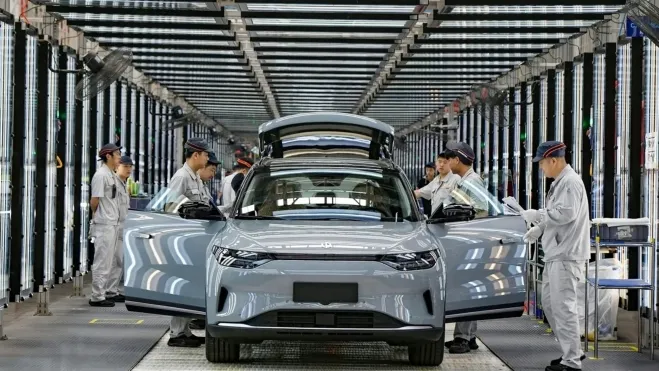
The issue for the European Commission is not limited to cars that can be imported directly from China, but rather the possibility that Chinese manufacturers could set up production in British territory and then use those facilities to gain access to the common market. This scenario gains particular significance with industrial projects such as the discussions regarding Chery’s potential to manufacture vehicles at Nissan’s plant in Sunderland.
The situation forces the UK to balance two goals that are increasingly difficult to separate: attracting Chinese investment to strengthen its own automotive industry and, at the same time, maintaining a privileged relationship with European supply chains that are pushing for higher local production requirements. For the EU, this issue will become particularly important as “Made in Europe” gains prominence in subsidies and public procurement, while London will have to decide how closely it is willing to align its trade policies with those of the community.
