
The solution for everything: in both its electric and hybrid versions, the Citroën Ë-C3 is larger than it appears.
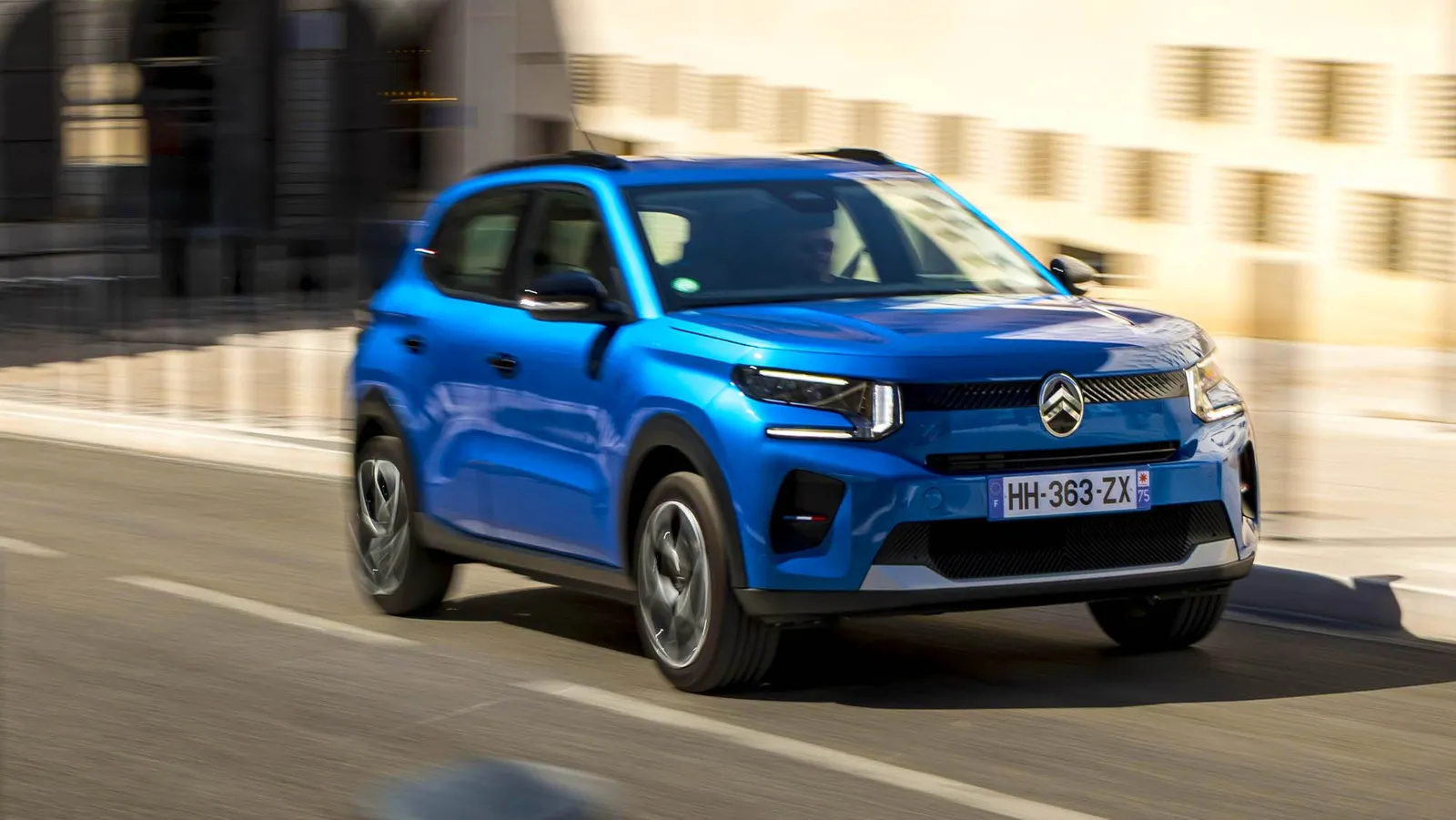
Current mobility demands various solutions. Citroën offers two models to meet different needs: on one hand, the Ë-C3, a 100% electric compact urban car with zero local emissions. On the other hand, there’s the C3 Aircross Hybrid 145, an SUV that combines a thermal engine with an electric one (mild-hybrid 48V).
Each model suits different driver usage patterns better. It’s not about debating which is “better” in general terms, but rather determining which technology—hybrid or electric—fits each user’s daily routine best, based on real data regarding power output, fuel consumption, and range. The price of the Citroën Ë-C3 starts at 11,700 €, including Auto + package and the brand’s promotions.
Below we explain its key features and when to choose each model.
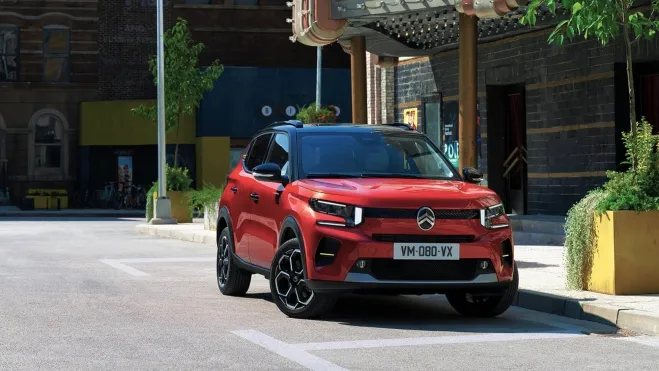
Citroën Ë-C3: Compact Electric Urban Vehicle (100% Electric)
The Ë-C3 is a 100% electric urban vehicle designed for daily city commuting without any local emissions. Its electric motor delivers 83 kW (113 HP), sufficient for agile performance in urban areas. It operates solely on battery power, with two WLTP range options depending on capacity: the Urban Range version (30 kWh) has a range of up to 214 km, while the Comfort Range version (44 kWh) reaches up to 322 km.
These ranges more than cover most daily urban trips. The average energy consumption is around 16.5–17.2 kWh/100 km, similar in both versions. Charging can be done quickly: the 44 kWh battery supports fast charging up to 100 kW (20% to 80% in 26 minutes), while the 30 kWh battery supports charging up to 30 kW (20% to 80% in 36 minutes). At home, with a 7.4–11 kW wallbox, a full charge takes 2–4 hours.
Its environmental rating is Zero emissions, the highest possible: in addition to ECO benefits, pure electric vehicles can park free of charge and indefinitely in SER zones and access all ZBEs (Madrid Central, Plaza Elíptica, etc.) without restrictions. This makes it ideal for demanding urban environments. In dense cities with frequent short trips, the Ë-C3 offers silent and smoke-free driving, low maintenance costs (lower energy cost than gasoline), and the convenience of charging at home.
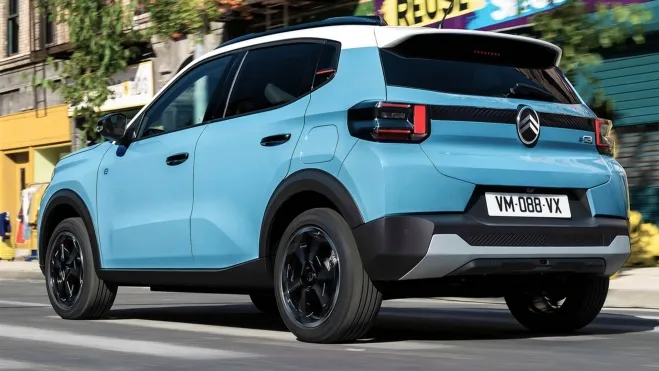
Advantages of the Ë-C3
Zero local emissions: ideal for cities and ZBEs, it operates freely without causing local pollution.
Urban practicality: compact (4.01 m), easy to maneuver, and comfortable, with Citroën Advanced Comfort® suspension. Elevated seats improve urban visibility.
Sufficient range: up to ~322 km WLTP in the larger version, more than enough for most daily uses without relying on long trips.
Convenient charging: supports fast charging in public areas and home charging, enabling hassle-free daily electric use.
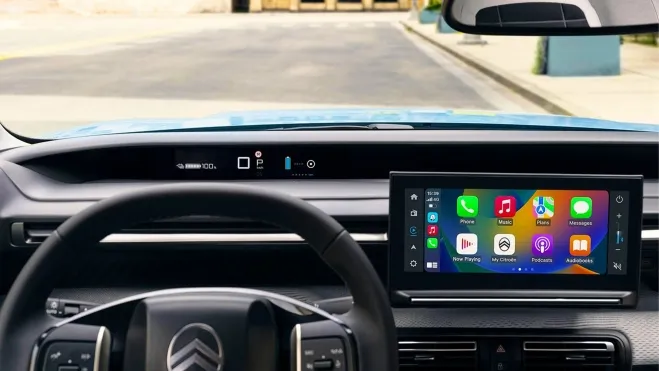
Citroën C3 Aircross Hybrid 145: combined efficiency (city + road)
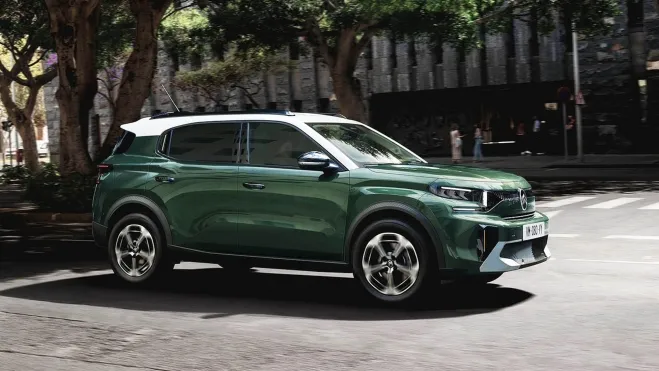
The C3 Aircross Hybrid features a lightweight 48 V hybrid system that combines a 1.2 L turbocharged three-cylinder gasoline engine with a small auxiliary electric motor. Together, they deliver around 145 HP (107 kW) of power, sufficient to propel this compact SUV with agility.
The transmission is a dual-clutch automatic ë-DCS6 (6 speeds) that feels very smooth in urban driving and efficient on the road as well. Thanks to the 48 V system, it can operate in electric mode without plugging in, recharging the battery through braking. In mixed urban driving conditions, it can cover more than half of the distance in electric mode without external charging. This significantly reduces fuel consumption: the combined WLTP cycle is around 5.2–5.6 L/100 km. The 44 L fuel tank provides excellent range (over 800 km WLTP), eliminating concerns for long trips.
Advantages of the C3 Aircross Hybrid 145:
Flexibility: it requires no external charging and can cover long distances by combining gasoline and electric power.
Savings in cities: ECO rating (unlimited access to ZBE, discounted SER parking) and up to half of urban driving done in electric mode.
Moderate fuel consumption: certified at ~5.3 l/100 km (WLTP), with emissions of around 120 g/km of CO₂.
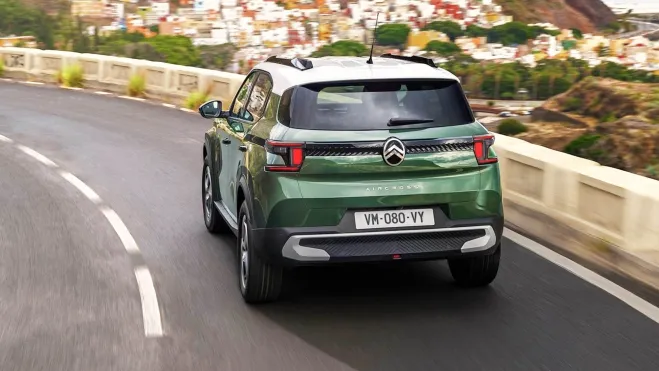
SUV nature: more interior and trunk space than an electric city car, ideal for families or carrying cargo.
Usage scenarios: mobility that fits each driver
The choice between hybrid and electric depends on individual driving habits, not just technical labels. Each case is different, but the key idea is to “match the vehicle to the lifestyle.”
In pure urban driving, for trips that are mainly within the city (to work, running errands, etc.) and with access to frequent home or public charging, the Ë-C3 electric vehicle is the natural choice. It takes advantage of its zero-emission rating and low maintenance costs per kilometer, along with a range that lasts several days.
For example, for a daily 30 km round trip, even the smaller battery (30 kWh) is sufficient to get through the week without needing an extra charge.
In low-emission zones, both models have advantages, but of different kinds. The Aircross’s 48V hybrid comes with an ECO label, allowing free access to ZBE zones and discounted parking (up to 75% off under SER). The Ë-C3 has a Zero label, which in addition provides free and unlimited parking in SER zones along with full access rights.
If you have easy access to a charging point (home, work, or parking lot), an electric vehicle is convenient. If recharging is difficult, a hybrid avoids reliance on plugs and is usually more practical. In terms of operating costs, a lightweight hybrid reduces gasoline consumption in urban areas and eliminates the need to refuel every few days (tank capacity 44 liters); an electric vehicle incurs small electricity costs but requires managing charging. Consider the available infrastructure before making a decision.