
Volkswagen's situation is much worse than expected.
Volkswagen once again presents financial results that offer little reason for optimism. The German automaker is facing a particularly challenging situation: problems in China, price pressures, and restructuring efforts that are affecting its performance as it tries to regain competitiveness. The situation is serious, but to understand its full extent, it’s necessary to separate the business downturn from the accounting adjustments that have exacerbated the losses.
The group ended the third quarter of 2026 with operating losses of 5.860 billion euros, compared to 1.299 billion in the same period last year. The result is far worse than expected; analysts had predicted losses of around 2.600 billion euros. Sales also declined by 6.3%, reaching 75.277 billion euros.
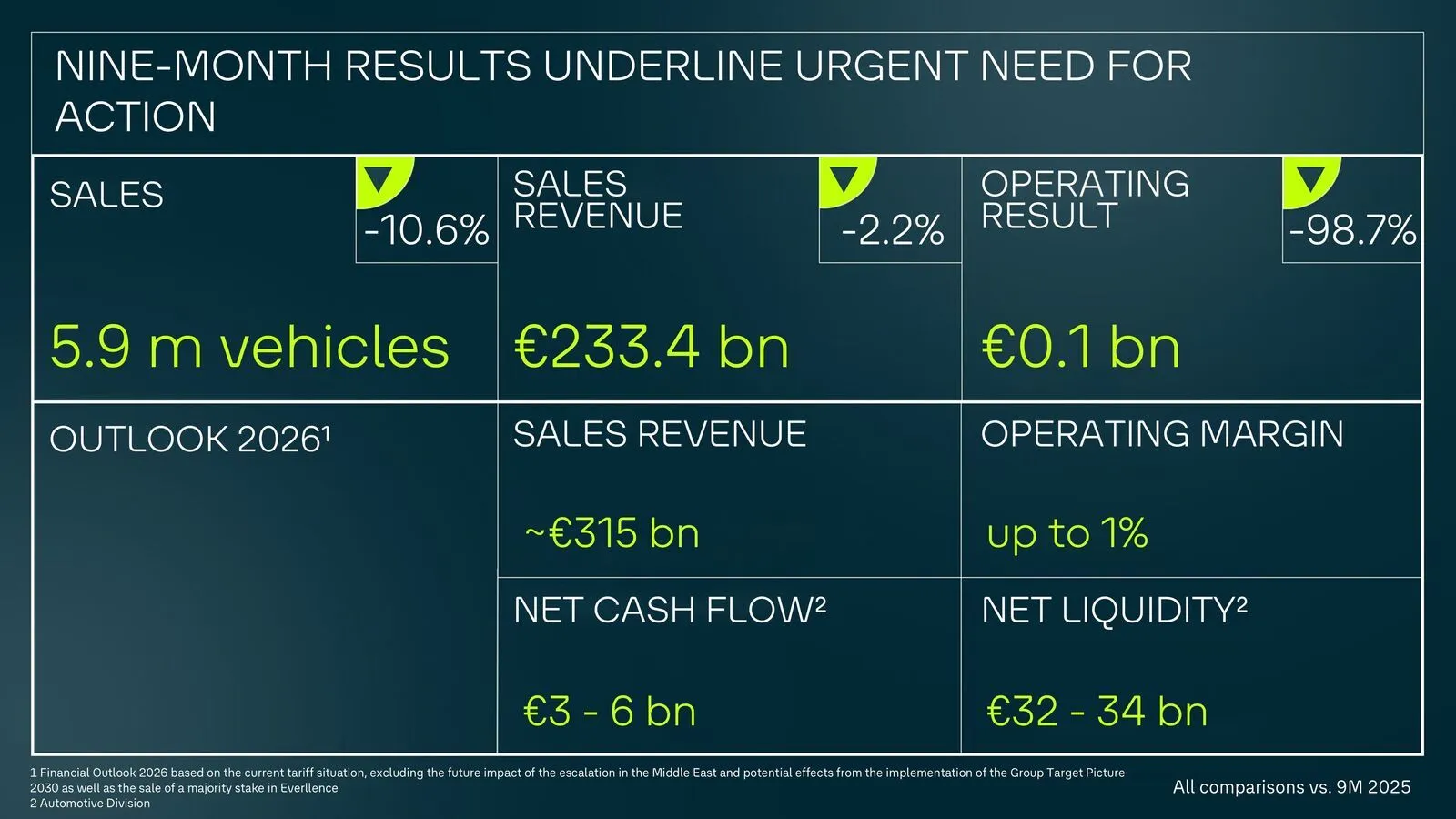
The quarterly loss has essentially wiped out the operating profit accumulated for the rest of the fiscal year. From January to September, this profit was reduced to 71 million euros, a 98.7% decrease from the previous year. Looking at the after-tax result, the balance for those nine months is already clearly negative: losses of 2.720 billion, compared to a profit of 3.405 billion in the previous year.
A large portion of the decline is attributed to 8.7 billion euros in one-time items, of which 7.8 billion occurred in the third quarter. Notable is a 6.4 billion euro accounting impairment related to Porsche’s goodwill, along with adjustments to assets in China and expenses associated with the planned sale of Volkswagen Osnabrück. Not all of this impact represents an immediate outflow of cash, but it does reflect a downward revision in the value of certain businesses.
Now, eliminating those one-offs also doesn’t result in particularly comfortable financial figures. The adjusted operating margin for the first nine months was 3.8%, a return rate that CFO Arno Antlitz himself considers insufficient to continue investing heavily. Volkswagen needs to fund new products and technologies while trying to reduce a cost structure that is becoming increasingly burdensome.
China shifts from bringing profits to increasing pressure
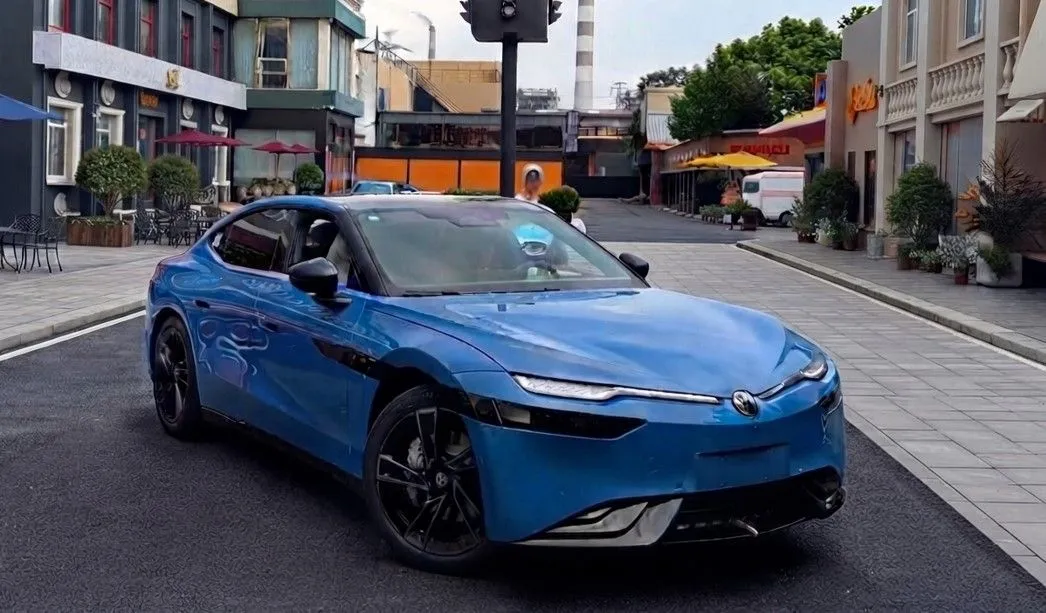
For years, China was one of the group’s major economic supporters. Now, local competition, slow expansion of its electric vehicle lineup, and a deteriorating market have changed the landscape. Volkswagen’s share of the operating results from its Chinese joint ventures resulted in losses of 113 million euros by September, compared to a profit of 744 million euros the previous year.
The problem isn’t limited to the Chinese market either. Experts also point to U.S. tariffs and increasingly fierce competition in Europe as other factors reducing profitability. Volkswagen must defend its sales and adjust prices while transforming its product offerings, a combination that leaves less room to absorb mistakes or delays.
In that context, an interesting paradox arises regarding the transition to electric vehicles. According to the group, electric cars account for 40% of their order portfolio in Europe, but they currently generate less profit than combustion engine models. The demand exists; the challenge lies in manufacturing and selling these cars with sufficient profitability. Confusing these two issues would lead to a mistaken diagnosis of the problem.
Oliver Blume’s solution involves a thorough reorganization. Reuters has reported on a plan to cut 100,000 jobs across the group and the possible closure of up to four German factories. These measures face strong opposition from labor unions, and their implementation could trigger a major labor conflict. The potential closures should not be taken as final decisions yet.
The company also aims to simplify its product range, cut overall expenses, and improve operational efficiency. For 2026, it maintains a forecast of an operating margin of up to 1%, far below its initial target of between 4% and 5.5%. With such a narrow margin, any new setback could have a significant impact on the year-end results.
Volkswagen continues to rely on its restructuring efforts and partnerships like that with Xpeng to regain ground. But cutting costs alone does not guarantee that customers will return. The group needs to turn this transformation into competitively priced cars with advanced technology and high efficiency. And it must do so while the market keeps evolving and its competitors remain active.
And all this comes at a time when Chinese firms are expanding in Europe, continuing to expand their business networks and even increasing their production capacity within the EU, which limits the impact of any desperate trade barriers Germany might impose to stop this trend.