
China’s power grid needs help, and Beijing already has a plan: 100,000,000 electric cars will be part of the solution.
11/09/2026 14:30
Updated to
11/09/2026 14:30
China has so many electric cars that it now wants to use them for more than just transportation. The country is upgrading its power grid so that some of these vehicles can store energy when there is a surplus and release it when demand rises, turning their batteries into small storage systems spread across the country.
This strategy is already part of the official energy planning for the coming years. The new Five-Year Plan for power system development aims to expand smart, two-way charging on a large scale, as China strengthens its grid capable of powering over 110 million electric vehicles by 2030.
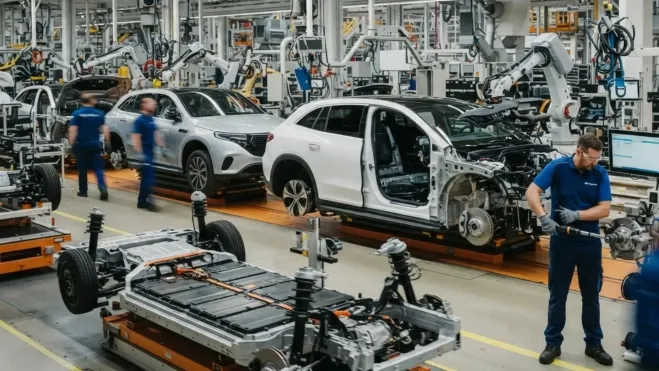
China wants cars to help stabilize its power grid
The scale of this project becomes clearer when looking at the infrastructure Beijing plans to deploy. By the end of this decade, there will be over 40 million charging stations, about 300,000 of them high-power, sufficient to meet the needs of more than 110 million electric vehicle owners. Additionally, there is a planned investment of over five trillion yuan in the grid during the 2026-2030 period.
But building millions of chargers is only part of the plan. China aims to achieve around 50 GW of total flexible charging capacity through systems that allow control over when vehicles should charge and, in compatible cases, when they can feed electricity back. This way, a huge number of batteries that would otherwise sit idle for hours could be used to absorb excess power or meet peak demand.
To put it simply, a car could charge during the early morning or when there is abundant renewable energy production, then return some of that energy during periods of high demand. This is exactly what V2G technology —Vehicle-to-Grid— enables, turning the vehicle into a two-way charger rather than just a device that draws electricity from the grid.
China has been preparing for this leap for some time. In 2024, it launched a call for proposals to expand this type of testing, and in April 2025, the government finally selected 30 projects and nine cities to test V2G on a larger scale. The scenarios under consideration include residential homes, charging stations, heavy vehicles, and systems capable of grouping many cars to participate together in the electricity market.
The biggest challenge isn’t finding electric cars
On paper, the potential is enormous, but scaling this up to millions of vehicles still requires overcoming several obstacles. Not all electric cars can feed energy back into the grid, bidirectional devices are more complex and expensive than conventional chargers, and the systems used by manufacturers, operators, and electricity companies still lack full interoperability.
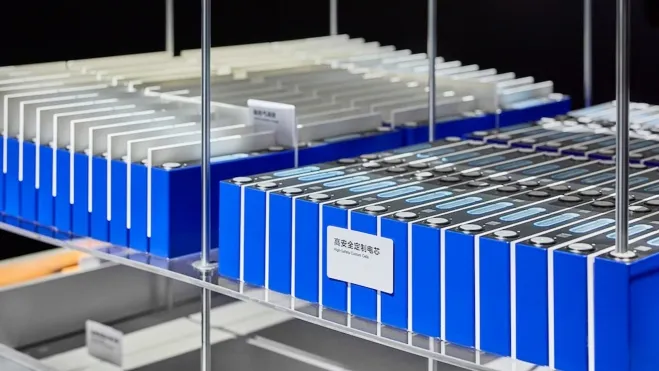
There is also a particularly sensitive issue for those who must lend their car battery to the grid: its degradation. Each additional cycle causes wear, so it will be necessary to manage how much is discharged, at what times, and what compensation the owner receives, so that participating in these programs remains attractive and does not end up increasing the vehicle’s operating costs.
The International Energy Agency itself also notes that ISO 15118-20, designed to enable two-way communication and data transfer between cars and chargers, has not yet been implemented uniformly. Differences among manufacturers and the varying electrical standards in each market continue to make it difficult for any compatible vehicle to connect to any V2G charger effortlessly.
China aims to use the next four years to overcome these barriers. Its goal is not only to have tens of millions of electric vehicles plugged in but also to manage them coordinately so that part of their massive battery capacity can help balance an electrical grid that relies increasingly on renewable sources and faces growing demand.