
Perovskite passes a key test: 1,000 hours of heat and humidity with only a 5% loss
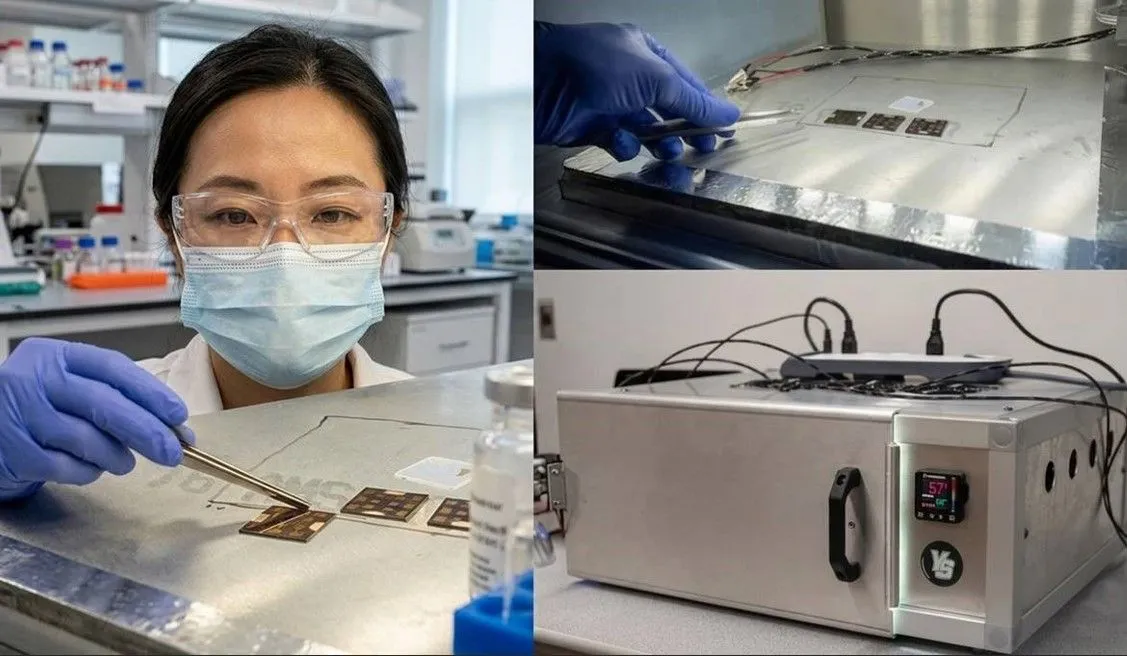
Pervskite solar cells have many advantages that make them a strong contender in the field of photovoltaics: a high capacity to convert light into electricity, potential for low-cost manufacturing, and lightweight designs. But one question remains that affects their future: how long can they maintain these performance traits once taken out of the laboratory and exposed to heat and humidity.
Researchers at South Korea’s Korea Institute of Energy Research (KIER), in collaboration with UNIST university, have presented an advancement aimed at addressing this weakness. Their solution modifies the manufacturing process to remove components that initially aid cell function but may later accelerate its degradation.
The result is cells that retain 95% of their initial efficiency after 1,000 hours at 85 °C and 85% relative humidity. The study, published in Advanced Science, specifies that the test was conducted on encapsulated devices, meaning those protected from the surrounding environment. This is an important factor for correctly interpreting the scope of the test. Wiley Online Library
That 95% also does not mean they convert almost all the light received into electricity. It indicates how much performance they maintain relative to the start of the test. The maximum conversion efficiency achieved with the new process was 25.24%, compared to 25.21% for the reference cells manufactured using the conventional method with additives. The difference is minimal; what matters is improving durability without sacrificing efficiency.
Removing residual lithium to reduce degradation
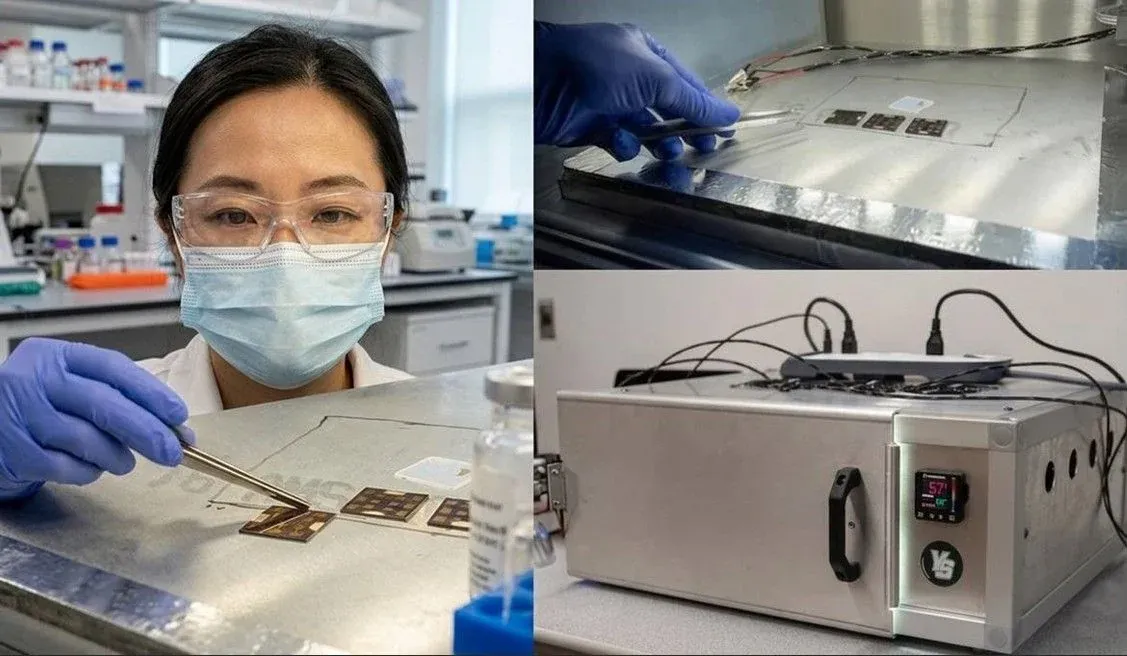
The research focuses on the so-called hole transport layer, one of the components that facilitate the extraction of electrical charges generated when light hits the cell. In certain perovskite architectures, this layer uses lithium salts and additives to enhance its electrical properties. The problem is that some of these ingredients also contribute to reducing its stability.
When temperature and humidity increase, additives can evaporate and leave small voids in the film. These defects impair the contact between layers and facilitate a loss of performance. Additionally, lithium ions can migrate inside the device and cause further damage. What helps achieve good initial results eventually turns into a durability issue.
The team’s solution involves taking advantage of the necessary reactions during mixture preparation and then removing components that could be harmful. To do this, they use nickel oxide, NiOx, which acts as a catalyst and helps capture lithium ions present in the solution used to create that layer.
Once the reaction is complete, the mixture undergoes a filtration process. Nickel oxide particles remain trapped along with the lithium ions attached to them. This way, the catalyst performs its function during preparation but is removed before the final layer forms. The method also eliminates the need for tBP, an additive used in conventional formulations.
The idea is interesting because it addresses the origin of part of the degradation. In addition to protecting the cell from the outside through encapsulation, it aims to make its own composition more stable. The results show that it is possible to remove these components without sacrificing the ability to convert sunlight into electricity.
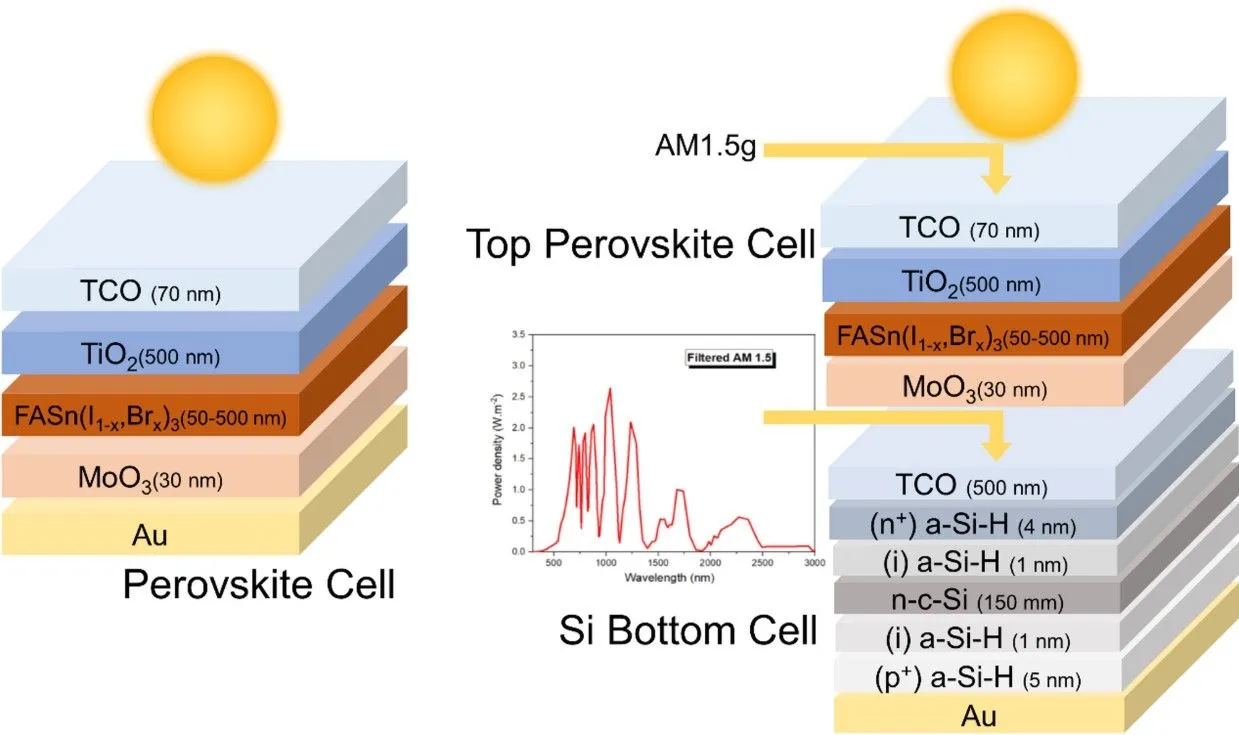
For researchers, this advancement could also be useful in tandem solar cells, which use materials capable of harnessing different parts of the solar spectrum. Perovskites offer possibilities in such configurations, but increasing electricity production has little commercial value if that advantage is lost too quickly due to degradation.
That said, passing a heat and humidity test does not equate to proving decades of performance on a roof. The 1,000 hours represent a test of durability under specific conditions and cannot be directly converted into years of useful life. It remains to be seen how this process can be applied to larger modules and competitive industrial manufacturing.
The results suggest an improvement that perovskites need as much as record efficiency levels: maintaining their performance. For those installing solar panels, the performance on day one matters; the electricity they continue to produce many years later is even more important.
Source | Advanced