
Gasoline could be Europe’s next problem: refineries are already shifting their production
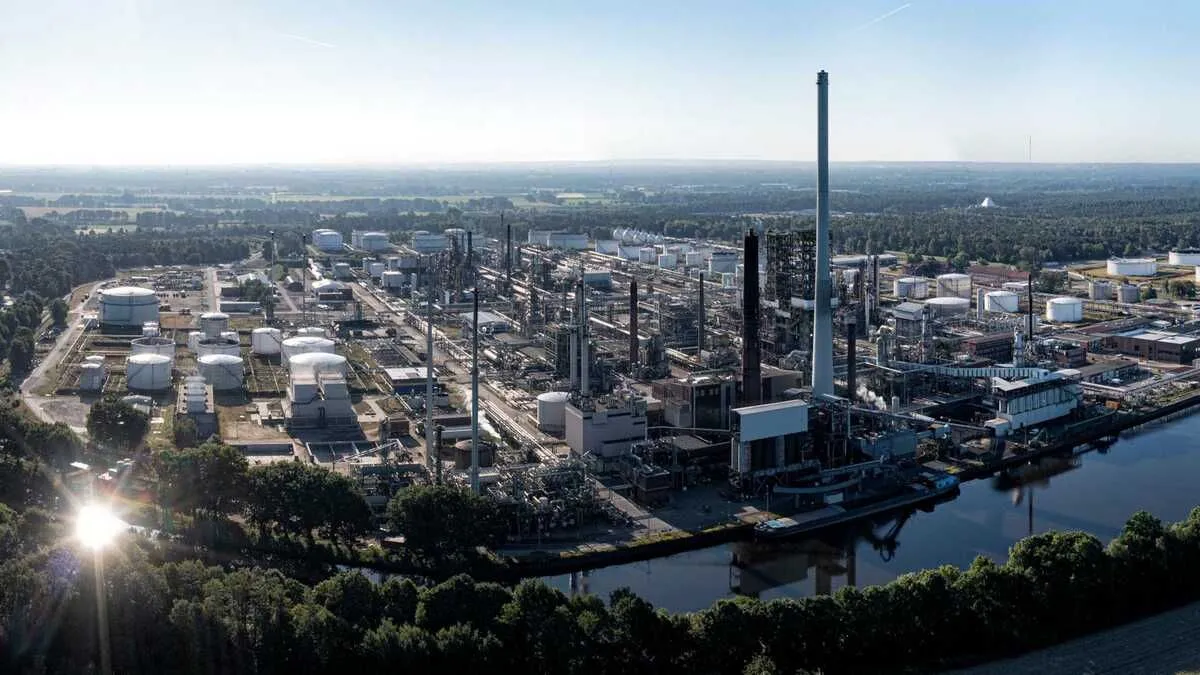
The oil market is once again sending out warning signs, and this time the problem isn’t just diesel. Refineries are focusing more and more effort on producing diesel, which is much more profitable under current conditions, while gasoline supply begins to decline. For Europe, which still relies heavily on energy imports, this trend could have significant consequences in the coming months.
The situation arises at an especially sensitive time. According to Goldman Sachs data, diesel prices have soared, gas reserves remain a concern in several countries, and electricity costs are also rising in some of Europe’s key markets. Adding to this is a more limited global refining capacity, with facilities in Russia and some Gulf countries affected by attacks. The market has not yet declared a new energy crisis, but the signs are beginning to resemble those of previous episodes too closely.
The problem is that refineries cannot produce unlimited amounts of each fuel. When there is a significant difference between the margins offered by diesel and those of gasoline, facilities with the capacity to adjust their production have a clear incentive to make more diesel. And that is exactly what is happening now.
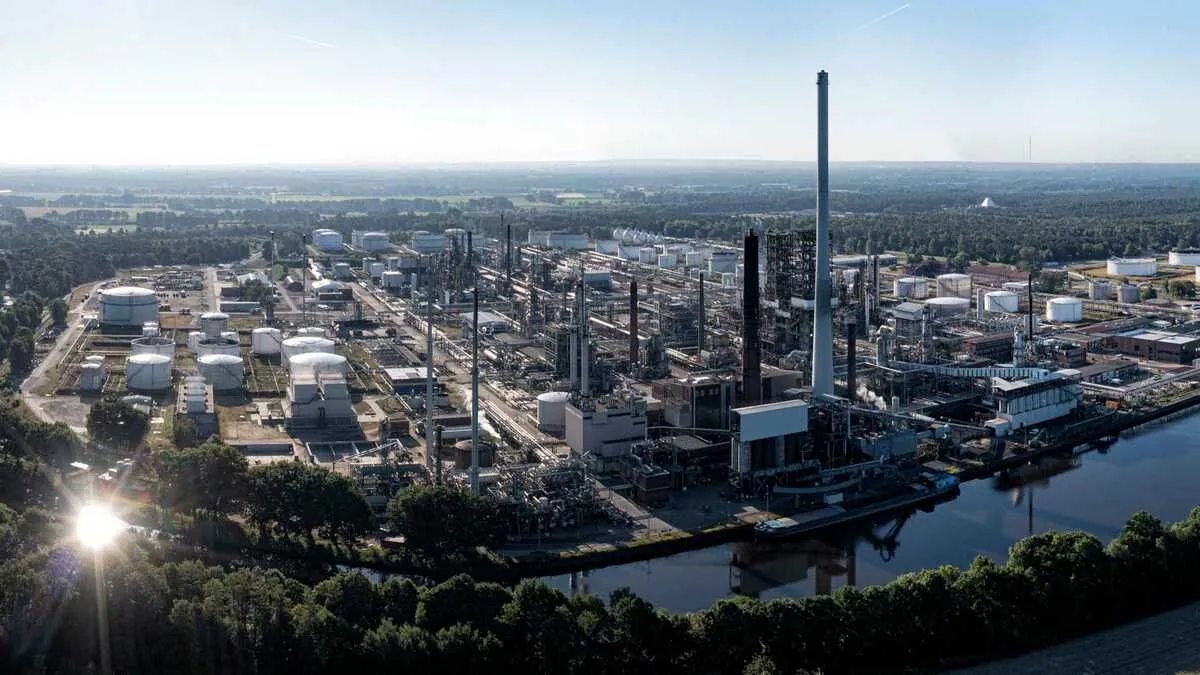
According to the report, refineries earn around $100 per barrel of oil converted into diesel, about $30 more than when the same barrel is turned into gasoline. With such a difference, the market is sending a very clear signal to companies: producing diesel is much more profitable.
Goldman Sachs analysts have adjusted their stance on both fuels for this very reason. They believe gasoline may now have more room for an upward move, to the point of advising their clients to take positions in futures for this fuel. The reason is simple: gasoline production is starting to decline at a time when refineries are prioritizing diesel.
The latest data available to the analysts show an already 2% year-on-year drop in global gasoline production over the past few months, equivalent to about 1.3 million barrels per day less. This reduction may still seem manageable on paper, but it takes on a different dimension when it occurs in a market already under strain from geopolitical conflicts.
The conflict between the United States and Iran and the war between Russia and Ukraine are simultaneously affecting oil supply, refinery operations, and the transportation of energy products. In the case of Russia, Ukraine has also attacked several refineries, further reducing an already strained capacity.
In the United States, the situation is particularly striking. Diesel futures contracts have reached record levels, and the average price of this fuel at gas stations is also at historic highs. The increase in refined products has been much greater than that seen in crude oil itself, indicating that the problem is shifting from crude to the processing and distribution of fuels.
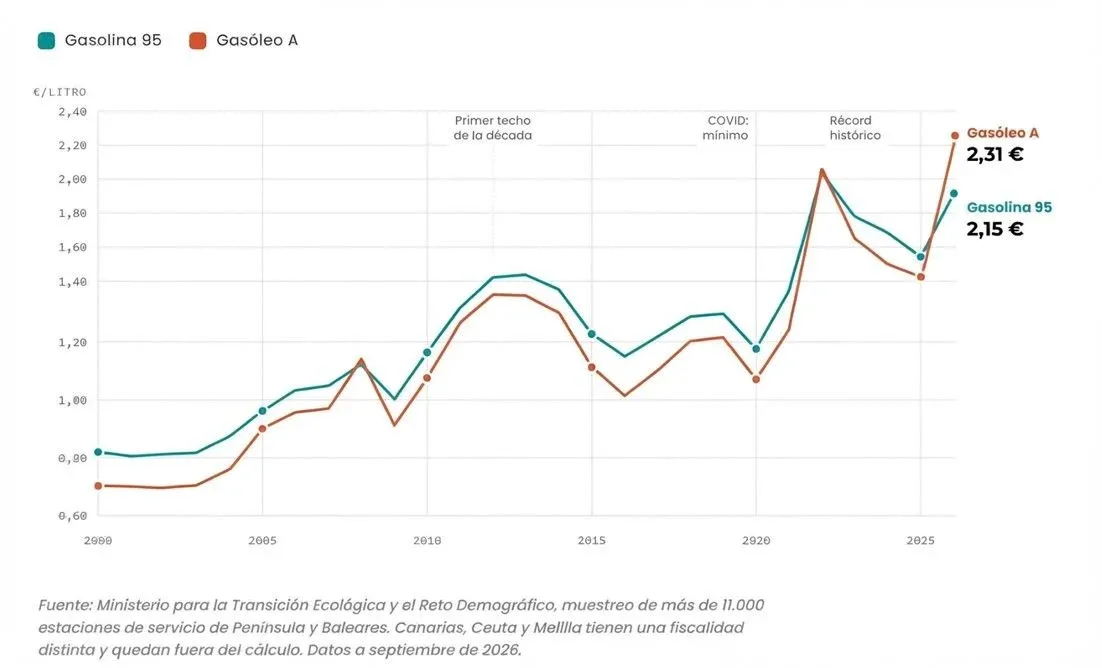
Spain is not immune either. In fact, if the situation continues to deteriorate, gasoline prices could start rising more sharply than diesel prices, reversing a price gap that has favored diesel for years. Spanish tax policies have traditionally kept diesel prices lower than gasoline, but a supply crisis could temporarily alter this relationship.
The problem isn’t limited to cars either. Global Petroleum Advisers warned a few days ago about a similar situation in the market for fuel oil used by the shipping industry. Refineries are prioritizing diesel and other refined products with higher profit margins, while geopolitical tensions are complicating oil supply and maritime transportation.
This could ultimately affect the cost of freight shipping as well. If the fuel used by ships becomes more expensive, part of that increase is passed on to the cost of transporting goods around the world. In an environment with still-high inflation, another rise in energy costs would be particularly problematic for European economies.
Analysts at Goldman Sachs also note that U.S. refineries are operating at their highest processing rates in 22 years, allocating a significant portion of that capacity to diesel production. The reason lies in rising international demand, largely driven by the two ongoing conflicts.
This is reducing the amount of gasoline available in the U.S. market. And although diesel prices may continue to rise, Goldman Sachs believes gasoline now has greater potential for increases precisely because its supply is tightening.
Gasoline prices in Europe will rise more

Goldman Sachs has thus changed its strategy for fuel markets. The bank has closed a previous operation based on the difference between diesel contracts and is now focusing on European gasoline ahead of mid-2027. Its approach is that the high prices of diesel will eventually affect gasoline as well.
The bank also believes that European gasoline prices could rise more than those in the United States. One of the risks it considers is a possible restriction on exports of refined products from the U.S. If this occurs, Europe would have to compete even more fiercely for a global supply that is already under severe pressure.
And here lies one of the major structural problems facing the continent. Europe needs to import a significant portion of the energy it consumes and cannot immediately increase its own production of oil and gas when disruptions occur in international markets.

The situation has become even more complicated after Saudi Aramco announced it will not send oil to European refineries in October. This decision follows an attack by Iran-backed militias on a Saudi pipeline, a strategic infrastructure that allows the world’s top oil exporter to maintain its shipments even when traffic through the Strait of Hormuz is disrupted.
The potential impact is significant because every barrel that fails to reach Europe forces the search for alternatives elsewhere. Orlen, Eastern Europe’s largest oil company, had already turned to Saudi oil to replace Russian crude after the invasion of Ukraine. Now its management acknowledges it needs to find new suppliers.
But global oil production cannot increase overnight. If a European company starts buying more crude from Brazil, for example, it will have to compete with other buyers for those same barrels. The result could be a rise in prices that will eventually reach refineries and then gas stations.
It is precisely this type of dependence that makes Europe particularly vulnerable. It’s not just about how much oil costs, but to what extent the continent can ensure it has access to it when the global market is under strain.

Bloomberg even suggests the possibility that EU officials may need to meet to discuss how to address another wave of energy tensions. It’s a possibility, not a confirmed crisis, but it illustrates how much the situation has deteriorated compared to just a few months ago.
The situation brings back to the forefront an issue that Europe has been trying to resolve for years. Relying on Russia for energy proved to be an enormous risk after the invasion of Ukraine. Dependence on the Middle East now presents a different problem, but with a similar consequence: Europe remains vulnerable to events occurring thousands of kilometers away from its borders.
Therefore, the transition to renewable energy has not only a climate dimension. It also has a strategic dimension. The more energy Europe can produce using its own resources, the less exposed it will be to the decisions of other countries and disruptions in international trade.
The problem is that this transformation takes time, and renewable energy still needs to continue developing alongside electrical grids, storage systems, and other infrastructure required to ensure a stable supply.
But what’s most concerning is the severe lag Europe has in strategic sectors such as road transport, agriculture, fishing, and mining. These areas remain at the starting point due to governments’ lack of vision, which focuses solely on electric cars as a solution—some even ignoring that altogether, when the problem is much broader and requires far more ambitious measures.
The fact is that fuel prices at 2 euros have arrived to stay, and it’s very likely they will soon rise toward 3 euros per liter. This would be catastrophic for our economy and a huge windfall for oil-producing countries.