
DGT introduces the V-16 beacon companion: these are the connected cones that will forever change road warnings

28/10/2026 15:30
Updated to
28/10/2026 15:30
The General Directorate of Traffic continues to expand the connected devices it uses to improve road safety. Following the mandatory installation of V-16 beacons in January 2026, the agency has introduced a new technology for construction zones: smart cones capable of communicating their location and sending alerts about potential road hazards.
The main advantage is that these devices allow drivers to know about work on a road before reaching the affected section, without relying solely on physical signs. The DGT showcased their capabilities at the 32nd World Congress on Intelligent Transportation Systems, held from October 19 to 23 in South Korea, before an audience of over 60,000 attendees.
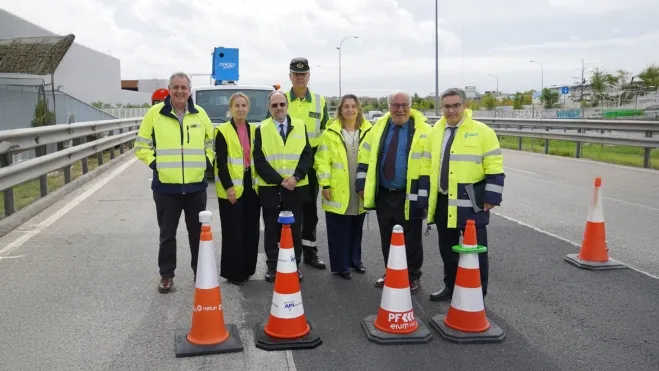
How DGT’s new connected cones work
Unlike conventional cones, these devices incorporate communication technology that allows them to transmit information about where maintenance, cleaning, or repair work is taking place. The data is sent to the National Access Point for traffic and mobility information (NAP), from where it can be distributed to browsers, applications, and traffic information systems.
This technology is part of DGT 3.0, the platform that also receives signals from connected V-16 beacons. Its functionality allows it to report the start and end of an intervention, as well as alert to potential obstacles when no workers are present. Alerts can be sent to compatible vehicles and electronic panels installed on roads.
A specific regulation has been in place for this system since January 2025, outlining the conditions for transmitting information. Among its requirements is that the device must report its activation within a maximum of 120 seconds and update data at intervals not exceeding five minutes. The goal is to maintain up-to-date information on affected areas and reduce workers’ exposure to traffic.
Two certified models and one deployment yet to have a date
Currently, the DGT has two devices listed in its official registry that have passed the certification process. The first is the Cono Conectado DGT V01, developed by API Movilidad and certified on May 22, 2026. The second is the NDS-C01 from Netun Solutions, whose certification was finalized on June 3. Both meet the technical requirements set for sharing information with the national platform.
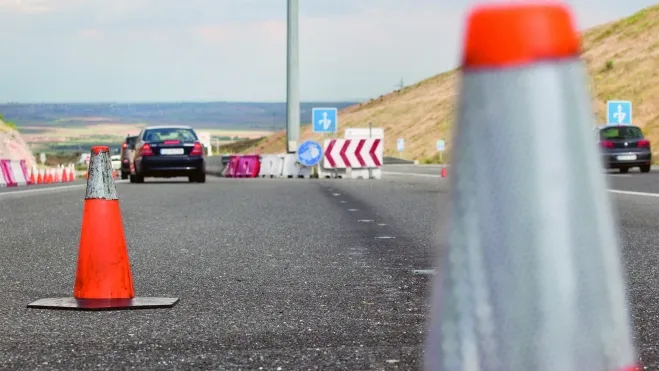
However, their international introduction does not mean they will be immediately deployed on all Spanish roads. The DGT has not yet released a specific schedule or indicated how many units will be used. Additionally, the current regulation considers this service to be voluntary, so its implementation will depend on the agencies responsible for road maintenance work.
During the meeting held in the South Korean city of Gangneung, representatives from Traffic also presented other projects related to artificial intelligence and the modernization of traffic management systems. The connected cones thus fit into the DGT’s digitalization strategy, serving as a complement to conventional signage and aimed particularly at improving the safety of road maintenance workers.