
China produces three new EVs per day. CATL: battery quality at risk
In China in 2026, over 600 new car models were launched, nearly three per day. This pace is starting to cause quality issues for battery giant CATL. Shorter validation cycles risk creating defects and anomalies that then affect entire batches of batteries.
Fierce competition puts pressure on the supply chain
Robin Zeng, CATL’s president, raised concerns at the World Power Battery Conference in Yibin, China. Zeng linked the rapid introduction of new vehicles to the need to shorten development and validation times.
The context is one of particularly aggressive price competition in China’s electric vehicle market. Falling selling prices and declining costs of LFP cells put pressure on the entire supply chain. As a result, the likelihood of failures or errors inevitably increases.
The issue is especially critical for batteries. A defect affecting even a very small percentage of production can, given the massive scale of industrial output, result in a significant number of potentially problematic cells.
How a single defective cell can become a problem
Zeng mentioned the so-called “barrel effect,” which refers to the situation where the performance of a system made up of many components is determined by the weakest component.
In a battery pack composed of cells connected in series and parallel, differences in capacity or impedance can affect endurance, charging behavior, and thermal stability. Therefore, controlling the quality of individual cells becomes crucial, especially when production volumes reach very high levels.
CATL claims to aim for a maximum defect rate of one per billion cells (1 PPB). This is an internal production and engineering goal, not an independently verified figure for the defect rate of the entire fleet.
The comparison provided by the company still highlights the scale of the problem: even a rate of 1 PPM, or one defect per million cells, would mean potentially 1,000 defective cells per billion produced.
How do batteries work? It can be understood with X-rays
Past articles
The Chinese market has already seen controversies over battery quality. In 2025, Geely’s subsidiary Viridi E-Mobility Technology filed a lawsuit against Sunwoda, alleging defects in batteries supplied between 2021 and 2023.
Another case involved CALB batteries installed in around 213,000 GAC Aion vehicles. Complaints included issues such as battery swelling and power loss, leading to what was known as the “banana battery” controversy due to the curved shape of some batteries.
These incidents demonstrate that battery quality problems can indeed arise even in a highly developed EV supply chain.
CATL and the study of latent failures
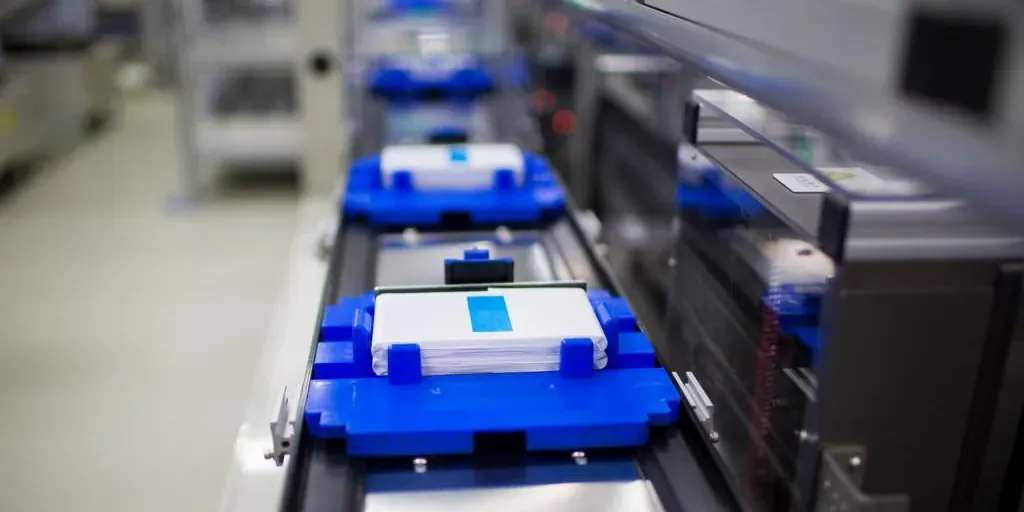
In his speech, Zeng also talked about the Opponent Group, an internal structure at CATL that, according to the manager, has existed since the company’s founding.
The group brings together expertise ranging from electrochemistry to mechanical engineering and artificial intelligence. Its task is to identify potential failure modes by subjecting batteries and systems to extreme conditions and simulating malfunction scenarios.
According to Zeng, the Opponent Group also has the power to veto project goals and shipments that fall under its evaluation.
Catapulted battery repair: CATL takes the lead
Eyes on China, but not just there
In short, the risk is that development speeds may become incompatible with the time required to properly validate increasingly complex systems. With hundreds of new models launched each year, identifying latent defects has become more of an industrial process issue than a technological one.
This issue certainly doesn’t affect only China, but it’s clear that the most attention is focused there. Chinese manufacturers currently account for over 70% of global electric vehicle battery installations.
This issue also has significant implications for Europe. Imports of Chinese electric cars and the use of components produced in China continue to rise, making the traceability of battery cell and system quality an increasingly important industrial concern.
READ ALSO: Digital & Batteries: What happens if something goes wrong in “software defined vehicles”… and watch the VIDEO
Previous Article
Tesla Cybercab makes a quiet debut in Austin
Next Article
India has a plan: 100,000 electric heavy vehicles within 5 years