
BMW’s decline in China hits its factories: up to 1,800 layoffs are planned
The pressure from the Chinese market is starting to affect BMW’s workforce. After years during which the country was a goldmine for sales of internal combustion engine cars, the sharp and rapid decline in sales is forcing the company to urgently review its costs, with the workforce being among the first to face cuts.
According to a report by Chinese media, the BMW-Brilliance partnership began a round of layoffs on November 2 that would affect around 1,800 people, roughly 10% of its workforce. The information is based on testimonies from various employees.
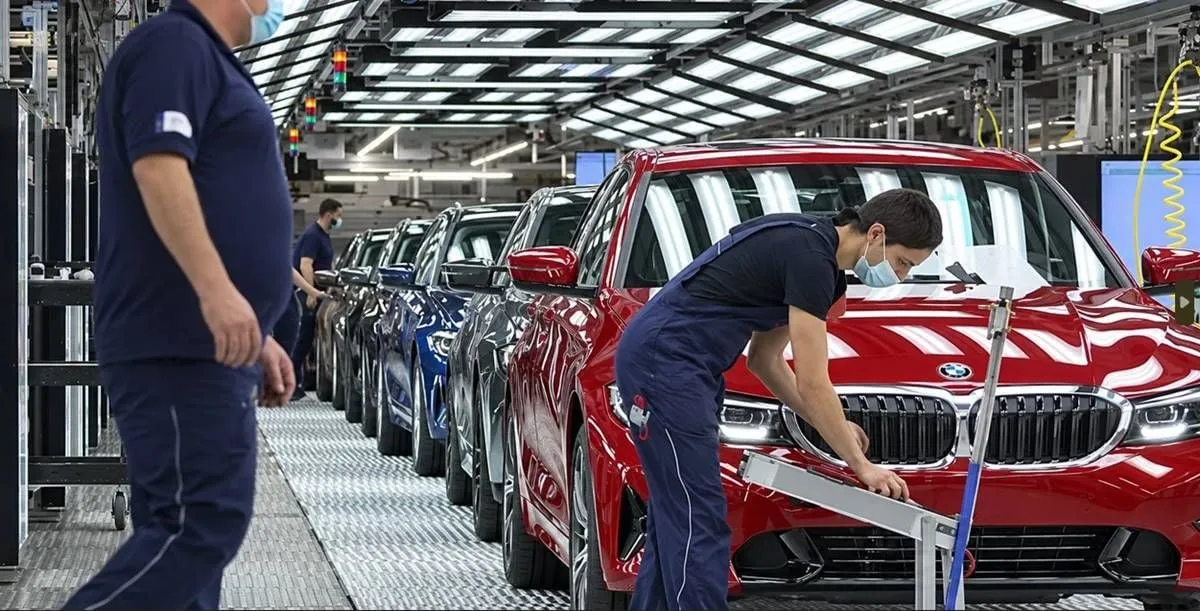
BMW Brilliance is responsible for the production and marketing of BMW cars in China. According to a union listing cited by Chinese media, it employed over 19,000 workers before this adjustment. The cuts would affect both office and management positions as well as factory staff, though the vast majority of those affected would be production workers.
Employees interviewed described a week of uncertainty before any communications began. Some said colleagues were called while working on the assembly line; others were instructed to go directly to human resources the following day. Those affected included workers with short tenure as well as employees who had been with the company for over a decade, including team leaders.
According to those same accounts, the compensation to be offered to workers would follow the “N+5” formula. The N component would be calculated based on the pre-tax monthly salary, while the five additional months’ pay would be based on the base salary, excluding performance bonuses and other allowances. BMW Brilliance has not publicly confirmed these conditions either.
The report also describes a less noticeable prior adjustment. Several employees claim that outsourcing had been significantly reduced over the past few years, and that some departments stopped renewing contracts when they expired. They also mention impacts on subcontracted staff, indicating that a decline in activity may have begun before this round of layoffs.
China's Impact on BMW's Challenges Growing
Official sales data help illustrate the situation. From January to September 2026, BMW and MINI delivered 376,128 cars in China, 21.8% fewer than in the same period the previous year. The decline accelerated in the third quarter, with a 24.8% drop. This represents a significant deterioration in a market that is crucial to the German manufacturer's business.
Outside China, the situation was more favorable. BMW and MINI deliveries rose by 4.5% in Europe and 3.4% in the United States during the first nine months, but these gains did not offset the overall decline of the group. Including Rolls-Royce, the BMW Group ended the period with 1,707,799 cars delivered worldwide, a 4.9% decrease.
Pressure is also evident in the results for the first half of the year. The group’s pre-tax profit fell by 29.4% to 4.045 billion euros. In the automotive division, operating profit dropped by 45.6% to 1.974 billion euros, while its margin declined from 6.2% to 3.6%. BMW attributed the deterioration to factors such as developments in China, competition, depreciation, and the effects of exchange rates and raw materials.
The workforce reduction plan is not limited to the Asian country either. BMW has already reached an agreement with union representatives on a voluntary retirement program in Germany, focusing on administrative and development roles and excluding production positions. Reuters estimated the total possible workforce reduction at around 8,000 people, citing a source familiar with the process. It has not been confirmed that the cuts now described in China are part of the same program, so the two figures should not be added together automatically.
Amid these challenges, electric vehicles offer some positive signs. During the third quarter, BMW Group delivered 110,257 electric cars worldwide, a 7.2% increase. In Europe, this type of propulsion accounted for 34.7% of its quarterly deliveries. This recent growth contrasts with the global figure from January to September, when electric car sales were still down by 2.7%.
The outlook is therefore uneven: BMW finds demand for its electric vehicles in Europe, but it continues to lose ground in China and operates with much tighter margins. This situation risks spreading to the Old Continent, where Chinese companies are making inroads, including by targeting profitable premium segments with increasingly better products tailored to European tastes.