
kW or kWh: What's the difference? Explained simply
kW or kWh? Two similar acronyms, but two distinctly different concepts. One measures power, while the other measures energy quantity. A single “h” that makes all the difference. Here’s a simple guide, from kettles to your electric car’s battery.
kW and kWh: why we keep confusing them
Kilowatt (kW) and kilowatt-hour (kWh) appear everywhere: bills, charging stations, technical specifications. We keep mixing them up. Yet they measure different things. One refers to power, while the other refers to stored or consumed energy. No one ever took the time to explain this in school.
Result: Sometimes “50 kW” and “50 kWh” are read as synonyms. This is a common mistake that you won’t make again after reading this article.
kW refers to power (flow rate)
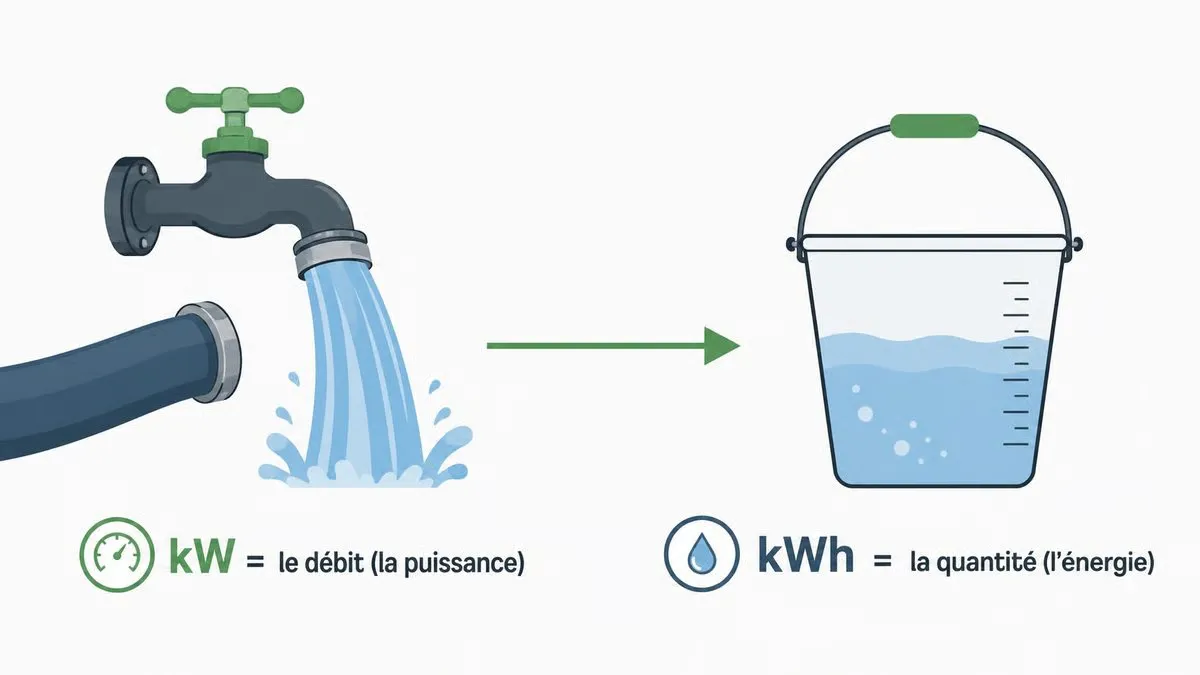
Kilowatt measures power, in other words, the flow rate of energy. Think of a faucet—the kW represents the size of the pipe. The larger it is, the faster the flow. A 2 kW device uses twice as much energy as a 1 kW device at the same time. And 1 kW equals 1,000 watts.
A few references. A kettle operates at around 2 kW. An additional heater is usually 1 to 2 kW. A home charging station typically provides 3.7 to 7.4 kW. Thus, kW represents power at a specific moment. It says nothing about duration or total amount.
kWh is the energy (the quantity)
Kilowatt-hour measures a volume of energy. Using the faucet analogy again: kWh is like the amount of water in the bucket. A 1 kW device running for 1 hour consumes 1 kWh. The same device running for 2 hours consumes 2 kWh. Duration is the key factor.
This is the unit on your electricity bill: you pay in kWh. It’s also the unit that shows how much energy a car battery can store. kWh represents the total amount, while kW represents power at a single moment. That’s the whole difference.
The formula linking the two: kWh = kW × hours
There’s only one formula to remember. Energy = power × time. In other words: kWh = kW × hours.
Here are two concrete examples. A 2 kW oven turned on for 30 minutes: 2 × 0.5 = 1 kWh. An internet router with a power consumption of 15 W left on for a month: approximately 11 kWh.
What about the reverse? You divide the 1 kWh consumed by a device operating at a constant power of 2 kW: this corresponds to 30 minutes of operation.
In everyday life: light bulbs, kettles, meters
A quick check around the house makes it clear. An LED light bulb consumes about 10 W. An old incandescent bulb uses 60 W. The same level of light, but six times more power. Kettles, on the other hand, require a lot of power: around 2 kW. But they only run for three minutes. So their energy consumption is modest compared to that of a light bulb, which stays on for longer periods.
Your meter sets a limit, which is the power capacity you subscribed to, measured in kVA (kilovolt-amperes). This limits the amount of power you can draw at once. If too many devices are used simultaneously and you didn’t subscribe to enough power, the circuit will trip.
At the end of the month, your bill totals up all your kWh usage. The cost depends on the price per kWh specified in your contract. Your subscription fee, on the other hand, is based on the power capacity you subscribed to (in kVA).
In an electric vehicle: where do kW and kWh fit in?
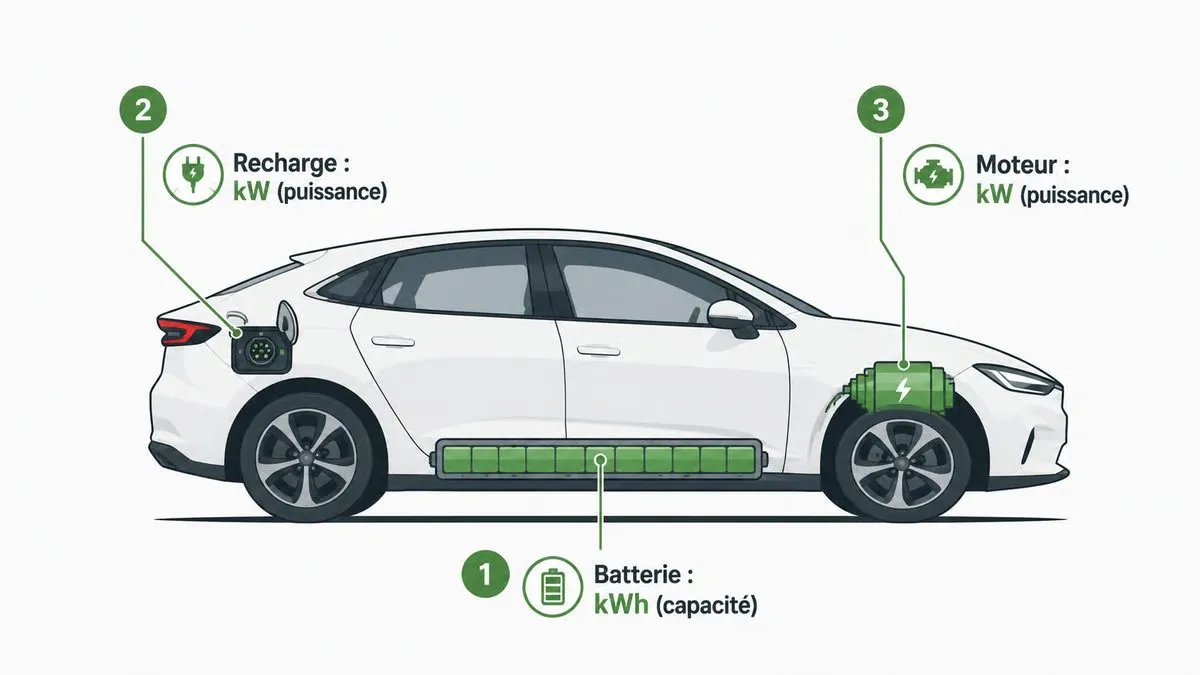
Let’s move on to the topic that interests us. Electric vehicles constantly manage two units: the battery, the charger, the motor, and energy consumption — each with its own metrics. Here’s how to read them correctly.
The battery is measured in kWh (the tank)
The battery stores energy, which is expressed in kWh. This represents your vehicle’s energy tank. The higher the capacity, the greater the potential range.
What are the typical ranges? An urban electric car usually has around 40 kWh. A family-sized vehicle ranges from 60 to 80 kWh. Larger models exceed 90 kWh.
A 50-liter tank doesn’t tell you anything about consumption, nor does a 60 kWh battery. It all depends on the vehicle’s energy demands. On a smaller scale, electric bike batteries are measured in Wh, though kWh is also used occasionally. For reference: 1000 Wh equals 1 kWh.
Also read: Top electric cars with the best range
The charging power is measured in kW (the outlet’s output)
The charger itself is specified in kW. This refers to the charging rate. It’s that same “tap” again.
A standard household outlet has a capacity of around 2.3 kW. A higher-powered outlet like Green’Up can reach about 3.2 kW. A wallbox delivers 7.4 kW on single-phase and up to 22 kW on three-phase.
On highways, fast DC chargers offer much higher capacities, ranging from 50 kW to 350 kW or even more. The “tap” becomes a powerful fire hose.
Caution: the car sets its own limit. A 150 kW charger is useless if the vehicle only accepts 100 kW.
The engine too: kW and horsepower
The electric motor is specified in kW. It makes sense—this figure represents its power output. The issue? We’re used to horsepower (hp). The conversion is simple: 1 kW is approximately equal to 1.36 horsepower. Here are some reference values:
Power (kW)
Power (hp)
70 kW
≈ 95 hp
100 kW
≈ 136 hp
150 kW
≈ 204 hp
200 kW
≈ 272 hp
A reading tip: On a technical specification sheet, don’t confuse the motor’s kW with the charging system’s kW.
Consumption, in kWh/100 km
The final metric is consumption, measured in kWh per 100 kilometers. This is similar to liters per 100 kilometers for internal combustion engines.
A fuel-efficient electric vehicle typically has a consumption of around 15 kWh/100 km. Heavier SUVs may reach 20 or even higher. Driving style and weather conditions significantly impact this figure.
The range calculation is simple: a 60 kWh battery with a consumption of 15 kWh per 100 km. The result: 400 km. At least in theory.
Also read
kW or kWh: what’s the difference, explained simply
How long does it take to charge? The simple calculation (and its limitations)
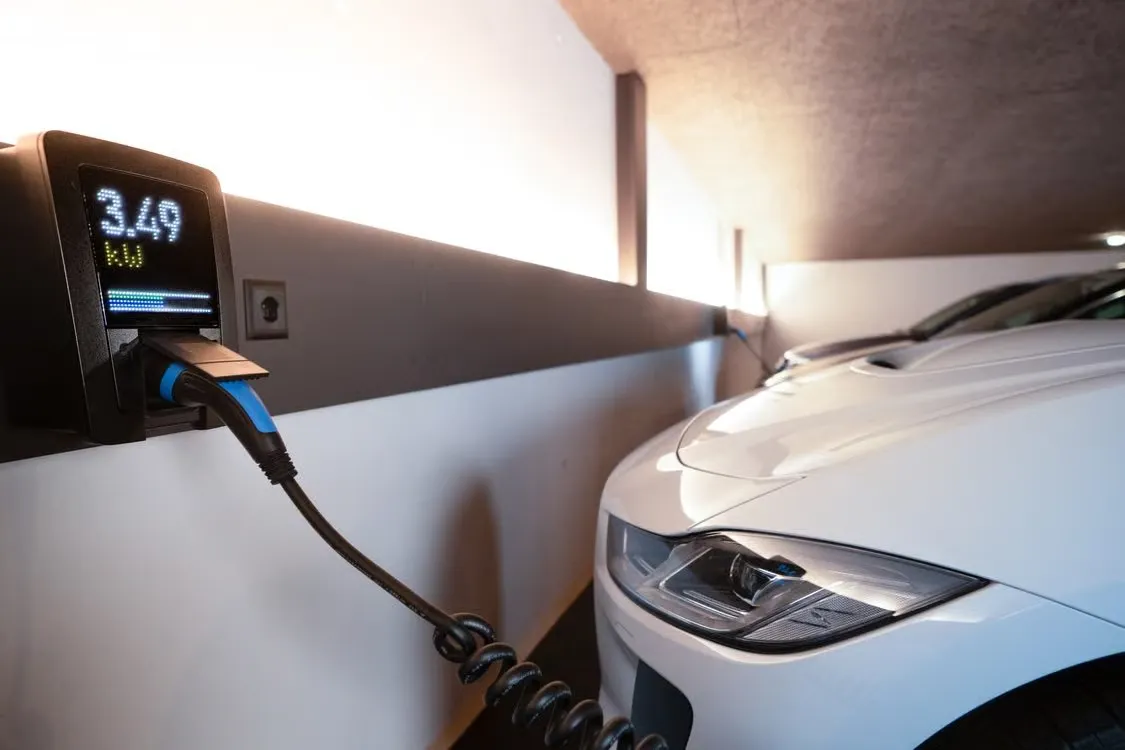
This question comes up frequently. The basis is simple: Time = capacity (kWh) ÷ power (kW).
For example, a 50 kWh battery using a 7.4 kW wallbox would take about 6 hours and 45 minutes. With a standard 2.3 kW outlet, it would take over 20 hours.
But three nuances matter. First, the battery loses some energy during charging. Expect 10 to 15% loss. Second, the charging speed slows down after 80% charge, as the car limits power to protect the battery.
The calculation provides only a rough estimate. For more detailed information, our guide on actual charging times covers each case in detail.
kW vs kWh: the summary table
Criterion
kW (kilowatt)
kWh (kilowattheure)
What it measures
A power (a rate)
An energy (a quantity)
Shower faucet analogy
The flow rate of the pipe
The volume in the bucket
Basic reference
1 kW = 1,000 W
1 kWh = 1 kW for 1 hour
In cars
Engine power, charging rate
Battery capacity, consumption
In daily use
Power of an appliance
The kWh on the bill
Instant or duration
A specific moment
A cumulative amount over time
Frequently asked questions
What is the difference between kW and kWh?
kW measures power, or flow rate. kWh measures energy, or quantity. An appliance at 1 kW for 1 hour consumes 1 kWh.
How to convert kW to kWh?
Multiply the power by the duration. The formula is: kWh = kW × hours. For example, 3 kW for 2 hours equals 6 kWh.
How many watts is 1 kWh?
1 kWh corresponds to 1,000 watts for one hour. Watts measure power. Watt-hours measure the energy consumed.
How to convert kW to horsepower?
Multiply the power by approximately 1.36. Thus, 100 kW equals about 136 hp. And 150 kW is roughly 204 hp.
How many kWh are needed for 100 km in an electric car?
The consumption is around 15 to 20 kWh per 100 km depending on the model. Driving style, speed, and weather conditions affect this figure.
How many kWh is an electric car battery?
It’s usually 40 kWh for city cars. Larger models have 60 to 90 kWh. The capacity determines the potential range.
Is my electricity bill in kW or kWh?
In kWh. You pay for the energy consumed. The contracted power, in kVA, only sets the instantaneous limit.