
Fuel consumption: New regulations slow down the growth of electric vehicles in the U.S.
With significantly lowered fuel efficiency standards, the U.S. government under President Donald Trump is boosting the market for internal combustion engine vehicles. This noticeably hinders the growth of electric mobility in the U.S. and reduces pressure on automakers to increase sales of electric cars.
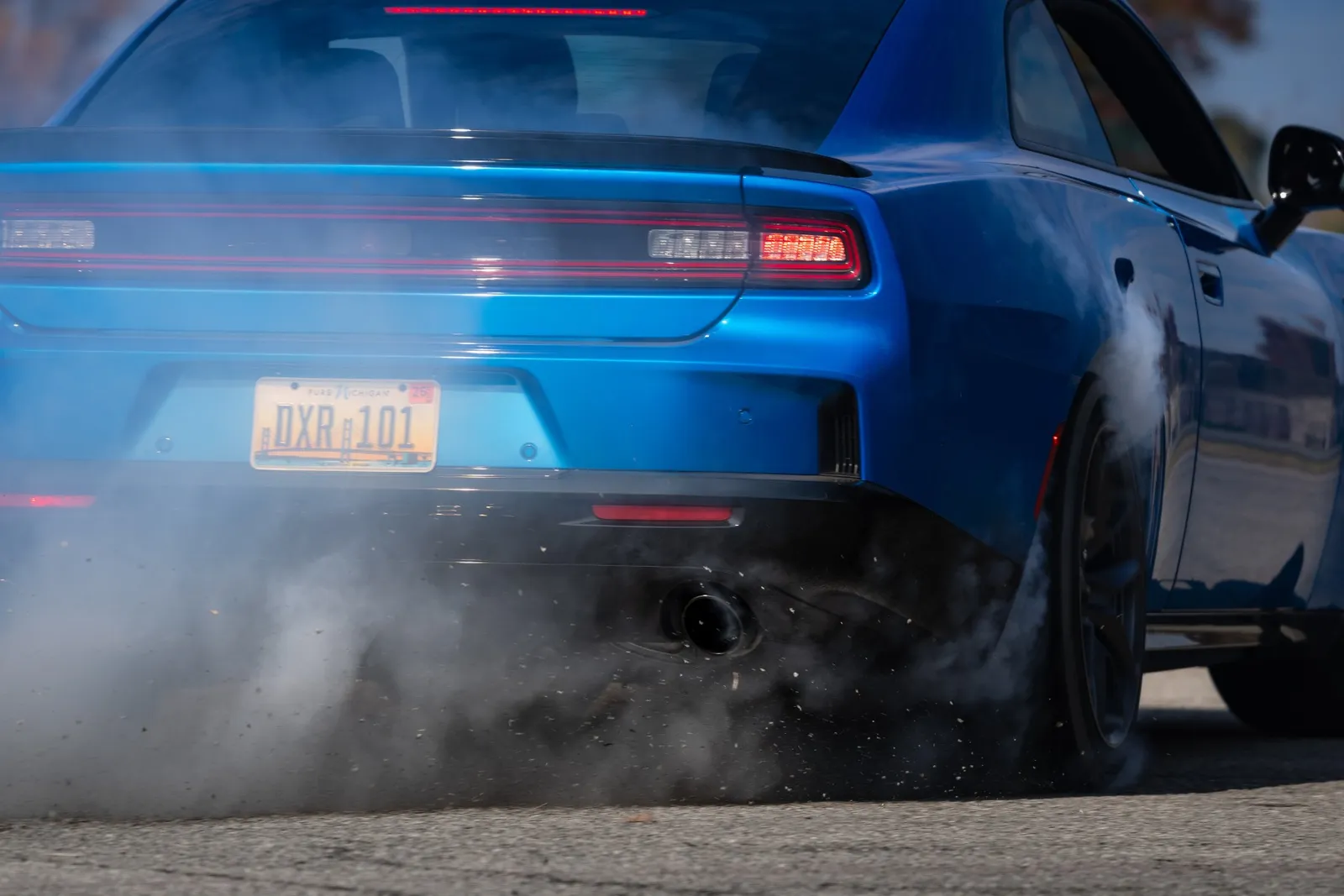
Dodge Charger Scat Pack (Illustration)
Image: Stellantis
The U.S. Department of Transportation has established significantly lower fuel efficiency standards for vehicles, as expected following a announcement by U.S. President Donald Trump in February 2026. This is the latest move by the Trump administration to boost sales of gasoline-powered vehicles and reverse efforts by former President Joe Biden to improve fuel efficiency and promote electric vehicles. The Department of Transportation specifically stated that it will set a fleet-wide average of 34.9 miles per gallon (14.7 km per liter) by 2031 — a substantial drop from the 50.4 miles per gallon (21.4 km per liter) standard under Biden.
With reduced fuel efficiency standards easing pressure on the automotive industry, manufacturers face less regulatory urgency to quickly shift their model lines to fully electric vehicles. As conventional internal combustion engines become significantly more attractive and cost-effective to produce, the growth of electric mobility in the United States is likely to slow further—this momentum had already stalled by the end of September 2025 due to the termination of tax incentives for purchasing new electric cars. By Q1/2026, sales of electric vehicles had dropped by 28 percent. In response, U.S. automakers Ford, GM, and Stellantis have realigned their model portfolios toward internal combustion engines and implemented massive write-downs in their electric vehicle operations.
U.S. Transportation Secretary Sean P. Duffy issued a forceful statement on the matter: “Thanks to President Trump’s leadership, we have finally ended the illegal rule that forced automakers to produce more expensive electric vehicles that American families didn’t want. While Joe Biden and Pete Buttigieg pursued a green agenda that made our roads less safe and raised costs for hardworking Americans, this administration is relieving families of burdens and revitalizing the core of America’s manufacturing industry. With our sensible standards, we are making the American Dream affordable again, bringing safer cars to the roads, and investing in American automakers.”
Certificate trading will be abolished
In addition to introducing new fuel efficiency standards, the U.S. government will also eliminate the CAFE certification trading program starting in model year 2028, a program that the U.S. Department of Transportation claims has “artificially boosted the electric vehicle industry at the expense of traditional automakers.” Eliminating this program, according to them, will restore fairness, create equal competitive conditions for all automakers, and ensure that they adopt fuel-saving technologies across their entire vehicle fleets.
Market observers and industry groups view the lowered fuel efficiency standards as a threat to the ecological transformation of the U.S. transportation sector. Several U.S. organizations see this decision as a clear setback for advancing electric mobility. The Electrification Coalition warns that the U.S. risks falling behind China and other competitors in transitioning to electric vehicles. “The rest of the world is increasingly relying on electric transportation, but the United States is falling behind China and other global competitors,” said Executive Director Ben Prochazka. The Center for Biological Diversity also highlights the risk that U.S. automakers will fall behind in developing cleaner vehicles as electric cars gain more prominence worldwide. The organization describes this decision as putting the U.S. auto industry at a disadvantage.
it might leave the “ten-line” system in place while other markets continue to electrify.The Environmental Defense Fund (EDF) also views the new fuel efficiency standards as a technological step backward. According to calculations by the U.S. Transportation Department’s NHTSA, the fleet of new vehicles from model year 2031 under these new requirements would be less efficient than those sold in 2024. From the critics’ perspective, the government is thereby removing an important regulatory incentive for manufacturers to bring more efficient and electric vehicles to market. The Union of Concerned Scientists also speaks of a significant regression in efficiency requirements. For critics, this decision represents not only less stringent fuel efficiency standards but also raises questions about whether the U.S. auto industry can keep up technologically in the global shift toward electric propulsion.