
Compass 2035: How to save Poland’s automotive sector from crisis?
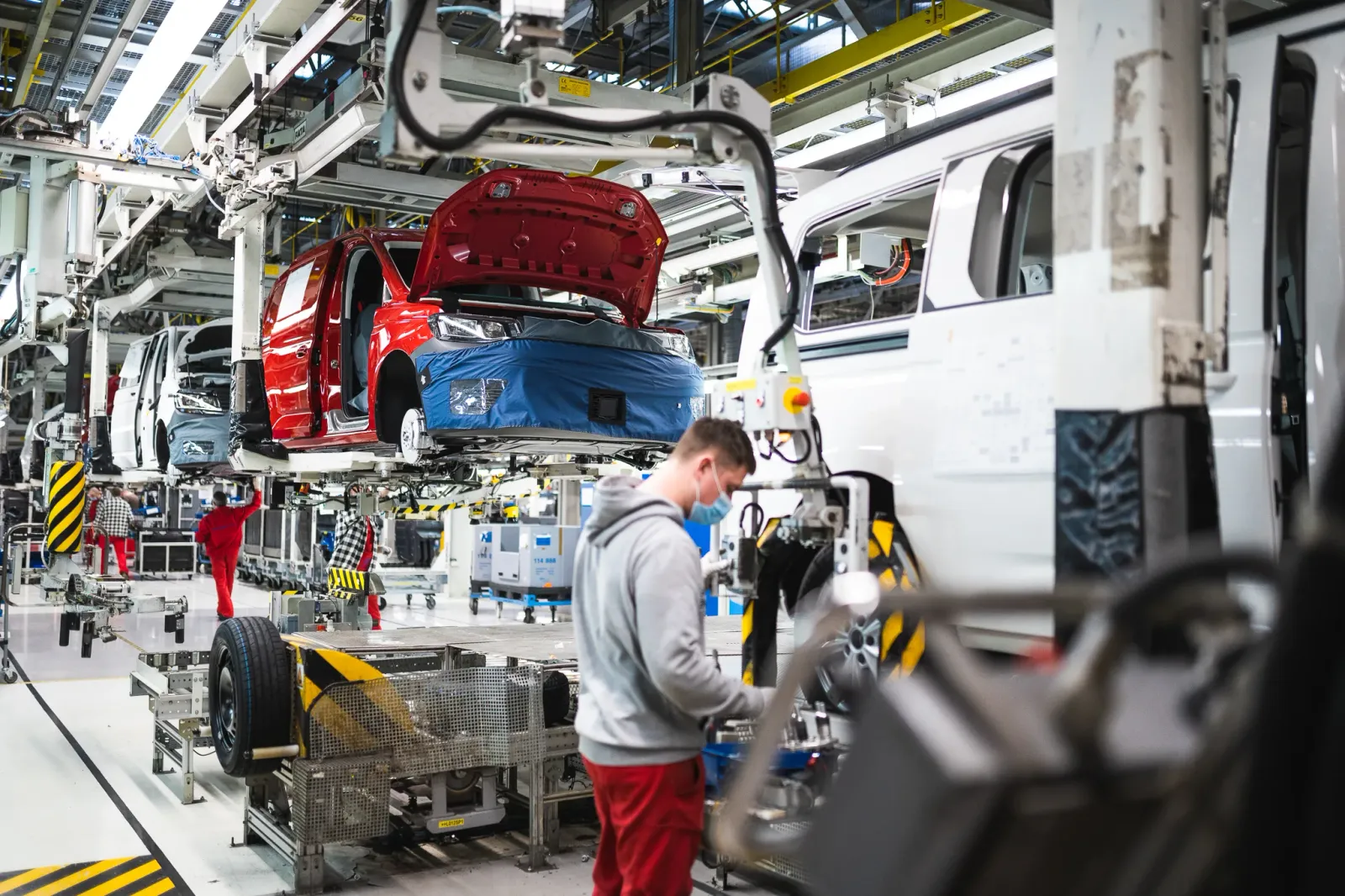
The MotoryzacjaPL coalition released the long-term Kompas 2035 strategy aimed at preventing Poland’s automotive industry from losing its competitiveness amid the energy transition. The document proposes that by 2035, Poland should produce one million vehicles per year, with 90% of them being electric cars. Implementing this plan is intended to safeguard 300,000 jobs and protect domestic factories from forced production shutdowns.
In short:
The production of gasoline-powered passenger cars in Poland has dropped to just 101,000 units – a more than eightfold decline compared to the record set in 2008.
The Kompas 2035 strategy sets a goal of producing one million vehicles annually, 90% of which should be electric cars.
The automotive industry currently accounts for about 8% of Poland’s GDP, with its exports reaching 105 billion zł per year.
Wages in Poland have risen by nearly 60% over four years, and given China’s growing dominance, immediate structural changes are needed.
Why Poland’s existing automotive model is no longer effective
Over the past three decades, Poland’s automotive sector has built its position on low labor costs, high quality of production, and stable supply chains focused on internal combustion engines. However, this phase is coming to an end. According to the Koalicja MotoryzacjaPL, in the record-breaking year of 2008, 840,000 internal combustion engine cars left Polish factories. Last year, this figure dropped to just 101,000 units, representing a year-on-year decline of 53% and an eightfold reduction compared to peak levels. This is the lowest level of passenger car production in the 21st century.
At the same time, operating costs in the country are rising rapidly. According to data cited in the report, the hourly wage in Poland increased from 11 euros in 2020 to over 17 euros in 2024, representing a rise of nearly 60%. Meanwhile, the global market is being dominated by manufacturers from Asia. China currently accounts for 60% of the world’s electric vehicle production and 80% of battery cell production, offering vehicles that are on average 30% cheaper than those produced in Europe. According to estimates by the European suppliers’ association CLEPA, this shift in power dynamics threatens as many as 350,000 jobs for EU component suppliers by 2030.
Economic pillars at risk without new investments
The automotive sector remains a key component of Poland’s economy. It accounts for around 8% of GDP, providing employment for 194,000 people directly in vehicle and parts production, while another 1.3 million people work in trade and service industries. The sector’s total exports amount to 105 billion zł per year. Although over 611,000 vehicles left Polish factories in 2024 (the majority being trucks), component suppliers form the foundation of this industry. Parts manufacturers create 142,000 jobs in Poland and generate 76 billion zł in exports, accounting for more than 70% of the total value sent abroad.
Currently, European countries such as Spain, Hungary, France, the Czech Republic, and Slovakia are competing aggressively to establish new platforms for electric vehicles. If Polish factories do not receive new production projects, they face gradual closure in the long term. Maciej Mazur, CEO of the Polish Association for New Mobility (PSNM), points out the insufficient investment in modern technologies: “China already produces 32 million cars per year, almost three times more than the entire EU, and the number of electric vehicles worldwide is set to rise from just under 7 million in 2020 to 440 million by 2035. Meanwhile, our entire industry spends only 2.6 billion złoty annually on research and development. Investments are now going to places with access to cheap, clean energy, expertise in electronics, software, and batteries, as well as predictable laws. If we do not build these advantages now, in the future—
“We won’t be talking about industry development for ten years — only about closing factories,” warns a PSNM representative.What exactly does the Kompas 2035 strategy entail?
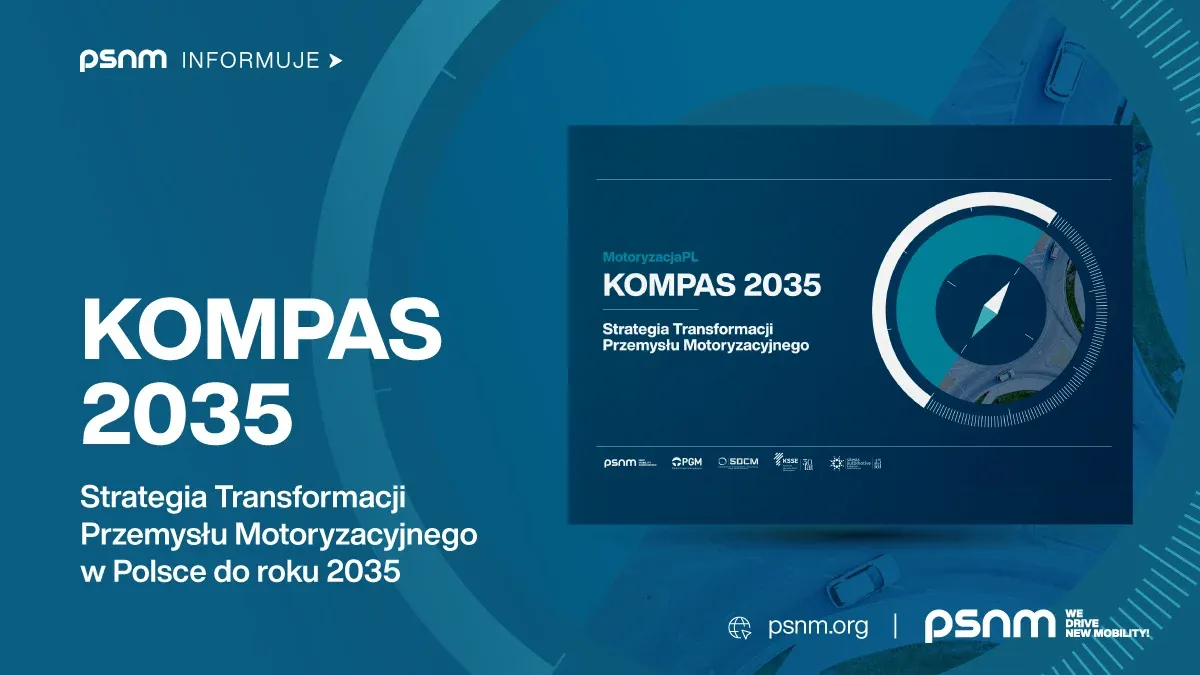
In response to these challenges, the Kompas 2035 document was created, outlining a plan for transforming the industry by mid-next decade. The strategy aims to shift domestic factories toward producing zero-emission vehicles and build a modern industrial ecosystem. The goals set for 2035 include:
Raising annual production to 1 million vehicles, with 90% of them being electric cars.
Increasing employment in the manufacturing sector to 300,000 people.
Increasing the added value per worker by at least 50%.
Raising the annual export value of the sector to 150 billion złoty.
Increasing the contribution of the automotive industry to Poland’s GDP to 10%.
Expanding domestic battery production capacity to 150 GWh.
Achieving 1.8 million electric cars on Polish roads and building 150,000 public charging stations.
Ensuring that at least 75% of car factories operating in Poland adopt new models or technological designs after 2030.
Where to find the highest value addition
The report’s authors emphasize that success in the coming decade will not depend solely on the number of cars assembled but rather on how much value remains within the country. Modern automotive industry is shifting focus from purely mechanical components to batteries, power electronics, software, artificial intelligence, and energy management systems. Polish companies must become suppliers of technologically advanced components for the entire European market.
An opportunity for the country also lies in supporting small and medium-sized enterprises with domestic capital as well as implementing local content policies. This means promoting the use not only of components installed directly in vehicles but also of tools, machinery, and advanced production lines designed in Poland.
Rafał Żelazny, CEO of the Katowicka Specjalna Strefa Ekonomiczna, emphasizes the role of investment conditions: “For Poland, it is crucial that technological transformation leads to new projects and reinvestments in existing plants, rather than shifting production to other countries. KOMPAS 2035 provides the necessary roadmap for actions that can enhance Poland’s competitiveness as a location for future industries. If we ensure investors access to competitive energy, skilled workforce, R&D support, and stable investment conditions, we can not only maintain the sector’s current potential but also attract another wave of technologically advanced investments,” says the KSSE chief.
Summary
The analysis presented in the Kompas 2035 document clearly shows that Poland’s automotive industry’s existing advantages are no longer sufficient to maintain its current position. A significant decline in the production of internal combustion engines, along with increasing pressure from Chinese manufacturers, necessitates rapid digitalization and electrification. Whether Poland can retain its status as one of Europe’s most important automotive centers or decline to a role of low-margin support depends on the effective implementation of the plans outlined.