
Will there be a mass market for two-way charging with AC?
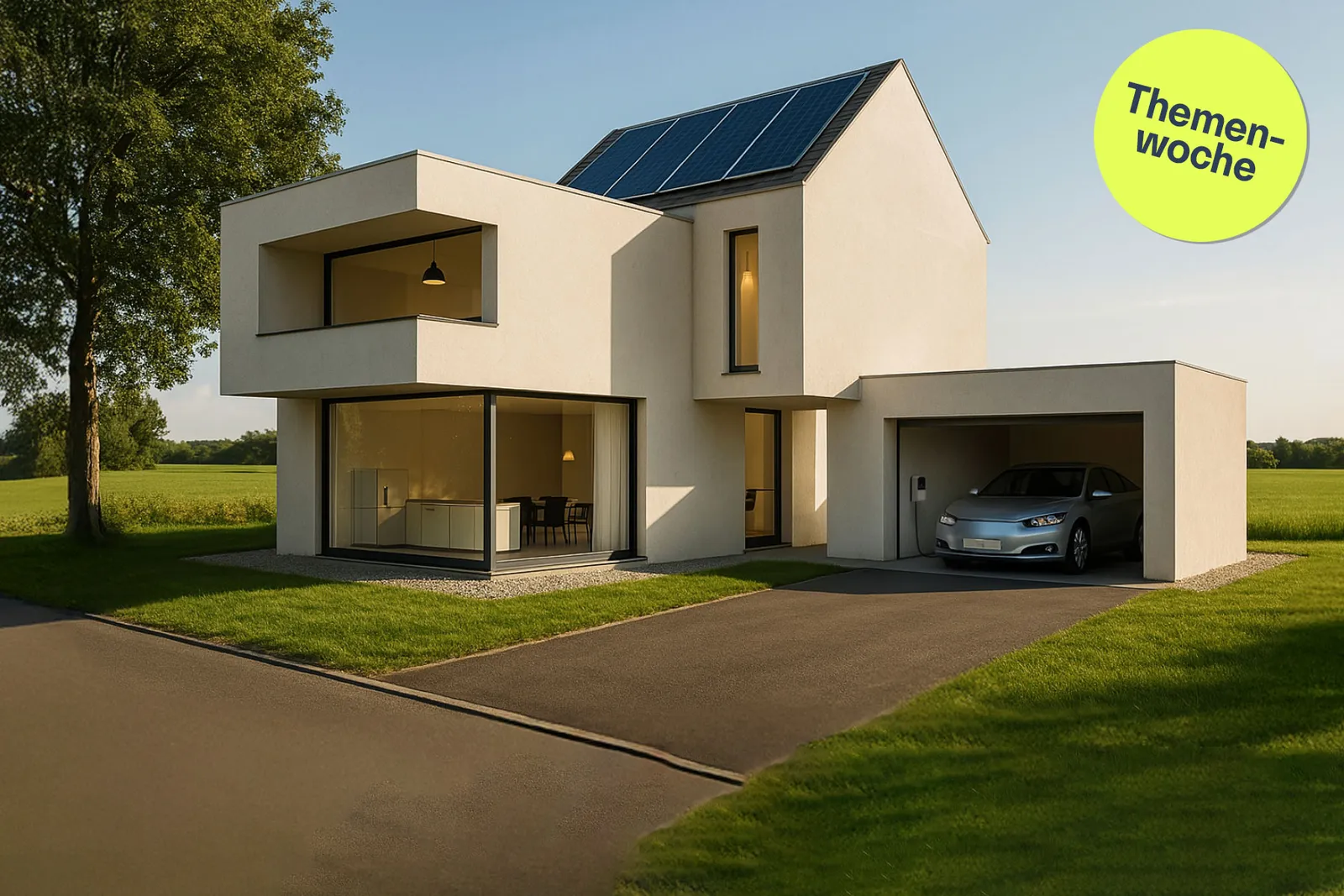
Bidirectional charging has been discussed for years, and now it’s actually happening. Electric vehicles can not only absorb electricity but also supply it back. The first commercial offerings are entering the market, pilot projects are expanding, and companies are beginning to integrate vehicle batteries into the energy market. For example, a practical test conducted by enercity and Volkswagen Nutzfahrzeuge during our themed week demonstrates how an electric fleet can be integrated into the electricity market through a virtual power plant. Such company fleets with long, predictable lifespans are considered particularly valuable for promoting flexibility in energy markets. This was also confirmed by Jörg Heuer from EcoG in our podcast on the BiDi-themed week.
At the same time, this electric vehicle-themed week has shown why a major breakthrough is still pending: standards, grid codes, and regulatory rules do not yet integrate smoothly everywhere. Even implementing ISO 15118-20 does not automatically mean that a charging station can actually operate bidirectionally. Moreover, as Andreas Varesi’s guest article illustrates, Germany continues to face unresolved issues regarding grid fees, market integration, and a highly fragmented landscape of grid operators.
Therefore, the pressing question is no longer whether bidirectional charging works, but rather: How can this become a mass market?
There are good reasons why many of the V2G projects visible today rely on direct current. With a DC solution, the direct voltage from the vehicle battery is converted outside the car into grid-compliant alternating current. As a result, much of the power electronics and the necessary “Grid Code” software are contained within the DC charger (DC wallbox). This makes it easier to integrate existing vehicles and manage the complex grid connection outside the car.
Yet this very factor makes the systems relatively expensive.
Thomas Basbous, Director of Energy Business at Valeo Service Smart Mobility, captures this conflict of goals succinctly. DC charging is technically the simpler and more straightforward approach initially, as much of the effort lies in the charging infrastructure. But “DC is very, very expensive, and we can’t imagine it being adopted by the mass market,” says Basbous. (His remarks were translated from English for this article.) Therefore, Valeo is focusing on a bidirectional AC wallbox using IoTecha’s central software and hardware platform, which is now owned by Valeo and has been integrated. Valeo will initially launch this with Nissan in the UK. Certifications under the Grid Code for countries such as Germany and France were underway at the time of our conversation.
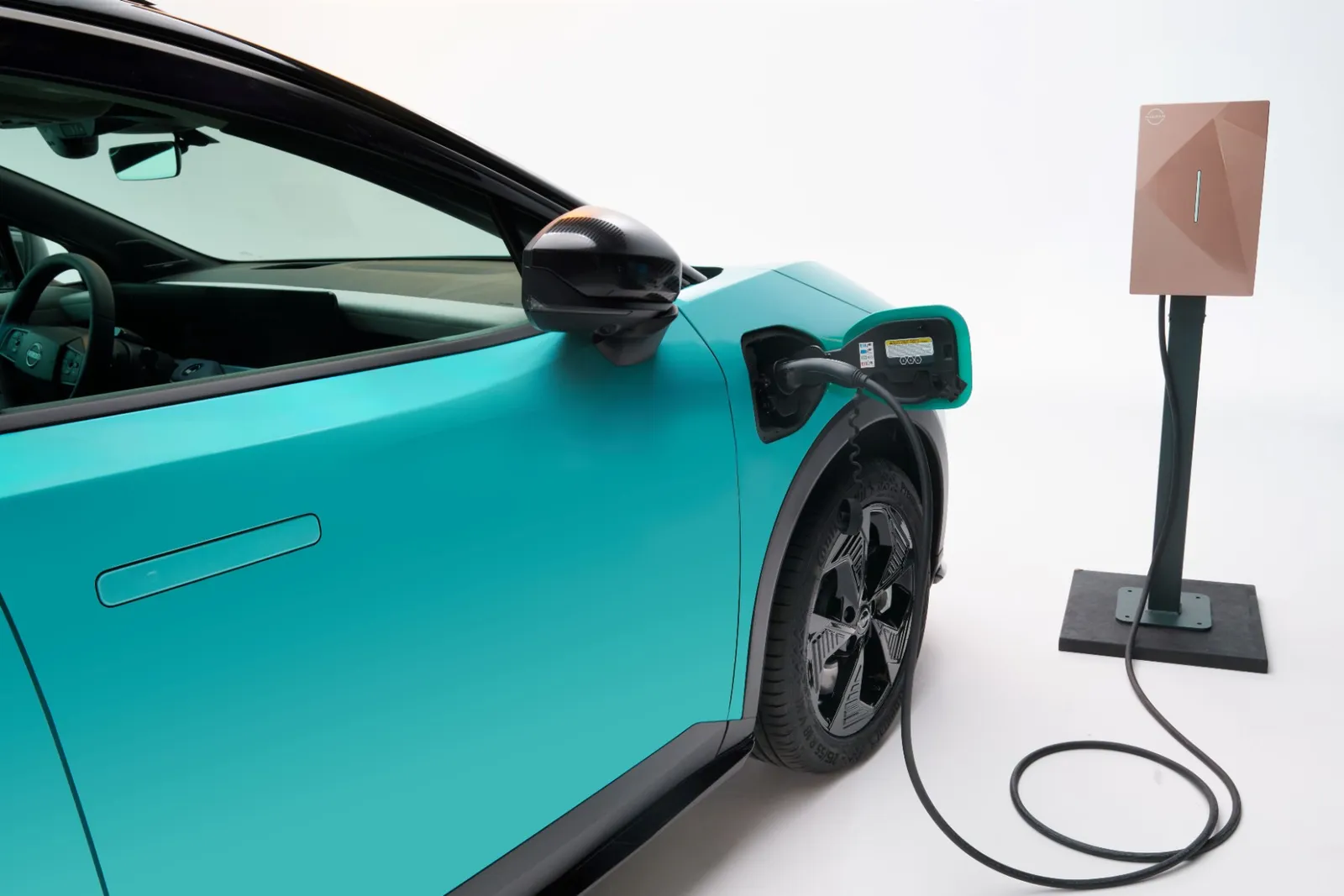
Basbous also notes that automakers are working on AC solutions alongside the DC options currently being announced: “Everyone is also looking at AC because it’s a mass-market technology,” says the Valeo executive. This is particularly interesting for the French supplier: Valeo has been developing and producing onboard chargers for years—namely, those power electronics in vehicles that must not only feed electricity into the battery but also send it back into the AC grid in a V2G setup.
Why exactly AC?
Christian Rühe, Cubos’ Chief Technology Officer, argues similarly. This charger infrastructure specialist focused on corporate clients has already implemented DC-BiDi pilots with Volkswagen. However, Rühe is betting on AC in the long term: “Because I believe that only through it can the mass market be reached.”
His logic is simple: since inverters are already installed in large quantities in vehicles, this power electronics can be scaled there. The wall box itself can be designed to be simpler and thus cheaper. For this reason, Cubos has already developed a prototype for bidirectional AC charging. What’s particularly interesting is its modular design: a currently unidirectional charging module is intended to be replaced later with a bidirectional one. This allows the infrastructure to be installed today without locking customers into current technology.
Björn Dietrich, CEO of Compleo Charging Solutions, also favors this approach. Compleo has focused its hardware portfolio on AC charging and is developing a new modular platform, with future versions planned to be fully bidirectional.
For Dietrich, aside from costs, it is primarily the sheer number of AC charging points along this route that speaks in favor of it. The vast majority of charging infrastructure is not located on highways or public fast-charging parks, but rather where cars stay for long periods: at home or at work. It is precisely this duration of stay that makes V2G valuable. “If we really want to implement and experience bidirectionality professionally as well as monetize it, then we need many cars connected to the grid,” says Dietrich.
And this changes the perspective: For V2G, it is not crucial to get as much energy into a car as quickly as possible. What is valuable instead is a vehicle that remains connected for hours, with its battery able to be managed intelligently during that time.
If every wallbox were simply a Bidi-wallbox
Valeo takes this idea even further. The supplier’s long-term goal is to position an AC-V2G solution at a price roughly comparable to that of today’s standard AC charging solutions. Initially, the price will be higher due to lower production volumes. However, Thomas Basbous does not expect a significant premium: “The idea and vision is to offer AC-V2G in the long term at the same price as today’s standard AC charging.”
Compleo also expects only a moderate price increase. Björn Dietrich uses an unusual but apt comparison to televisions: Many people own 4K TVs today, even though they don’t watch content in 4K exclusively. This capability has simply become part of the device.
A similar situation might arise with bidirectional functionality: customers install a wall box that can transfer electricity in both directions, even though at the time of purchase, the appropriate vehicle, corresponding electricity tariff, or marketing product might still be missing. In that case, this feature would no longer be an exotic extra but rather a future-ready option in the background.
The market isn’t quite there yet. Dietrich explicitly warns against drawing complete investment certainty from the term “Bidi-ready,” which is commonly used today. Therefore, Compleo plans to introduce its new generation only once the requirements for communication, grid codes, and certification are sufficiently clarified. A gradual rollout of the product is scheduled starting at the end of 2027. This aligns with the regulatory issues we have already discussed in detail this week: ISO 15118-20 provides an important communication foundation, but on its own it does not yet guarantee a fully functional V2G solution.
Here, the strategies of the providers differ significantly. While Compleo focuses on obtaining full certification before deployment, Cubos aims to ensure investment security through interchangeable modules. Different approaches — with the same goal: the charging infrastructure installed today should not become a hindrance when AC-V2G becomes more widely available in a few years.

What matters most is the business behind the wallbox
Yet even a cheap and fully certified AC wallbox does not yet create a V2G market. This becomes clear in all three discussions.
Valeo explicitly refers to a complete ecosystem consisting of the vehicle, charging hardware, aggregator, and energy provider. Only when these components work together can a vehicle capable of feeding power back become a storage solution usable in the energy market.
Compleo therefore faces an unusual situation: “We are currently developing products for use cases and business models that don’t exist in this form today,” says Dietrich. For now, discussions are still underway about how vehicle owners can actually earn money from their batteries, what usage levels automakers will permit, and what effects additional charging and discharging processes will have on warranty and guarantee issues. Nevertheless, his expectation is clear: “Regarding bidirectional functionality, it’s no longer a question of whether it will arrive, but only when, in what detail, and how quickly.”
Cubos is already thinking about expanding its business model from the charging point perspective. The company aims to transform today’s charging infrastructure into a comprehensive energy system — including photovoltaic systems, stationary storage, dynamic pricing, and eventually the marketing of vehicle batteries. Christian Rühe describes this development as follows: “Today it might still be just a simple charging point, but tomorrow it should become an intelligent energy system.”
The consequence of this could significantly change the charging industry. If money can be made from the connected battery over many years, even the one-time purchase price of the charging station might lose its importance. What becomes more crucial are electricity contracts, control systems, and access to aggregated flexibility. In that case, the charging point would no longer be the actual product — it would become the gateway to the energy market.
Millions of small storage units rather than fewer large ones
This gives the debate over AC and DC a dimension that goes beyond mere charging technology. It’s not about which type—DC or AC—will prevail in product specifications. Both approaches will have their applications, and DC is currently a crucial pathway for bringing V2G to actual products and projects. The existing or announced offerings from automakers and energy companies also show that the market is no longer limited to research projects alone.
AC power could, however, open up the next stage of scaling: millions of relatively inexpensive charging points in locations where vehicles already stay for many hours. The necessary power electronics would move more into the vehicle, with the wallbox becoming a link between the car, buildings, and the energy system — and software determining when to charge and when to return energy.
This would also change the perception of electric vehicles. Their batteries would no longer be merely an expensive component designed to provide as many kilometers of range as possible, but could serve a second economic purpose during those long periods of idling.
For Christian Rühe of Cubos, this point is crucial. The industry must move away from an enthusiasm for technology for its own sake: “In the end, it has to be worthwhile for the customer overall. They need to save money through it.”
This is perhaps the most optimistic outlook of our theme week! The open regulatory questions are real, as is the work on standards, grid codes, and business models. But the perspective has shifted: The industry is increasingly not discussing whether electric vehicles can feed energy back in. Instead, it is developing products to enable millions of vehicles to do so as cheaply and effortlessly as possible.
If AC-V2G truly becomes standard in regular wall chargers and ordinary electric vehicles, two-way charging might eventually lose its current special status. Then no one would need to talk about “BiDi” anymore. The car would simply stay in the garage or company parking lot, charging at the most cost-effective time and supplying part of its energy back when needed—automatically, in the background, with financial benefits for its owner.
That would be when the long-discussed vision turns into a mass market product.
* * *
The electrive Themed Week on Two-Way Charging features expert articles, podcasts, and videos on the topic from August 17 to 21, 2026. All content is available here.