
Kia electric vehicle for people in wheelchairs. The PV5 WAV costs from 197,600 zł
In short:
Kia is introducing the PV5 WAV model to Poland
This is a factory-modified version designed for transporting people in wheelchairs
The car features a special side ramp and a modified floor
Price? Starting at 197,000 Polish zlotys
The version with a larger 71.2 kWh battery costs nearly 230,000 Polish zlotys
Kia and “Made-In-Plant”
Cars adapted for transporting people in wheelchairs are not new. However, it usually involves buying a standard van or station wagon, which is then taken to an external company that modifies the floor, installs a ramp, seat belts, and a wheelchair mounting system.
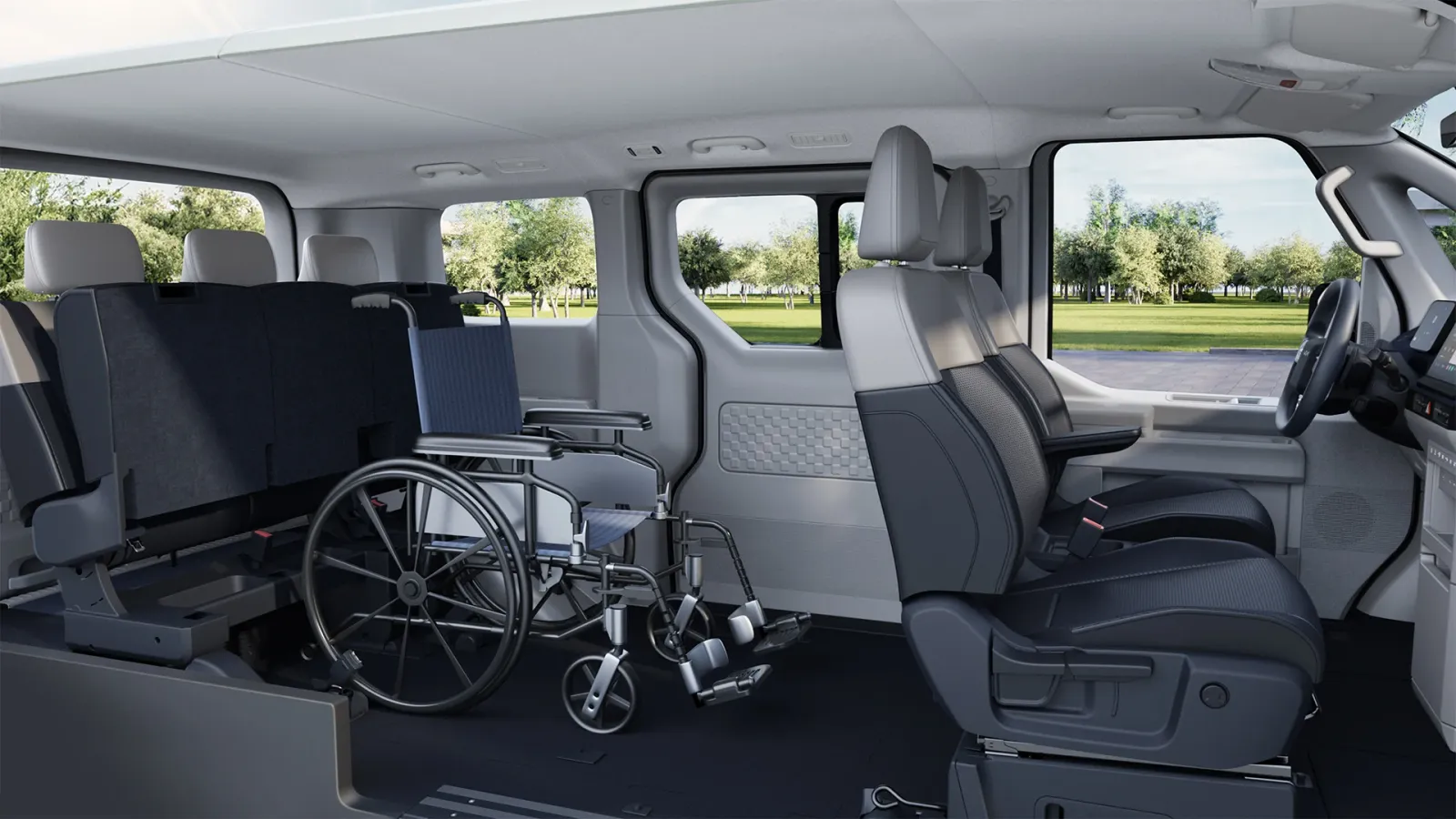
Kia approached the issue differently. The PV5 WAV is created under the “Made-In-Plant” program, meaning the conversion is carried out directly during vehicle production or at the manufacturer’s own modification center. This allows for a reinforced floor and integrated wheelchair mounting points to be installed already during the car’s construction phase.
This is one of the most important features of the PV5 WAV. It’s not a regular PV5 to which a few extra components are added after leaving the factory. From the start, it is developed as a vehicle designed for this specific purpose.
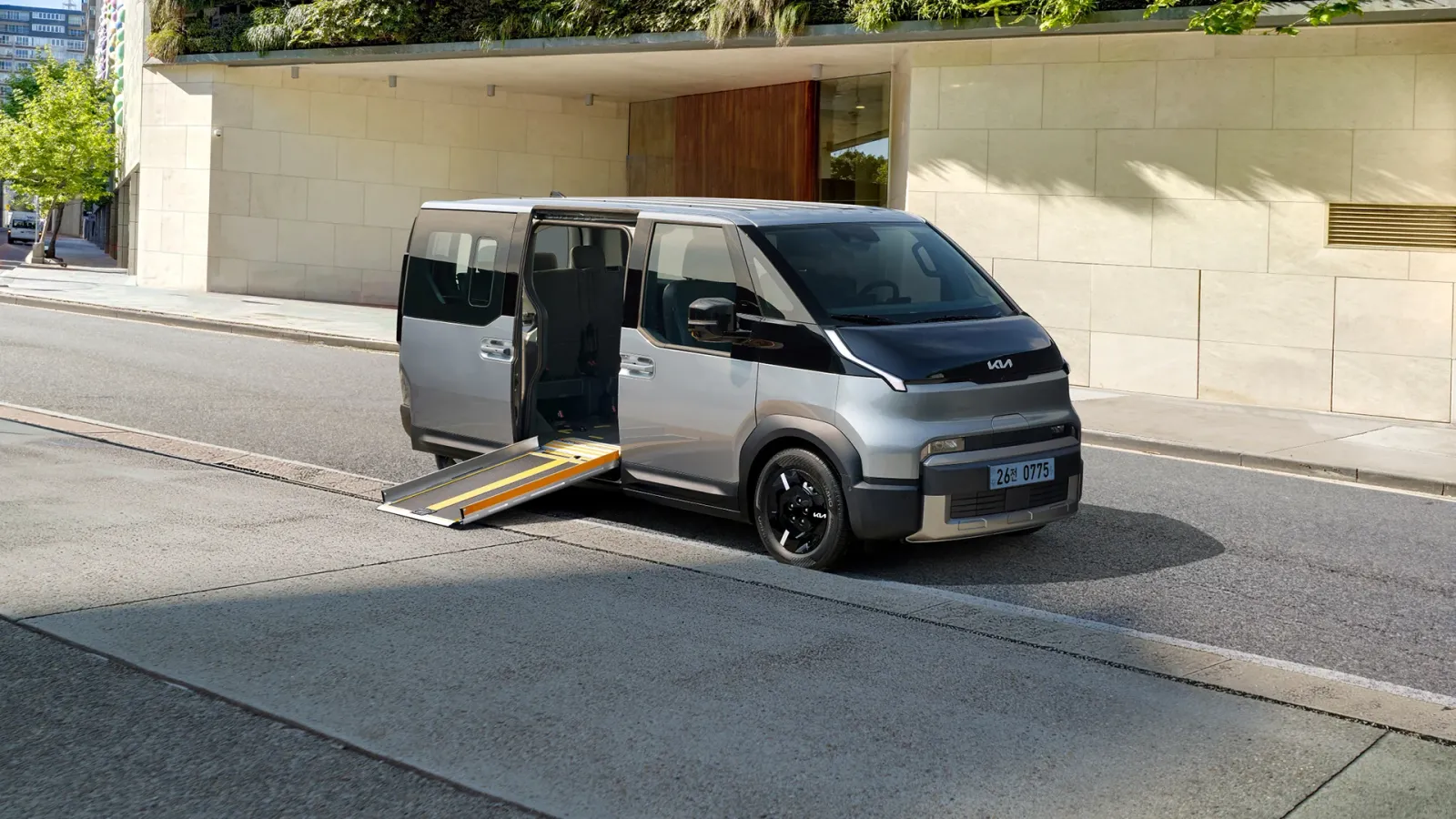
The wheelchair enters from the side, straight from the sidewalk
A distinctive feature is the side entrance. The two-step manual ramp is 744 mm wide and is located next to the sliding doors. When extended from the road level, its slope reaches a maximum of 13.1°, while when accessed from a curb that is 150 mm high, it drops to around 11°.
This is particularly important when using the car in urban areas. A person in a wheelchair can board from the sidewalk side rather than from the back of the car, where one would need to operate the ramp on the road or leave plenty of space behind the vehicle. Kia has also included LED lighting for the floor and ramp to facilitate use in low light conditions.
The passenger's seating position is equally important. In many classic conversions, the wheelchair is placed behind the last row of seats or in its place. In the PV5 WAV, it is positioned more centrally, among the other passengers. Once installed, the cabin adopts a 2-1-1 layout, allowing the caregiver to sit right next to them. Standardly, the vehicle has five seats.
A version with a rear entrance is also available
Kia does not limit itself to just a side ramp. The PV5 WAV can also come with a traditional rear entrance. This version is developed in collaboration with specialized companies such as AMF-Bruns, and it features a lower floor and a shallower ramp angle.
Depending on the configuration, it can carry up to six people. However, the version with a rear entrance is made to order, while the Side Entry variant is already included in the regular Polish price list.
It’s Still a Full-Size Electric Van
The base is the E-GMP.S platform developed by Kia specifically for the PBV family. The PV5 WAV measures 4695 mm in length, 1895 mm in width, and 1899 mm in height, with a wheelbase of 2995 mm. It has a cargo volume of 350 liters, a ground clearance of 143 mm, and a turning radius of 11 meters.
Two battery options are available. The base version has a capacity of 51.5 kWh and works with an engine producing 122 horsepower. The maximum torque is 250 Nm, with power delivered to the front wheels, and the claimed range is 282 km according to WLTP standards.
The larger battery has a capacity of 71.2 kWh and is paired with a 163-horsepower engine. Torque remains unchanged, but range increases to 391 km. Both versions can reach a top speed of 135 km/h. Acceleration figures from 0 to 100 km/h have not been released yet.
Energy consumption is 20.2 and 20.4 kWh/100 km respectively. Kia notes that some technical specifications are still under homologation and may change.
30 minutes with a fast charger
Both versions can be charged quickly using direct current. Charging from 10% to 80% should take about 30 minutes.
The onboard AC charger has a power output of 10.5 kW. For the smaller battery, charging from 10% to 100% using a 11 kW wallbox takes around 4 hours and 45 minutes, while the larger battery requires about 6 hours and 30 minutes.
Each PV5 WAV comes with an additional 11 kW Green Cell Habu SE portable charger featuring a 230 V converter. A heat pump and V2D functionality, which allows using energy stored in the battery to power external devices, are also standard.
Kia PV5 WAV – Prices in Poland
The pricing list is valid as of September 18, 2026, and applies to vehicles approved for passenger use. Two battery options are available, along with Pro and Pro Plus trim levels.
Version
Battery
Power
WLTP Range
Gross Price
Pro
51.5 kWh
122 HP
282 km
197,600 PLN
Pro Plus
51.5 kWh
122 HP
282 km
212,300 PLN
Pro
71.2 kWh
163 HP
391 km
215,000 PLN
Pro Plus
71.2 kWh
163 HP
391 km
229,700 PLN
Interestingly, the extra cost for a larger battery isn’t enormous. It’s 17,400 zł for the Pro version and also 17,400 zł for the Pro Plus version. In return, the range increases by 109 km, and the power goes from 122 to 163 HP.
The Pro is already quite well-equipped
The basic Pro isn’t a typical “barebones” model. Standard features include adaptive cruise control with Stop & Go function, a rearview camera, front and rear parking sensors, lane-keeping assist, lane-centering system, and automatic braking that detects pedestrians and cyclists.
In addition, there are heated front seats and steering wheel, automatic climate control, a heat pump, keyless entry, a wireless phone charger, and a 12.9-inch multimedia screen based on Android Automotive OS.
Pro Plus primarily includes features that enhance comfort: electrically adjustable front seats, leather upholstery, 360-degree cameras, advanced blind spot monitoring systems, electrically operated both side sliding doors, and an electric trunk lid.
What does the competition offer?
This becomes interesting because the PV5 WAV doesn’t have many direct equivalents. There are plenty of electric passenger vans on the market, but in most cases, people buy a standard car and have it modified for wheelchair access as an additional conversion.
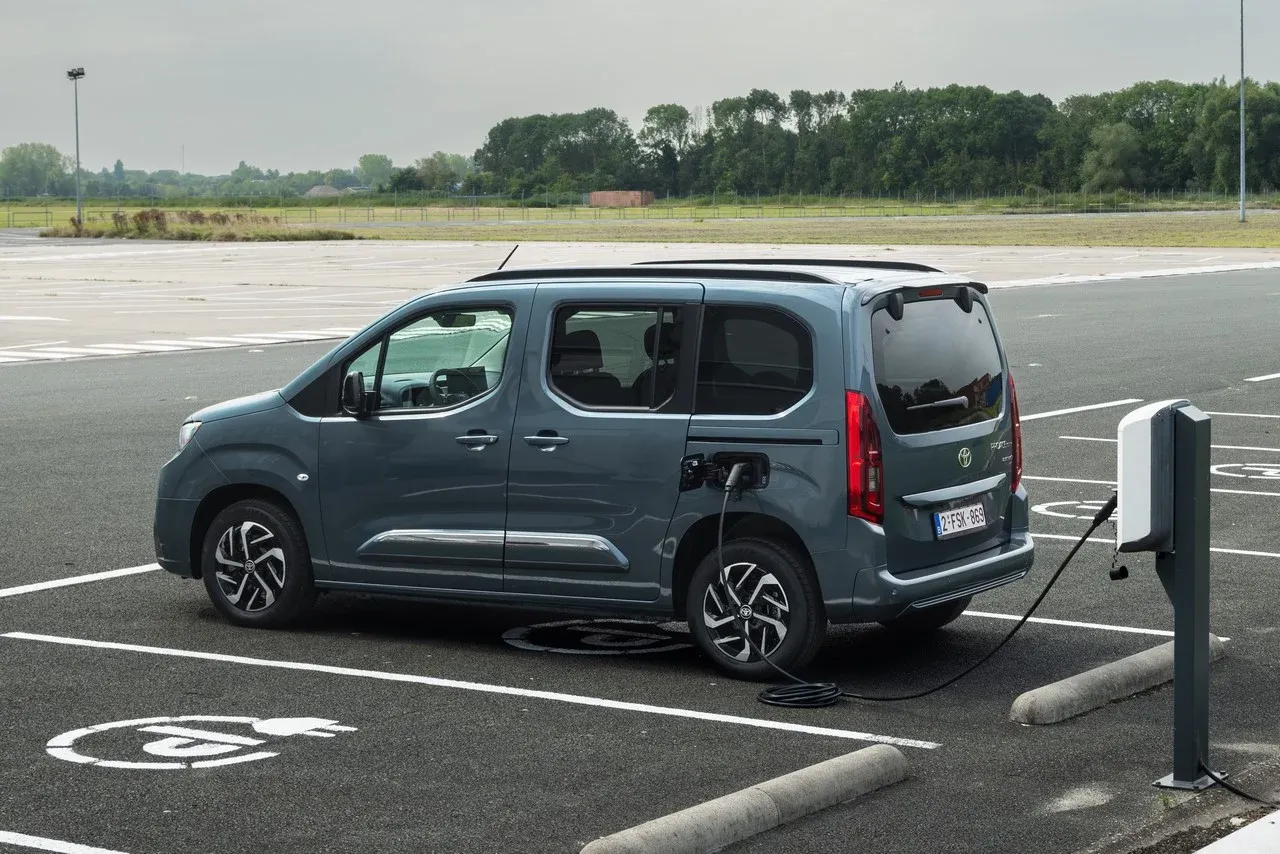
The closest example is Toyota. The Proace Verso Electric currently costs from 227,200 zł and offers up to nine seats along with a range of around 350 km. Toyota also has its own customization program, such as Mobility for the Proace Verso, which includes wheelchair mounts, ramps, a lowered floor, and an elevator. However, the customization itself is priced separately, with costs depending on the configuration.
The situation is similar for the Peugeot E-Traveller. The electric Business version with a 49 kWh battery costs 230,200 zł, while the one with a larger 75 kWh battery costs 258,700 zł. These are prices for a regular passenger van, without any specialized adaptations for transporting people in wheelchairs.
The Ford E-Tourneo Custom is even larger and more powerful. In the current pricing, the 218 HP version comes with a 71 kWh battery and a range of around 338 km. The regular price for the Titanium version is 261,160 zł, although Ford is currently offering significant promotional discounts. Still, this refers to the price of a standard van without any modifications.
This makes the 197,600 zł price for the Kia interesting. Not because the PV5 is absolutely the cheapest electric van, but because the listed price already includes a vehicle factory-prepared for transporting people in wheelchairs. With some competitors, you have to add the cost of appropriate modifications after purchasing the base vehicle.
Kia has found an interesting niche for the PV5
PV5 was conceived from the start as a vehicle that Kia aims to develop into various passenger, delivery, and specialized versions. The WAV model clearly demonstrates the logic behind this approach. Rather than building a generic van and then figuring out how to modify it, the manufacturer incorporated appropriate solutions into the car’s design from the outset. Compared to traditional vans that require subsequent adaptation, this could be a significant advantage for the PV5 WAV.
Piotr Sobczyk