
The Kia PV7 made its debut at IAA 2026. An 800 V electric van with a WLTP range of 460 km
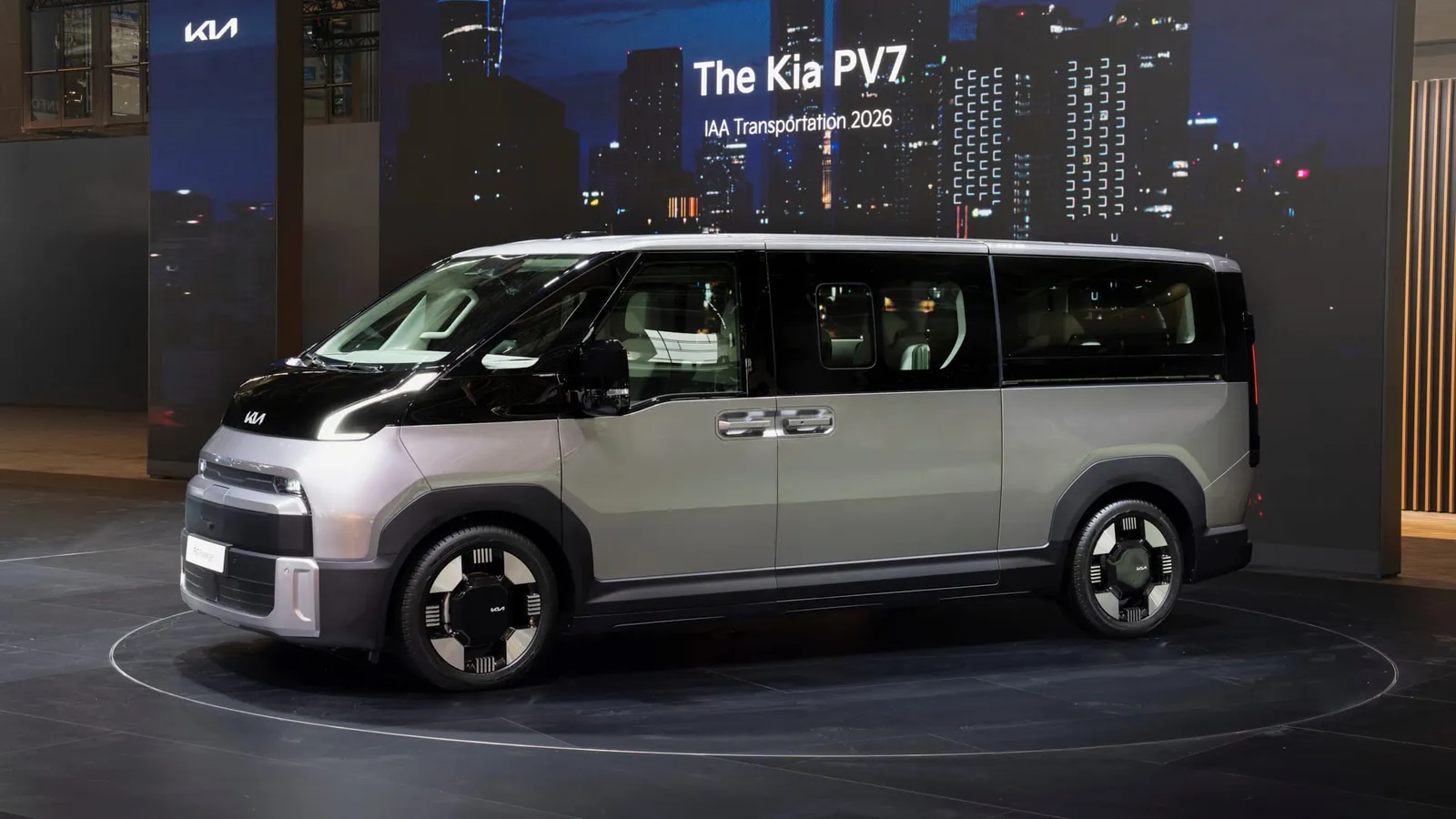
Kia unveiled the PV7 in Hanover, the second vehicle in its PBV family following the smaller PV5. The car features an 800 V electrical system, a battery with a capacity of up to 96.2 kWh, a 10-80% charge time of around 20 minutes, and a WLTP range of up to 460 km in the Cargo Long Range version.
Table of Contents
Show
Hide
This is a significant launch not only for fleets. Kia aims to enter the electric van segment with more than just another e-van featuring a large trunk at the back.
The PV7 is larger, more powerful, and far more practical than the PV5
The PV7 will be available in both Cargo and passenger versions. In the delivery version, it offers a cargo space of up to 8.0 m3, a load capacity of up to 1200 kg, and the ability to transport 3 euro pallets. The loading height is 550 mm, so on paper it seems well-suited for delivery services, maintenance work, and local logistics.
Kia also offers several practical solutions. There are two-door rear doors or a hatch, an adjustable partition, and the Smart Walk Away system that automatically closes and locks the sliding side doors when the driver leaves with the keys. It may sound trivial, but such features make a difference in urban driving.
The passenger version will accommodate 7, 8, or 9 people in global markets. It is expected to feature sliding and removable seats, rear air conditioning, and USB-C ports with up to 100 W of power. In other words, it functions more like a shuttle or hotel transfer than a traditional family minivan.
800 V, two charging ports, and 460 km WLTP
The most technically interesting aspect is the E-GMP.S platform, designed specifically for PBVs. Kia mentions an 800 V architecture, up to 200 kW of power, 420 Nm of torque, and front-wheel drive. All-wheel drive is planned for the future.
There will be two battery options: 71.5 kWh and 96.2 kWh, both using NCM chemistry. The maximum declared range for the PV7 Cargo Long Range is over 460 km according to WLTP standards. As usual, WLTP figures for a delivery vehicle loaded and in winter should be viewed with caution. The actual range will depend more on the vehicle’s interior setup, speed, and load weight than it does for a passenger car.
Kia claims that charging from 10% to 80% takes about 20 minutes using a 350 kW DC charger. That’s fast, but not quite industry-leading. For such a van to truly maintain a competitive range, just an 800 V architecture isn’t enough. A well-designed battery and efficient cooling system are also required — these aspects will only become clear through testing.
An interesting feature beats any AI-related marketing claims. The PV7 has two charging ports: an AC/DC port at the front and an optional AC port at the back. This is particularly useful for delivery vehicles that are often parked tightly against a wall, pole, or ramp.
Kia aims for 23 models, with a Polish launch in 2027
The PV7 range is expected to grow to 23 variants in total. Compact, Long, High Roof, and chassis cab versions for custom builds have been announced. This is the right direction, as it’s impossible to seriously compete with fleet customers without multiple configurations. The Volkswagen ID. Buzz Cargo appears more lifestyle-oriented than utility-focused.
In addition, there’s the Pleos Connect system based on Android Automotive OS, OTA updates, the Gleo AI voice assistant, V2L functionality, and fleet tools with API access. Some of these sound like a must-have checklist for 2026, but fleet management, maintenance, and uptime are more important here than flashy screen animations.
Preliminary sales for the model in Poland are set to begin in Q2 2027, with European production starting in the summer of 2027. Prices in Poland haven’t been announced yet. And this is the most significant gap at present, as for electric vans, everything comes down to TCO rather than the number of screens.
I’ve just finished testing the PV5, and a review will be available soon. All I can say is that I’m truly impressed with it, so I’m very eager to try out the PV7. If Kia doesn’t set the price too high, it could become one of the most interesting electric vans for business use in Europe. Where do you think the PV7 Cargo should be priced to make sense in Poland?
Specifications
Kia PV7
Platform
E-GMP.S
Architecture voltage
800 V
Battery
71.5 kWh or 96.2 kWh
Cell chemistry
NCM
Maximum power
up to 200 kW
Torque
420 Nm
Drive type
FWD, AWD later
Range
up to 460 km WLTP
DC charging
10-80% in about 20 minutes, up to 350 kW
Charging ports
front AC/DC, optional rear AC
V2L
yes
Cargo space
up to 8.0 m3
Cargo capacity
up to 1200 kg
Pallets
up to 3
Lading threshold
550 mm
Passenger versions
7, 8 or 9 seats
Poland
pre-order starting Q2 2027
Europe
production starting summer 2027
LovEV newsletter
Want more content like this?
Sign up — we’ll send you a weekly summary once the newsletter launches.