
Kia PV7: up to 9 seats, over 460 km of range, and 800-volt charging
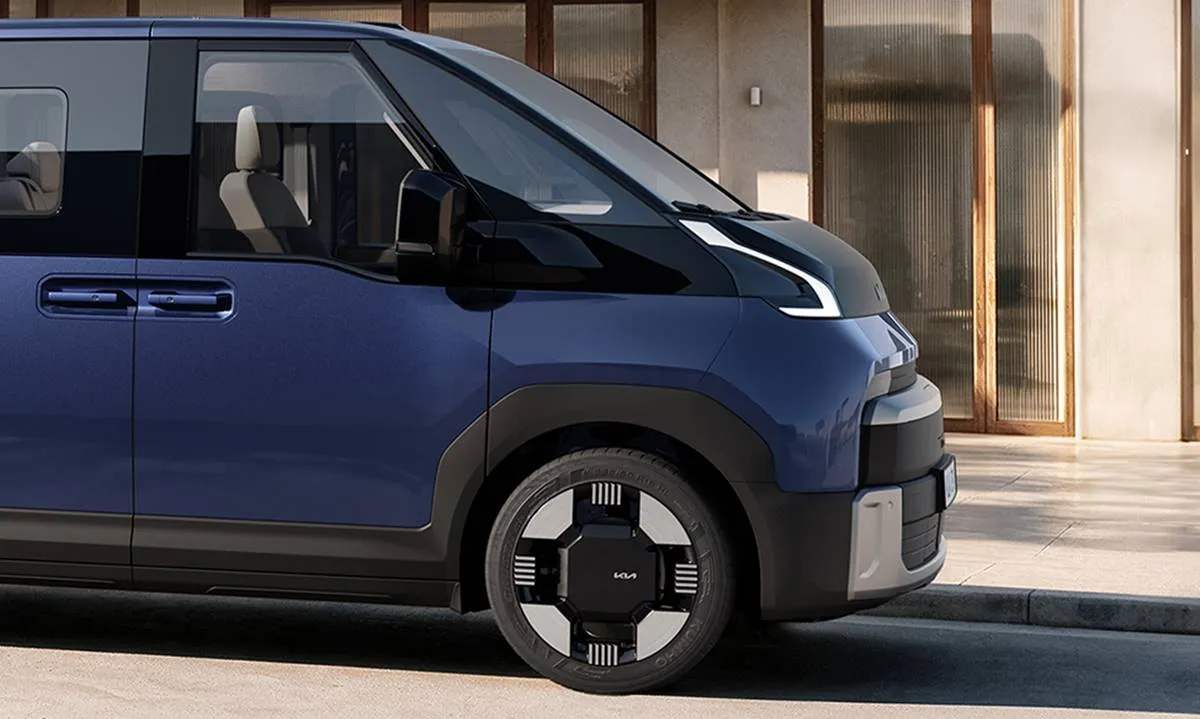
Kia aims to expand its presence in a segment that appears to be booming again: electric vans. This industry places as much emphasis on space, ease of use, and charging times as it does on fuel consumption. Following the PV5, the Korean brand is preparing a larger model designed to cater to professionals who need to transport more goods, as well as passenger transport companies and families seeking an alternative to SUVs.
The Kia PV7 is the second member of its PBV electric vehicle family and will be available in Cargo and Passenger versions. Introduced at the IAA Transportation show in Hannover, it uses the specialized E-GMP.S platform, featuring a flat floor and a structure built to accommodate various body types and modifications. Its launch in Europe and Korea is scheduled for the second half of 2027.
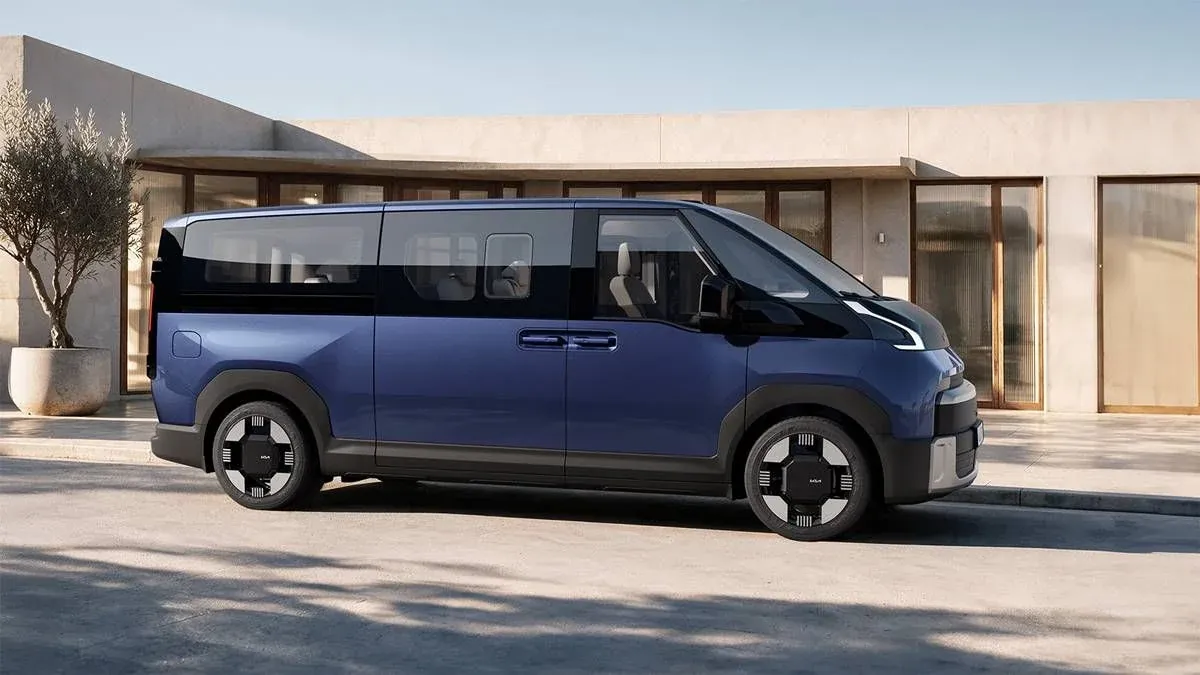
In the longer variants announced, the PV7 measures 5.35 meters in length, 2.00 meters in width, and 1.99 meters in height, with a wheelbase of 3.50 meters. These proportions are designed to maximize interior space and cargo area, featuring a short front end, a nearly horizontal roof, and a body with straight lines.
The design retains its connection to the PV5, especially in the black finish of the front end, pillars, and lighting. It also includes less eye-catching but useful features for daily users: the corners of the bumpers, certain sections of the wheel arches, and door trim can be replaced separately, making repairs easier.
Passenger and cargo space, with two batteries and fast charging
The PV7 Passenger will offer up to nine seats in international markets, while in Korea there will be versions with up to eleven occupants. The seven-seater version will feature removable seats on long rails, allowing the interior to be reconfigured as needed. Nine-seater variants with different seat arrangements are also planned, including options with four rows.
To enhance comfort, Kia will offer rear climate control, electric sliding doors, and USB-C ports with up to 100 W of power, depending on the version. The interior may include ambient lighting, two-tone finishes, and a center console that functions as a table during stops. These features increase its appeal beyond purely professional use.
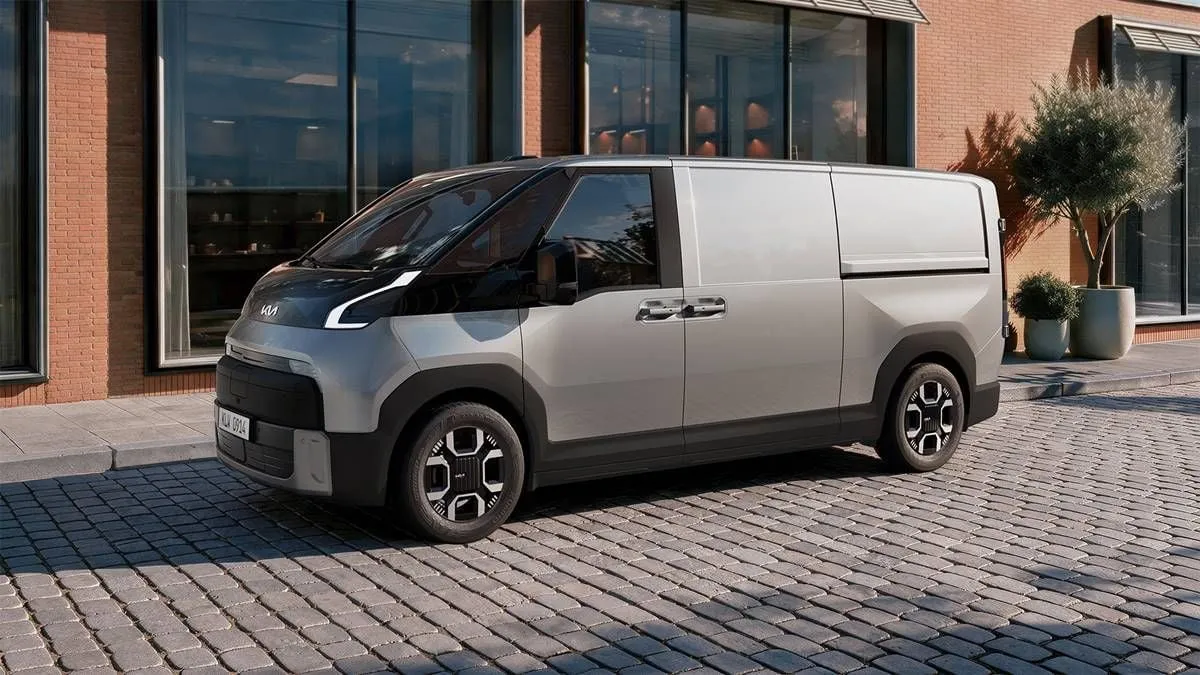
The PV7 Cargo will come in two or three-seater front configurations. The Long version will offer up to 6.1 m³ of cargo volume, while the high-roof model will reach 8 m³. The maximum payload announced is 1,165 kg for the Long version and 1,200 kg for the Compact version, so the longer body style isn’t necessarily the one that can carry the most weight.
In the Cargo Long version, the loading edge will be 55 centimeters above the ground with space for three Euro pallets. Drivers can choose between double-door rear doors or a liftgate, along with a partition featuring an opening for transporting long items. Separate locking for the cargo area and remote monitoring of door status complete the work-oriented features.
The cockpit will combine 12.9-inch and 14.6-inch screens with physical controls for the most frequently used functions. Kia has also optimized the seat position, steps, and front pillar handle to facilitate frequent entry and exit. In the three-seater Cargo versions, the central seat back can be folded down to create a tray surface.
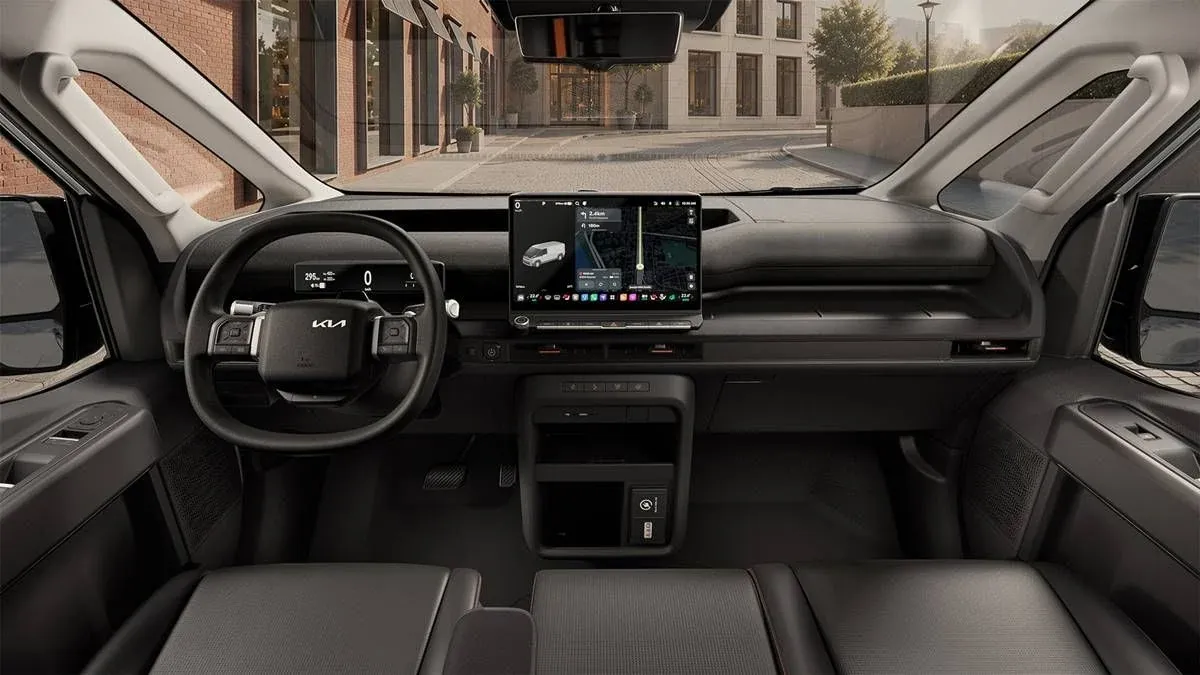
The Pleos Connect multimedia system, based on Android Automotive OS, will include connected navigation, apps, and remote updates. It will also feature the Gleo AI voice assistant for controlling functions using natural language. For businesses, Kia will add fleet management services, maintenance tracking, and diagnostics aimed at reducing service disruptions.
In terms of mechanical specifications, the PV7 will deliver up to 200 kW (272 hp) and 420 Nm, depending on the market and configuration. Front-wheel drive will be the initial option, with all-wheel drive version to follow later. The Cargo will also feature a dedicated driving mode to adjust performance when carrying heavy loads.
The range will use NMC batteries with capacities of 71.5 and 96.2 kWh. With the higher-capacity battery, Kia claims over 460 kilometers of WLTP range for the Cargo Long Range, though this is still preliminary data. The brand does not specify the range for other battery and body configuration combinations in this announcement.
The 800-volt architecture will enable a charge from 10% to 80% in about 25 minutes using a 350 kW DC charger. This figure refers to the charger used as a reference; Kia does not specify here the maximum power the PV7 itself can handle.
Another practical solution is the option to have two charging ports. The front port will accept AC and DC power, while a second optional connection located on the rear side will allow charging via AC. This makes it easier to connect the car when the layout of a parking spot or base station makes it difficult to bring the front port close to the charging station.
The V2L function will allow powering tools and other equipment through internal and external outlets. In terms of safety, Kia announces seven airbags, emergency automatic braking, lane keeping, adaptive cruise control, and various parking assist features. It will also include a system designed to reduce the risk of unintended acceleration caused by pedal confusion.
The manufacturer plans to expand the lineup to 23 variants, including compact, long, station wagon, and convertible body styles. Production will be supported by its Hwaseong EVO West plant and local specialists, with the future PV9 expected in 2029.
The PV7 will enter the European market in the second half of 2027, although Kia has not yet announced prices for Spain. That will be one of the key factors in evaluating a proposal that, on paper, offers interesting advantages: customizable interior space, work solutions, and a charging technology particularly useful for those who need to hit the road soon.
KIA PV7 Specifications Summary
Body styles: Passenger (long wheelbase, 9 seats) Cargo (long wheelbase, 3 seats)
Battery capacity: 71.5 kWh and 96.2 kWh
External dimensions: Length: 5,350 mm Width: 1,995 mm Height: 1,990 mm Wheelbase: 3,500 mm
Drive system: Front-wheel drive (2WD)
Engine: Maximum power: 200 kW, Maximum torque: 420 Nm