
Kia PV7: Electric van with up to 8 m³ capacity and 460 km range
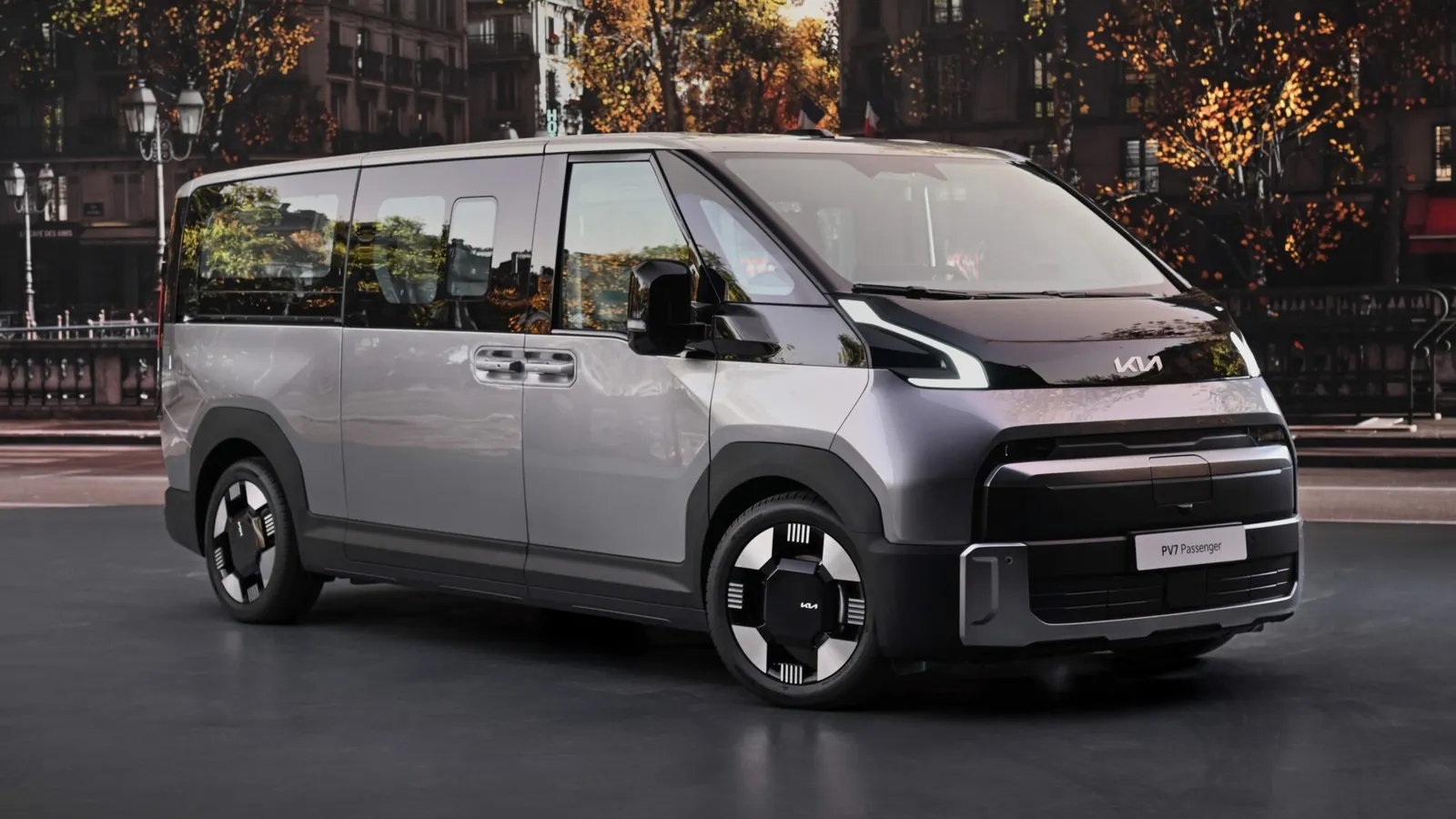
Kia unveiled the PV7 at the IAA Transportation in Hannover, the second model in its PBV series. The transporter will arrive in 2027 in both Cargo and Passenger versions, featuring a battery capacity of up to 96.2 kWh, a range of around 460 km, and 800-volt technology.
Advertisement
Kia unveiled the PV7 at the IAA Transportation 2026 in Hannover. It is the second vehicle in the “Platform Beyond Vehicle” series (PBV) following the PV5, targeting the electric light commercial vehicle segment. The PV7 is available in two basic versions: as a Cargo model for logistics, delivery services, and fleets, and as a Passenger model for passenger transport, shuttle services, and rental car operations. Launch in Europe and Korea is scheduled for the second half of 2027, with additional markets, derivatives, and modified versions to follow. The exhibition in Hannover runs from September 15th to 20th.
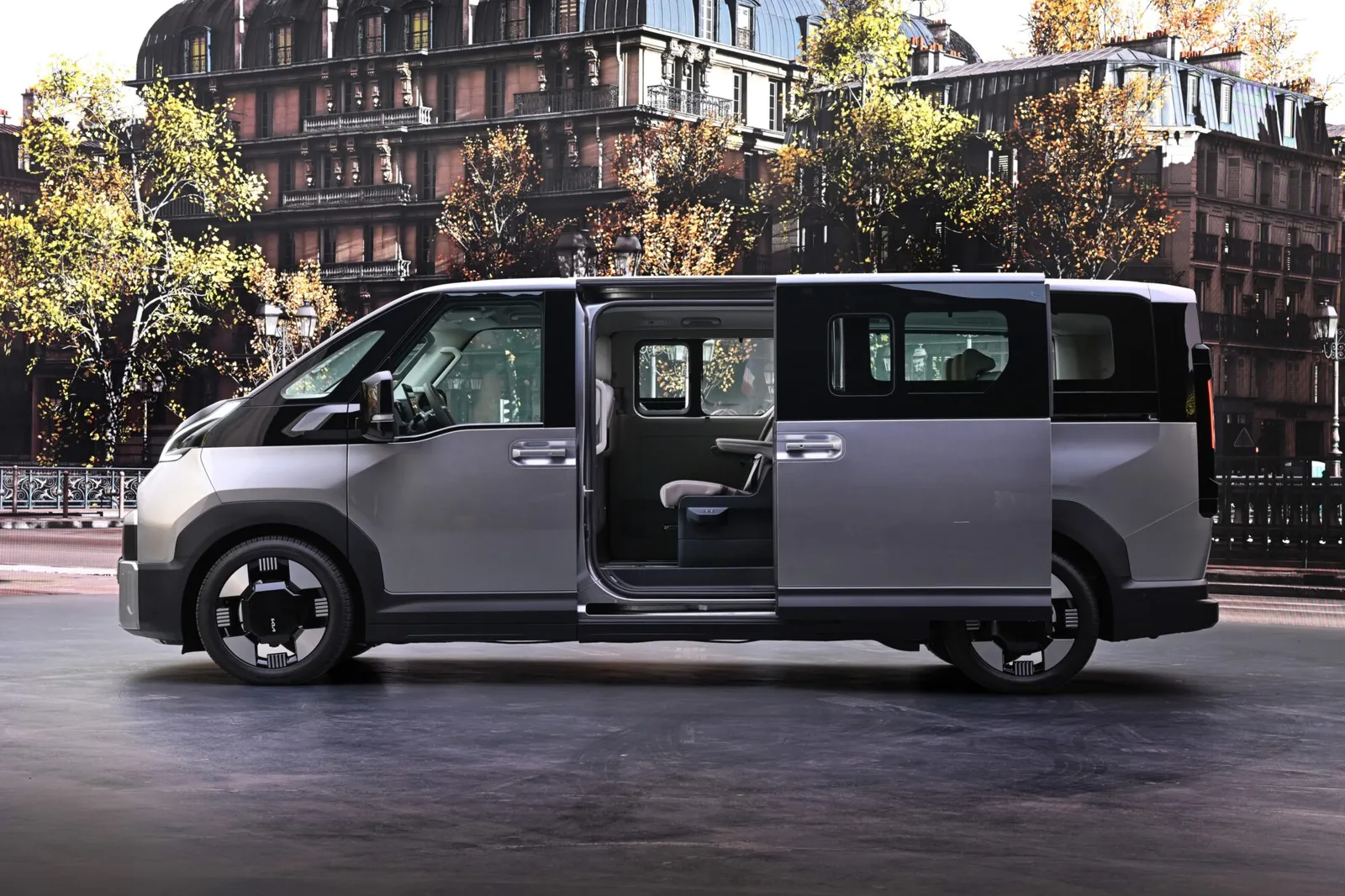
The technical foundation is the E-GMP.S platform developed for PBVs, featuring a flat floor. With a length of up to 5,350 mm, the PV7 is significantly larger than the PV5, which was named “International Van of the Year 2026.” Its width and height are 1,995 mm (2,030 mm including exterior mirrors and door handles), respectively, with a wheelbase of 3,500 mm. Additionally, it features the so-called Flexible Body System, a modular body architecture that allows for various variants and modified models to be developed based on a standardized vehicle structure.
Powertrain, Battery, and Range
Two NMC batteries with capacities of 71.5 and 96.2 kWh are available for propulsion. The PV7 comes standard with front-wheel drive, and depending on the market and configuration, the engine delivers up to 200 kW (272 hp) and 420 Nm of torque. Kia plans to offer an all-wheel-drive version at a later date.
Kia claims the PV7 Cargo equipped with the larger battery has a range of around 460 kilometers. This figure is based on the manufacturer’s own measurements according to WLTP standards; homologation for the German market version is still pending. Kia has not provided information on fuel consumption yet, as the vehicle is not yet on sale.
Features
Charging capacity and V2L function
The PV7 uses 800-volt technology. According to Kia’s internal tests, the battery should be able to charge from 10% to 80% in about 25 minutes at a 350-kW charging station. Notably, the layout of the connectors is unique: the PV7 is the first electric model in the brand’s lineup to feature a charging port at the front (AC/DC) and an optional second port at the back (AC). This should make maneuvering easier depending on the location of the charging station and the orientation of the vehicle.
The Vehicle-to-Load function allows external devices to be powered. For this purpose, 230-volt outlets are available inside the vehicle and on the outside, suitable for electric tools or business equipment.
Cargo Space, Payload, and Seating
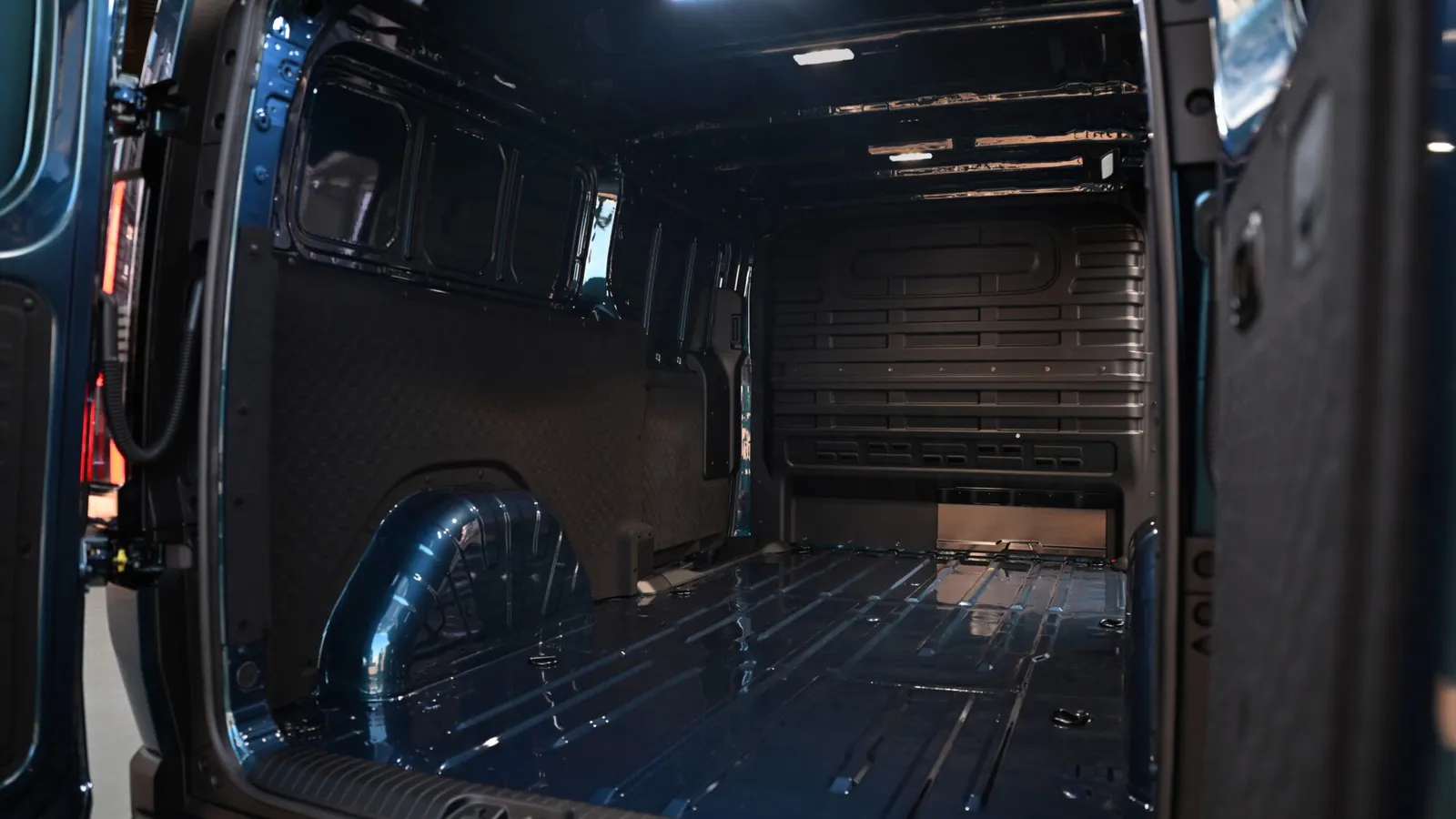
Kia offers the PV7 Cargo with two or three seats. The standard-length version with a normal roof has a cargo volume of up to 6.1 m³ per VDA standards, while the convertible roof version can hold up to 8.0 m³. The maximum payload is 1,165 kg for the standard-length version and 1,200 kg for the three-seater version. Up to three European pallets fit in the cargo area of the standard-length version, with a loading height of 550 mm. For heavy loads, there is a dedicated driving mode that adjusts the vehicle’s performance to the payload. For rear access, customers can choose between a double-door design and a traditional tailgate. A partition with loading capability is available only on the three-seater version.
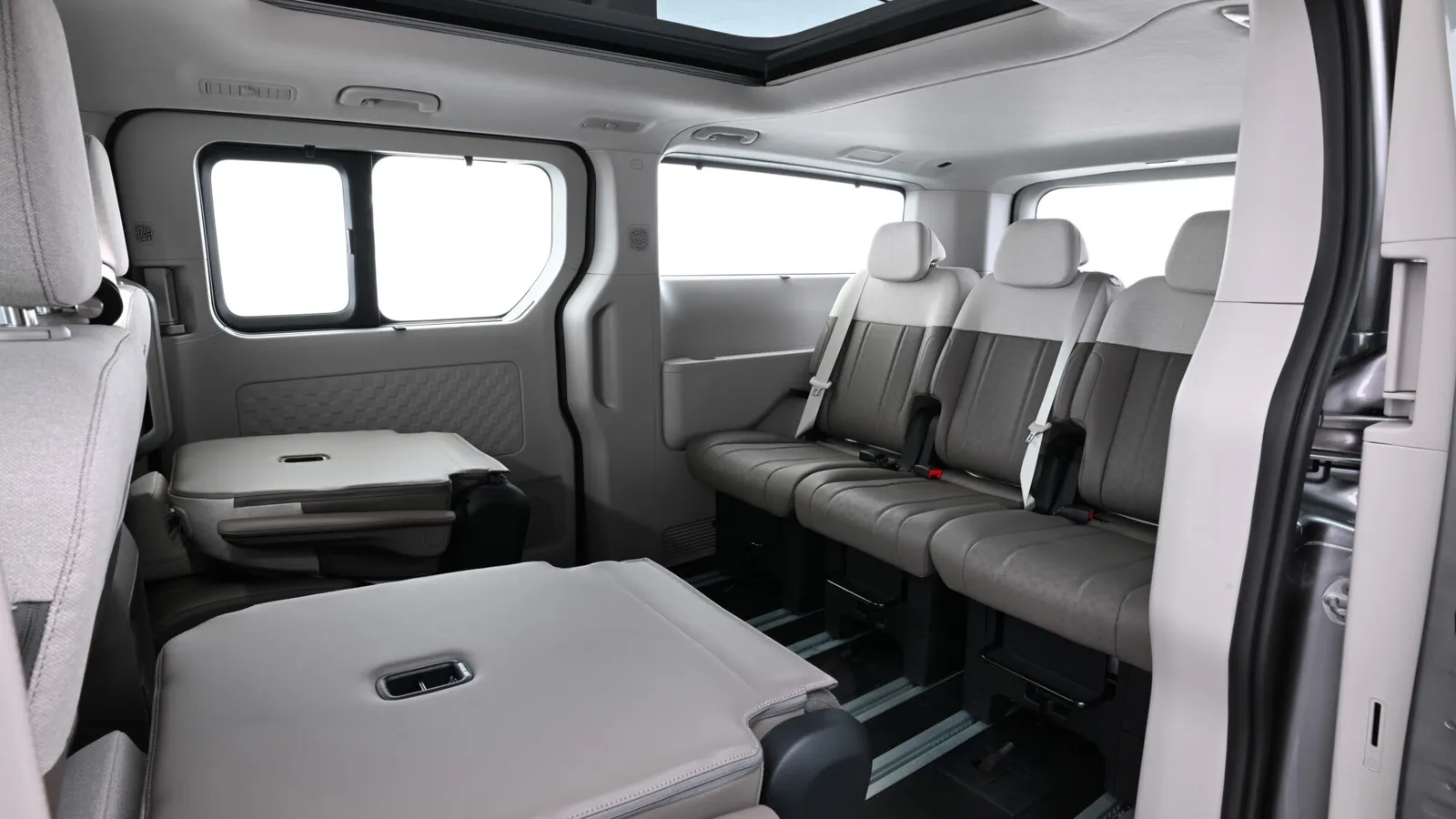
The PV7 Passenger can seat up to nine people, or up to eleven in Korea. The seven-seater model features longitudinally adjustable and removable seats, while the nine-seater is available with or without a fourth row of seats. A separate air conditioning system in the rear, USB-C ports with 100 watts of power, and optional electric sliding doors are available.
Operation, Design, and Planned Lineup
The interior features displays of 12.9 and 14.6 inches, along with the Pleos Connect infotainment system based on Android Automotive OS, which includes an open app marketplace, over-the-air updates, and the Gleo AI voice assistant. Physical controls for frequently used functions remain available. Safety features include seven airbags, including one passenger airbag located under the roof, as well as options such as Highway Assistant 2.0, navigation-based cruise control, Lane Keeping Assistant 2.0, remote parking assistant, and a surround-view camera. Availability varies by market, model, and trim level.
Visually, the PV7 follows the design language of the PV5 with a black hood, upright proportions, and a flat roofline. Interchangeable bumper corners along with wheel arch and door trim are designed to simplify repairs. New color options include “Fjord Blue,” “Solid Moonrock Gray,” and “Lush Green,” while the Passenger model adds matte finishes.
After launching on the market, Kia plans to expand the PV7 lineup to 23 variants, including three cargo versions (Standard, Long, Convertible), two Passenger versions, and a Chassis Cab for custom builds. Production takes place at the Hwaseong EVO Plant in Gyeonggi Province, supported by a nearby conversion center and regional partners. Another model, the PV9, is set to follow in 2029. At Hannover, Kia displays three PV7 models along with seven variants of the PV5, ranging from a food truck to the wheelchair-accessible WAV.
Advertisement