
Kia PV7 electric van targets 286-mile range and 1,200kg payload
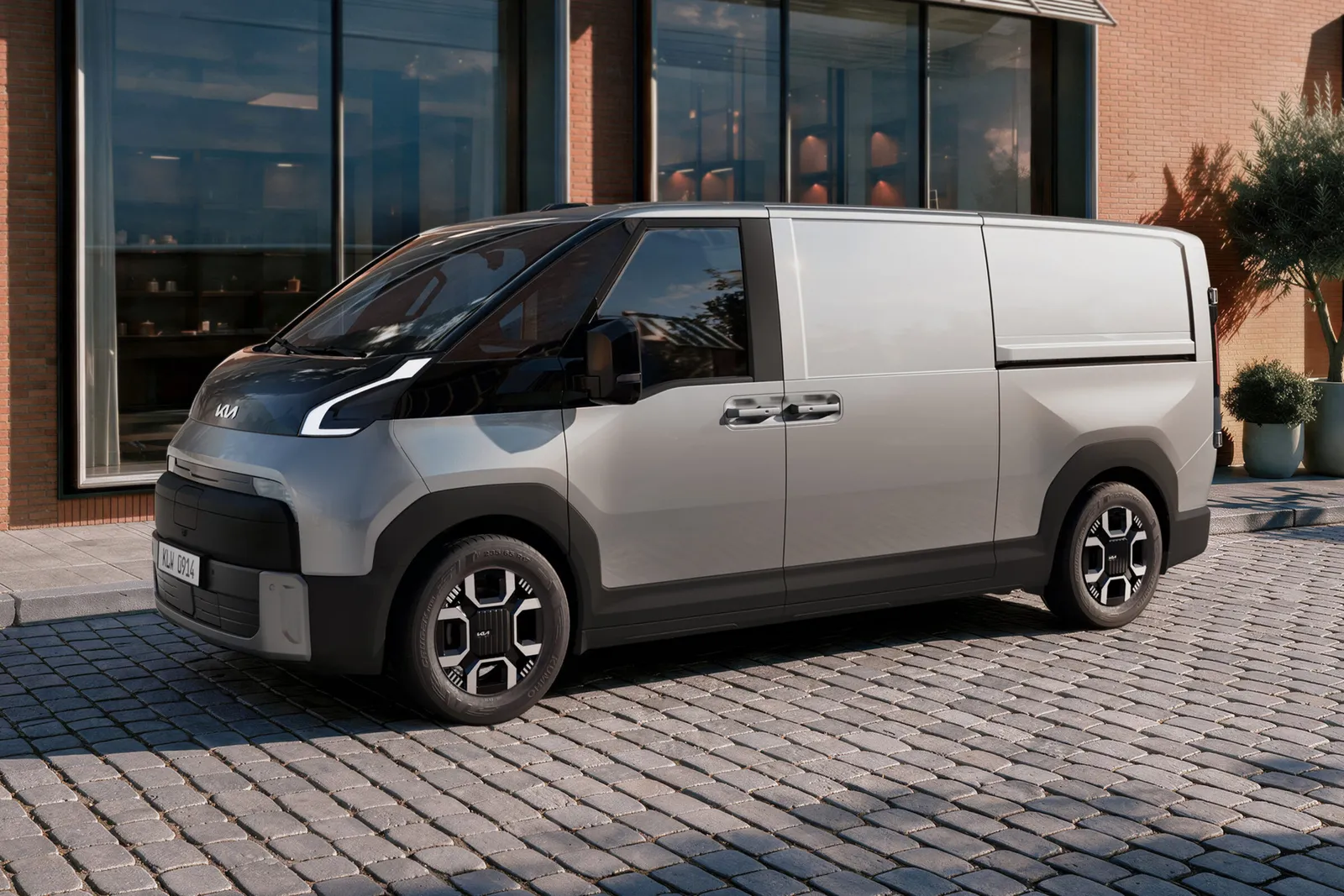
Kia has unveiled the PV7, a larger electric van offering up to 1,200kg of payload, a claimed range exceeding 286 miles and 800V charging technology, ahead of a planned European launch in the second half of 2027.
Revealed at IAA Transportation in Hanover, Germany, the new model will be available in Cargo and Passenger forms, with seating for up to nine people in global markets. It is the second vehicle in Kia’s dedicated Platform Beyond Vehicle (PBV) range, following the smaller PV5.
The PV7 broadens Kia’s ambitions beyond urban deliveries towards larger logistics operations, shuttle services and businesses needing greater carrying capacity. However, UK prices and final specifications have not been announced, and Kia cautions that some features described at the unveiling may not reach British models.
Buyers will have a choice of 71.5kWh and 96.2kWh nickel cobalt manganese batteries. Kia quotes more than 460km, equivalent to around 286 miles, under the WLTP cycle for the Long Range Cargo version. Separate range figures for the smaller battery and Passenger models have yet to be provided.
The PV7 uses Kia’s dedicated E-GMP.S commercial vehicle architecture, with a flat floor intended to maximise usable space. Front-wheel drive is standard, with outputs reaching 200kW and 420Nm depending on market and configuration. An all-wheel-drive version is planned for a later date.
Its 800V electrical system is intended to enable a 10–80% charge in approximately 25 minutes when connected to a 350kW DC charger. Kia describes this as a time in the “mid-20-minute range”, with confirmation still pending. The charger rating should not be confused with a confirmed maximum charging rate for the vehicle, which the announcement does not specify.
Charging flexibility is another focus. For the first time on a Kia, the PV7 will offer two charging ports: a front connection supporting AC and DC charging, plus an optional rear-side AC port. This could make depot charging easier where parking layouts or cable positions restrict access to the front of the van.
Vehicle-to-load functionality will allow tools and other equipment to draw power from the traction battery through interior and exterior outlets. For tradespeople, that could make the vehicle useful as a mobile power source as well as transport.
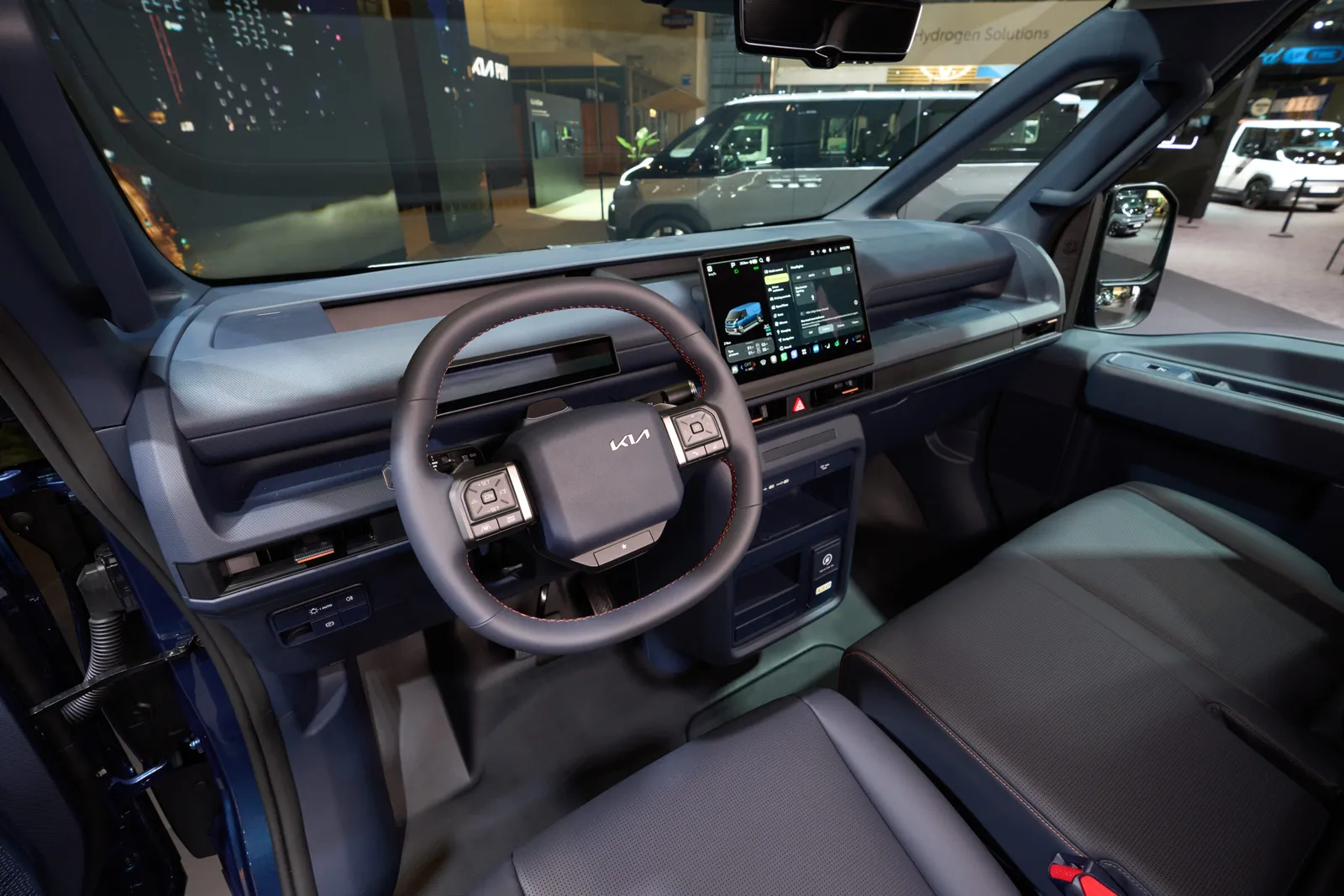
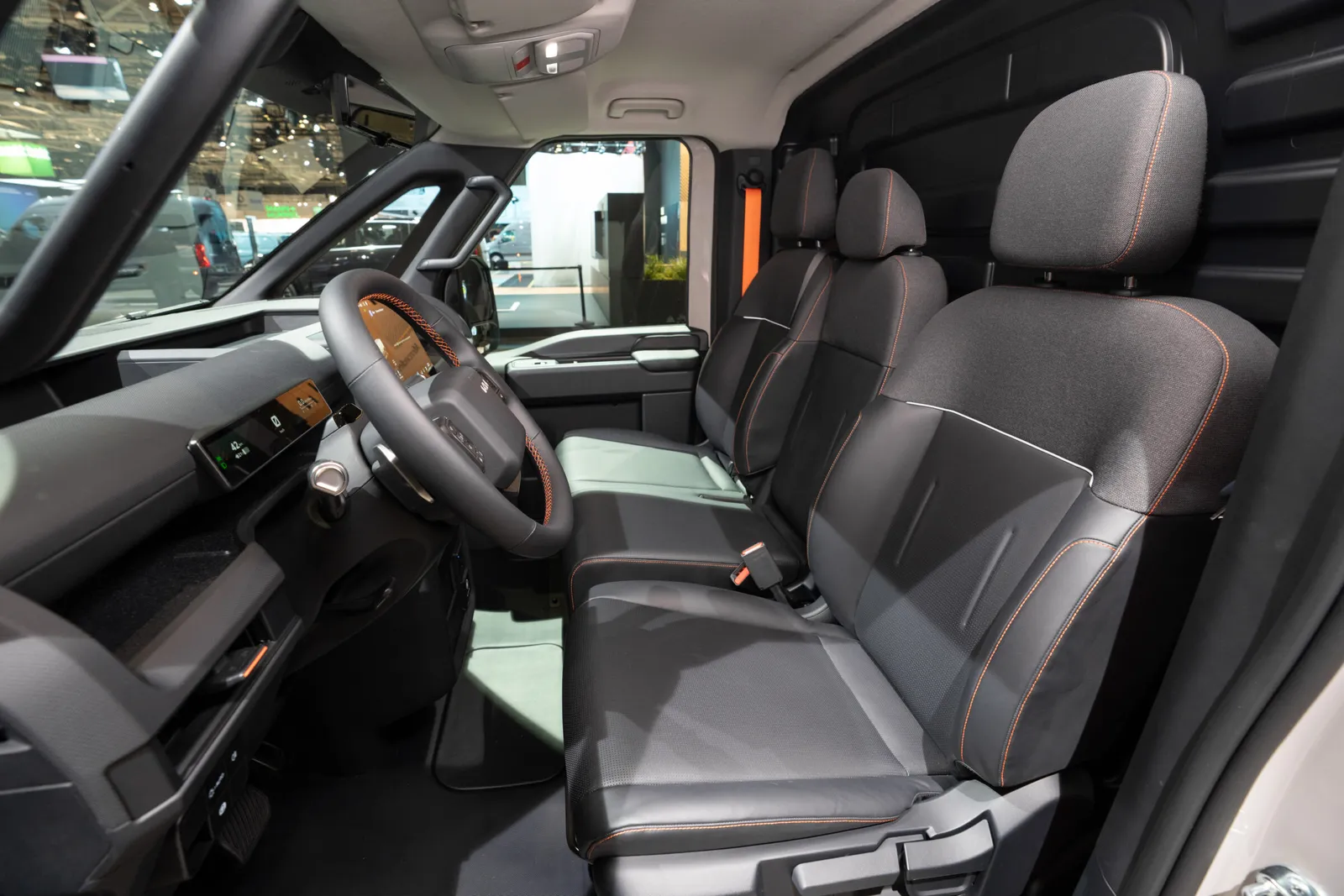
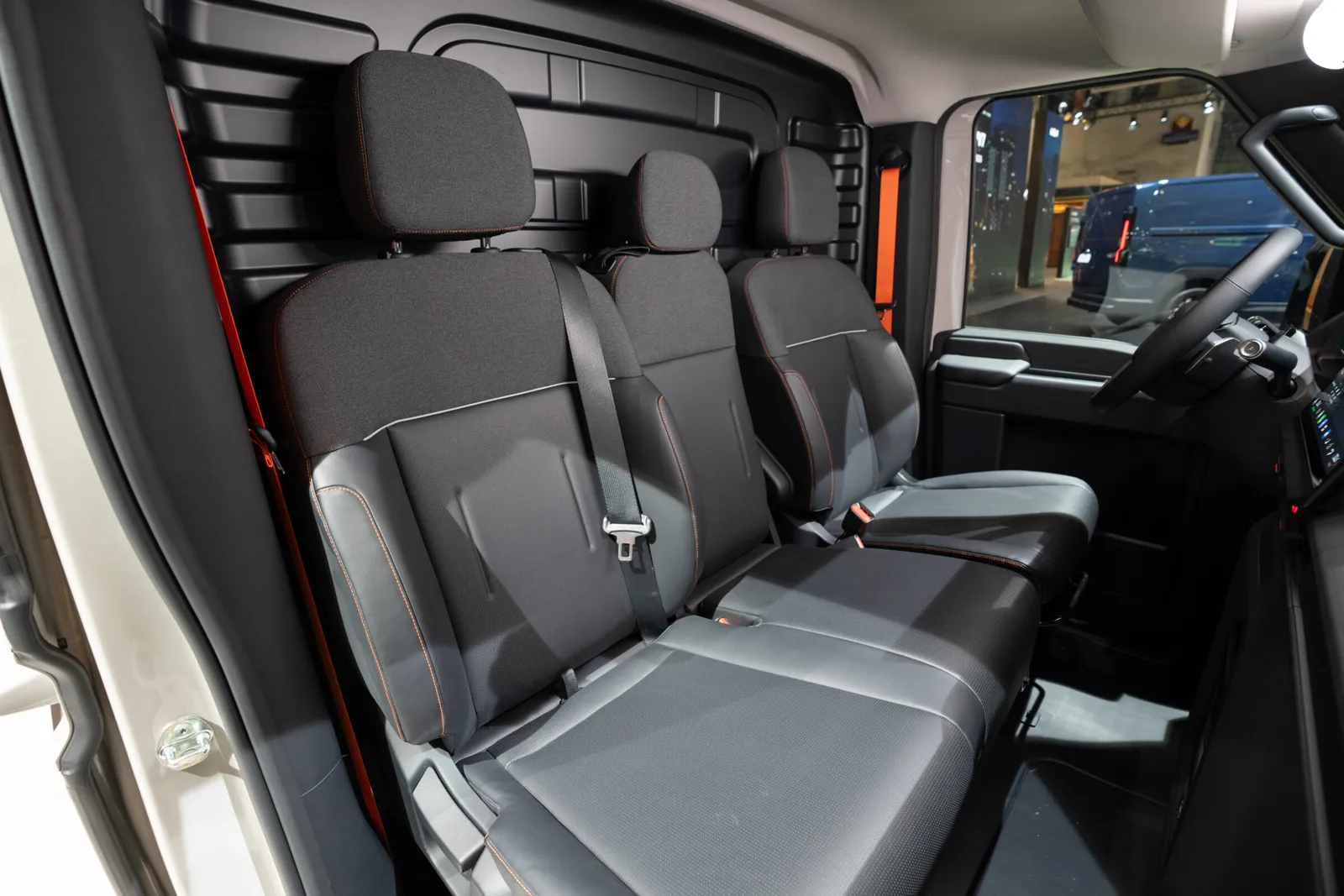
“The PV7 marks the next step in our journey toward personalised mobility, building on the foundation established by the PV5,” said Ho Sung Song, Kia’s president and chief executive.
“By bringing together hardware developed for specific applications, business-tailored software and dedicated PBV services, the PV7 goes beyond the vehicle itself to deliver a complete business solution that helps customers achieve greater productivity, flexibility and long-term value.”
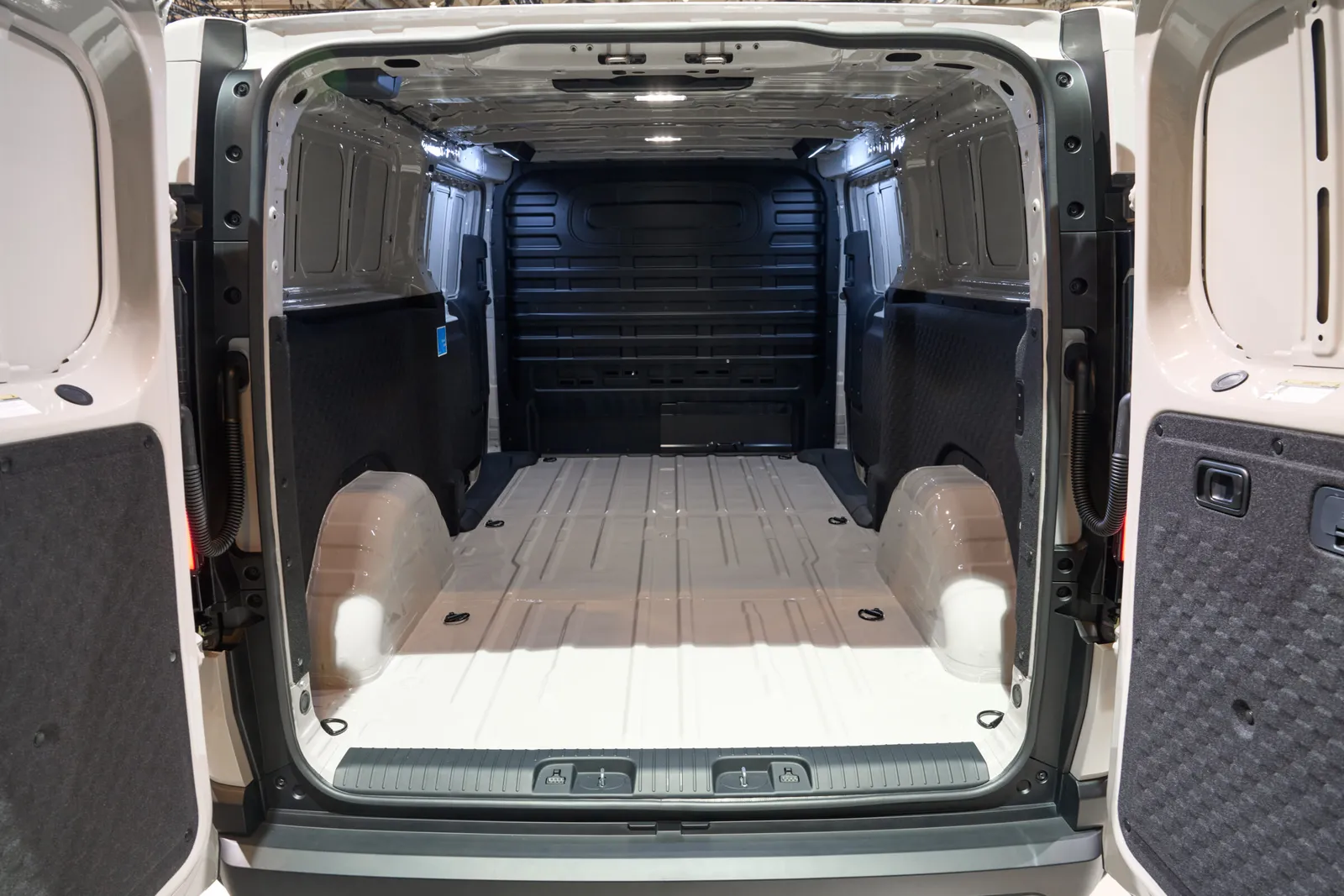
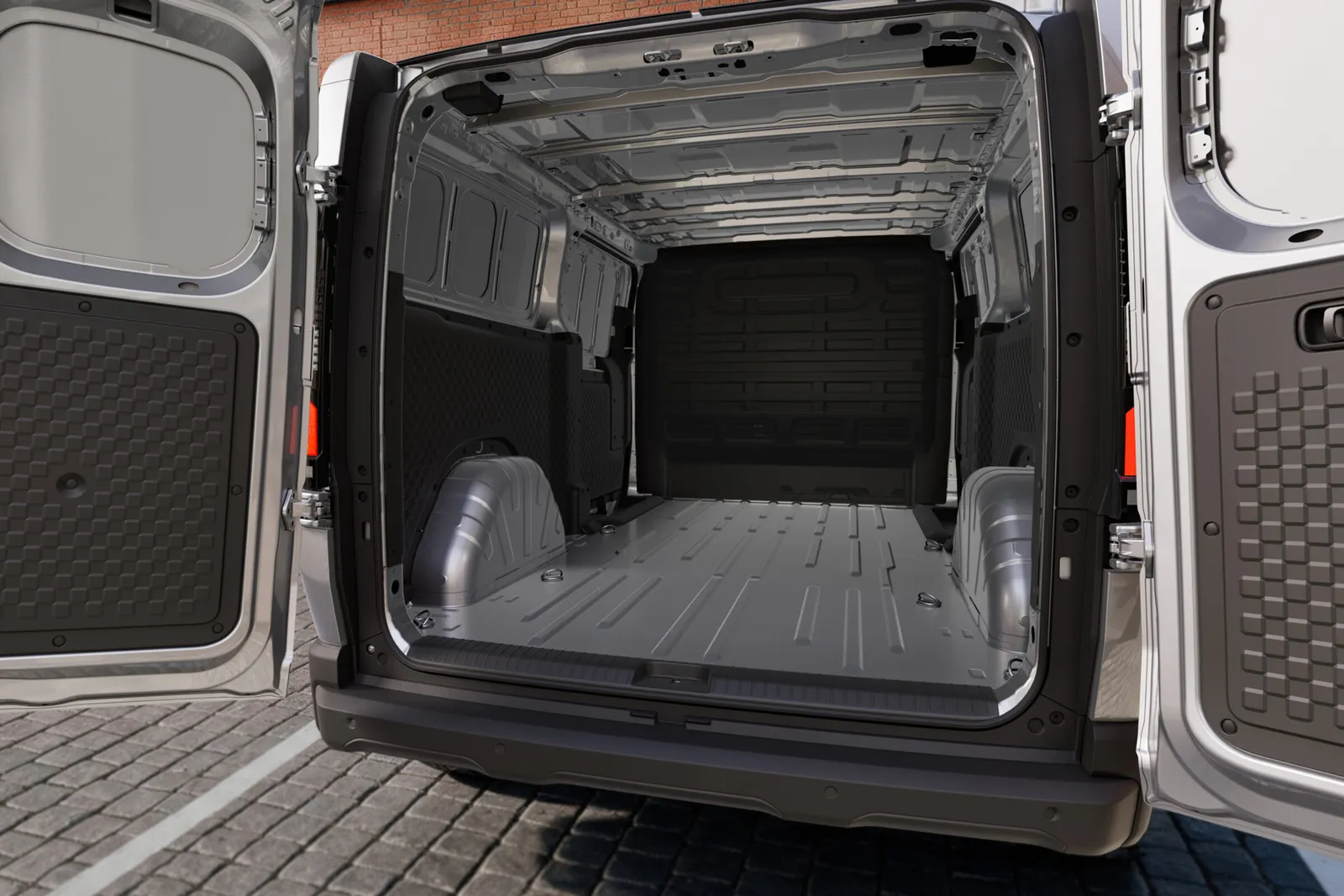
For commercial operators, the most important differences between versions concern load space and payload. The Cargo Long provides up to 6.1 cubic metres of capacity, measured to the VDA standard, while the High Roof increases this to 8.0 cubic metres.
Maximum payload is up to 1,165kg for the Long model and 1,200kg for the Compact. The Long has a loading height of 550mm and can accommodate three Euro pallets, each measuring 800mm by 1,200mm. A dedicated heavy-load driving mode adjusts vehicle performance to suit changing payload conditions.
Preliminary dimensions for both the Long Cargo and nine-seat Long Passenger versions are 5,350mm in length, 1,995mm in width and 1,990mm in height, with a 3,500mm wheelbase. These figures give operators an initial basis for assessing parking and access requirements, although final certification remains outstanding.
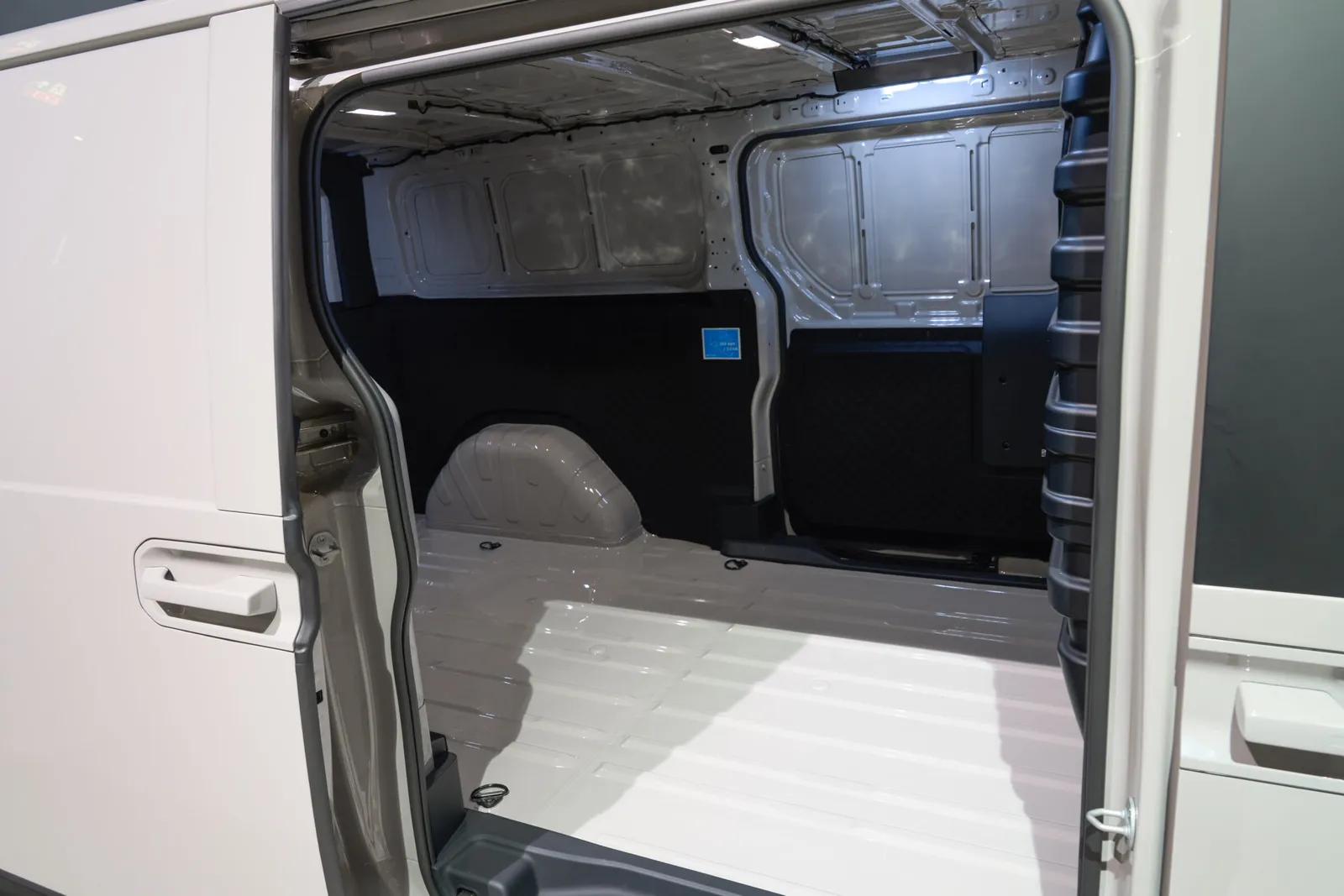
Cargo versions will offer two or three front seats globally. Customers can choose twin rear doors or a conventional lifting tailgate, while a load-through bulkhead adds flexibility for carrying longer items. Cargo doors can be locked and unlocked independently, with remote monitoring of their open or closed status.
An available Smart Walk Away function automatically closes the power sliding door when the driver leaves carrying the smart key. Inside three-seat versions, the centre seatback folds down to provide a tray when the seat is unoccupied.
The Passenger model targets crew transport, shuttle operators, rental businesses, tourism and family use. Global versions accommodate up to nine occupants, while an 11-seat configuration is planned for Korea.
Seven-seat models feature removable seats mounted on long rails, allowing the interior to be rearranged. Nine-seat versions will be offered with or without a fourth row. Rear climate control, available 100W USB-C charging ports and optional power sliding doors are among the passenger-focused features.
Kia has also considered drivers making repeated stops. An A-pillar grab handle, the seating position and step design are intended to make entry and exit easier. Frequently used functions retain physical controls, alongside the digital displays.
The cabin technology includes 12.9-inch and 14.6-inch displays and Kia’s Pleos Connect system, based on Android Automotive OS. It supports connected navigation, business applications and over-the-air updates. An AI voice assistant, Gleo AI, provides natural-language control of vehicle settings, navigation and messaging.
Fleet support extends beyond the dashboard. Kia’s Business Solutions Portal brings together charging, maintenance and fleet management functions, while connected vehicle data interfaces allow integration with operators’ systems. Its Uptime services use monitoring, predictive diagnostics and proactive maintenance management to help reduce disruption.
Safety equipment includes seven airbags, with a roof-mounted front passenger airbag, plus technology intended to reduce unintended acceleration caused by pressing the wrong pedal. The announced assistance systems include collision avoidance, lane keeping, navigation-based cruise control and Highway Driving Assist 2.0.
Parking aids include front, side and rear distance warnings, surround-view cameras and remote parking assistance. Kia also lists a built-in camera system for recording and reviewing driving footage, although UK equipment availability remains subject to confirmation.
The upright, squared-off body follows the design established by the PV5, combining a flat roof with extensive glazing on Passenger versions. Replaceable bumper corners, wheelarch sections and door cladding are intended to simplify repairs and limit downtime after minor damage.
Bio-based and recycled materials feature throughout the vehicle, with different interior finishes distinguishing the Cargo and Passenger versions.
Kia ultimately plans 23 PV7 variants, including Compact, Long and High Roof Cargo models, Compact and Long Passenger versions, a chassis cab and specialist conversions. Production will be supported by its Hwaseong EVO West PBV factory and conversion centre, alongside regional conversion partners.
A shared connector will allow conversion equipment to be controlled from within the vehicle. The approach is intended to help businesses specify bodies and equipment suited to particular jobs, rather than relying solely on the standard van configurations.
The PV7 will be displayed publicly at IAA Transportation from 15–20 September alongside seven PV5 derivatives. Further markets and conversions will follow its Korean and European launch, with the larger PV9 scheduled to join Kia’s expanding electric commercial vehicle range in 2029.
Kia PV7 Preliminary Specifications
Length
5,350mm
5,350mm
Width
1,995mm15
1,995mm16
Height17
1,990mm
1,990mm
Wheelbase
3,500mm
3,500mm
Drivetrain
2WD (front-wheel drive)18
Max. Power
200kW
Max. Torque
420Nm
Variant
Passenger (Long, 9-seat)
Cargo (Long, 3-seat)
Battery capacity
71.5kWh
96.2kWh
71.5kWh
96.2kWh