
Kia unveils the PV7 for the first time, its new electric van featuring batteries of nearly 100 kWh, up to 8 m³ of cargo space, a range of 460 km, and 9 seating positions.
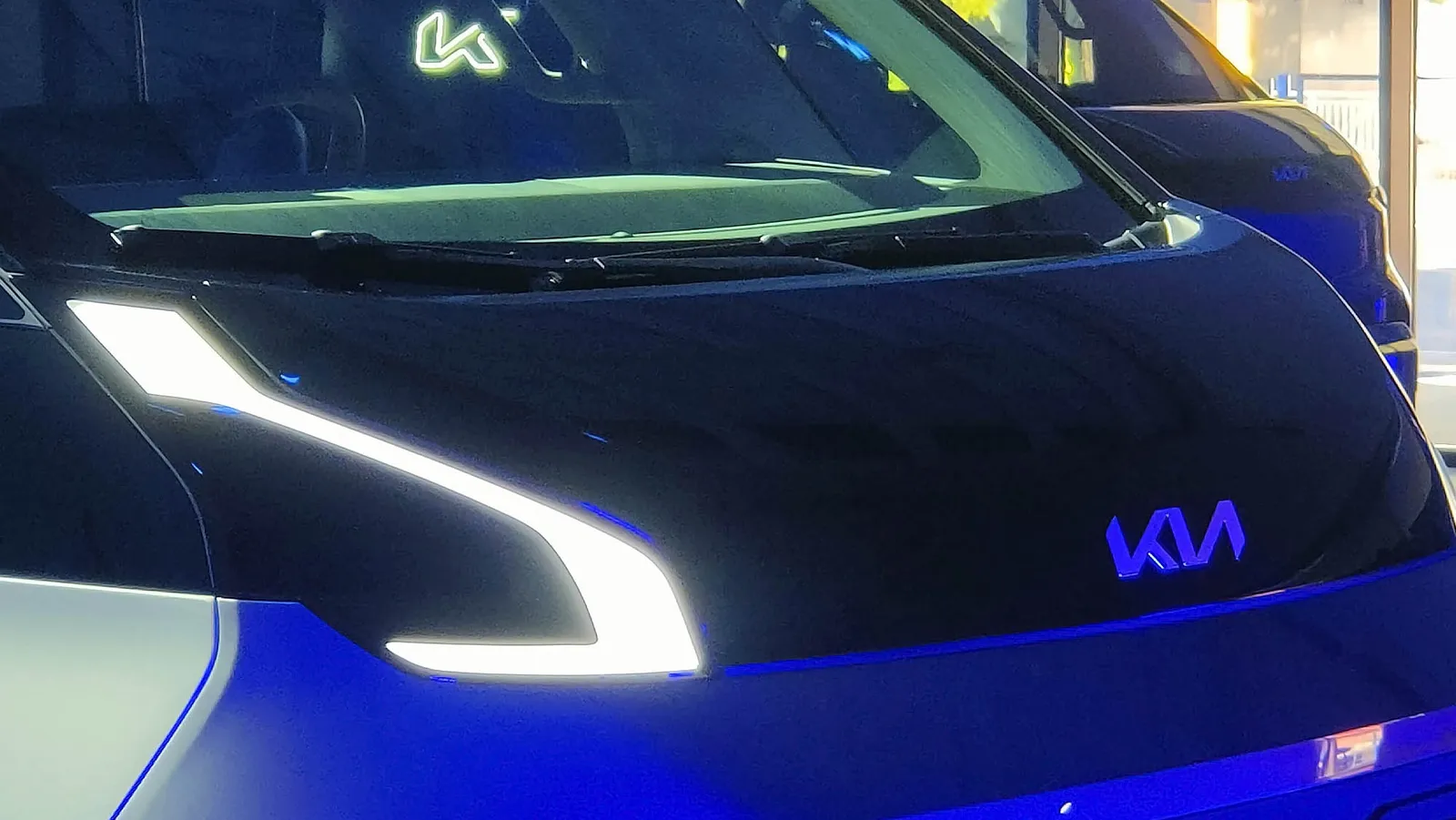
Kia has officially unveiled the new PV7, an electric van that expands its focus on zero-emission commercial vehicles and sits one tier above the PV5.
The new model, the second member of the Platform Beyond Vehicle (PBV) family, combines greater cargo capacity with an 800-volt electric architecture, batteries up to 96.2 kWh, and various configurations for passengers and goods.
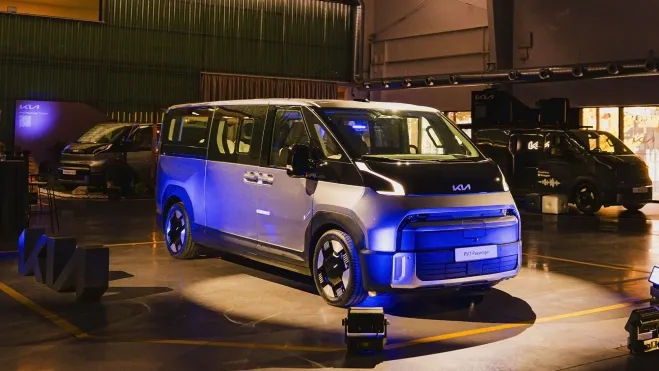
A larger and more capable electric van
The global debut took place on September 14, 2026, at the IAA Transportation show in Hannover, Germany. Its arrival in European markets is scheduled for the second half of 2027.
The PV7 is a key component in Kia’s electric vehicle strategy for the commercial vehicle market. Following the launch of the PV5, the brand expands its offerings to a larger and more capable segment, aiming to compete in both professional freight and passenger transportation. Its European launch will take place in the second half of 2027.
The PV7 is built on the specialized E-GMP.S platform developed by Kia for its new generation of PBV vehicles. Unlike the more urban and flexible design of the PV5, the new model follows the Tool Box concept, designed to provide a work vehicle adaptable to various professional activities and transportation needs.
Its dimensions reflect that leap in class. The long-range version measures 5.35 meters in length, 1.995 meters in width, and 1.99 meters in height, with a wheelbase of 3.5 meters. This configuration allows for a larger cabin and better utilization of interior space thanks to a nearly flat floor.
The initial lineup consists of two main options: the PV7 Cargo, designed for professional freight transportation, and the PV7 Passenger, aimed at passenger transport, shuttle services, and family mobility.
Two batteries and over 460 kilometers of range
One of the main selling points of the new Kia PV7 is its electric propulsion system. The brand will offer two batteries using NCM (nickel, cobalt, and manganese) technology, with capacities of 71.5 and 96.2 kWh respectively.
Depending on the configuration and market, the electric motor delivers up to 200 kW (272 hp) and 420 Nm of maximum torque. Front-wheel drive will be the initial configuration, although Kia is already considering adding a four-wheel-drive version.
The Cargo Long Range variant claims a range of over 460 kilometers on the WLTP cycle. This is a preliminary figure provided by the manufacturer, pending final approval, so it should not yet be considered an official figure for all versions.
The 800-volt technology allows for 10 to 80% of the battery’s capacity to be restored in approximately 25 minutes using a 350 kW fast DC charger. This is a particularly attractive solution for commercial vehicles that need to minimize downtime.
Another feature is the inclusion of two charging ports: a front port compatible with both AC and DC power, and an optional rear AC port on the side.
Up to 8 cubic meters for cargo transport
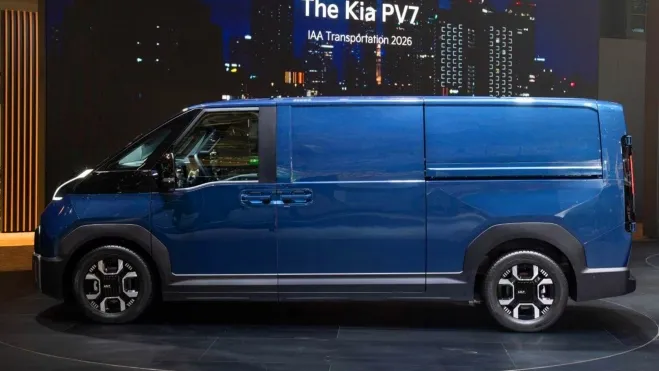
The Kia PV7 Cargo is designed for delivery, logistics, maintenance, and professional transportation companies. It will be available in two- and three-seater configurations with various body styles to meet the needs of each industry.
The Cargo Long variant has a cargo volume of up to 6.1 m³, while the High Roof configuration, with an elevated roof, reaches 8 m³. Kia’s announced maximum approved payload capacity is 1,165 kg for the Long version and 1,200 kg for the Compact version.
The Long configuration allows for the transport of up to three European pallets measuring 800 x 1,200 mm and features a cargo edge height of 550 mm. It also includes a dedicated heavy load driving mode that adjusts the vehicle’s performance to the operating conditions.
The rear opening can be configured with two double-door panels or a conventional gate. Among the practical solutions is Smart Walk Away, which allows the electric sliding side door to close automatically when the driver moves away using the smart key.
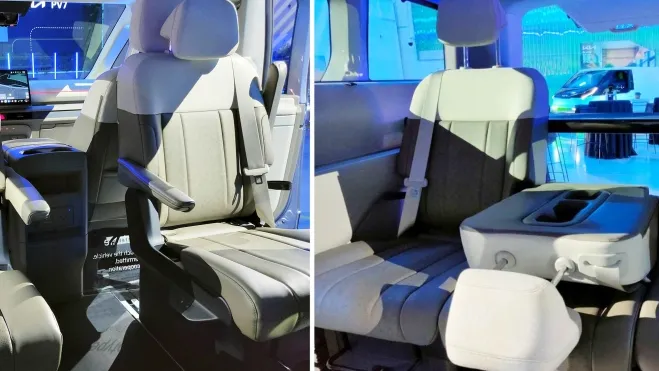
A Passenger version with capacity for nine occupants
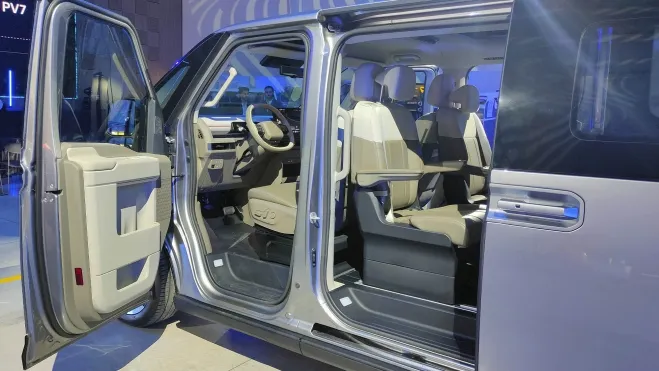
The passenger variant significantly expands the utility of the PV7. In the European market, it can carry up to nine passengers, with various interior configurations.
The seven-seater version features Long-Rail Easy Remove seats that can be moved and removed to adjust the cabin layout according to each trip’s needs. The nine-seater configuration allows choosing between a layout with or without a fourth row of seats.
Additional amenities include climate control for the rear seats, USB-C ports with up to 100 W of power, and various storage spaces.
In this way, Kia aims to meet the needs of passenger transport companies and shuttle services, as well as tour operators and families requiring a large-capacity electric vehicle.
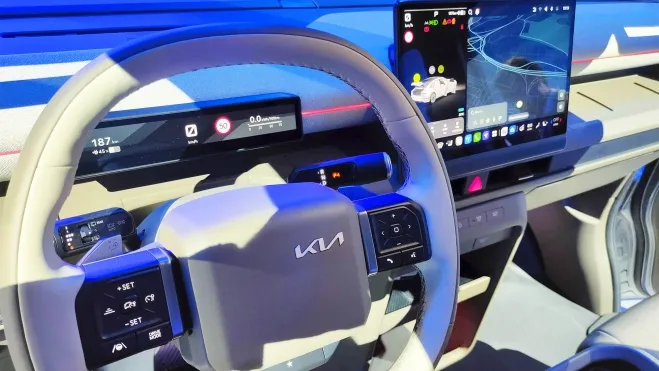
Connected technology and 23 planned variants
Digitalization also plays a key role in this proposal. The interior features two screens, 12.9 and 14.6 inches, through which access is provided to vehicle functions and connected services.
In the professional segment, Kia aims to set its PBV lineup apart through an ecosystem that combines the vehicle, software, and services. The Kia Business Solutions portal will enable management of fleets, charging, and maintenance, while the Fleet Management System (FMS) will facilitate tracking of vehicles and their activities.
The brand also offers Uptime services featuring real-time monitoring, predictive diagnostics, and proactive maintenance management. Additionally, there is the Vehicle-to-Load (V2L) technology, which allows using energy stored in the battery to power external or internal electrical tools and equipment.
The range will gradually expand to include 23 variants. In addition to the Cargo Compact, Long, and High Roof versions as well as the Passenger Compact and Long versions, Kia will introduce a Chassis Cab configuration and various modifications designed for specialized professional applications.