
A Kia executive expects more electric car sales than gasoline-powered vehicle sales in Europe by 2030.
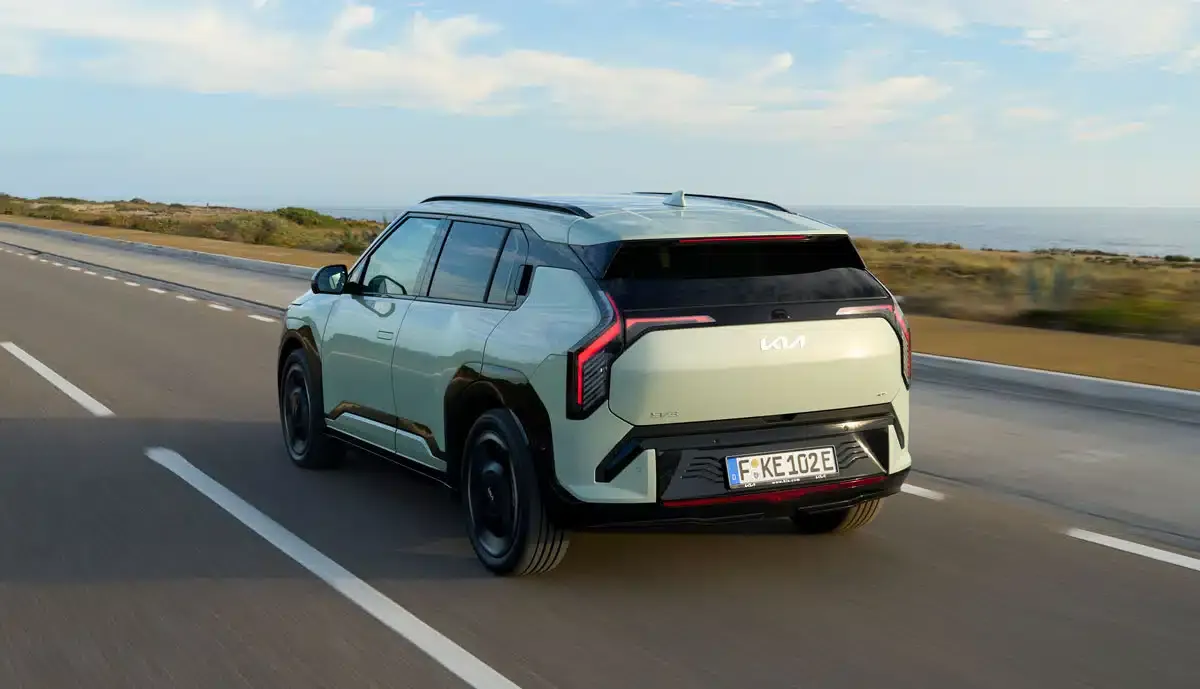
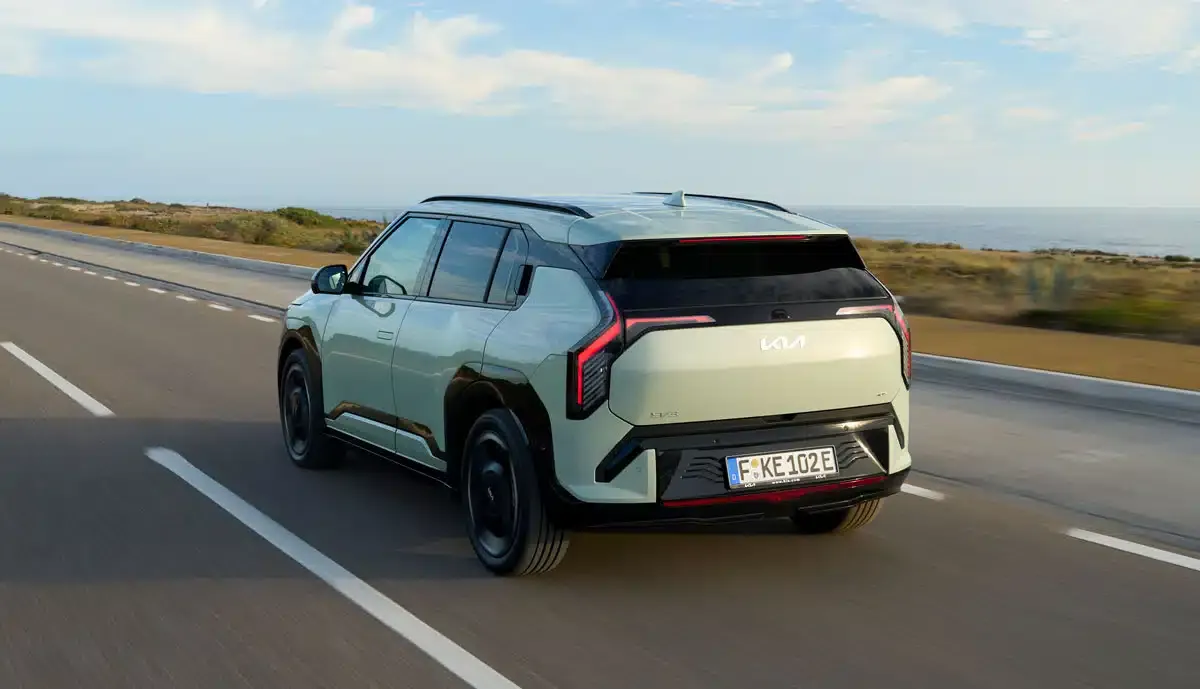
Image: Kia
Kia has a high proportion of battery electric vehicles in Europe. In the first half of the year, the brand’s electric vehicle share was over 30 percent, while in Germany it reached around 42 percent after six months. COO Sjoerd Knipping notes an acceleration in market growth over the past few months, citing more models, rising fuel prices, and government subsidy programs as drivers of demand in an interview with Autogazette.
A key factor is the availability of compact and affordable electric cars. The EV3 is currently Kia’s best-selling electric model, while the EV2, launched a few months ago, is intended to appeal to an even broader customer base. “It’s not just our smallest electric vehicle. It’s our response to the question of whether an affordable, compact electric car can also be a family’s primary vehicle,” says Knipping.
Demand for the EV2 exceeds expectations. Starting at 26,600 euros, the model initially came with a 42.2-kWh battery and a range of 314 kilometers, but it is now also available with a 61 kWh battery offering up to 430 kilometers of range. Knipping sees demand for the smaller battery version as a sign of growing confidence in the actual range of modern electric cars.
In Norway, nearly 99 percent of new car registrations are already electric vehicles. Knipping cites financial incentives, practical advantages, and good charging infrastructure as key factors, but he also emphasizes the differences between European markets. While some countries achieve electric vehicle shares of 50, 80, or even over 90 percent, Spain and Italy are at around 10 percent or lower. In Germany, 32.4 percent of new car registrations last month were for battery-electric vehicles.
Regarding charging capacity, Knipping believes a consistently high level of performance is more important than peak values as high as possible. The EV3 can reach up to 128 kW, while the EV2 reaches up to 118 kW. What matters most is how quickly an electric vehicle can be charged from 10 percent to 80 percent in everyday use.
In addition to purely battery-powered vehicles, Kia continues to offer hybrids, plug-in hybrids, and other powertrains as long as there is demand for them. Knipping describes affordability as one of the biggest hurdles to broader acceptance of electric vehicles. He expects a faster shift when the price gap compared to internal combustion engines narrows. He does not see a range extender, which uses an internal combustion engine as a power generator for the electric drive, as a priority at present.
By August, Kia achieved 7.8 percent growth in Germany, with around 44,000 new registrations. Knipping sees further potential especially through the EV2, new all-wheel-drive variants, and sporty GT models. By 2030, he expects Kia to sell more electric vehicles than internal combustion engine cars in Europe.
Also interesting
About the author
Thomas Langenbucher is an expert in electromobility with professional experience in the automotive industry and finance sector. Since 2011, he has been covering electric vehicles, sustainable technologies, and mobility solutions for ecomento.de. Learn more.
Reader interactions