
The Kia EV2, XPENG X9, and Audi Q7 all got 5 stars. Euro NCAP prefers buttons.
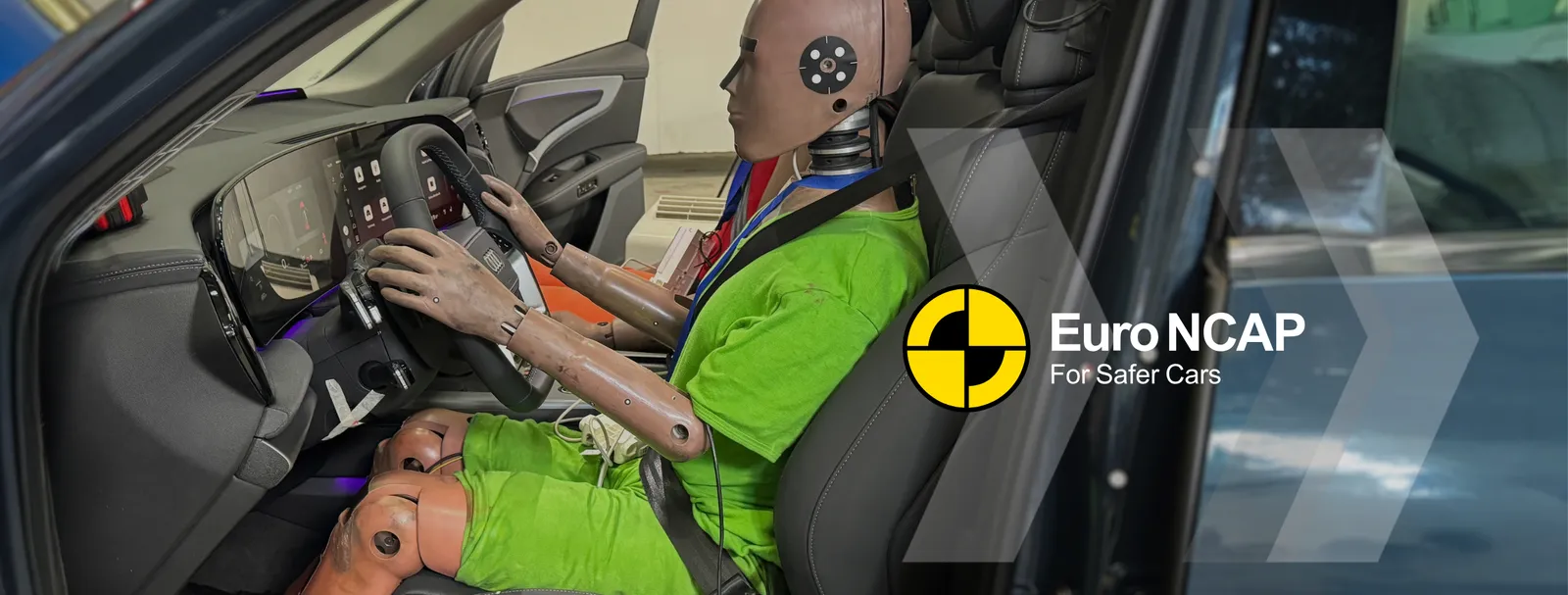
Euro NCAP released on October 12, 2026, the test results for the Audi Q7, Kia EV2, and XPENG X9 under the new protocol. All three vehicles earned 5 stars, but significant differences appeared in the assessment of basic function operation: Audi scored 90%, while XPENG got only 20%.
Starting in 2026, Euro NCAP evaluates not only crash protection and ADAS system performance. In the Safe Driving section, it also assesses whether the driver can directly activate turn signals, wipers, windshield washers, hazard lights, the horn, and eCall. The organization prefers physical buttons and levers because searching for functions on a screen distracts the driver more from the road.
Audi returned to buttons, XPENG still relies on screens
The new Audi Q7 scored 90% for its controls: full points for basic functions and 80% for comfort and infotainment. The buttons and levers are visible, easily accessible, and can be operated without having to fiddle with the screen. This represents a clear improvement in Volkswagen’s lineup, which had previously been criticized for removing physical controls.
The Q7 also received good ratings for passenger protection in frontal, side, and pole collision tests. The lane-keeping assist system adjusts its sensitivity based on the driver’s attention level. If the driver is looking at the road, the warnings and interventions are less intrusive.
The Kia EV2 also performed well in handling basic functions, although Euro NCAP did not provide a specific percentage score in its report. Features such as collision protection and driver monitoring systems helped it earn the final 5 stars. The lane-keeping assistant adjusts the timing and intensity of its response based on whether the driver is focused or distracted.
The XPENG X9 took a different approach. This large electric MPV relies heavily on the central screen for many functions, which is why it only received 20% for its basic control elements. Strong results in collision avoidance and post-crash safety saved it the 5 stars.
The speed assistant also proved to be a problem. During 2,000 kilometers of driving on European roads, the system struggled with conditional speed limits, including those in place during rain or those related to trucks. It also failed to meet the requirement of displaying the last detected speed limit along with a clear warning when the sign could not be read.
Aled Williams, program director at Euro NCAP, put it bluntly: “XPENG adheres to the principle that everything must be on the touchscreen, despite the strongly negative feedback from European buyers. We praise Audi and Kia for their more sensible approach.”
The new protocol greatly differentiates manufacturers
Among the vehicles already rated according to 2026 standards, the BMW iX3 received 100% for its handling, while the Cupra Raval and Geely E2 each got 80%. At the bottom of the table were the Zeekr 7GT and Aion UT with a score of 20%, and the Leapmotor B05, which received 0%. Geely stands out among Chinese manufacturers for matching the high ratings of European models.
In the same round, the BYD Shark appeared with five stars, but based on a 2025 rating. The score was taken from Australian NCAP tests and supplemented by Euro NCAP trials involving a shifted front barrier and impact against a barrier. The pickup was penalized for improper deployment of its side air curtain but retained five stars thanks to its crash protection and accident prevention systems.
The Mazda 2 Hybrid retained its 4-star rating inherited from its twin, the Toyota Yaris, also for 2025. Thus, care must be taken when simply comparing these ratings to those of the Q7, EV2, and X9. The star ratings may seem similar, but the evaluation protocols are not.
LovEV Newsletter
Want more content like this?
Sign up — we’ll send you a weekly summary once the newsletter starts.