
KfW-Study: Willingness to invest in climate protection is increasing significantly
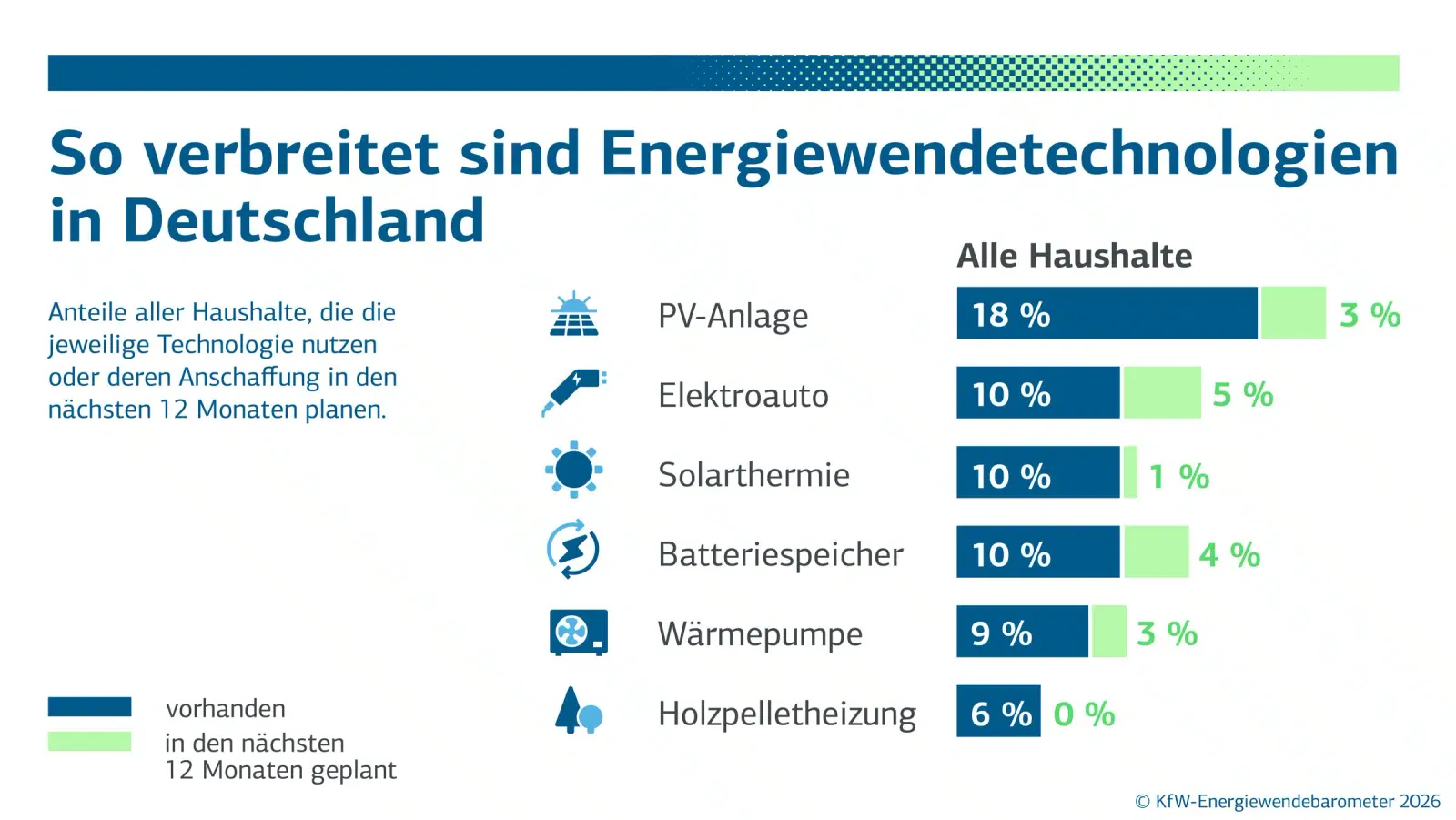
Image: Tesla (illustrative)
People in Germany are once again more willing to personally invest in climate protection. The proportion of households expressing readiness to take action has risen significantly, from 59 percent last year to 66 percent now. This largely reverses the declines seen in previous years.
This is the result of the KfW Energy Transition Barometer, for which KfW Research surveyed over 4,300 households in Germany representative of the population between December 2025 and April 2026. 84 percent of households told the bank’s analysts that they consider climate protection important or very important. A year earlier, the figure was similarly high at 83 percent.
"In recent years, many people in Germany felt 'tired of the climate issue.' Climate protection was not a top priority. Despite ongoing economic difficulties in Germany, it seems people are now reconsidering; they want to invest again in the energy transition. This is good news. The extreme heatwave of summer 2026 once again clearly highlighted the need for climate protection," says Dirk Schumacher, KfW's chief economist.
The proportion of households using at least one energy transition technology has risen to 34 percent, or around 14 million households. This represents about 1.1 million more households than the previous year. In 2025, the increase compared to the prior year was smaller at around 800,000 households — indicating that the upward trend has gained momentum. Additionally, 5 percent of households plan to purchase an energy transition technology for the first time within the next year. These include heat pumps according to KfW Research, rooftop photovoltaic systems (PV), solar thermal systems, battery storage, wood pellet heaters, and electric vehicles.
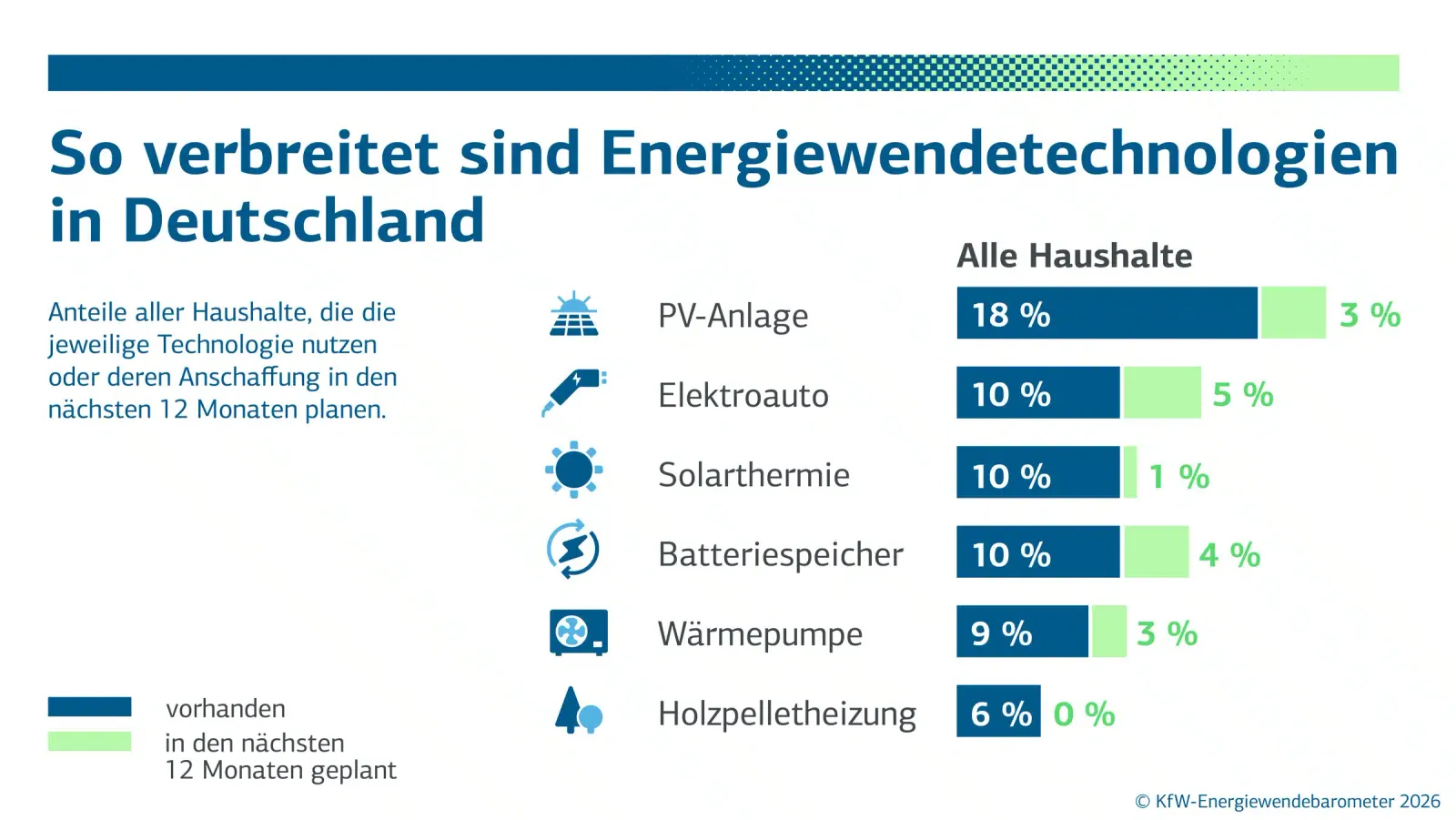
The demand for electric vehicles and rooftop PV systems is growing particularly rapidly. The share of households with a pure electric car or plug-in hybrid rose from 7 to 10 percent within one year. Additionally, 18 percent of households use a rooftop PV system, up from 16 percent just a year earlier. More than half of these PV systems (55%) are operated alongside a battery storage unit. Three years ago, it was less than one-third (31%). Looking solely at owners, 34 percent already possess a rooftop PV system, while 17 percent own an electric vehicle.
The gap between homeowners and renters remains significantly large. 59 percent of households living in their own single-family or two-family homes use at least one energy transition technology, nearly four times more than households in rental apartments (15 percent). Additionally, households with higher incomes are far more likely to adopt energy transition technologies than poorer households. “Given the rising costs of fossil fuels, this disparity means that vulnerable groups will face increasing cost pressures in the future,” explain the study authors. Nearly two-thirds of households in Germany (63 percent) are still heating with gas or oil, while heat pumps are used by 9 percent of households.
"Households in the lower income bracket often lack the funds to invest in climate-friendly technologies. With rising CO2 pricing, these households will bear a disproportionate burden in the coming years. To promote widespread adoption of energy transition solutions, it is important to engage lower-income households through targeted support measures for such technologies," says Schumacher, KfW’s chief economist.
Also interesting
About the author
Thomas Langenbucher is an expert in electromobility with experience in the automotive and financial industries. Since 2011, he has been covering electric vehicles, sustainable technologies, and mobility solutions for ecomento.de. Learn more.
Reader interactions