
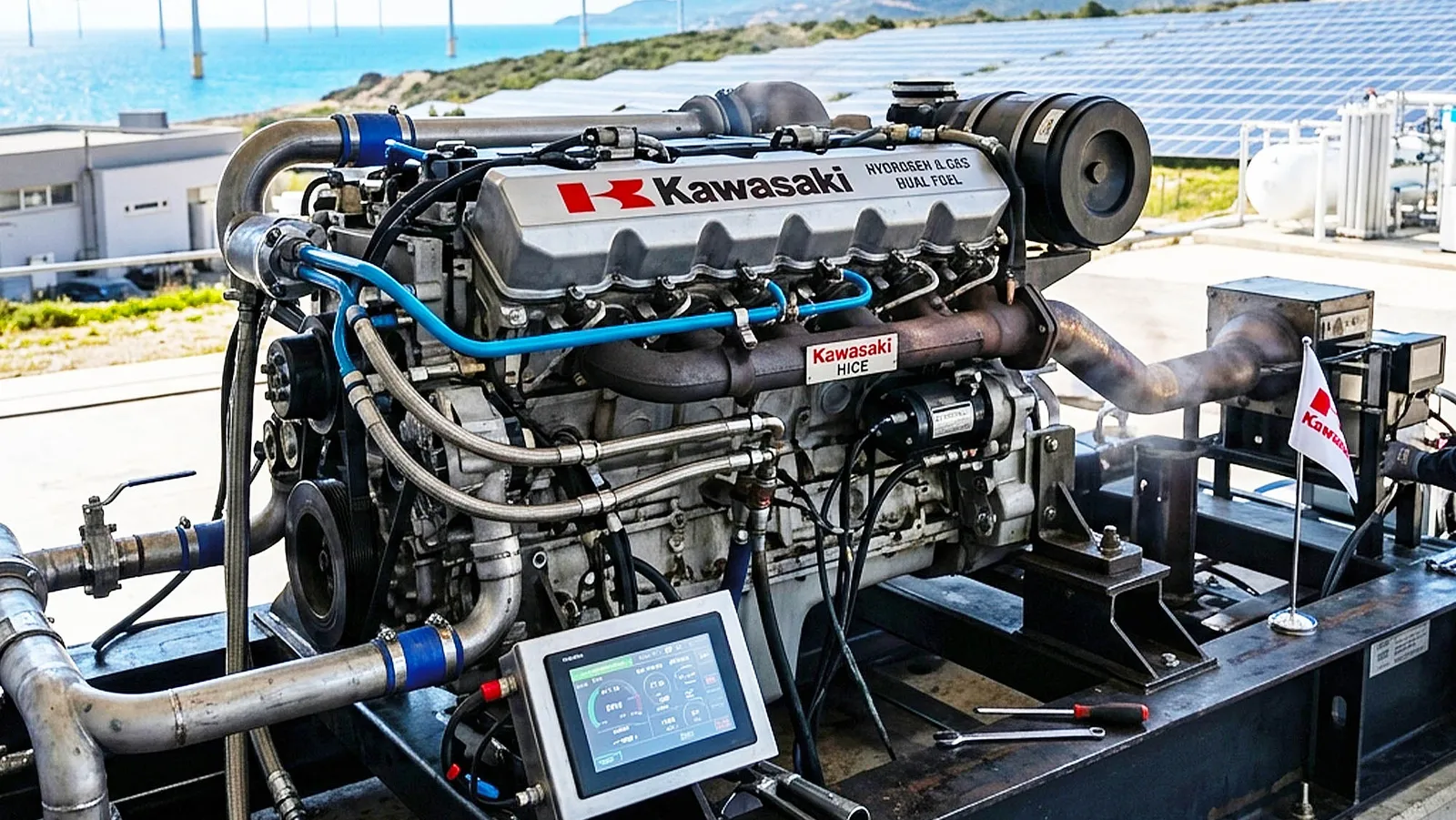
Kawasaki 'invents' a new co-combustion power plant: the first 8,000 kW gas engine that generates electricity using 30% hydrogen
02/11/2026 10:00
Updated to
02/11/2026 10:00
Japan has taken a significant step toward energy transition with the launch of the first commercial engine capable of generating electricity through the combustion of a mixture containing up to 30% hydrogen.
Developed by Kawasaki Heavy Industries, this system offers an intermediate solution that enables progress toward decarbonization without the need for major changes to existing gas infrastructure.
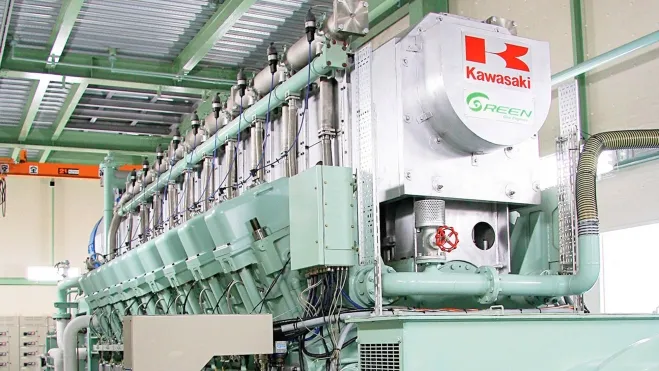
Here’s what this innovative Japanese engine looks like
The new unit, part of the KG series, has a capacity of 8 megawatts and is designed to operate with natural gas combined with hydrogen at up to 30% by volume. This feature makes it an immediate alternative for power plants looking to reduce emissions without undertaking complex structural investments.
The key to its development lies in its ability to integrate into existing networks. Unlike other technologies that rely solely on hydrogen, this engine can use the same existing pipelines, storage tanks, and distribution systems, thereby overcoming one of the main barriers to adopting clean energy: high infrastructure costs.
Hydrogen, long regarded as a promising solution to replace fossil fuels, presents significant technical challenges, such as storage and transportation issues due to its low density and tendency to leak. However, the co-combustion approach allows it to be gradually integrated into the energy system without relying on a completely new infrastructure.
From an environmental perspective, the progress is substantial. Hydrogen does not produce carbon dioxide when burned, so its partial inclusion in the energy mix reduces overall emissions from systems that use it.
Although the engine still uses natural gas, this mixture enables an immediate reduction in carbon footprint, serving as a transitional solution toward cleaner models.
Development is not just conceptual. Before its commercialization, the engine underwent an 11-month testing period at facilities in Japan’s city of Kobe, where its stable operation with this fuel mixture was verified.
Furthermore, this type of technology aligns with the Asian country’s broader strategy to achieve climate neutrality by 2050. Japan has allocated significant public resources to research and development related to hydrogen, with investments reaching 1.3 trillion dollars through programs supported by agencies such as NEDO.
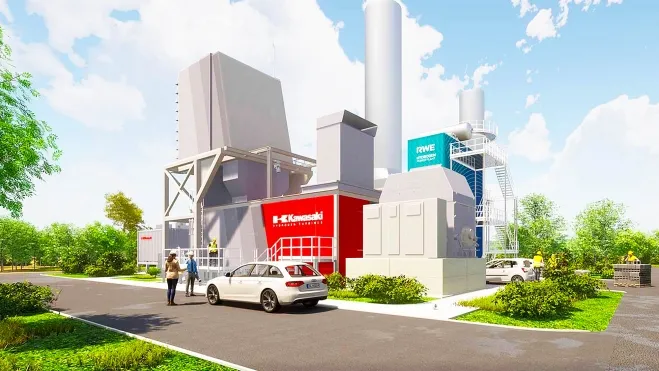
Nevertheless, the widespread deployment of this type of solution still faces significant challenges. One of the main ones is the availability of hydrogen on a large scale. Although the engine is ready to use it, the infrastructure needed for its supply will not be fully operational in Japan until around 2030, which limits its adoption in the short term.
Despite this, the industry considers this advancement to be a significant milestone. The possibility of adapting existing power plants to operate with hydrogen blends allows for faster emission reductions without having to wait for a complete transformation of the global energy system. In this sense, the engine does not represent a final solution, but rather a technological bridge between the current fossil fuel-based model and a future dominated by clean energy.
With this launch, Japan strengthens its position as one of the most advanced countries in the development of hydrogen-based technologies, advancing a strategy aimed at reducing emissions without compromising energy supply stability.