
July figures: China is increasingly becoming an electric vehicle export powerhouse
The number of electric vehicles and plug-in hybrids produced in China reached 1,561,000 units in July, meaning for the first time more than 60 percent of all new cars were plug-in models. Strong export sales continue to drive this growth, while domestic demand remains weak. This trend applies not only to electric vehicles but even more so to internal combustion engine cars.
According to figures from the China Association of Automobile Manufacturers (CAAM), sales of so-called New Energy Vehicles (NEVs) reached approximately 1,561,000 units in July – a 23.7 percent increase compared to the previous month, but a 5 percent decline from June. The slight drop in July compared to June is a seasonal phenomenon commonly observed in China. Since the overall market also experienced a downturn this year, NEVs reached a new relative high: 60.4 percent of all new cars in China were electric vehicles, the highest share ever recorded. As reported by CN EV Post, the cumulative share for the first seven months of the year also exceeded 50 percent for the first time in July.
For context: The sales figures from the China Association of Automobile Manufacturers include manufacturers’ wholesale sales, covering both domestic sales and exports. New Energy Vehicles (NEV) encompass battery electric vehicles (BEV), plug-in hybrids (PHEV) including range-extender vehicles (EREV), as well as fuel cell vehicles (FCEV) – however, fuel cells play no significant role in the passenger car sector even in China.
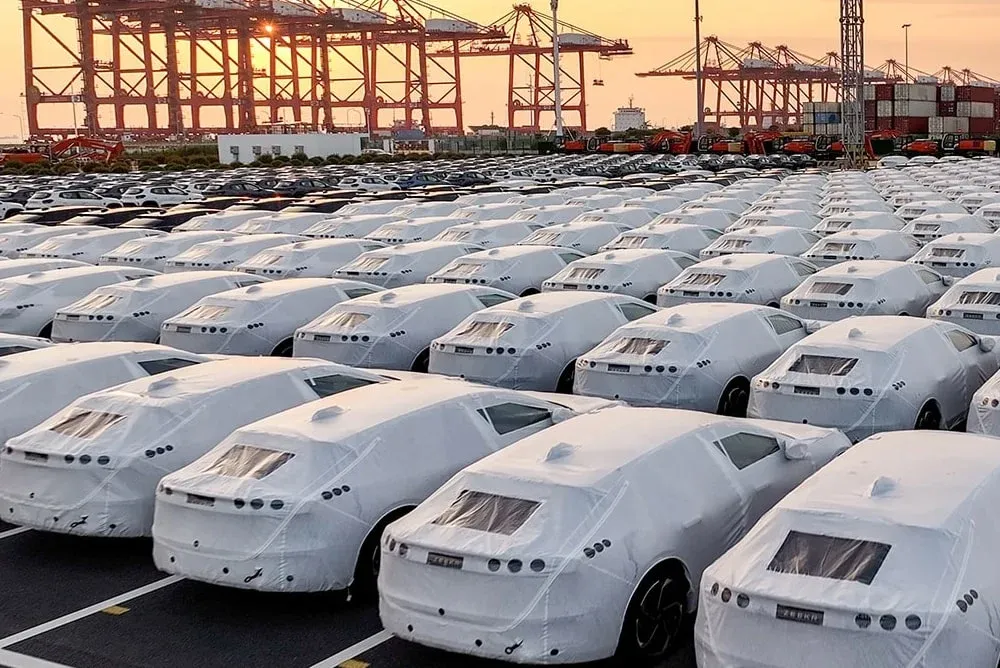
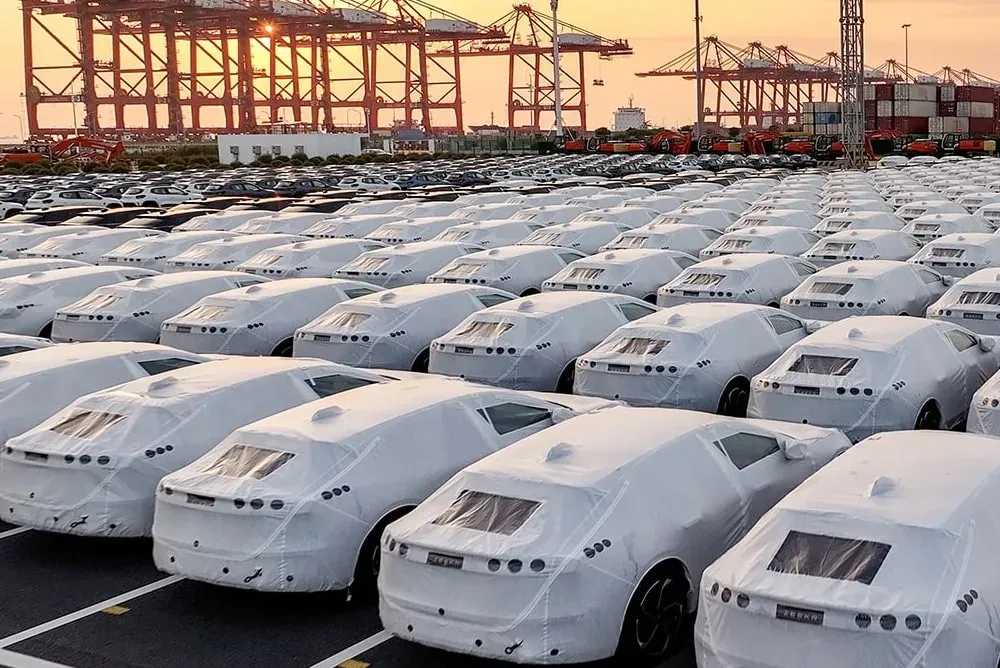
In July, domestic sales of NEVs totaled 1,008,000 units, representing a slight 2.8 percent decline compared to July 2025. In contrast, NEV exports saw a massive 145 percent year-on-year increase, reaching 553,000 units. This reflects a trend that has characterized the Chinese market for months: exports of battery-powered vehicles (and to a lesser extent, internal combustion engines) are surging sharply, while domestic demand is declining. In other words, through exports, Chinese manufacturers are currently able to offset shrinking domestic sales.
Overall, China’s overall passenger car market remained stable in July compared to the previous year: 2.59 million units sold was roughly on par with the level in July 2025. However, as mentioned, it declined compared to June by eight percent. As unimpressive as the statistics may seem, they carry significant implications—namely, that there was a major shift in exports and domestic demand within just one year. Domestic vehicle sales in China dropped by 23.6 percent across all propulsion types (to 1,541,000 units). Within this negative trend, domestic sales of internal combustion engines suffered the steepest decline—by a substantial 45.7 percent. The market’s stability relative to July 2025 was solely due to exports, which rose by 81 percent compared to the same month last year, reaching 1,043,000 vehicles.
China therefore has a significant domestic demand deficit.
But back to electric drives: Among NEVs, 1,072,000 units were BEVs in July (+32% year-on-year, -6.1% compared to June), while 489,000 units were PHEVs (+8.4% year-on-year, -2.2% compared to June). In other words, pure electric vehicles are becoming increasingly important in China’s sales market, whereas the PHEV market is growing only slowly.
Let’s take a look at production figures as well: NEV production reached 1,576,000 units in July, representing a 26.8% increase from the previous year. BEV production exceeded one million units for the second consecutive month. In the first seven months of the year, China’s NEV production already amounted to 9,014,000 units — nearly a 10% increase compared to the same period last year.