
Javier has driven 7,000 kilometers with a hydrogen Toyota: "The reality far exceeded my high expectations.
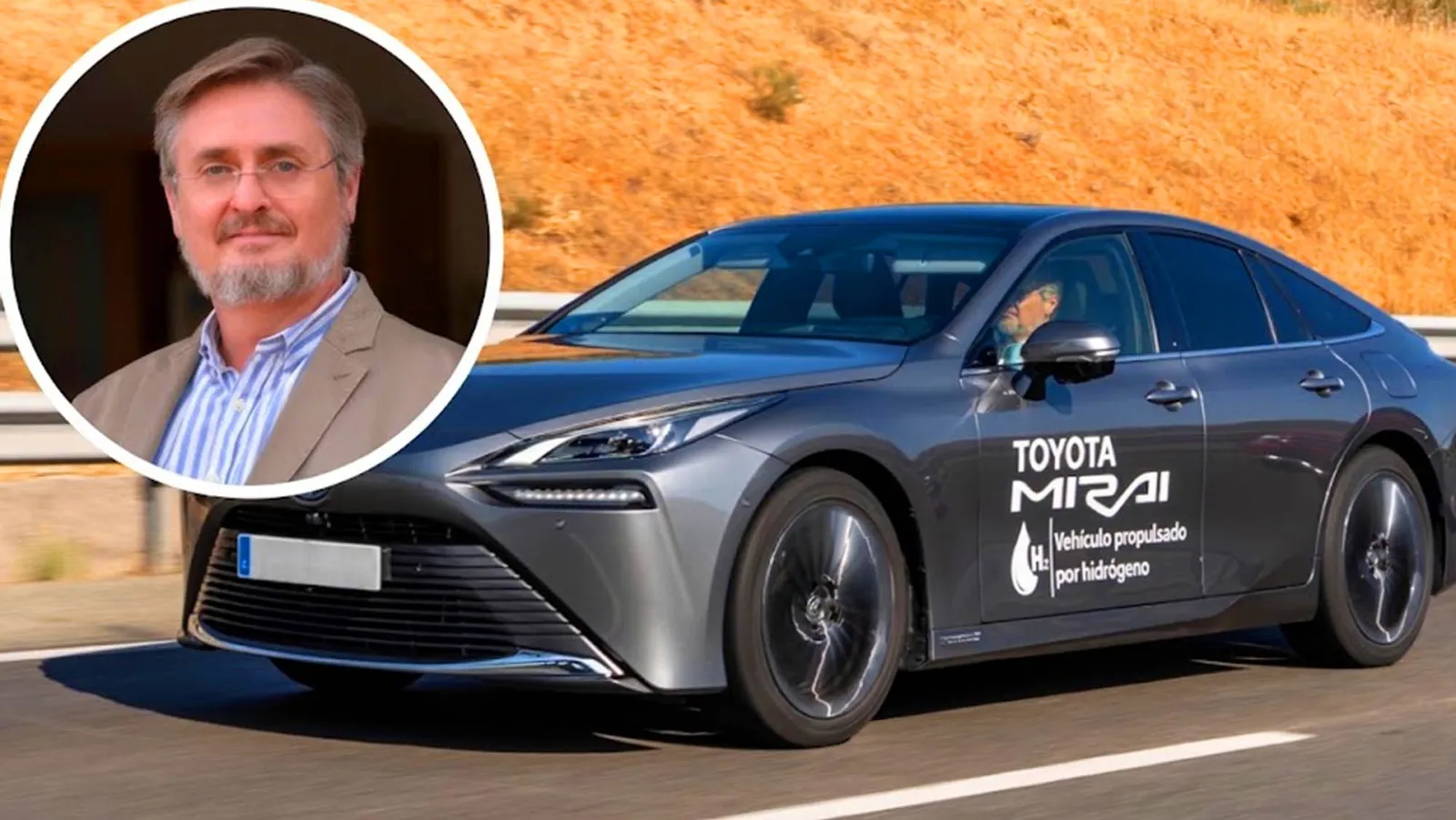
The Toyota Mirai demonstrates that a hydrogen electric vehicle can offer silent, comfortable driving with immediate responsiveness.
Javier Arboleda has driven this sedan about 7,000 kilometers for nearly a year, and his experience highlights the vehicle’s strengths while also pointing out the main challenge of this technology: having enough refueling stations available.
Nearly a year behind the wheel of a hydrogen car
Arboleda, an engineer with extensive professional experience in the automotive industry and background in testing developing vehicles, has been interested in hydrogen applications for transportation for decades.
His chance came when Toyota Spain provided a Mirai fuel cell vehicle to SHYNE, Spain’s hydrogen network. For almost a year, Arboleda was able to use it practically every day for work, covering about 7,000 kilometers.
The difference compared to a conventional test is significant. Extended use allows one to become familiar with the car’s behavior in everyday driving, beyond the first impressions from a presentation or press drive.
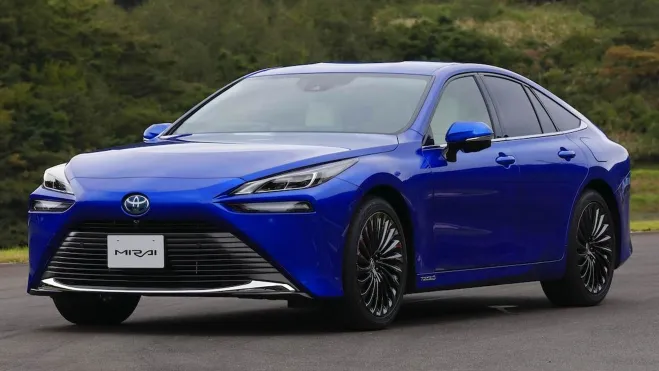
His overall evaluation is very positive. He particularly highlights the quiet operation, comfort, perceived quality, and the responsiveness of the propulsion system when acceleration is needed. He also mentions the sedan’s design, which, according to him, draws attention on the road.
Stability and suspension among its strengths
Beyond the hydrogen technology, one of the aspects that surprised Arboleda the most is the dynamic performance of the Toyota Mirai.
The engineer highlights the effectiveness of the suspension system and the balance of the chassis, which enable a combination of stability in corners and comfort during driving. He also emphasizes the immediate response when power is requested, a characteristic typical of electric propulsion.
The second-generation Mirai generates 134 kW / 182 hp and 300 Nm of torque, with rear-wheel drive. Toyota claims a range of up to 650 kilometers and an approved fuel consumption of between 0.81 and 0.84 kg of hydrogen per 100 kilometers, depending on the configuration.
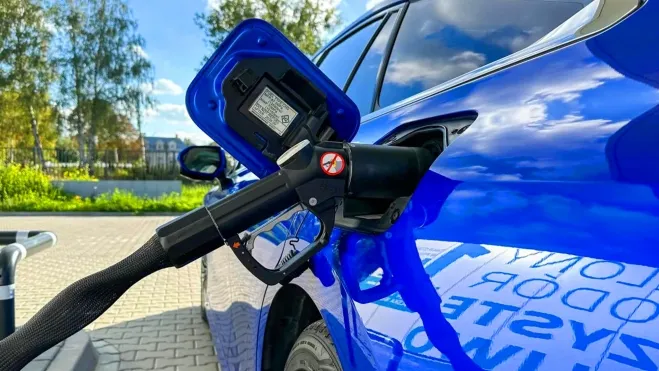
The brand also states that refueling takes less than five minutes under optimal conditions. These figures are based on the manufacturer’s official data: Arboleda does not publish its own measurements for fuel consumption or range over the 7,000 kilometers tested.
An electric car that doesn’t need to be plugged in
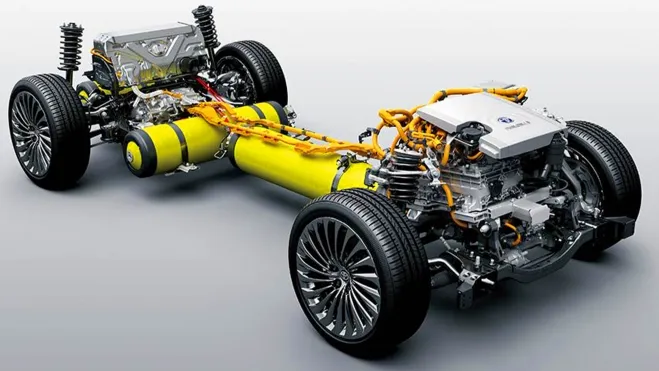
The Toyota Mirai belongs to the category of fuel cell electric vehicles (FCEV). Its operation differs from that of battery-electric cars, although both use electric motors to drive the wheels.
In the Mirai, hydrogen stored on board reacts with oxygen in the air in a fuel cell to generate electricity. A battery supplements the system and helps supply power when high output is required.
The vehicle has three tanks with a combined capacity of 5.6 kilograms of hydrogen. It does not emit carbon dioxide from its exhaust during operation, and water is one of the products of the electrochemical reaction.
However, that does not mean the entire energy chain is emission-free. The climate impact depends, among other factors, on how hydrogen is produced, the energy used to manufacture and transport it, and the materials used to build the vehicle.
Hydrogen refueling stations: the major obstacle to their expansion
Arboleda’s experience highlights the potential of fuel cells for transportation, but it isn’t enough to determine their operating costs or viability for average drivers. His account doesn’t specify exactly how much hydrogen he used, how much it cost him, or which stations he visited during his trips.
This information is crucial because the availability of hydrogen refueling stations affects both daily commutes and long-distance journeys. The speed of refueling loses some of its appeal if drivers struggle to find operational and easily accessible stations.
The European Union aims to promote this infrastructure through the AFIR regulation. Article 6 stipulates that by December 31, 2030, member states must have public hydrogen refueling stations spaced no more than 200 kilometers apart along the trans-European transport backbone network. They must also have at least one station in each urban node covered by the regulation.
This requirement does not mean installing a hydrogen refueling station every 200 kilometers on all roads, but rather covering the corridors and nodes specified in the regulation.
The Mirai is ready; the infrastructure, not so much
Arboleda’s conclusion is that hydrogen can provide a satisfactory driving experience even in passenger cars, in addition to the applications typically associated with this technology in heavy transport.
However, the 7,000 kilometers traveled do not allow for general conclusions about costs, actual fuel consumption, or the ease of traveling across Spain with a Mirai. They do provide an extended assessment of its comfort, performance, and dynamic handling.
The next step in expanding this alternative depends not only on improving the vehicles but also on a refueling network that enables normal use and allows for planning trips without hydrogen access becoming a limitation.
Javier Arboleda’s full account can be found in this article about his experience with the Toyota Mirai.