
EU cold water jar: these hybrids pollute almost like diesel
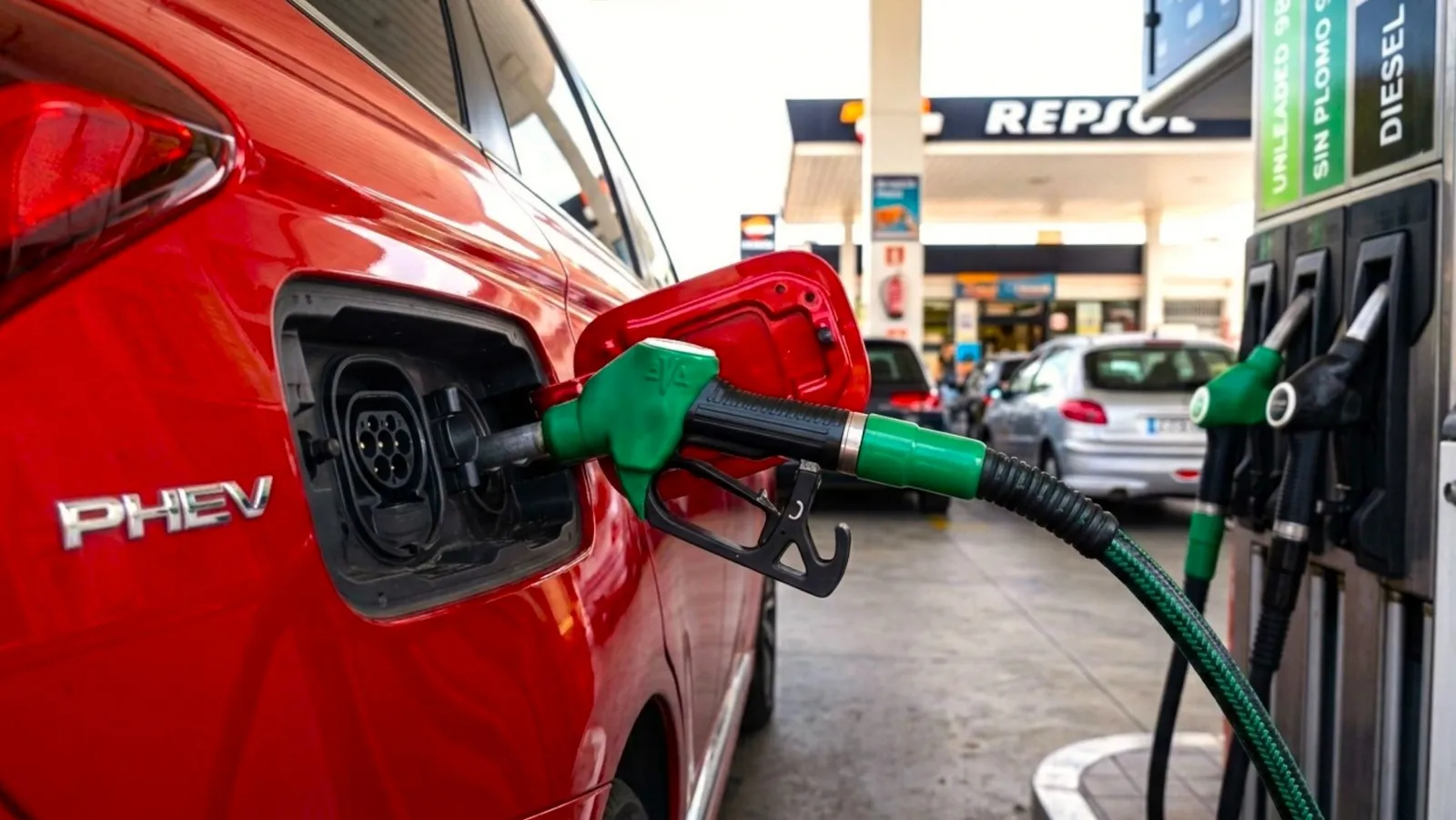
In the process of electrifying transportation that the EU has been undergoing in recent years, it seemed that a type of hybrid car was the perfect bridge between gasoline or diesel cars, which pollute our cities’ air, and the increasingly common electric cars. But a recent EU data report has served as a huge setback.
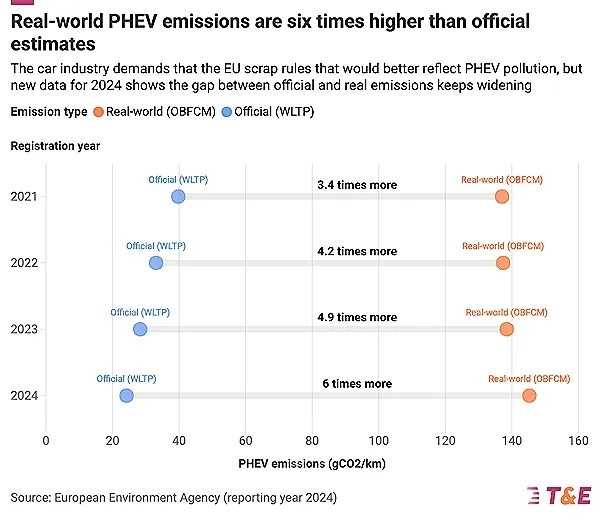
After analyzing the emissions of as many as 220,000 of these hybrids—which already account for nearly 10% of total car sales in Europe—the EU makes it clear that while their “homologated” emissions average 24 g of CO₂/km, in real-world use these cars emit an average of 145 g of CO₂/km. In other words, they pollute almost six times more. And worse still, they only emit 14% less pollution than gasoline or diesel cars.
A cold shower for plug-in hybrids that cause pollution through their usage
We are, of course, referring to plug-in hybrids — BYD and Toyota lead sales in Spain — and the EU’s data on these vehicles compared to gasoline and diesel cars registered in 2024 — recently released two years later — leaves no doubt.
But there’s more, as a study by Transport & Environment makes it even clearer, serving as a huge cold shower for those who thought plug-in hybrids were the perfect bridge before switching to electric cars.
As we have mentioned earlier, plug-in hybrids sold in the EU in 2024 claimed an approved emission level of 24 g of CO₂/km on average, although in actual use they emitted an average of 145 g of CO₂/km—nearly six times more.
Worse still, compared to a gasoline or diesel car—regardless of the fuel type, real-world emissions average 169 g of CO₂/km according to EU data—plug-in hybrids in 2024 emitted only about 14% less.
The EU’s criticism of these hybrid vehicles regarding their pollution levels — a controversy that has persisted for years — stems mainly from how these plug-in hybrids are used.
If they are charged regularly, most of their driving is done using electricity, but many owners charge them infrequently and use them like regular gasoline or diesel cars. In this case, they are almost worse, as the weight of the battery makes them heavier and may even result in higher consumption and greater pollution.
Another issue is the EU’s formula for measuring the pollution caused by these hybrid cars, which takes into account so-called “utilization factors” — in other words, what percentage of the car’s usage is powered by 100% electricity.
And those utility factors aren’t real, meaning they don’t reflect the actual use that owners make of plug-in hybrids. In fact, according to Lucien Mathieu, head of the automotive department at Transport & Environment (T&E), “plug-in hybrids are one of the biggest greenwashing tactics in the automotive industry. They’re marketed as a ‘green solution,’ but in practice they carry significant environmental costs.”
In addition, Mathieu explains that “the efficiency factors were originally designed to align official [homologated] emissions with those in the real world; they represent evidence-based policy formulation.”
The EU is already working to reduce pollution from these hybrids
But Brussels isn’t foolish and has been aware of the issue with plug-in hybrids for years. Thus, the EU has set out to update the efficiency factors used by the industry—by changing how their official emissions are calculated to use more realistic assumptions about how much these hybrids operate in electric mode—to gradually narrow the gap between their theoretical pollution levels and their actual pollution levels, which are much closer to those of gasoline or diesel cars.

Thus, the EU under the leadership of the European Commission already made changes to the efficiency factors in 2025, which will be further tightened in 2027… unless this study accelerates the process. And keep in mind that this tightening, which will increase emissions from plug-in hybrids or PHEVs, will affect manufacturers’ compliance with European CO₂ targets for their vehicle models.
Currently, as reported by T&E, negotiations are underway within the EU “on reviewing the CO₂ standards for cars.” The EU Council plans to hold a debate on this topic as early as October 12, while the European Parliament will vote on potential measures in November.