
Jaguar-Land Rover announces a plan to cut 4,000 jobs after losing 230,000,000 euros in just one year
10/09/2026 16:00
Updated to
10/09/2026 16:00
Add Hybrids and Electrics as Google’s preferred source for free.
Stay informed with the latest news updates.
Activate now
The profound transformation in the automotive industry continues to require significant structural and economic adjustments from traditional manufacturers. Jaguar-Land Rover (JLR), part of the Indian Tata conglomerate, has announced a restructuring plan that includes laying off 4,000 workers in the UK over the next two years. The goal is to achieve operational savings of 1.7 billion pounds, equivalent to 1.98 billion euros, with efforts to make these layoffs voluntary and minimize direct impacts on production lines.
This decision comes at a time of significant industry pressure due to intense competition from low-cost Chinese brands and the demands associated with the shift toward electric propulsion systems. Adding to this challenge are 10% tariffs on automobile imports in the United States, a crucial market that accounts for 29% of the British conglomerate’s total sales, as well as the financial fallout from a severe cyberattack in October that caused an estimated loss of 2.210 billion euros.
Decline in annual sales and adjustment of production targets
The financial results for the 2025-26 fiscal year reflect a decline in the company’s sales volumes. Global registrations dropped by 18% to 352,389 units, leading to a 21% decrease in net revenue, which amounted to 2.29 billion pounds (approximately 2.665 billion euros). These figures resulted in a net loss after taxes of 200 million pounds (230 million euros), compared to profits of over 2 billion euros in the previous period.
To stop this bleeding, the management team led by its new CEO, P. B. Balaji, is aiming to reduce industrial complexity and lower the break-even point of its production lines to around 300,000 units per year. This measure is intended to ensure industrial viability without relying on continuous saturation of its four manufacturing plants in the UK, located in the West Midlands and Merseyside.
Offensive with five new models and investment in electric platforms
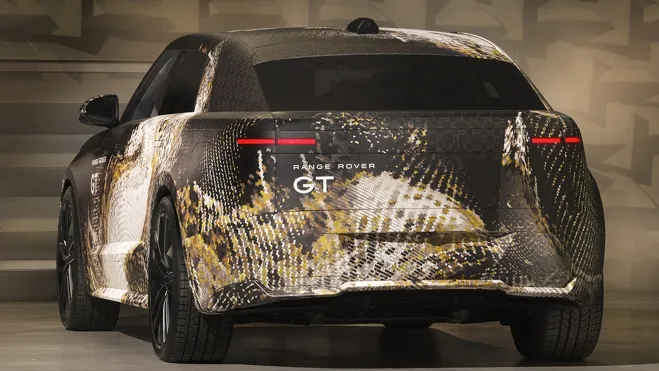
Despite cost-cutting measures and the British government’s refusal to provide a public bailout for the company, the manufacturer remains committed to its mechanical renewal plan for the next twelve months. During this period, it aims to launch five new products into the market in order to restore double-digit growth rates. These include the new Range Rover Electric and the upcoming Range Rover GT, as well as the final release of the Jaguar Type 01. Meanwhile, in China, Land Rover has revived the Freelander name, creating a parallel lineup through collaboration with Chery Group. The Freelander 8 is its first product in this series.
The savings resulting from this template adjustment will support a massive investment program of between 15.000 and 18.000 million pounds (reaching up to 21.000 million euros at the upper end) over the next five years. These funds will be prioritized for upgrading their powertrain platforms to accommodate pure electric mechanics, modernizing advanced manufacturing processes, and digitizing their systems to revitalize their range of SUVs and luxury vehicles.