
It doesn’t always have to be Tesla: The Rivian R2 emerges as a Model Y alternative
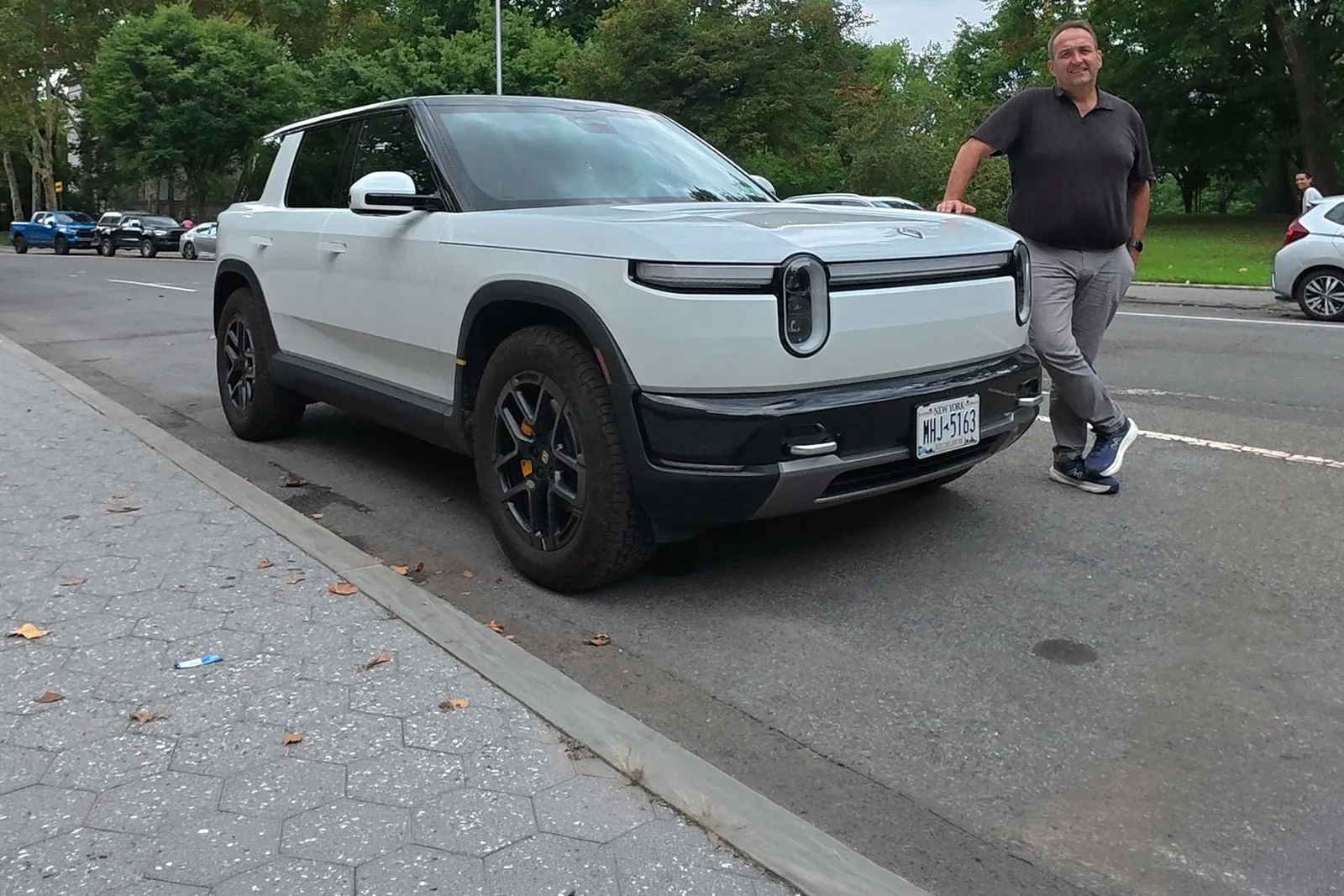
Few segments have so many different models with the same uniform monotony as the mid-size electric SUV class. After all, the Tesla Model Y, once the world’s best-selling car, is everywhere you look, and most of the new models coming out of China share the same design language. But now, a breath of fresh air is arriving from America.
Having already positioned the R1T and R1S as the optimistic alternative to Tesla’s dystopian Cybertruck, the California-based startup is now thinking smaller — so to speak — and lining up the R2 against the Model Y, Ford Explorer, and BMW iX3. At 4.72 metres, it is roughly half a metre shorter than its bigger sibling, so, it stands a good chance of making its way to Europe soon.
Electronic architecture for future VW models
As a matter of fact, we’ll be getting to know the electronic architecture even sooner. Rivian’s investors include not only Jeff Bezos, who commissioned the American company to custom buildAmazon delivery vehicles. Volkswagen has also poured nearly six billion dollars into Rivian and the joint venture between the two companies, largely because VW’s own software subsidiary, Cariad, has struggled to gain traction. Together, they are developing the electronic backbone for future VW models based on Rivian’s zonal architecture, with plans to debut it as early as next year in the ID. Up.
The concept therefore includes razor-sharp graphics, intuitive on-screen menus, and charming “Halo” rotary dials with haptic feedback. The dashboard houses two digital displays with a large central screen and a small screen in front of the driver, and the vehicle supports over-the-air updates for new vehicle functions.
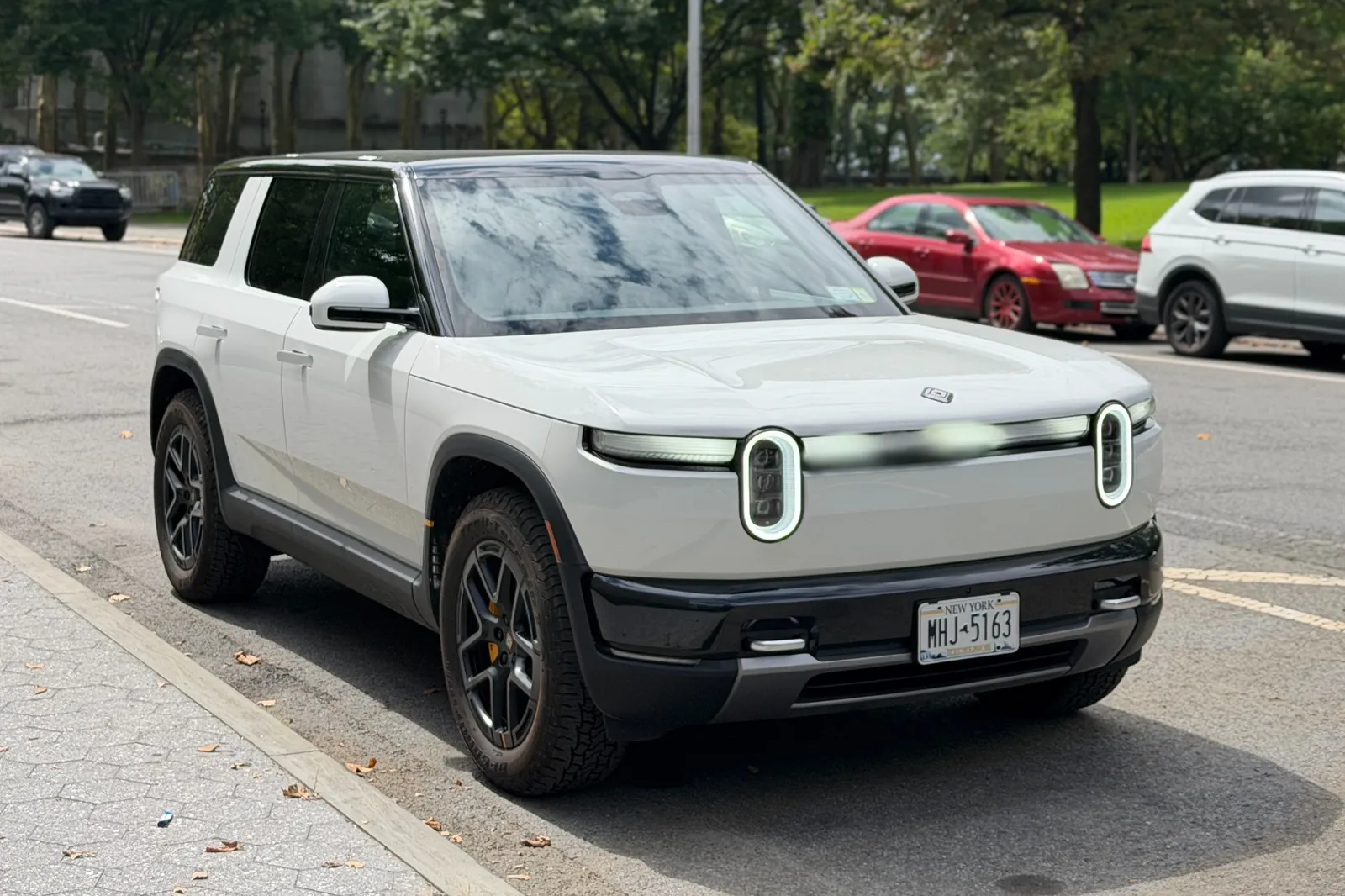
Image: Rivian
- 1/11
- 2/11
- 3/11
- 4/11
- 5/11
- 6/11
- 7/11
- 8/11
- 9/11
- 10/11
- 11/11
If the class demands it and the budget allows, there’s plenty of assistance on offer. The R2 features eleven cameras with a combined 65 megapixels and five radar sensors, providing a perfect overview whether driving, turning, or manoeuvring. On the highway, the vehicle can take care of the wheel entirely, like Tesla or Cadillac, asking the driver only for occasional attention as a formality. And with one of the next updates, this large electric car should also be able to handle city driving autonomously.
Outdoor details over generic design
While the city may be the R2’s home turf, its horizons stretch far into the wilderness. Rivian positions itself as the cool outdoor brand among automakers —not as rugged as a Defender or Land Cruiser, but always ready with trail shoes and a functional jacket. The motto is Wall Street meets Jack Wolfskin, which is reflected in numerous details. These include the torch integrated into the driver’s door, which automatically recharges there, just like the key, designed to look like a carabiner.
And while there’s no gear tunnel under the rear seat like in the bigger R1, the rear window can be fully lowered, making it easy to transport long items like surfboards. In addition, there’s a 147-litre frunk, two gloveboxes, and —impressively for this class — a generously sized boot with a maximum capacity of over 2,000 litres.
Then there’s the ground clearance, a particularly important feature for Rivian, where the R2 offers 24.4 centimetres, more than its competitors. Add to that approach angles of 25 degrees at the front, 26 degrees at the rear, and a ramp angle of 20.6 degrees, plus a wading depth of 50 centimetres. Combined with driving modes like All-Terrain, Snow, Sport, Soft Sand, and Rally, the R2 offers more off-road capability than you’d expect from a typical urban yuppie’s ride.
At its core, however, the R2 is not a traditional off-roader but a conventional large passenger car. As such, it doesn’t sit on a ladder frame but instead uses a battery structure integrated into the platform and a monocoque body on top. This creates space and helps reduce weight. At 4.72 metres long, 1.91 metres wide, and 1.70 metres tall, the R2 is a full mid-size SUV, and with a 2.94-metre wheelbase, the rear seats — thanks to the flat floor — can comfortably accommodate two adults.
Even with adaptive dampers instead of the R1’s air suspension, the R2 delivers a ride comfort that the Tesla Model Y, BMW iX3, Volvo EX60, or Mercedes GLC can’t match. Even on the potholed streets of Manhattan, the R2 glides smoothly and effortlessly, while remaining wonderfully quiet inside.
Performance version leads the way
While the R1 sometimes feels like a colossus struggling to contain its power, the R2’s size and performance are a perfect match — especially in the Performance version, which is the first to launch in the US. With dual motors producing nearly 490 kW and 826 Nm of torque, it accelerates from 0 to 100 km/h in 3.6 seconds and happily defends its pole position at traffic lights. The fact that it tops out at around 200 km/h doesn’t bother anyone in the US — and who knows how things will stand in Europe when the R2 finally crosses the Atlantic, at the earliest, in 2028?
More concerning, however, is its lacklustre charging performance. The ~90 kWh battery, which can now also power external devices and home storage via a V2L adapter, is acceptable, and the 531 km range is livable — even if the supposedly lagging European competition already offers 700 km or more. But the fact that the R2 only charges at a peak of just over 200 kW is already standard today and could be a major drawback in two years.
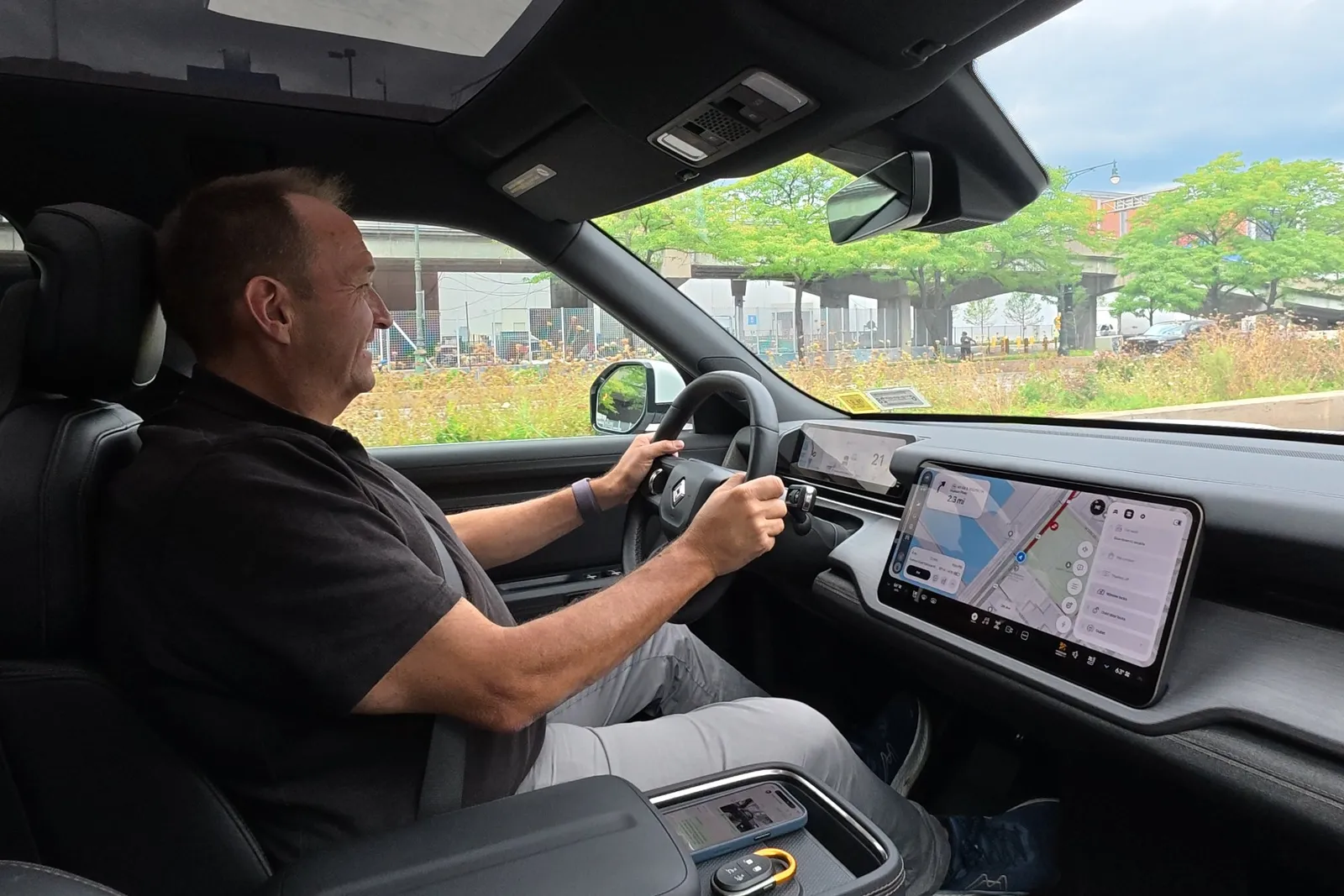
Image: Thomas Geiger
- 1/8
- 2/8
- 3/8
- 4/8
- 5/8
- 6/8
- 7/8
- 8/8
In addition to the Performance version, Rivian plans to offer three more variants. There’s a Premium model with 336 kW, a stripped-down rear-wheel-drive Long Range version with the standard battery, and an entry-level variant that not only omits the front motor but also features a smaller, as-yet-unspecified battery. This allows the American company to lower the current starting price of $57,990 (approx. €50,000) to a tightly calculated $44,990 (around €39,000), putting it just ten per cent above the Model Y’s entry price, with the added benefit that their car looks far fresher and isn’t parked on every street corner.
Production ramp-up risks
Now, all that remains is to hope that Rivian doesn’t stumble on its path to growth and avoid the “production hell” that Elon Musk endured with the Model 3 and Model Y. Otherwise, the timeline could slip, along with the already delayed European launch in two years’ time. Especially since the R3, which is clearly inspired by the first-generation Golf and likely priced at just over $30,000, is already waiting in the wings as the next export candidate.
Perhaps, in the meantime, they could at least send us a few of the R2’s charge port covers across the Atlantic. Rivian has engraved a maze into them, which would be a great way to pass the waiting time.