
Isolation and electric vehicles: how to unleash power for your charging station
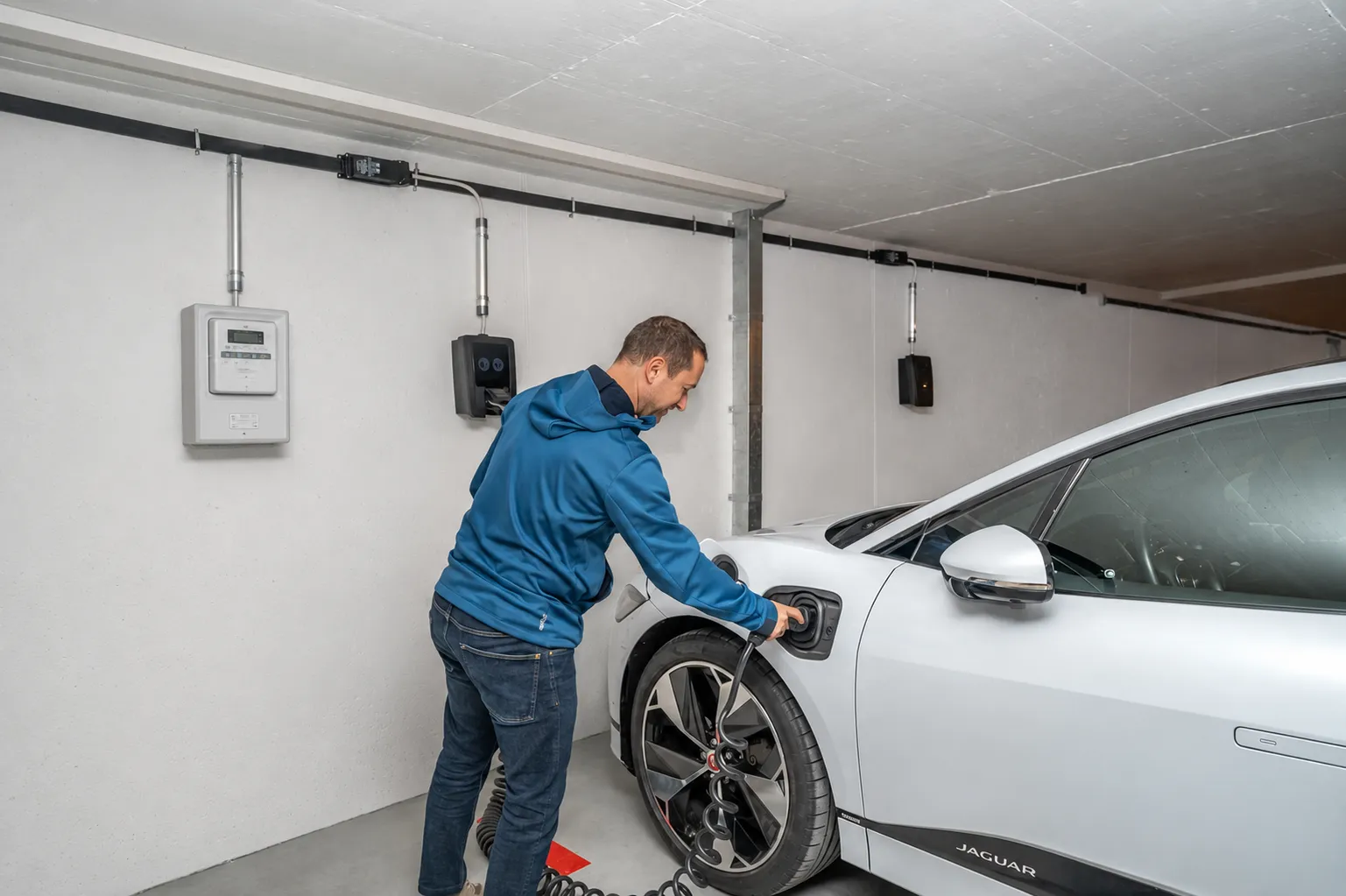
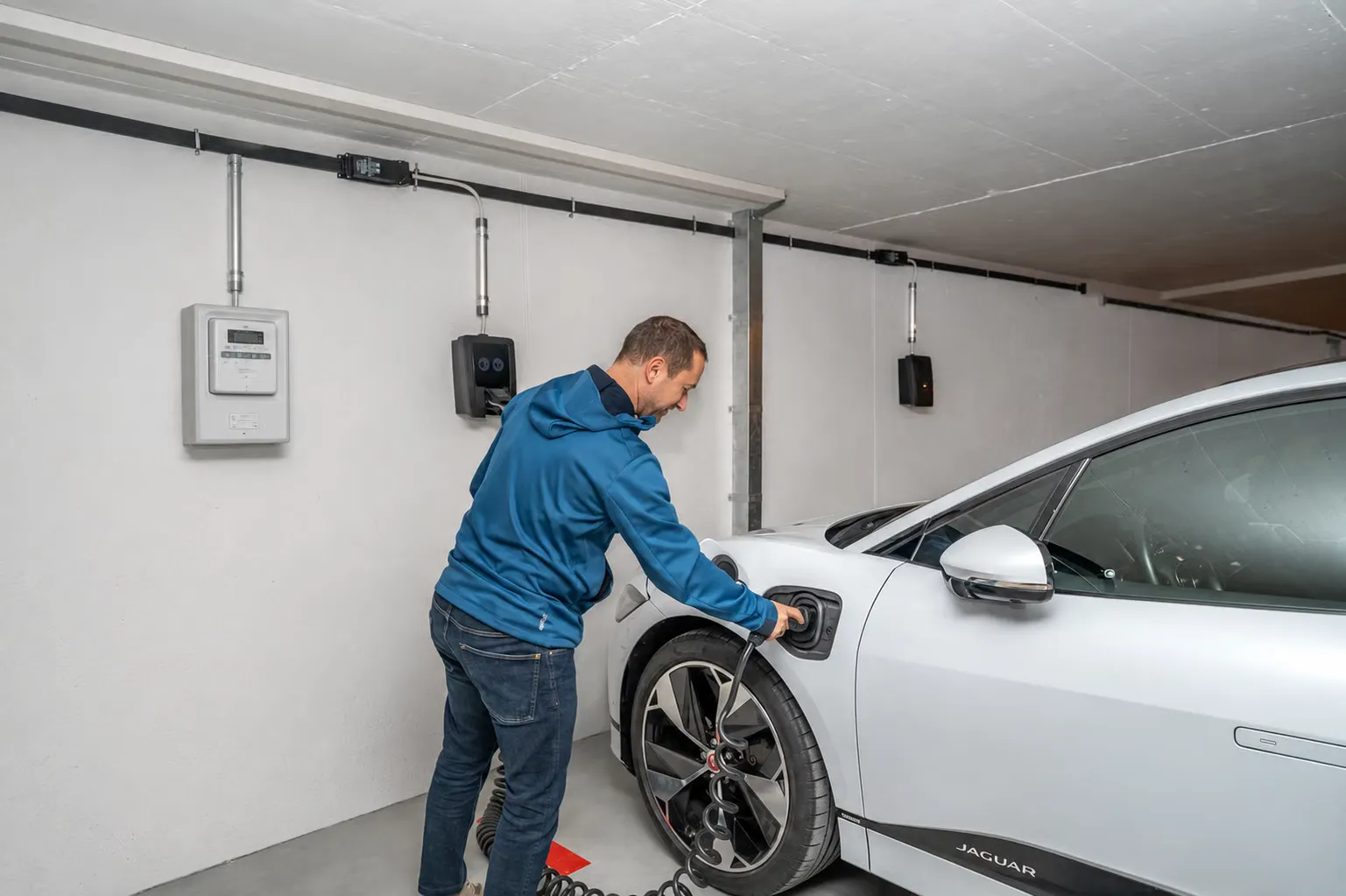
Electric heating and charging an electric car often compete for the same power capacity on the meter at the same time of day. Insulating one’s home or changing to a different subscription: both solutions exist, but they don’t meet the same needs or fit the same budget.
Charger and electricity meter: a decision to make
Many households equipped with electric heating encounter problems when installing a charging station. Their electricity meter already reaches its power limit by evening. Adding a 7 kW charging station simply isn’t possible without altering the power capacity specified in their electricity supply contract.
Also read
Which charging station to choose for home use: plug-in, Green’Up, or wallbox?
How does the contracted power capacity (kVA) work and why does electric heating exhaust it in winter
The contracted power, expressed in kVA, determines the maximum amount of electricity that can be used at the same time. In France, two main levels apply: 6 kVA for a standard apartment without electric heating or a small apartment with electric heating, and 9 kVA for a fully electric house. Some apartments have up to 12 kVA, with the maximum being 36 kVA for private individuals.
Electric heating changes the situation. In winter, radiators, water heaters, or heat pumps may all be in use at the same time toward the end of the day. This period coincides precisely with when most electric vehicle owners plug in their vehicles.
The classic symptom: the circuit breaker trips when plugging in the charger in the evening.
The same scenario repeats itself in many households. The heating turns on, the water heater starts up, and then the electric car charges around 7 or 8 p.m. The circuit breaker trips, cutting power to the entire house.
Two solutions are then available to the affected household, though they aren’t equally effective in all cases. Increasing the contracted power level resolves the problem immediately, at the cost of a slightly higher monthly fee (a few euros). Insulating the home can reduce the simultaneous demand from heating, but only if the insulation project is also justified for other reasons.
Upgrading to a higher plan: the real cost
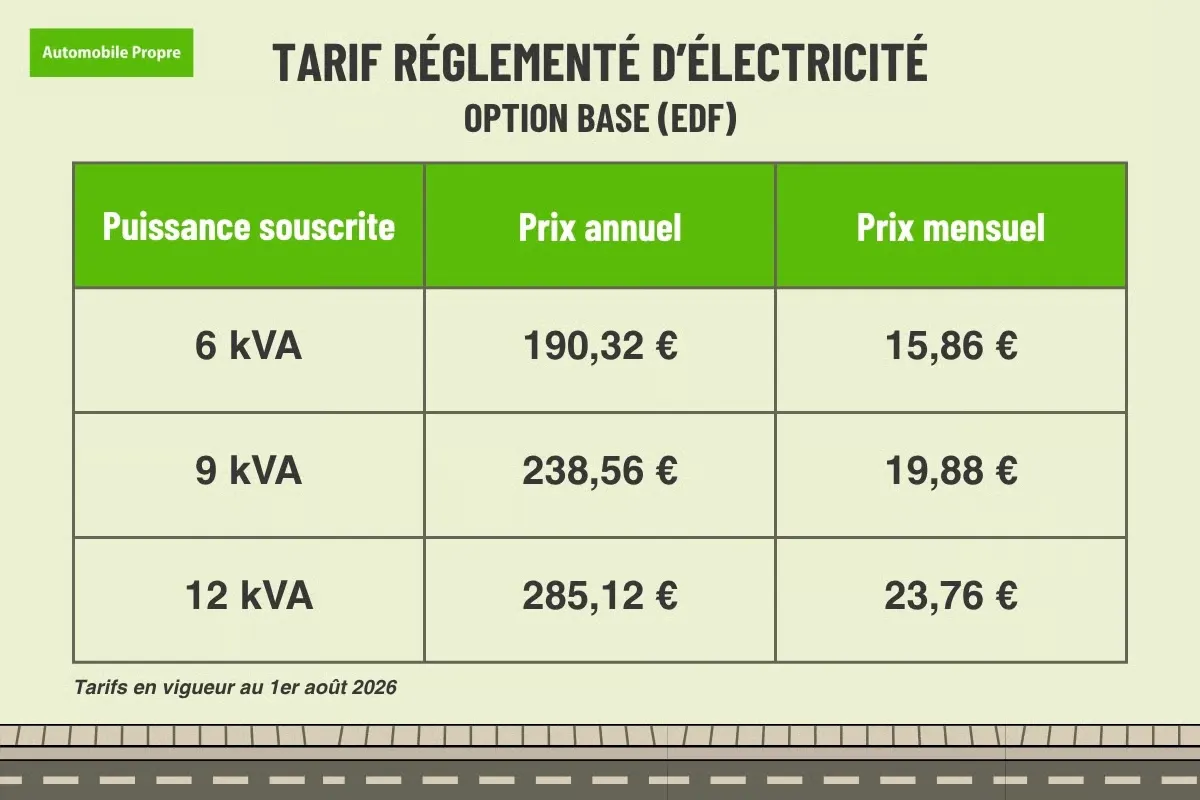
Price differences between capacity levels (6/9/12 kVA)
Upgrading from 6 to 9 kVA increases the annual bill from 190.32 € to 238.56 €, representing a difference of about 48 € per year. For larger homes, a 12 kVA subscription costs 285.12 € per year.
Another factor to consider before changing capacity: authorities have discontinued the Base option for capacities between 9 and 36 kVA. A household upgrading from 6 to 9 kVA must now opt for either the Off-peak or Tempo option and cannot remain on the Base plan.
Subscribed capacity
Annual price
Monthly price
6 kVA
190.32 €
15.86 €
9 kVA
238.56 €
19.88 €
12 kVA
285.12 €
23.76 €
This amount seems modest on its own. But it accumulates each year, with no time limit, unlike a one-time investment. Over ten years, the difference between 6 and 9 kVA amounts to about 482 €.
The price per kWh remains almost identical across the tiers (0.2001 €/kWh for 6 kVA, 0.1985 €/kWh above that). Only the fixed subscription fee actually increases with the power level chosen.
Also read
Electricity provider and electric car: which plan to choose in 2026?
Insulating one’s home doesn’t change the consumption of the electric car itself. But when this project is already justified for other reasons, it also reduces the power required by heating at the exact time the car is charging.
In practice, a well-insulated house retains heat or cold for longer. The heaters run less frequently, and especially at lower intensity at any given time. It is this simultaneous reduction in workload, rather than the overall decrease in annual consumption, that creates headroom for the charging station.
Less heating consumption, less risk of simultaneous tripping
The size of an electric heater is determined by the room’s area and insulation level. A poorly insulated room requires more instantaneous power to maintain the same temperature. Therefore, insulation directly affects peak power usage, not just the annual bill.
Rough estimates before/after insulation (attics, walls)
For a 30 m² room, the required radiator power ranges from 1,500 W with good insulation to 3,000 W with poor insulation.
According to ADEME, 25 to 30% of a home’s heat escapes through the roof. This is the main source of heat loss, ahead of walls, windows, and the floor. It is also for this reason that insulating the attic remains the most cost-effective first step.
For lost attics, the most economical method—blowing in bulk insulation—costs between 20 and 25 €/m².
A concrete example with figures: Insulate to save and avoid premium charges
Let’s consider a representative case: an 80 m² house with electric heating, average insulation, and 3 occupants. The household wants to install a charging station, but its 6 kVA meter already gets overloaded in the evenings.
Two possible approaches
First option: upgrade to a 9 kVA subscription. Cost: an additional 48 € per year, with no time limit and no impact on heating bills.
Second option: insulate the attic through blowing insulation. For this area, the investment ranges from 1,600 to 2,000 €.
For this profile, heating consumption is around 8,800 kWh per year. At the reference regulated rate (Base 6 kVA option, 20.01 cents €/kWh), this results in an annual heating bill of approximately 1,761 €. Insulating the attic, which accounts for 25 to 30% of heat loss, allows for a similar reduction in bills: about 440 to 528 € saved per year.
Scenario
Without insulation (9 kVA subscription)
With insulation (remains at 6 kVA)
Annual heating bill
≈ 1,761 €
≈ 1,233 to 1,321 €
Annual subscription cost
238.56 €
190.32 €
Total annual cost
≈ 1,999.56 €
≈ 1,423.32 to 1,511.32 €
Annual savings
—
≈ 488 to 576 €
Initial investment
0 €
1,600 to 2,000 €
Payback period
—
≈ 3 to 4 years
The message is clear: insulation isn’t justified to save 48 € on a subscription. It’s justified because it reduces heating bills year after year. The avoided subscription is just an additional benefit, not the main reason for insulating.
Conversely, a household with no current insulation plans has no reason to undertake one just to save on electricity bills. In this case, switching to 9 kVA remains the fastest and least costly solution in the short term.
Signals That Should Trigger Warnings
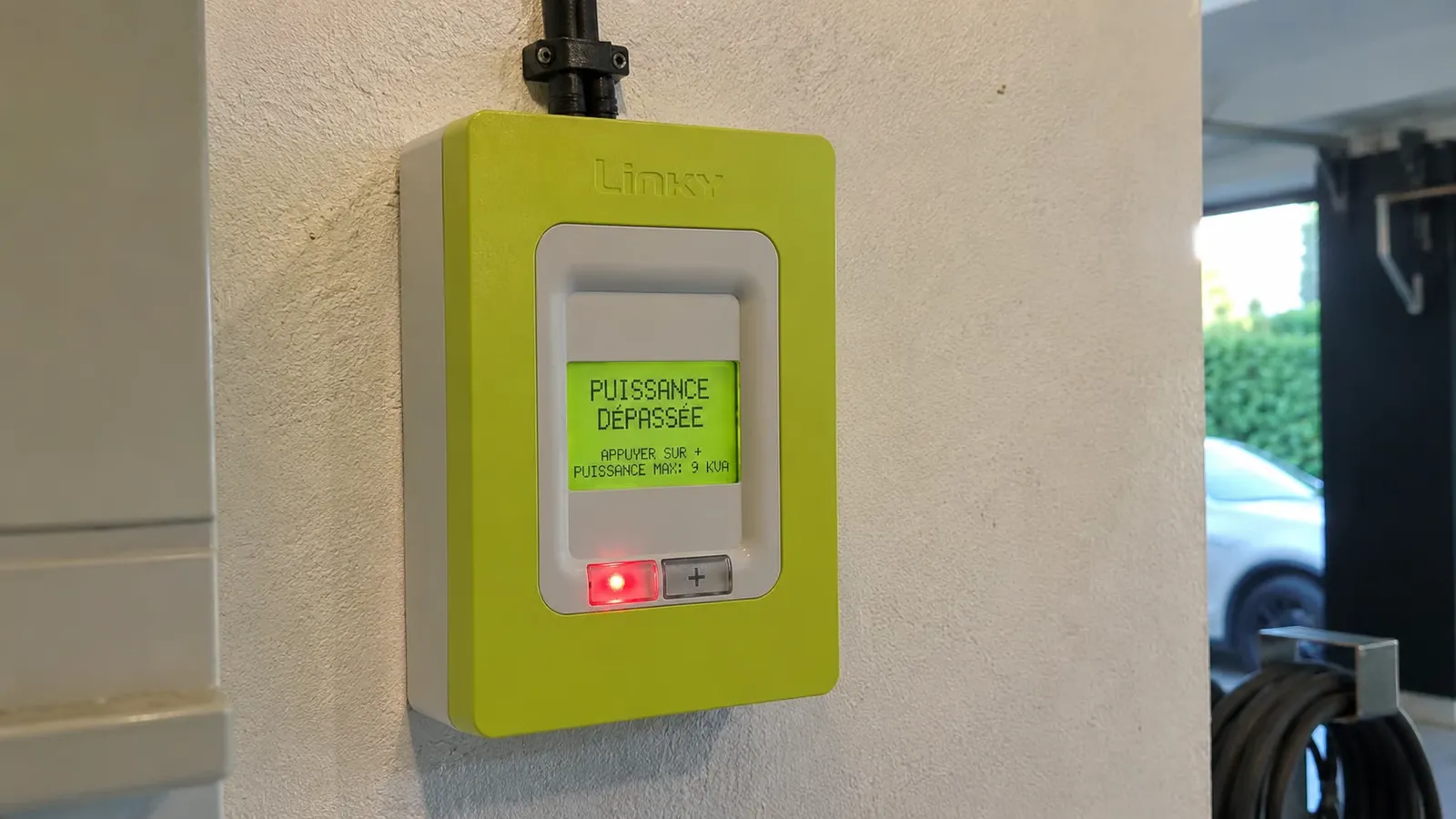
The most obvious signal is the circuit breaker tripping itself. On a Linky meter, the screen then shows the message “PUISS DEPASSEE.” This indicates that the instantaneous power consumption has exceeded the capacity specified in the contract.
Unlike older meters, which allowed up to 15% overage, the Linky cuts power immediately without any tolerance. Many households discover this issue only after installation, even though their usage habits haven’t changed.
To check your situation even before installing a meter, Enedis’ customer portal displays the maximum power level reached each day. The Linky meter also allows for direct reading: pressing the “+” button shows the instantaneous apparent power in kVA.
When to consult a professional instead of insulating alone
A simple change in capacity with your supplier is sufficient if outages still occur occasionally. This process is free or low-cost and can be completed within 24 hours with a Linky meter.
Insulation, on the other hand, requires a preliminary energy audit. A qualified RGE professional identifies the actual areas of energy loss in the home (attics, walls, windows and doors) before starting work. Without this diagnosis, there’s a risk of investing in a area that isn’t the most problematic.
One final useful tip: if the power outages occur only in winter, at night, and disappear for the rest of the year, the heating system is almost always to blame. This situation clearly points toward insulation rather than simply adjusting the subscription, for those seeking a lasting solution instead of a temporary fix.
The key takeaway: insulation offers dual benefits for electric vehicle owners
Insulating one’s home is primarily an act of energy efficiency improvement. Its primary benefit is a reduction in heating bills year after year.
For electric vehicle owners facing power outages, this same measure provides an additional advantage. It frees up power capacity and can help avoid a more expensive electricity subscription.
Isolating solely for this second benefit makes no sense: the investment far exceeds the savings achievable from just the subscription. However, for a household that already plans to carry out insulation work, the compatibility with electric vehicle charging is worth considering.
Before deciding between changing the subscription and insulating, a diagnosis remains the best step. An energy audit or a simple power reading through Enedis’s customer portal helps to objectively assess the situation rather than acting blindly.
Also read
Scorching heat or freezing cold: what causes a reversible air conditioner to consume the most energy?