
Ionity plant battery storage at 50 charging stations
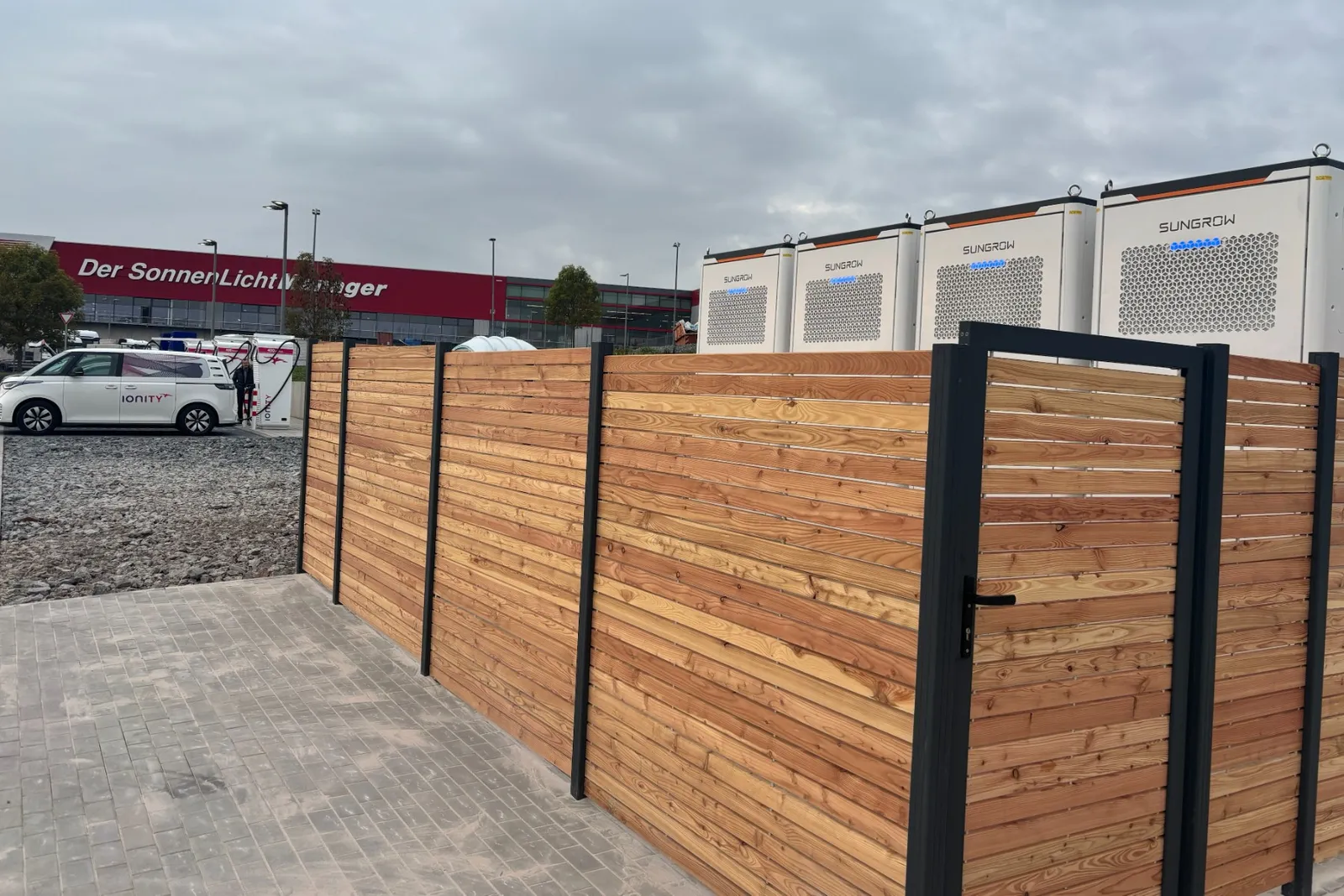
Ionity has integrated a battery storage system at one of its locations for the first time. This allowed the number of charging stations at the existing charging park in Wertheim (Baden-Württemberg) to be increased. But this is just the beginning: Ionity plans to have 50 battery storage systems at charging parks by next year.
Ionity Charging Park with Sungrow’s Battery Storage System in Wertheim
Image: Ionity
The use of battery storage is an important part of Ionity’s future expansion strategy, the company explains in response to an inquiry from electrive. The CPO plans to deploy battery storage at selected locations to provide additional charging points and make more efficient use of available energy. At sites equipped with PV systems, the batteries will also be used to store locally generated solar power for later use in charging operations.
The first charging park with an integrated battery storage system, also known as BESS (short for Battery Energy Storage System), has been in operation for a few days in Wertheim, Baden-Württemberg. The existing charging park, located between an exit from Highway 3, a McDonald’s, and the Wertheim Village outlet center, has now been expanded. While there were originally four charging stations available, Ionity has increased the number to six using the battery storage system, all of which are equipped with Alpitronic HYC400 charging units. Two more charging stations are set to be added soon, using ABB charging units with a peak power of 350 kW.
BESS reduces long waiting times for expanded infrastructure
In Wertheim, the primary purpose of the battery storage system is to bridge the time until the medium-voltage connection can be installed. According to Ionity, this installation could take up to three years. The storage system comes from the Chinese manufacturer Sungrow and consists of four modular units with a total capacity of 1,028 kWh and a maximum power output of 500 kW. The batteries are housed as an external solution in control cabinets on the charging park’s premises.
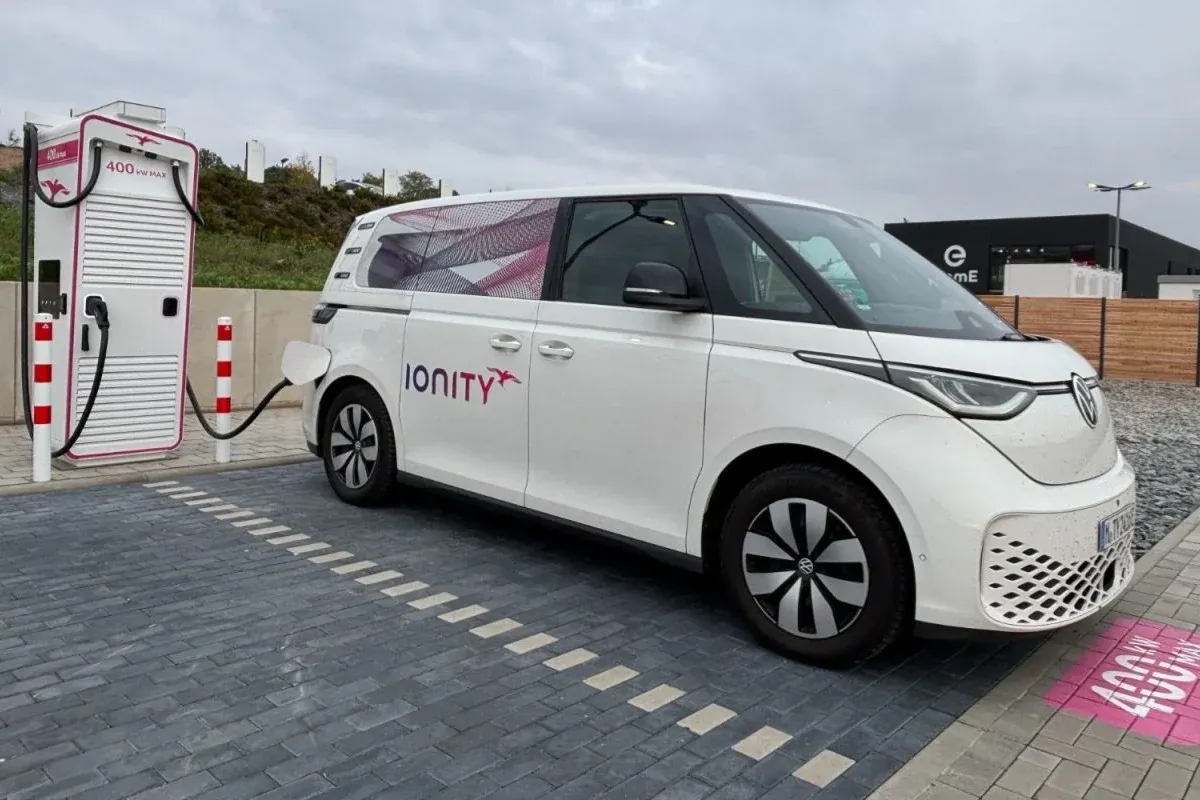
The additional storage capacity can be used in conjunction with the existing power connection. An intelligent energy management system is intended to allocate the available capacity among the power connection, battery storage, and charging stations as needed. Beyond compensating for limited connection capacity, Ionity sees other applications: when the charging network is heavily utilized, the battery storage can provide extra charging power while reducing peak loads.
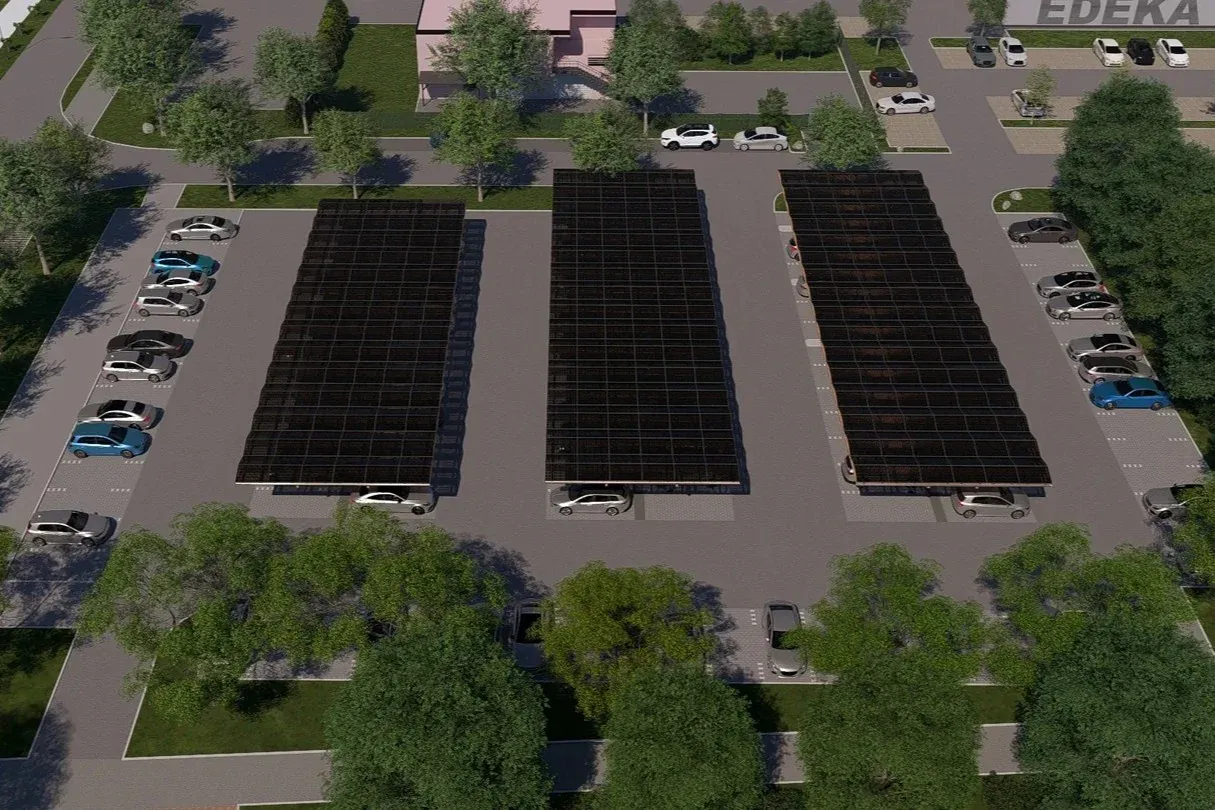
Ionity is building a new charging station in Hemsbach with twelve charging points, a PV system, and battery storage.
Another project is underway in Hemsbach, Baden-Württemberg. It involves a complete new construction featuring a fast-charging park with a photovoltaic canopy and battery storage system. The PV installation is expected to have an output of over 223 kWp, while the BESS will have a capacity of more than 2 MWh. Unlike in Wertheim, the locally generated solar power there will also be stored and later used to charge twelve fast-charging stations.
In the long term, Ionity plans to utilize its battery storage beyond direct charging operations: the company is already working on using these BESS systems for grid services in the future to help maintain electrical grid stability. Additionally, participation in electricity trading is a potential option down the road. To this end, Ionity is further developing its intelligent energy management system, which is designed to coordinate grid connections, storage systems, solar installations, and charging stations.
Ionity aims to have over 20 MWh of BESS capacity by 2027
With the scaling plan for 2027, which aims to install around 50 battery storage systems across Europe with a total capacity of over 20 MWh, the use of BESSes will become a key component of the fast-charging operator’s expansion strategy. There are several reasons behind this move, as Christoph Strecker, Head of Rollout at Ionity, explained to electrive: “For us, it’s not just about building more charging stations; it’s about creating the right charging infrastructure in the right locations and continuously improving the charging experience for our customers.”
Strecker continues, “Battery storage plays a key role here: It enables us to develop new locations, use electricity more efficiently, and take an active role in the energy system in the future. Wertheim is just the beginning. With the planned expansion across Europe, we aim to take the next big step toward a smarter, more efficient, and more flexible charging infrastructure.”
Battery storage technology can therefore be useful for CPOs like Ionity in several ways: It helps to bridge long waiting times for more powerful grid connections and allows charging stations to become operational earlier or with more charging points. At the same time, it creates the conditions for more flexible use of electricity and potential additional revenue streams through grid services and energy trading.
An interesting detail: So far, Ionity relies only on external BESS, even though there are charging stations with integrated battery storage available on the market. External solutions offer more flexibility to Ionity at present, as they can supply multiple charging points independent of the charging hardware used and be applied in various scenarios, according to the company. That is why Ionity’s focus is currently on external battery storage. At the same time, Ionity remains open to charging systems with integrated battery storage and is evaluating their use.
_Source: electrive – own research_