
Ionity finds a way to install more chargers without waiting years for the electricity company
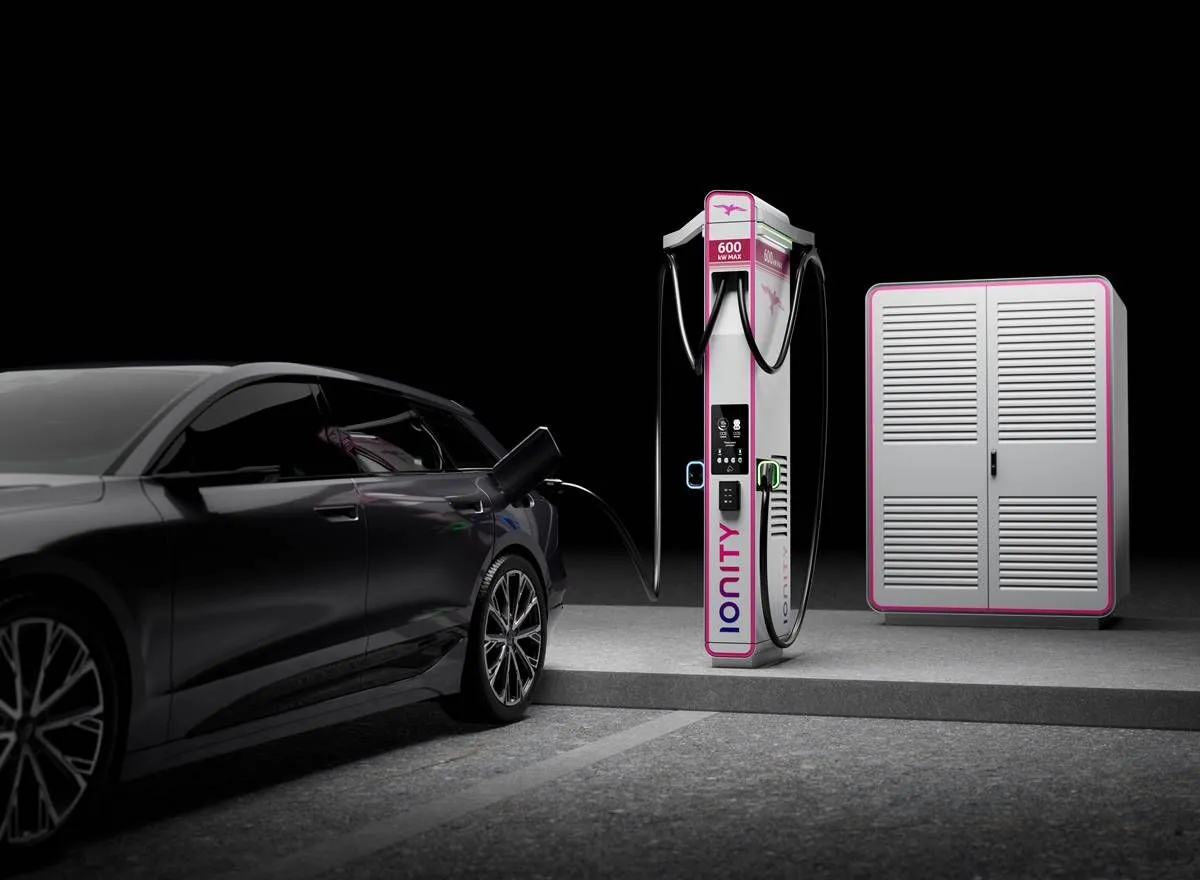
Reaching a charging station that is busy with outgoing trips and finding all the slots occupied remains one of those situations that can complicate a trip in an electric car. The solution seems obvious: install more chargers. But behind each expansion, there is something less visible that must also be addressed, and it does not always progress at the pace needed by operators.
Ionity is facing exactly this problem. According to the company, strengthening a connection to the medium-voltage grid can take up to three years. Such a delay hinders the opening of new stations or prevents the expansion of existing ones. To save time, the operator has begun to incorporate stationary batteries that allow for better utilization of the available connection and provide additional power when needed.
The first Ionity installation with this system is already in operation in Wertheim, in Germany’s Baden-Württemberg state. It is located next to an exit on the A3 highway, near a McDonald’s and the Wertheim Village shopping center. There, the station has been upgraded from four to six charging points, equipped with Alpitronic HYC400 chargers. Two more charging points are planned to be added using an ABB unit with a capacity of up to 350 kW.
The energy storage system is provided by the Chinese manufacturer Sungrow and consists of four modules, with a capacity of 1,028 kWh and a maximum output power of 500 kW. The batteries are housed in separate cabinets within the facility and operate alongside the existing electrical connection. Their initial purpose is to enable expansion while waiting for enhanced grid capacity, without having to halt the project throughout that period.
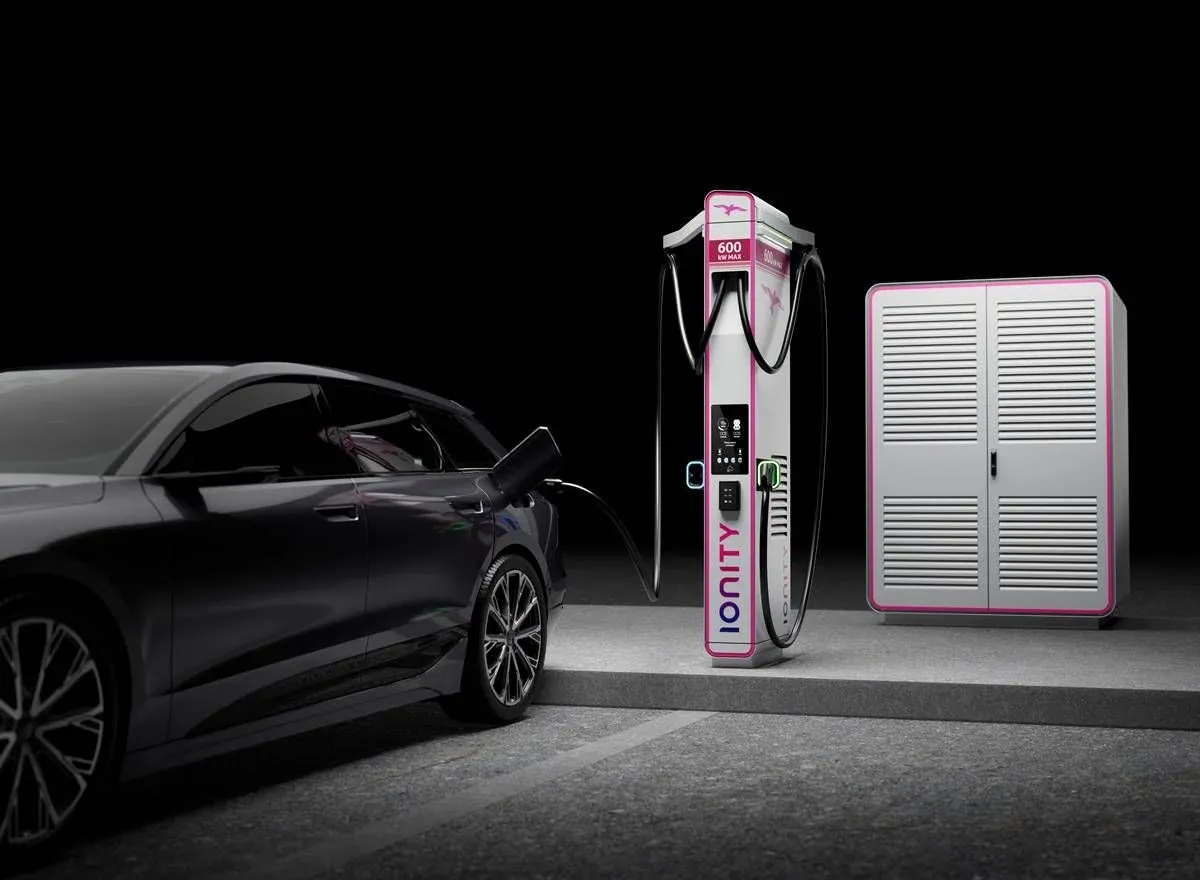
The mechanism is quite easy to understand. When demand allows, the batteries store energy; when several cars arrive and power needs increase, they supply part of the electricity required by the chargers. A management system coordinates the connections, storage, and charging points to distribute available resources and reduce peak demand on the grid.
That doesn’t mean the station can deliver any power indefinitely. The capacity depends on the energy stored and on the opportunities to replenish that reserve. But it does allow for handling peak demand periods with a connection that, on its own, would impose greater restrictions on service. For drivers, the advantage is that this improvement can be realized before the expansion projects to enhance supply are completed.
Solar panels and batteries to expand the Ionity network
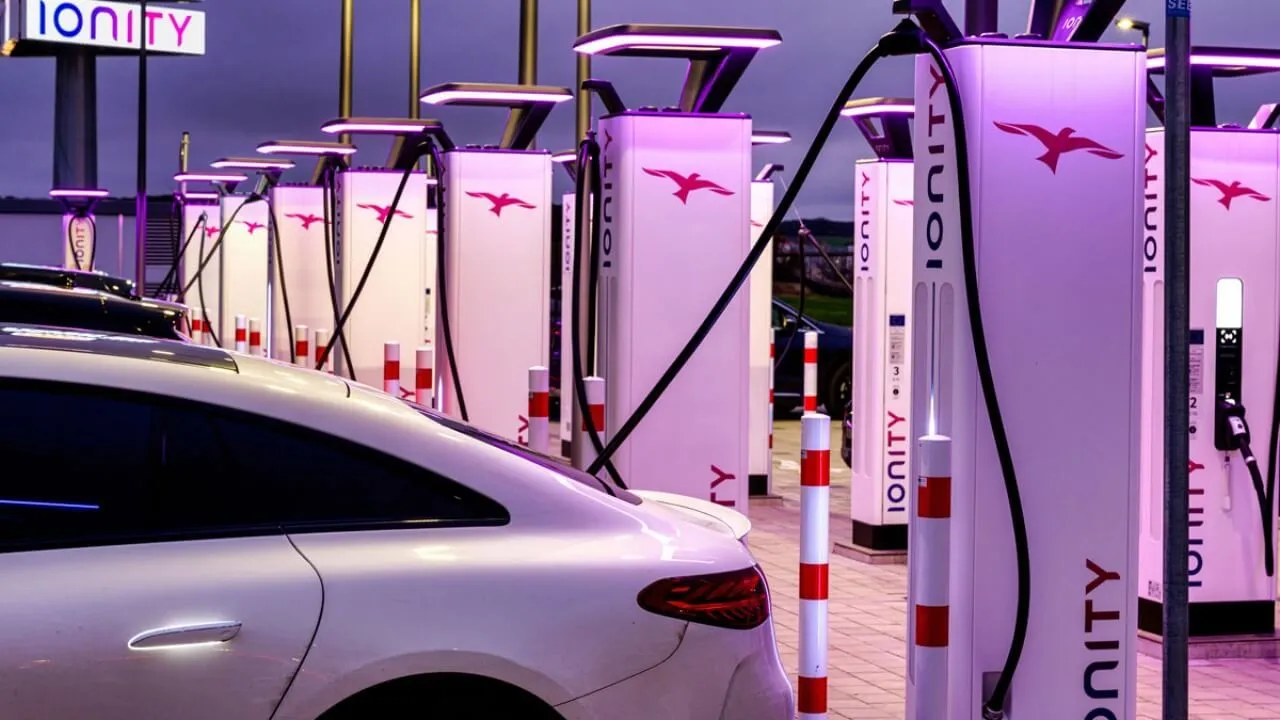
The next project is located in Hemsbach, also in Baden-Württemberg, where Ionity is preparing a completely new station. It will feature twelve fast-charging points, a roof with solar panels totaling over 223 kWp, and an energy storage system exceeding 2,000 kWh. In this case, the batteries will also allow storing the electricity generated there for later use in charging vehicles.
The difference matters. Solar power generation does not necessarily align with the hours when the most drivers arrive, and storing part of that energy makes it possible to use it at another time. This does not turn the facility into an off-grid operation, but it adds a local source of electricity and more flexibility in managing the station’s energy consumption.
Christoph Strecker, in charge of Ionity’s deployment, told electrive that the company aims to expand its infrastructure where it is needed most and improve charging experiences. As part of this strategy, energy storage will be used to open new locations, make better use of available energy, and eventually enable participation in services related to power grid operations.
The plans go far beyond these two stations in Germany. Ionity intends to deploy around 50 energy storage systems across Europe by 2027, with a combined capacity of over 20,000 kWh. The company is also working on its management system to coordinate electrical connections, batteries, solar installations, and chargers based on the specific needs of each location.
In the long term, those batteries could provide support for grid stability and even participate in electricity markets. These are applications the company is exploring that would allow maximizing storage beyond charging sessions. For now, the most immediate goal is to facilitate the expansion of charging stations and reduce limitations on their connections.
Ionity is giving priority to external batteries because they can power multiple charging points, regardless of the manufacturer of the installed equipment. It is also studying chargers with integrated storage, but for now prefers the flexibility of shared installations. For those who drive electric cars, the outcome that matters is quite clear: having more charging stations without having to wait years for a higher-capacity connection.