
Interview: What remains of Mazda in this CX-6e developed with the Chinese company Changan?
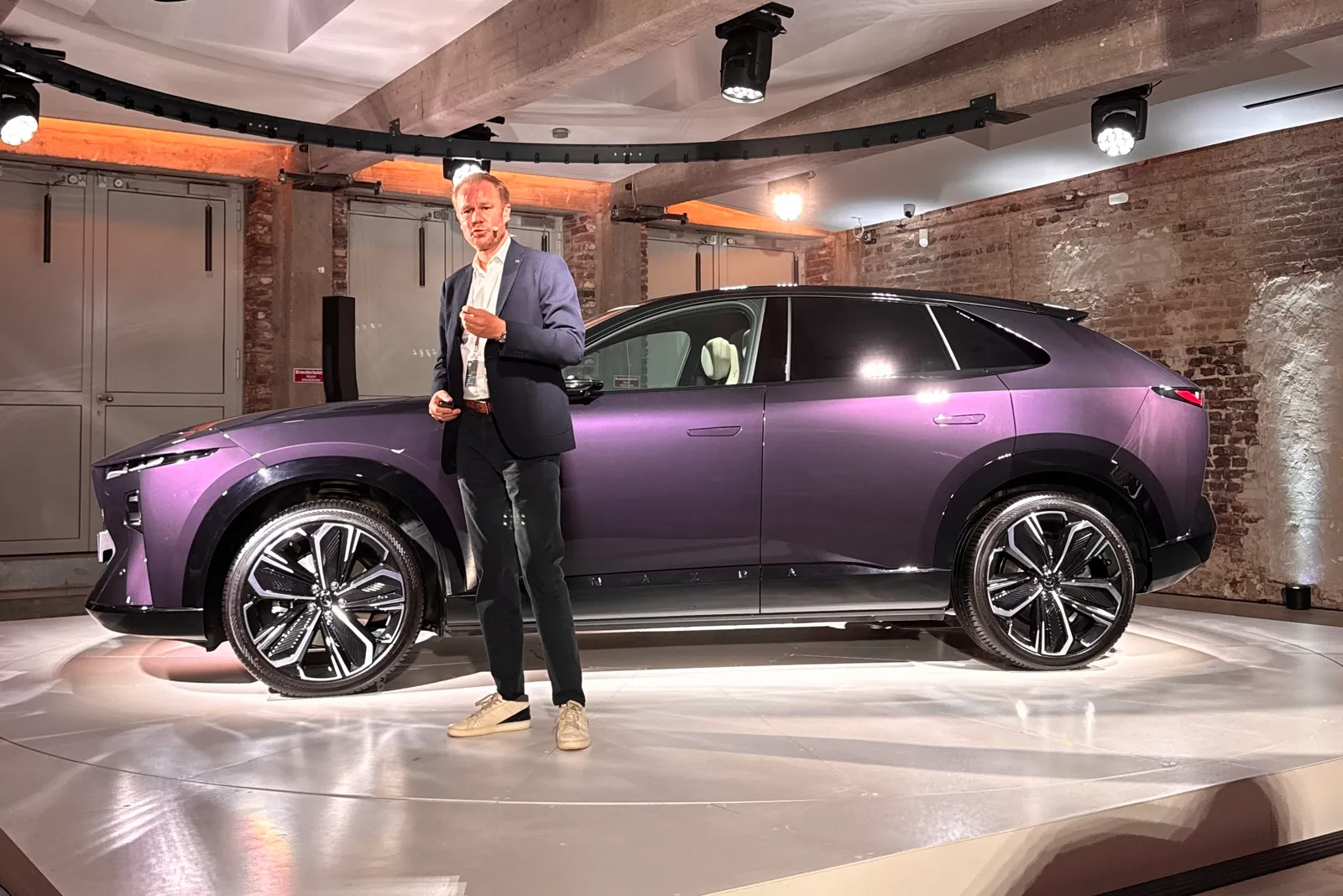
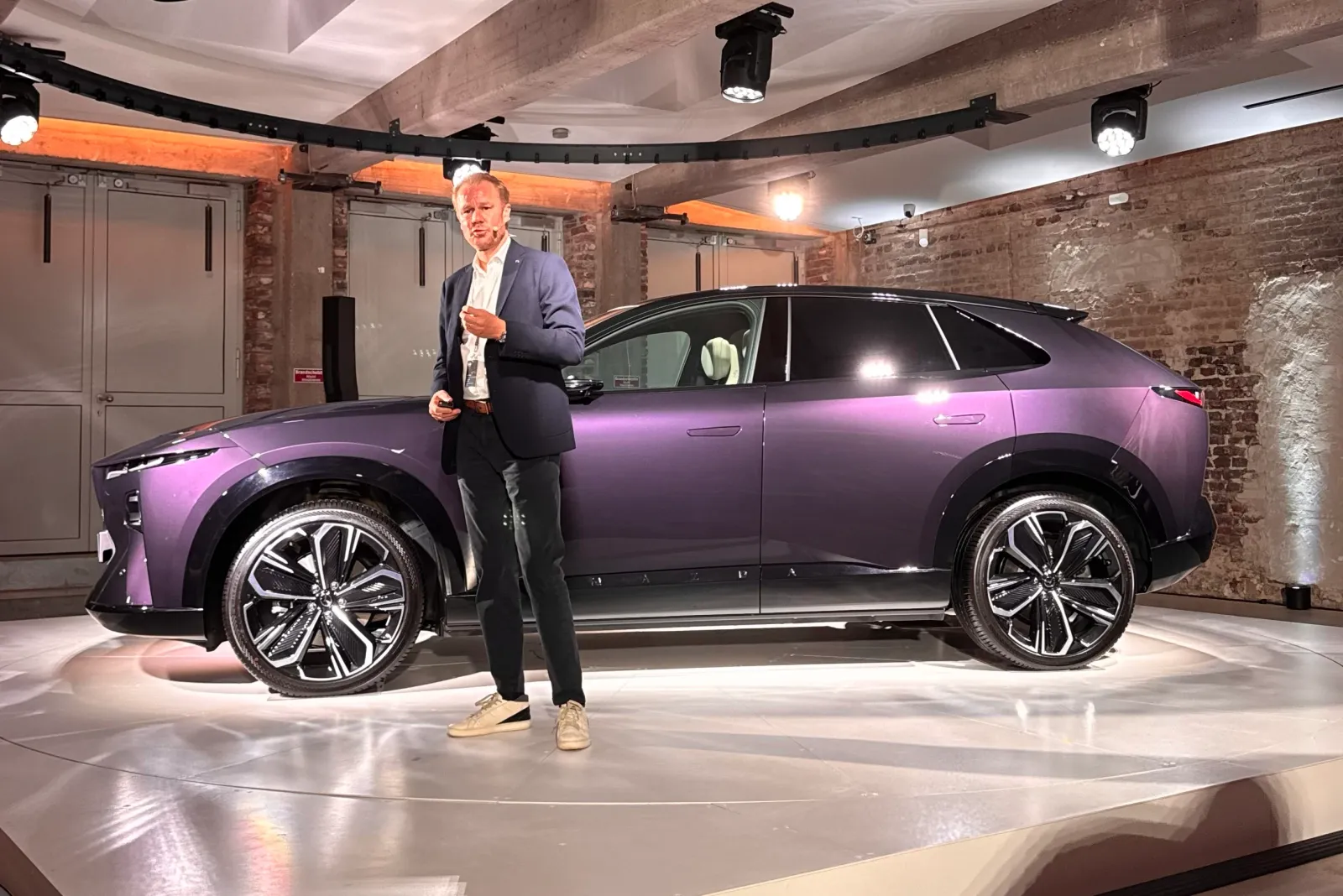
With the CX-6e, Mazda is making significant strides in the electric vehicle segment. But behind the Japanese logo lies a close partnership with Changan, the brand’s long-standing partner in China. A Chinese platform, production in Nanjing, European development, and Mazda’s design: during the model’s international tests in Düsseldorf, we tried to figure out who was actually responsible for what.
The Mazda CX-6e is a model that clearly illustrates how the automotive industry is evolving. Faced with the high costs of developing electric vehicles and their software, manufacturers are now forming more partnerships. Mazda, which remains a relatively modest player on the global scale, has chosen to rely on Changan to accelerate its progress. Moreover, this cooperation is not new—the two groups have been working together in China for over twenty years, with their partnership gradually evolving from simple local production to joint vehicle development.
Also read
Review – Mazda CX-6e: Mazda’s new electric SUV is attractive, but is it too late?
The CX-6e, like the previous Mazda 6, is one of the most visible outcomes of this partnership. Mazda contributes its expertise in design, engineering, and driving dynamics, while Changan focuses on electric technologies, connectivity, and manufacturing.
A Changan platform, but…
Mazda does not try to keep the technical origins of the CX-6e a secret. The SUV is built on a Changan platform, with its base being the Mazda EZ-60 sold in China. During our interview, we went further by asking Moritz Oswald, project manager at Mazda Europe, which components are actually shared with Changan models and which are specific to Mazda.
On this point, the Japanese brand’s “Mr Technologies” admits it cannot specify all of the shared components in detail. It does, however, confirm that several chassis elements are unique to the European CX-6e. The springs and shock absorbers, in particular, were specifically selected and tuned by Mazda.
What about the driving experience?
Mazda makes its strongest claims regarding road performance. According to Moritz Oswald, the driving experience of the European CX-6e is “99%” developed in Germany, at its R&D center in Oberursel (in Hesse state). Shock absorption, steering, energy recovery, the feel of the brake pedal, and even the accelerator response have all been specifically optimized for Europe. Mazda cites local driving habits that are “more dynamic” as the reason for this adaptation.
Be careful, however, not to misinterpret this statement... It certainly doesn’t mean that 99% of the vehicle was designed in Germany. Mazda is referring here to the tuning of the driving experience. The platform and a significant portion of the technologies offered in this vehicle still stem from cooperation with Changan.
Mazda rejects the label of “Chinese car”
The origin of the CX-6e is clearly a sensitive topic for Mazda. During our discussions, our interlocutors emphasized that this vehicle should not be viewed as a Chinese car with a rebranded name. It’s worth noting that the CX-6e is produced in Nanjing by Changan Mazda Automobile, a joint venture between the two manufacturers. Mazda stresses that this factory uses the same production processes, quality standards, and principles of continuous improvement as its other facilities around the world.
There’s no doubt it is indeed a Mazda. Yet we must not underestimate Changan’s role in Mazda’s electrification strategy. This is not merely an industrial partnership. The Chinese company contributes a crucial part of the technical foundation that enables Mazda to offer electric vehicles of this caliber today.
+1 for the design
It is likely in style that Mazda has sought to most distinctly establish its difference. Bahram Partaw, lead designer for Mazda Europe and responsible for the design of the CX-6e, explains that he wanted to move away from what is possible in China. The entire challenge was to preserve Mazda’s traditional aesthetic codes: a dynamic silhouette, well-proportioned volumes, and sleek lines.
The initial inspiration was quite unexpected: “a catamaran,” we were told. The idea was to envision a very elongated central body, paired with more robust volumes on the sides, in order to give the SUV a sense of stability and grip on the road. The shift to electric power also allowed for changes to some traditional design elements. The conventional grille gives way to a closed, illuminated front end. The surfaces are more taut and sharper than those on recent Mazda gasoline models.
Additional details further reinforce this design choice, such as the visible ridges on the front bumper—a feature commonly found in sports-oriented models. This emphasis on differentiation seems to be resonating with early customers already. According to Mazda France, 120 initial orders have been placed. It may not be a large number, but the brand appears satisfied with it.
The challenge was precisely to avoid falling into a too generic design. Many electric SUVs today share quite similar proportions and aerodynamic features. When asked about this trend toward uniformity, the designer of the CX-6e explained that he wanted to give the car a true personality, focusing more on emotion than just technical efficiency. When I directly asked if the goal was to avoid creating “just another Tesla Model Y,” his answer was unequivocal: “definitely not”!
Also read
Mazda 6e review: Is Japan’s new large electric sedan up to the task?
Too much digital kills digital?
Aboard, the contrast with Mazda’s usual approach is striking. The CX-6e features a massive 26.45-inch panoramic screen, gesture controls, numerous connected functions, and even digital exterior mirrors depending on the trim level. This is a far departure from Mazda’s approach just a few years ago, which featured relatively minimalist interfaces with more physical controls.
A 360° turn, while other brands are moving away from fully digital designs… In fact, several manufacturers are now reintroducing physical buttons after going to great lengths to centralize functions on screens. Mazda is taking the opposite path here, embracing a much more digital interior that aligns with the standards now set by Chinese automakers and Tesla.
The manufacturer still tries to maintain a certain level of readability inside the cabin. The screen is designed to be shared between the driver and passenger, voice control allows operation of several common functions, and certain information can be sent directly to the head-up display. It remains to be seen whether this new approach will preserve the user-friendliness that has been one of Mazda’s strengths to date.
A Strategic Car for Mazda
The CX-6e effectively illustrates the new balance Mazda is pursuing. The Japanese brand maintains control over elements that are highly noticeable to drivers: design, chassis, steering, braking, and adaptation to European tastes. Changan, on the other hand, enables it to quickly access an electric platform, advanced digital technologies, and competitive production capabilities.
For Mazda France, the commercial significance is already substantial. Of the 1,400 electric vehicles planned for 2026, 600 are expected to be CX-6es, with another 800 being Mazda 6es. This may seem modest on the scale of the French market, but it is considerable for a brand whose electric models have so far accounted for only a small portion of sales. And it’s evident: Mazda has high expectations for this new electric SUV.
Also read
Testimonial – At 70, Gilles switches from diesel to electric and charges his Mazda 6e using solar power
So, what remains of Mazda in the CX-6e? A lot in terms of what’s visible. But under the hood, Changan’s influence is undeniable. Rather than being a Chinese-made Mazda or a rebranded Changan, the CX-6e is primarily the result of a new approach to car design: Mazda retains its identity where it believes it matters most, and relies on China where it needs to catch up.