
India mulls new scheme to support 100,000 heavy-duty EVs
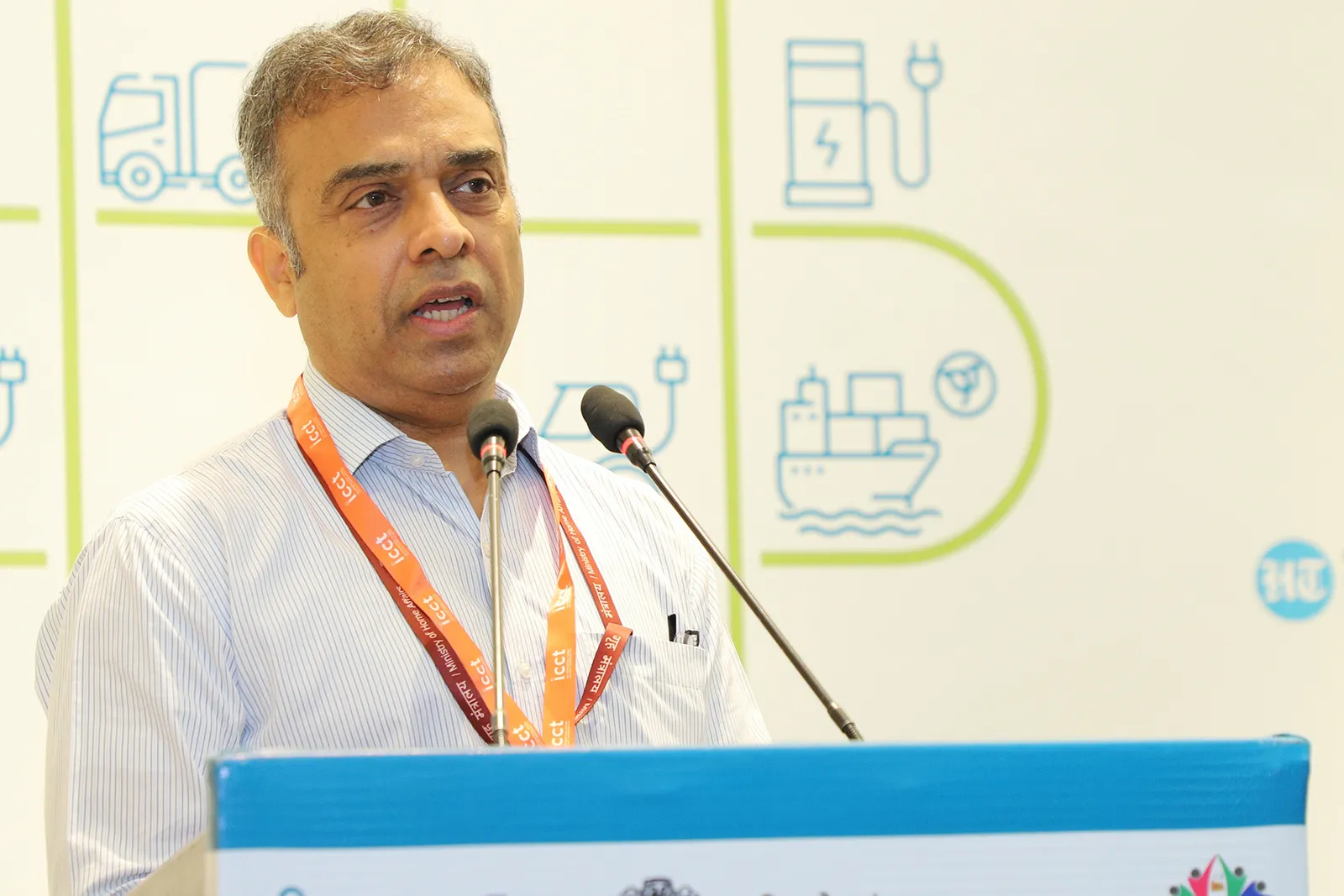
Building on FAME, PM E-Drive, PM E-Bus Sewa, and several other schemes over the past decade, the Indian government is considering a new programme to support heavy-duty electric vehicles. The proposed scheme, an initiative by the Ministry of Heavy Industries (MHI), could cover up to 100,000 EVs.
Dr. Hanif Qureshi (pictured), Additional Secretary, Ministry of Heavy Industries, discussed the proposed scheme during his keynote address at the India Clean Transportation Summit 2026 in New Delhi on 1 September. Dr. Qureshi noted that while electrification has gathered momentum in the two- and three-wheeler segments and in passenger cars, heavy-duty vehicles have seen negligible EV penetration.
The government has previously announced support for more than 31,000 electric buses, including over 7,000 units under FAME, 14,028 units under PM E-Drive, and 10,000 units under PM E-Bus Sewa, as well as 5,643 electric trucks under PM E-Drive, Dr. Qureshi said. It now needs to determine how electric buses and trucks can be made viable and economical to run for private-sector operations, he added.
“The loans lent to manufacturers… first of all, not many loans are lent because banks perceive a very high risk in lending to the manufacturers of heavy commercial vehicles, and if they lend, then they are at relatively higher interest rates,” Dr. Qureshi explained, adding: “The government is looking at ways to make financing easier for these categories of vehicles”.
Dr. Qureshi also provided an estimated breakdown of the 100,000 heavy-duty EVs that could be supported under the proposed scheme and indicated its potential duration. “We expect that probably up to 50,000 electric buses and 50,000 electric trucks can be supported in the next 5 years,” he said.
MHI is looking at interest subsidies and also partial credit guarantee for these electric buses and trucks. Financial institutions are typically hesitant to lend money for small heavy-duty vehicle fleets, such as those with a size of just five trucks or around ten buses. While the ministry has yet to make any formal announcements, rumour in the industry circle is that it is considering to guarantee covering up to 80 per cent of the outstanding loan amount in case of a default by the borrowing fleet owner.
The partial credit guarantee provision bears some resemblance to the PM e-Bus Sewa-Payment Security Mechanism scheme, which is aimed at ensuring timely payments to the companies operating electric buses for public transport authorities (PTAs) on a Gross Cost Contract (GCC) basis in case of default of payments.
According to a report Mint published on 31 August, MHI recently also began considering to include interest subvention for charging infrastructure under the proposed scheme. Electric buses and trucks typically need dedicated charging stations with high-power chargers and more space for parking and manoeuvring. The ministry aims to reduce the associated financial burden on operators. The total outlay of the scheme is being pegged at 98.52 billion rupees (~€896 million).
Electric trucks are among the lowest contributors to EV sales in India. According to a research report from JMK Research & Analytics, of the 2,339,501 EVs sold in India in 2025, only 573 units or 0.02 per cent were trucks. While this marked a 155.8 per cent year-on-year growth compared to 2024, when 224 units were registered, the absolute volume was incredibly low. Olectra GreenTech, PMI Electro Mobility, and Switch Mobility/Ashok Leyland were the top three players in the electric truck category last year.
The slow adoption explains why MHI extended the benefits for electric trucks under the PM E-Drive Scheme, implemented from 1 October 2024, from 31 March 2026 to 31 March 2028. While there is substantial penetration of electric models in the N1 category, which covers trucks with a gross vehicle weight rating of up to 3.5 tonnes, in other truck segments, the transition is still at a nascent stage. “If anybody is under the impression that there will be 100 per cent electrification, then that is not going to happen, at least not in the near future,” Dr. Qureshi said.
Buses have a much higher share in India’s electric vehicle sales, although still overall very low – 0.20 per cent. In 2025, 4,615 electric buses were registered in the country, which, compared to 3,905 units registered in 2024, marked an 18.2 per cent growth. PTAs are largely driving the growth in this case, inducting electric models into their fleets as part of the PM E-Drive and PM E-Bus Sewa schemes. Montra Electric, Energy In Motion (EIM), and Propel Industries led the electric bus sales chart last year.
India wants to speed up the adoption of electric buses and trucks to not only curb vehicular air pollution but also reduce its import bills. “Given the fact that we are importing more than 85 per cent of our crude oil in the country, and the current geopolitical situation, I think it is only in the fitness of things that reliance on alternative fuels, particularly electric vehicles, must be emphasised”, Dr. Qureshi said towards the end of his speech.
Amit Bhatt, India Managing Director, India Managing Director, International Council on Clean Transportation, said: “This year’s summit arrives at a moment when India is thinking hard about energy security and self-reliance, and clean transport sits right at the heart of that conversation. With every barrel of imported oil we displace, and every component we localise, it is a step towards a more resilient Atmanirbhar Bharat.”