
India approves chargers, awaits deployment
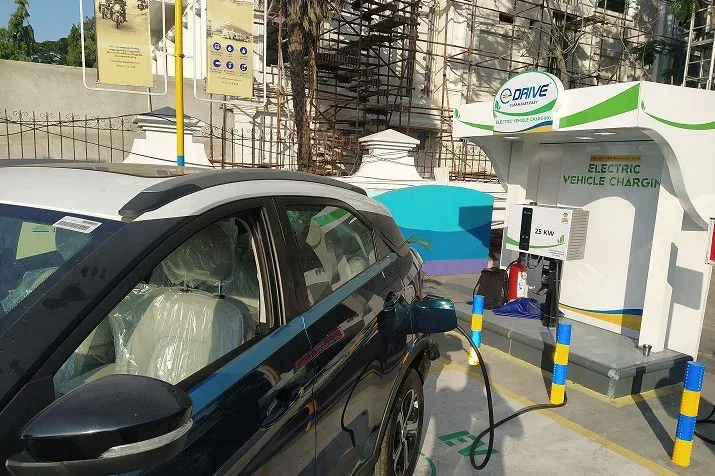
India has approved 6,562 public EV charging points under the PM E-DRIVE scheme, though none had been installed by the end of July. However, the programme has also supported more than 2.65 million electric vehicle sales.
Nearly two years after launching the PM Electric Drive Revolution in Innovative Vehicle Enhancement (PM E-DRIVE) scheme, the Indian government has approved 6,562 public EV charging points across the country. However, none had been installed as of 22 July 2026, according to information provided by the Ministry of Heavy Industries in a written reply to the Lok Sabha, the Business Standard reports.
Heavy Industries Minister H.D. Kumaraswamy said that 6,562 public chargers had been sanctioned under the scheme, including 1,571 in the state of Karnataka, but confirmed that no charging stations had yet been deployed.
Despite the slow progress on charging infrastructure, the ministry said PM E-DRIVE has already supported the sale of 2.65 million electric vehicles. Maharashtra leads with 428,000 supported vehicles, followed by Uttar Pradesh with 278,000, Karnataka with 267,000 and Tamil Nadu with 259,000.
Electric two-wheelers account for the overwhelming majority of supported vehicles. The scheme has subsidised 2.379 million electric motorcycles and scooters against a target of 2.479 million units. It has also supported 268,000 electric L5 three-wheelers and 6,547 electric rickshaws and carts.
Uptake has been far lower in the commercial vehicle segment, with just 55 electric trucks supported compared to a target of 5,643 units. No electric ambulances have received support so far, despite a target of 3,811 vehicles. Last year, MHI had announced that it would allocate roughly 50 million euros to electric trucks under the subsidy programme.
The government also provided an update on its electric bus programme. A total of 14,000 battery-electric buses have been allocated under PM E-DRIVE, including 4,500 for Bengaluru and 2,800 for Delhi. Hyderabad is due to receive 2,200 buses, followed by Mumbai with 1,500, Ahmedabad with 1,200, Pune with 1,000, Surat with 600 and Jammu and Kashmir with 200.
Beyond vehicle incentives, the ministry has allocated ₹780 crore to modernise four vehicle testing agencies – ARAI, ICAT, NATRAX and GARC – to strengthen India’s EV testing and certification infrastructure.
PM E-DRIVE has a total budget of ₹10,900 crore (about 1.3 billion euros) for the period from April 2024 to March 2028. According to the ministry, ₹2,322 crore (211 million euros) had been released and fully utilised by 22 July 2026. Of the total budget, ₹2,000 crore (182 million euros) has been earmarked for public charging infrastructure.
The ministry also compared PM E-DRIVE with its predecessor, FAME-II. As of 1 July 2026, the earlier programme had delivered 9,583 public charging stations, supported more than 1.67 million electric vehicles and funded the deployment of 5,297 electric buses. Unlike FAME-II, PM E-DRIVE does not set state, district or annual deployment targets.