
In detail: Ferrari Luce – It grows on you
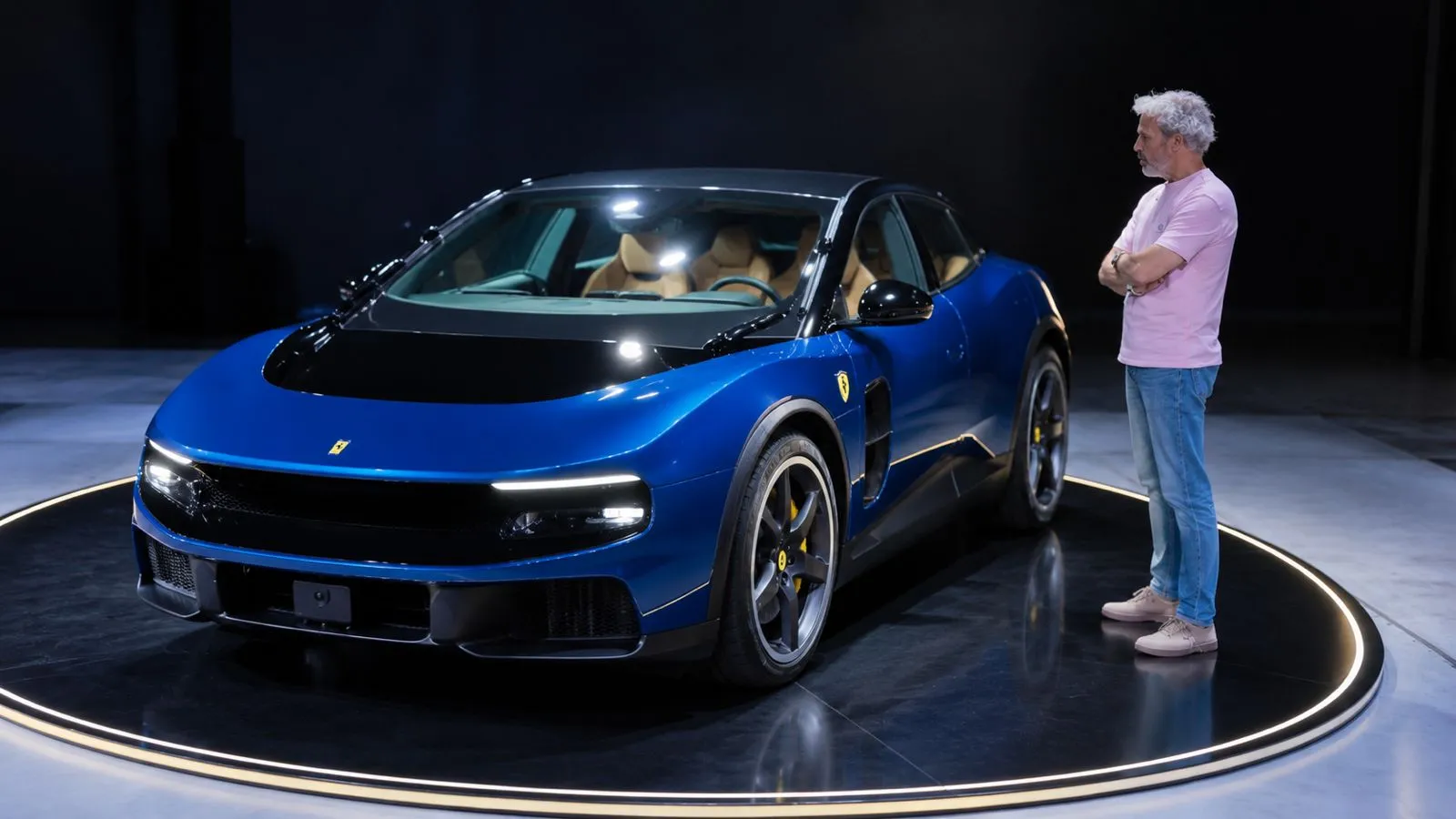
It has been one of the most talked-about cars in the world over the past few months: the Ferrari Luce. The first all-electric vehicle from Maranello sparked a wave of emotion at its unveiling in Rome. Now that we’ve had a chance to walk around it, sit inside it, and speak with the engineers behind the Luce, it turns out things are a bit different.
Cineporto Studio
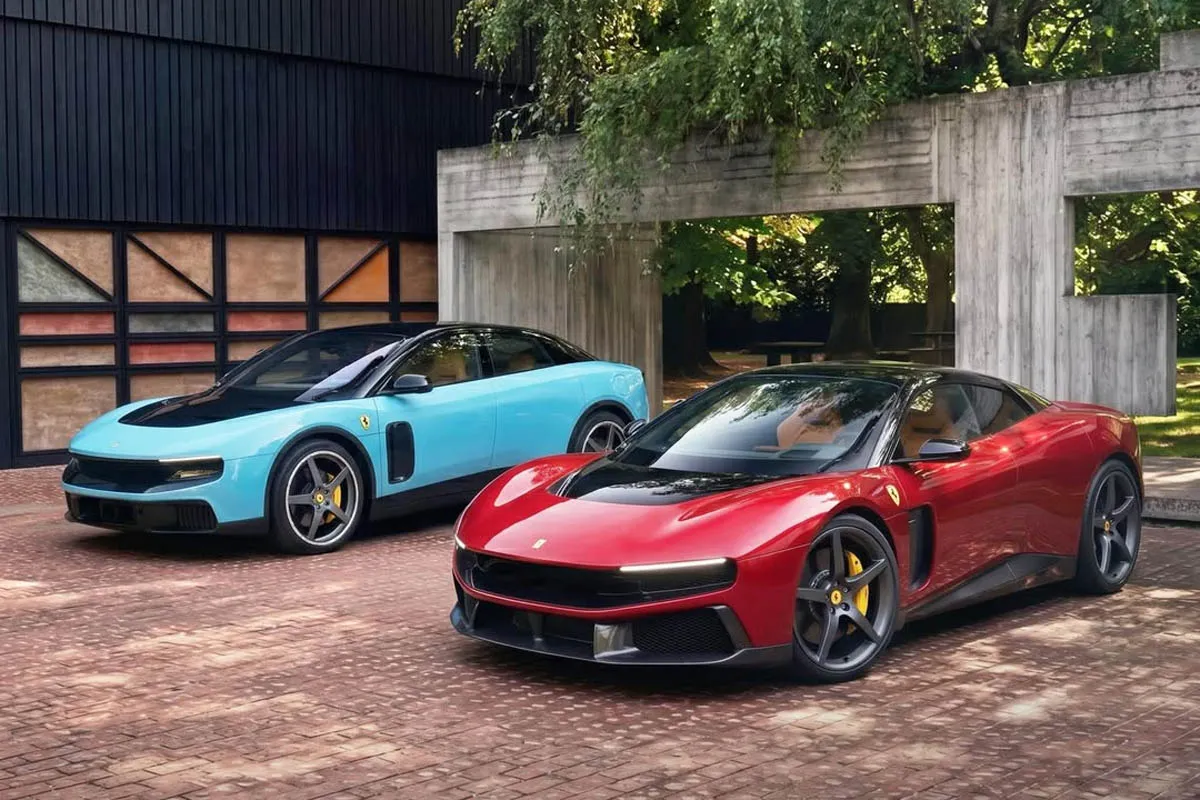
The trick Ferrari used in Rome during the Luce unveiling event is a tried-and-true method: create as much division as possible so the whole world talks about your product, then turn down the volume a bit. During that launch—chosen not coincidentally in Rome, where Ferrari won its first race with the 125 S—the audience saw the wildest configurations. There was even a bright yellow version, complete with wheels featuring yellow rims. No, not exactly beautiful.
It’s especially with the Luce that color proves to be extremely decisive. At the Cineporto Studio, near Fiorano, I was able to see the Luce in blue, with decent wheels underneath. Suddenly, it’s no longer such a strange car. The design improves over time — let’s leave it at that.
The concept behind the Ferrari Luce
Why not an electric sports car? After all, Ferrari is a sports car brand. The Italians have a simple explanation for this. The advantages of an electric car lie in packaging, functionality, and space. According to Ferrari, it wouldn’t make sense not to take advantage of these in the first electric Ferrari.
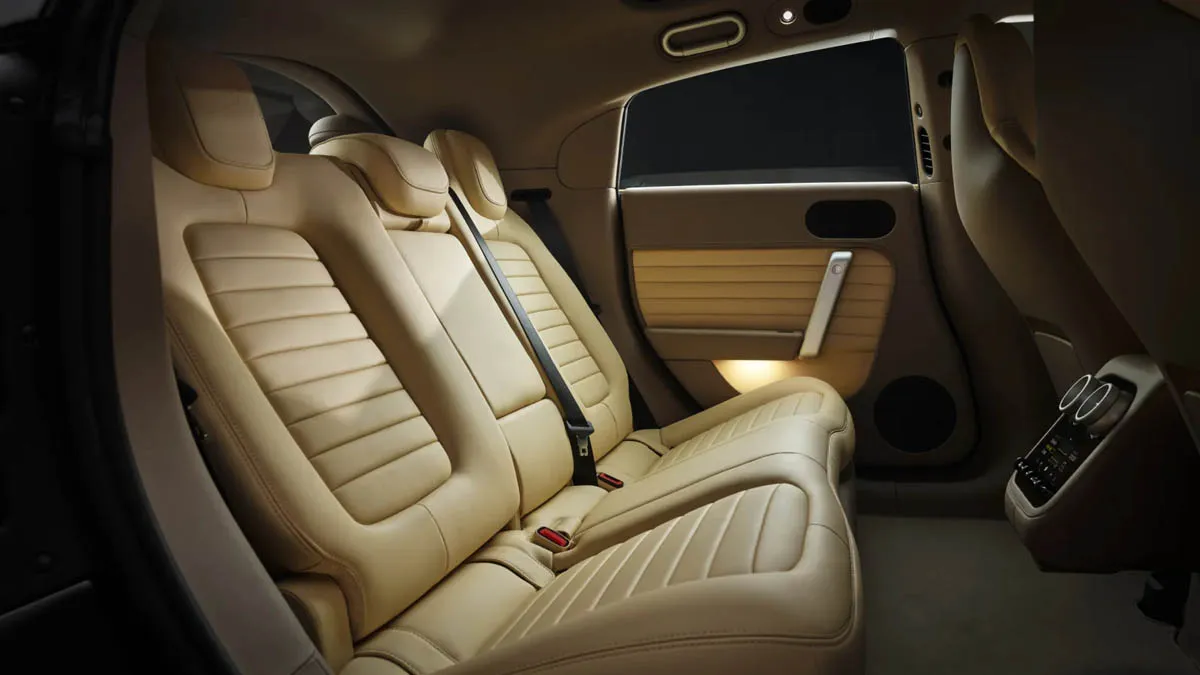
The Luce is therefore a four-door, five-seater car. It’s also quite large, with a length of 5.20 meters, approximately 600 liters of trunk space, and plenty of room at the back for legs and head. Even your feet fit under the front seats.
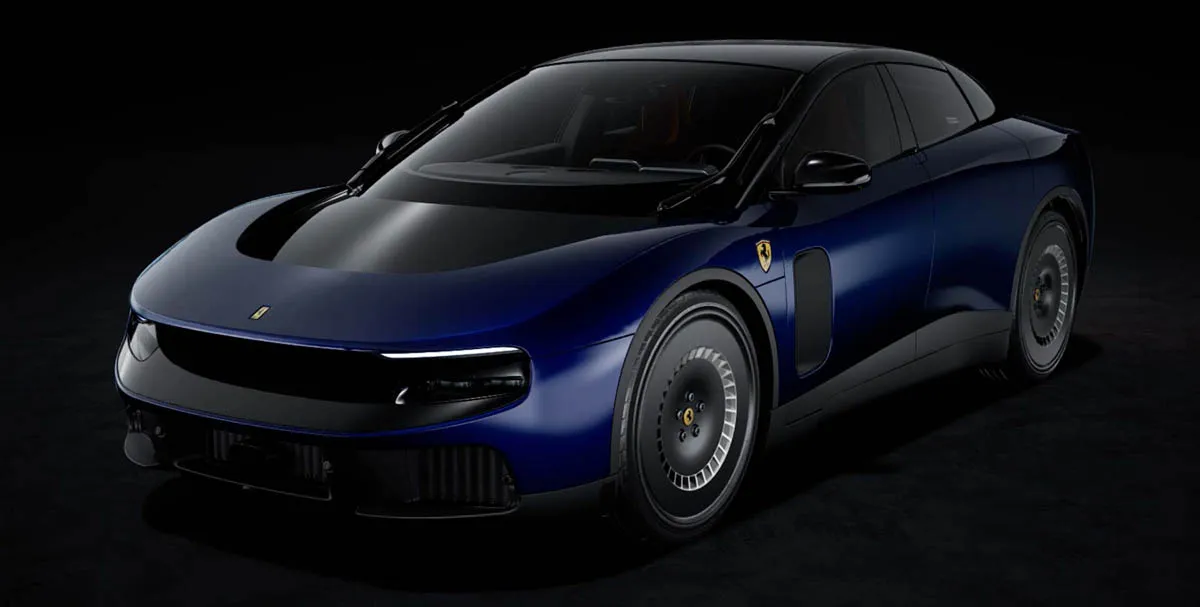
The design is clean, almost minimalist. Notable are the windshield wipers, which are integrated into the A-pillars to maintain a smooth, continuous airflow over the hood. This airflow is minimally disrupted by the bodywork at the front, as much of the wind is directed around the car through an underbody flow.
In fact, the Luce has an egg-shaped form, with a lightweight body shell folded around it. As a result, the wind mainly interacts with this basic shape rather than the visible bodywork. This yields a decent Cw value of around 0.25.
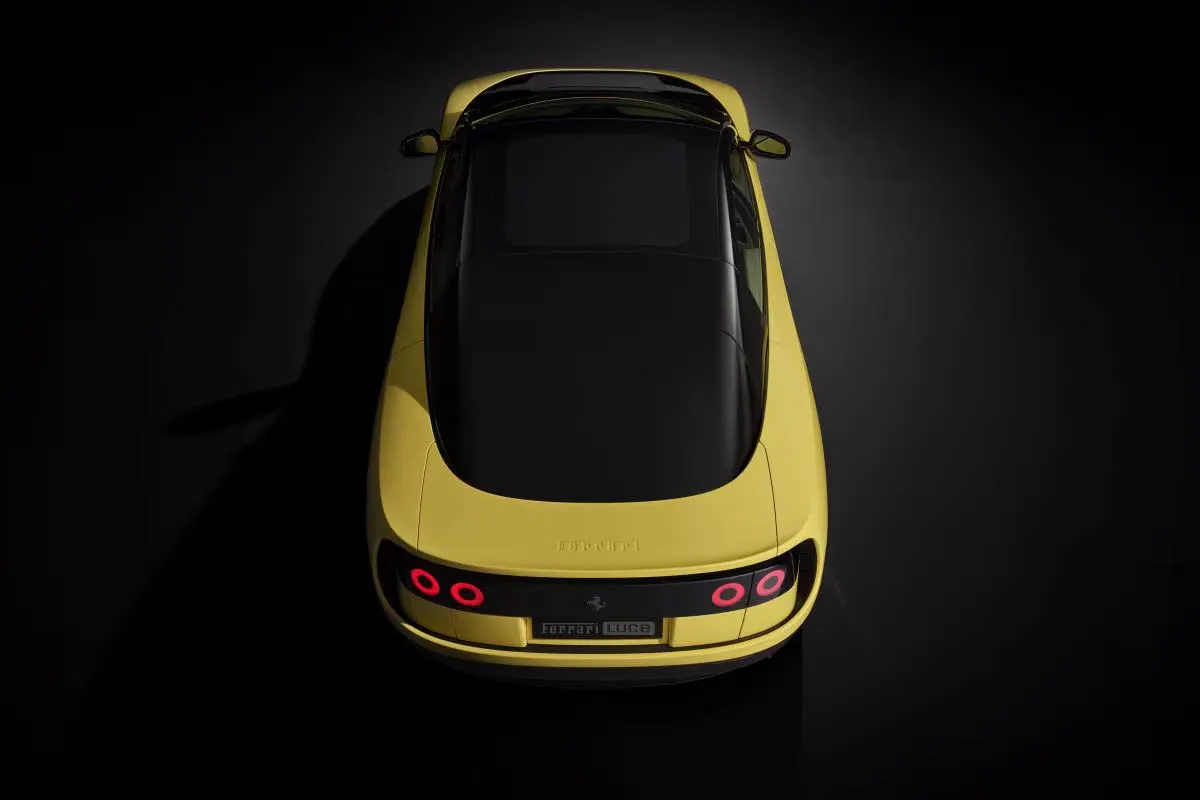
The rear end also breaks away from tradition. The “car within a car” design philosophy creates a striking, almost floating bodyline around the taillights. The shape of those taillights is reminiscent of the Ferrari 360 Modena. You can think what you will about it. But hopefully it becomes clear that there is a purpose behind almost every detail of the Luce, including its design.
Sir Jony Ive leaves his mark on the Ferrari Luce
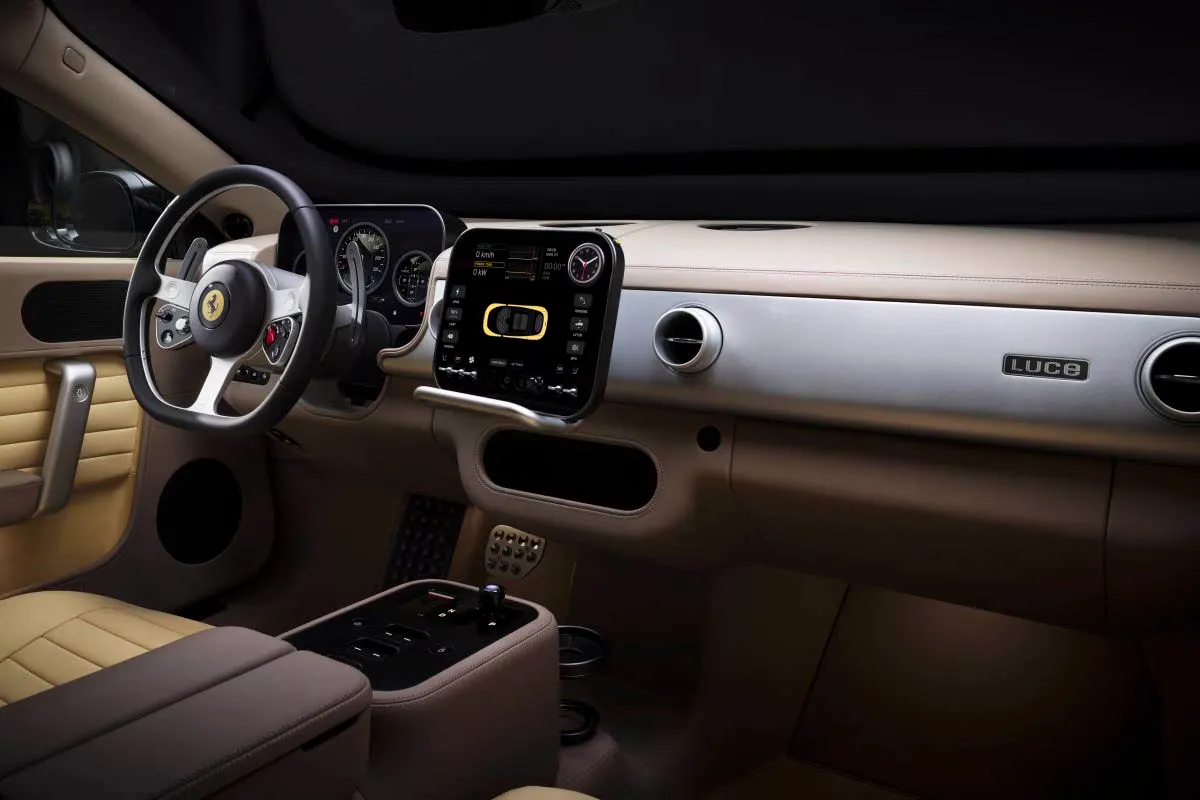
To design the Luce, Ferrari turned to LoveFrom, the design firm founded by former Apple chief designer Sir Jony Ive and Marc Newson. Think of it as a kind of design think tank. Has this resulted in one of the best dashboards in years? In my opinion, yes.
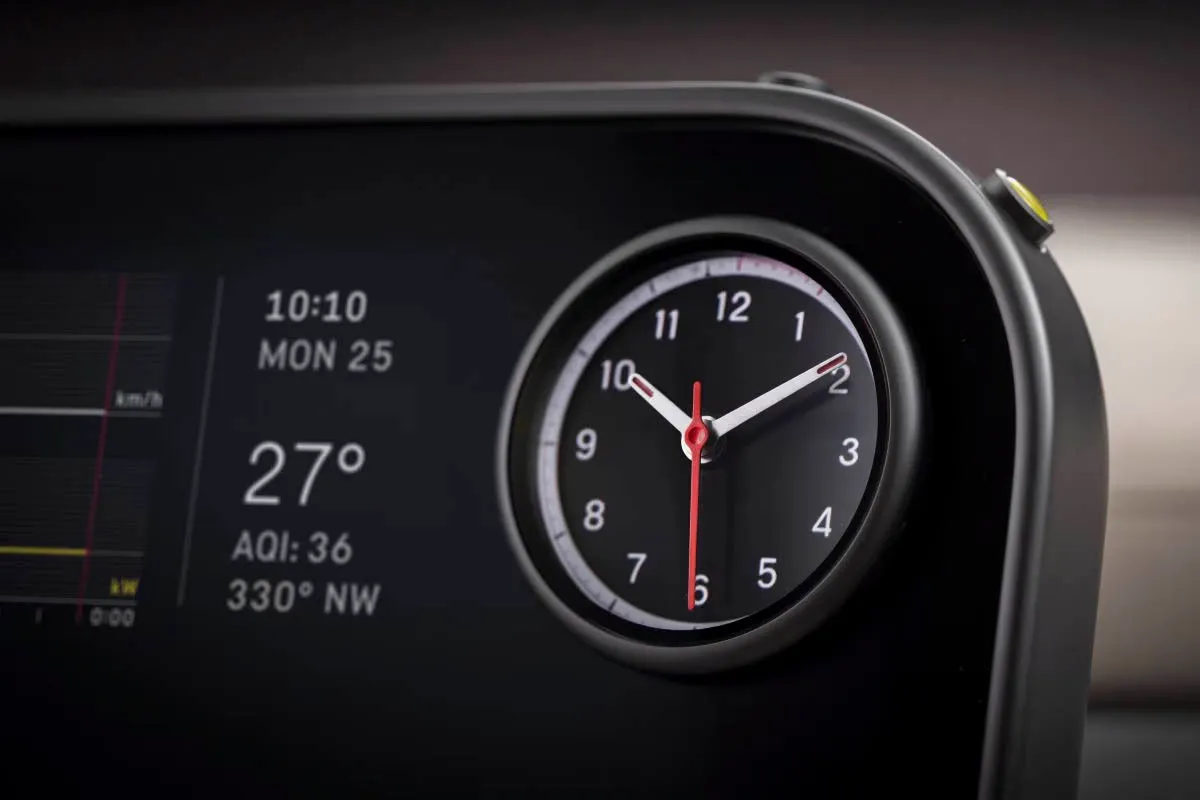
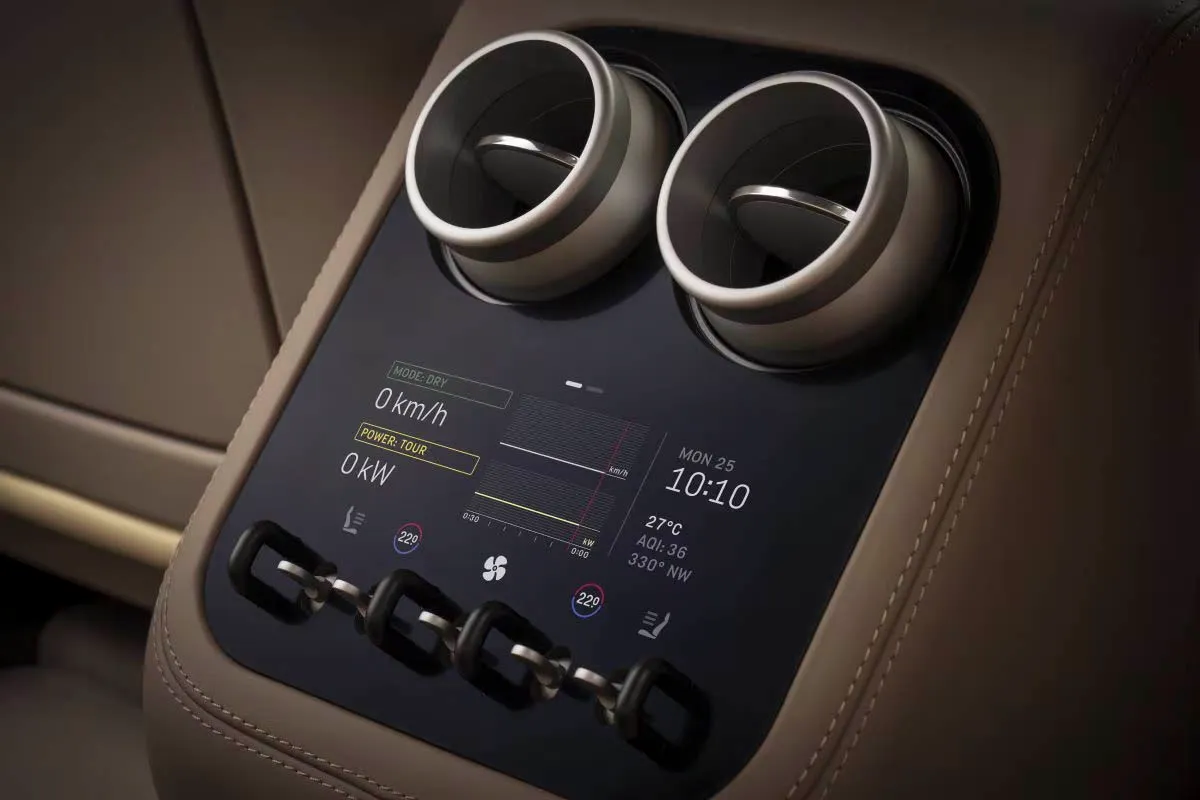
Ferrari exceeds itself here in terms of detail. The dashboard consists almost entirely of glass, aluminum, and leather. Buttons and controls are made of glass or aluminum. Particularly impressive is the precision with which the controls were developed. The toggle switches offer a delightful click when operated, and the aluminum ventilation openings can be adjusted with a nice, soft tap that you can both hear and feel through your fingers.
Take the round pull button on the roof that activates the launch control. Or the central display, thankfully not overly large, whose position can be adjusted with a bracket. All of it is amazing.
Then there’s the central instrumentation. It looks analog at first glance, but it consists of multiple layers of displays. The only truly analog component is the speedometer needle—it’s actually real.
I wonder if there are clear similarities to the designs Jony Ive created for Apple. But the entire interior is simply stunning. It’s excellently crafted, unique, functional, and easy to use as well.
Take just the steering wheel: a stunning, relatively thin three-spoke wheel that clearly pays homage to Ferrari models from the 1950s and 1960s, made up of as many as 19 individually machined components from CNC aluminum. Almost every part in this car has a story behind it. Eventually, you even start to understand why Ferrari dares to charge over 551,000 euros for the Luce.
122 kWh and 1,050 hp
Beneath the surface lies Ferrari’s own EV architecture. It is not a collection of components sourced from other car brands, but rather technology developed largely in Maranello itself. The battery pack is assembled by Ferrari, while the cells come from an external supplier. The total capacity is 122 kWh.
The Ferrari Luce officially features four electric motors for propulsion, one per wheel. Together, they generate 772 kW, or 1,050 hp. The top speed is 310 km/h, and it can reach 100 km/h from a standstill in 2.5 seconds. Ferrari claims a range of over 530 kilometers. Thanks to the 800V architecture, the Luce can be fast-charged at up to 350 kW.
An interesting fact: Ferrari even studied how fast a car can accelerate without confusing the driver. The Luce manages an impressive 2.5 seconds to reach 100 km/h.
The story behind the sound is also interesting. We now know that sound in a truly fast electric car not only enhances the driving experience but also helps with perceiving speed. Fortunately, Ferrari doesn’t use a virtual V12 sound simply played through speakers.
Instead, the natural vibrations and frequencies of the electric motors and drivetrain are captured and amplified before being sent to the interior. It’s somewhat similar to how an electric guitar works. The result is a raw, mechanical sound that responds directly to the amount of power requested.
Twelve electric motors around the four wheels
Each wheel has three electric motors, totaling twelve: one for propulsion and regeneration, one for active wheel movement through the suspension, and one for controlling the wheel’s angle. Ferrari officially counts only the four propulsion motors as part of the electric drive system; the remaining motors function as actuators for the suspension and steering.
Their control is handled by a powerful central computer that continuously coordinates propulsion, regeneration, active suspension, and steering. As the driver, you can partially intervene manually using the levers behind the steering wheel.
Ferrari calls this Torque Shift Engagement. With the left flipper, you can adjust the level of “engine brake,” or regeneration. Think of it as electric regenerative braking, which can occur in up to five steps. This allows you to precisely control the weight shift of the car, just as you would when braking with a combustion engine.
The right flipper is used to influence the acceleration response. Ferrari then uses electronics to distribute the available torque as optimally as possible across all four wheels.
I haven’t had the chance to drive the Luce yet, so we simply can’t form an opinion on that at the moment. But the technology looks promising. This is partly thanks to Ferrari managing to keep the weight quite low for such a large electric car. The Luce weighs around 2,260 kilograms. It’s certainly not light, but for a car of this size with a 122 kWh battery pack, it’s also not excessively heavy.
Look beyond the design of the Ferrari Luce
The Ferrari Luce will remain eye-catching for now. In part, that’s due to its design. People have all kinds of opinions on it, and that’s perfectly fine. But if you delve deeper into the car’s background, many of its choices become much more understandable.
The Luce is ultimately much more than just a design story. Ferrari aims to maximize the potential of an electric powertrain here, not only for performance and driving character but also for space and everyday usability. This makes it perhaps the most functional Ferrari ever built.
And as they say in Maranello itself: Ferrari is for life. Over 90 percent of all Ferraris ever produced would still exist today. So there’s a good chance this Luce, built on Via Abetone Inferiore, will remain with us for a long time. Get used to it.
Text: Werner Budding
