
Imagry and UNVI launch autonomous electric bus in Germany
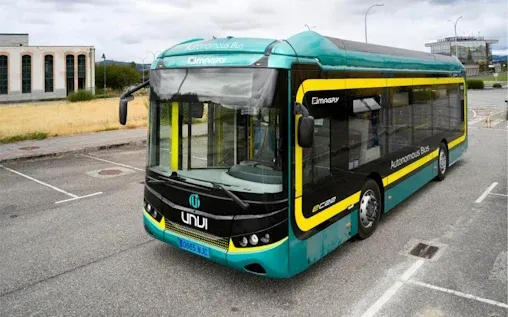
Software specialist Imagry and Spanish bus manufacturer UNVI are developing autonomous electric buses together. The first jointly developed vehicle is scheduled to enter operation in Germany in the third quarter of 2026.
The vehicle is a 10.3-metre battery-electric bus in the M3 class, equipped by UNVI with Imagry’s autonomous driving technology. According to the partners, the bus is already on its way to its deployment location in Germany. Imagry supplies the software for perception, motion planning and vehicle control. The system operates without high-definition maps and instead relies on the vehicle’s sensors, which Imagry says simplifies the setup of new routes. The technology has already been tested in autonomous vehicles on public roads in Germany, the US, Japan and Israel.
The bus is prepared for European Whole Vehicle Type Approval (WVTA) in compliance with the GSR2 safety regulations. According to the partners, integrating the vehicle and autonomous driving system took less than three months. Imagry and UNVI have not disclosed details about the battery, range or charging capacity. They have also not specified where the bus will be tested in Germany or whether it will operate fully driverless or initially only in trial mode. UBSI acts as the interface between the vehicle manufacturer and technology provider, handling procurement, homologation, regulatory matters, leasing and fleet operations.
UNVI intends to extend its collaboration with Imagry beyond this model to other vehicle configurations. In addition to conventional public transport, the partners see potential applications at airports, universities and hospitals. Notably, the technology is integrated into a full-size M3-class bus rather than a small shuttle. Imagry positions its system for Level 4 automated driving, which allows a vehicle to operate without a human driver within a defined area.
Whether and how quickly the German project can demonstrate this level of automation will depend not only on the technology but also on the relevant approval and regulatory frameworks. In mid-July, UNECE adopted the first internationally harmonised regulatory framework for automated driving systems (ADS) from SAE Level 4, with support from the EU, US, China and Japan. The framework requires manufacturers to implement a Safety Management System and demonstrate system performance through simulations and test drives. It does not replace national approval procedures but provides a common basis for them. The newly announced bus will initially operate under the existing WVTA and GSR2 regulations, but is expected to benefit from the new ADS framework in the medium term.