
Fresh fish in the Netherlands is delivered by electric vehicle
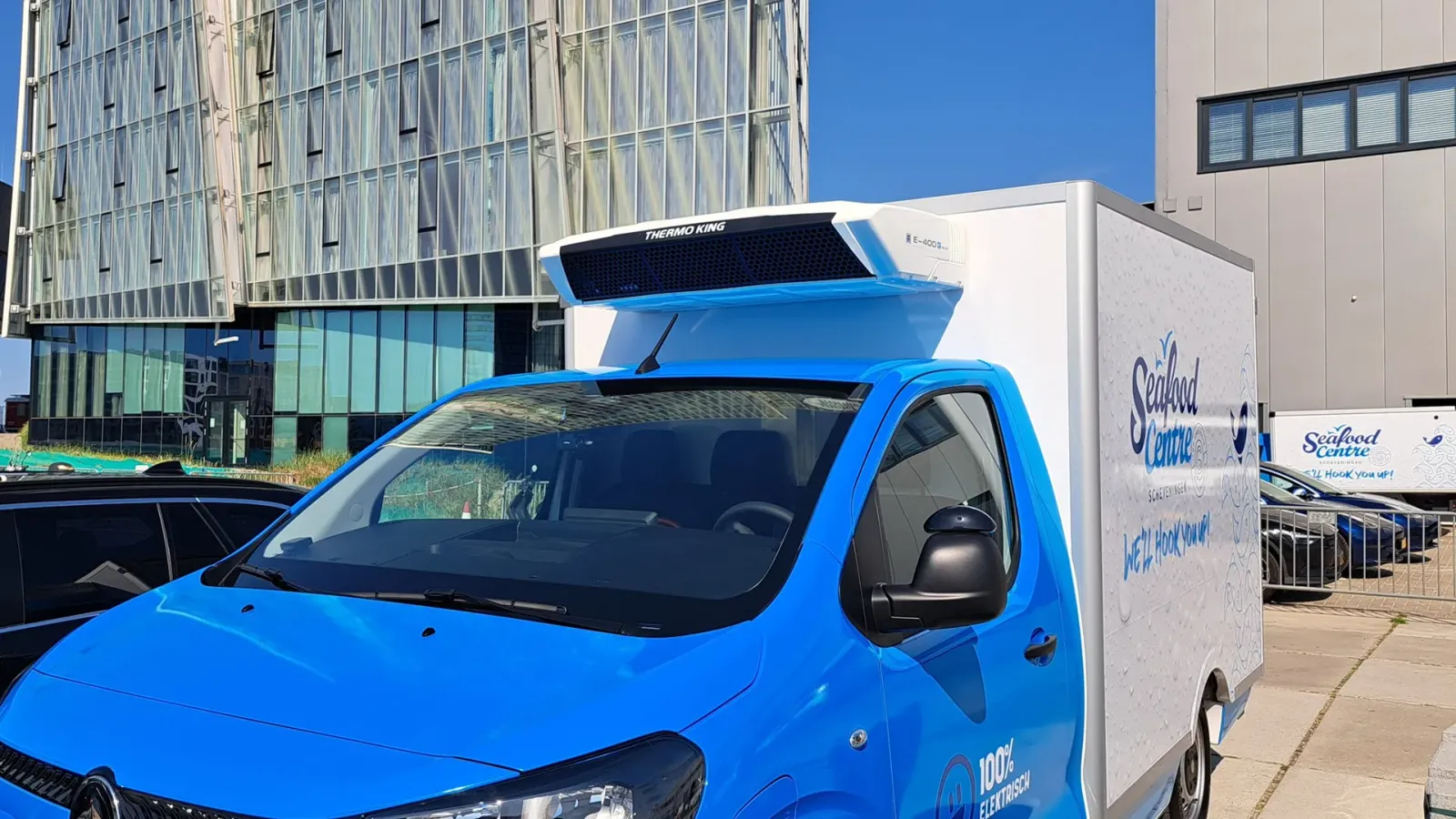
Fresh fish is transported in electric refrigerated trucks. In the Netherlands, thanks to zero-emission zones, delivery technology is advancing, even in the challenging field of refrigerated transport. To reduce energy consumption, Thermo King has developed a solution that allows for strict temperature control of perishable goods while maintaining battery life. These are the E-Series E-400 Max and E-500 Max refrigeration units installed on Citroën ë-Jumpy, Seafood Centre.
The wholesaler with electric refrigerated trucks
Thermo King, a brand of Trane Technologies, is supporting the Dutch seafood wholesaler Seafood Centre (Vis en Meer) in its transition to a fully electric refrigerated fleet to serve zero-emission zones in the Netherlands. By using Thermo King E-Series E-400-MAX and E-500 MAX units integrated into Stellantis Citroën ë-Jumpy electric vehicles, Seafood Centre delivers fresh seafood to urban areas while maintaining the strict temperature control required for highly perishable goods.
In a dual-electrification vehicle, how is range managed? Thermo King provides the E-Series E-400 Max and E-500 Max refrigeration units installed inside the vehicles. What’s unique about these refrigeration systems is that they don’t have their own diesel engine nor do they use a separate battery. They are powered directly from the electric vehicle’s traction battery through the electric power take-off (e-PTO). Thermo King refers to this as a “one-plug solution,” meaning a single energy source, that of the electric vehicle, powers both driving and refrigeration. This approach reduces weight, size, and maintenance needs.
Electric refrigerated delivery is here: Petit Forestier with 300 Iveco vehicles
The company emphasizes that for medium-sized electric vans used in high-frequency urban delivery, this translates to “simpler fleet specifications, reliable high-capacity cooling, reduced vehicle weight to maximize payload, and flexibility offered by both fast charging and charging while in motion.”
It’s not just refrigerated vans — the entire system aims for sustainability
The shift to a fully electric delivery fleet marks the final step in Seafood Centre’s broader sustainability program. The company’s headquarters is fully insulated, operates without natural gas heating, and is equipped with solar panels to help offset energy consumption.
Joep Besselink, owner and founder of Seafood Centre, emphasizes, “Thermo King has provided us with a practical electric technology that supports our operations in zero-emission zones. The easy integration of the system with our electric vehicles and its uncompromising temperature control have made it the ideal solution for our urban operations. It has delivered real value by ensuring ease of use for our drivers and helping to guarantee that our fresh seafood arrives in excellent condition.” Martijn Nanning, General Manager of Thermo King Netherlands, adds, “By combining the right refrigeration technology with the vehicle platform and app, we offer practical solutions that are implementable, reliable, and protect sensitive cargo in various types of fleets, routes, and regulatory environments.”
Electric Vans and Panels for Fishermen in Puglia
The latest data is highly significant as zero-emission zones have promoted these solutions and overall driven the growth of electric logistics. Similarly, with traffic restrictions in urban canals, millions of tourists board hundreds of electric boats. When regulations impact reality.
READ ALSO: Electric Boating – Where Are We Now? Latest Updates from the Genoa Show and watch the VIDEO
Previous Article
Orders are pouring in, but batteries for ID.Polo and Raval are in short supply