
ICCT Study: Relaxed EU CO2 Regulations Could Cost 185,000 Auto Jobs
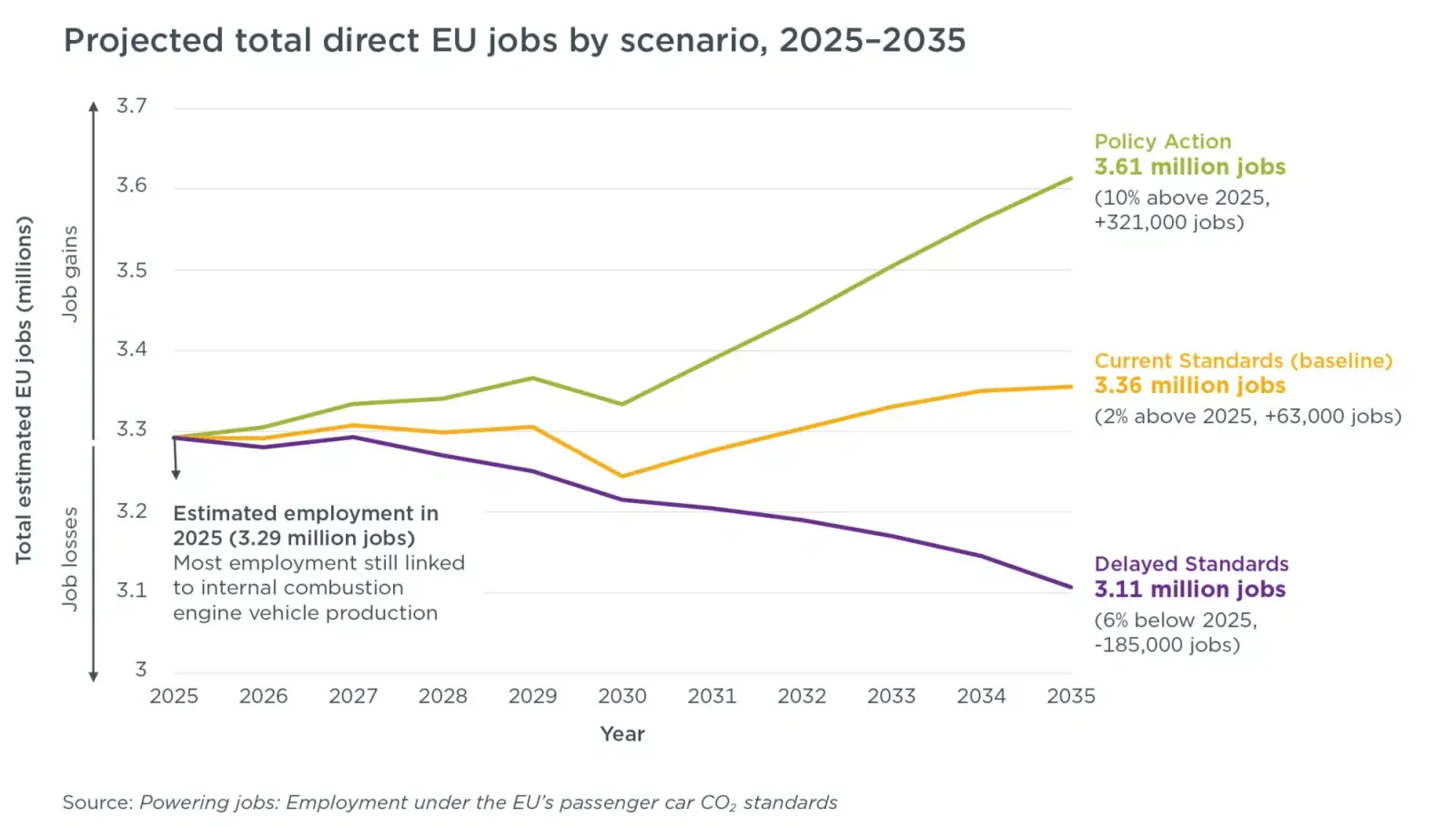
Image: BMW (illustrative)
A relaxation of EU CO2 regulations for passenger cars and light commercial vehicles could cost up to 185,000 jobs in Europe’s automotive industry by 2035. This is the conclusion of a new study by the independent research organization International Council on Clean Transportation (ICCT).
Such relaxed regulations would temporarily slow job losses in internal combustion engine production, but at the same time delay job creation in electric vehicles, battery manufacturing, recycling, as well as in the development and maintenance of charging infrastructure.
The investigation comes against the backdrop of the EU’s ongoing review of CO2 standards for passenger cars and light commercial vehicles. For new cars, fleet-wide emission reduction targets of 55 percent by 2030 and 100 percent by 2035 compared to 2021 levels currently apply. There are discussions about delaying these targets and introducing additional flexibility rules, with some advocates suggesting a delay due to employment risks from transitioning to battery electric vehicles.
For the study, ICCT examined three regulatory scenarios and their impacts on employment in the EU. Under unchanged CO2 targets, employment would remain largely stable by 2035, staying at around two percent of the 2025 level. In contrast, additional industrial policy measures to boost production within the EU could lead to an employment increase of about ten percent, or roughly 320,000 additional jobs compared to 2025. Relaxing the standards, on the other hand, might result in a decline of up to six percent, or 185,000 job losses.
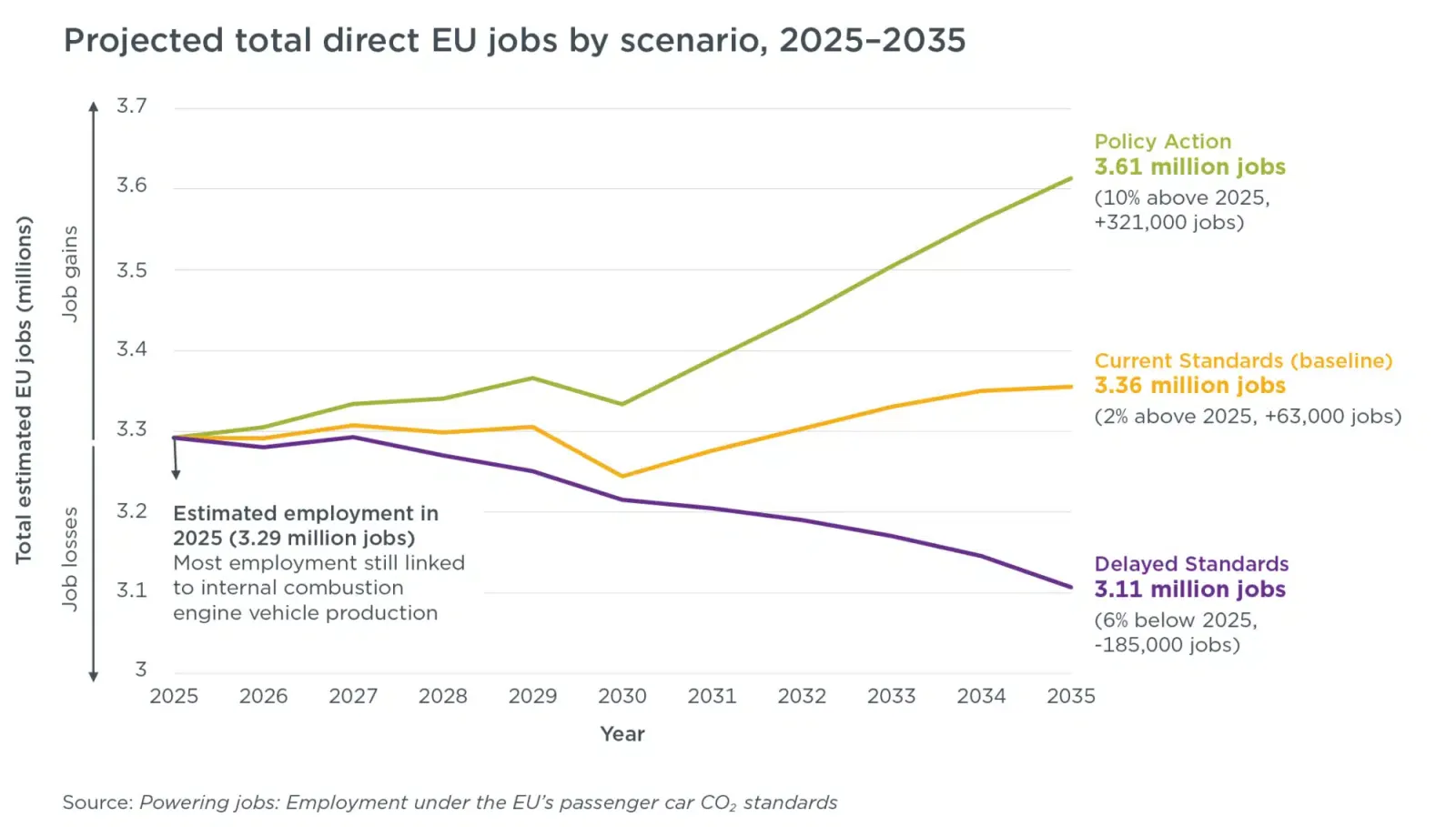
Between the scenario with relaxed regulations and a combination of existing CO2 standards and industrial policy support, there will be a job gap of around 500,000 positions by 2035. While the differences between the three scenarios remain relatively small by 2030, they increase significantly by 2035. The largest contribution comes from automobile production, with battery manufacturing, recycling, and the installation and maintenance of charging infrastructure playing an increasingly important role in these differences.
Whether additional jobs will be created in these sectors depends, according to the study, on the speed of transition to electric vehicles and on what proportion of the related production takes place within the EU. Sandra Wappelhorst, ICCT’s research leader and lead author of the study, therefore advocates for supplementing existing CO2 standards with measures to strengthen Europe’s supply chains for electric vehicles.
"Battery electric vehicles are gaining traction worldwide, and EU CO2 standards will play a crucial role in determining Europe’s role in this development," says Peter Mock, director of ICCT Europe. "Maintaining current CO2 standards will help European manufacturers take the lead in the electric vehicle market."
Also interesting
About the Author
Thomas Langenbucher is an expert in electromobility with professional experience in the automotive industry and finance sector. Since 2011, he has been covering electric vehicles, sustainable technologies, and mobility solutions for ecomento.de. Learn more.
Reader Interactions