
IAA Transportation 2026: Kia Unveils the PV7
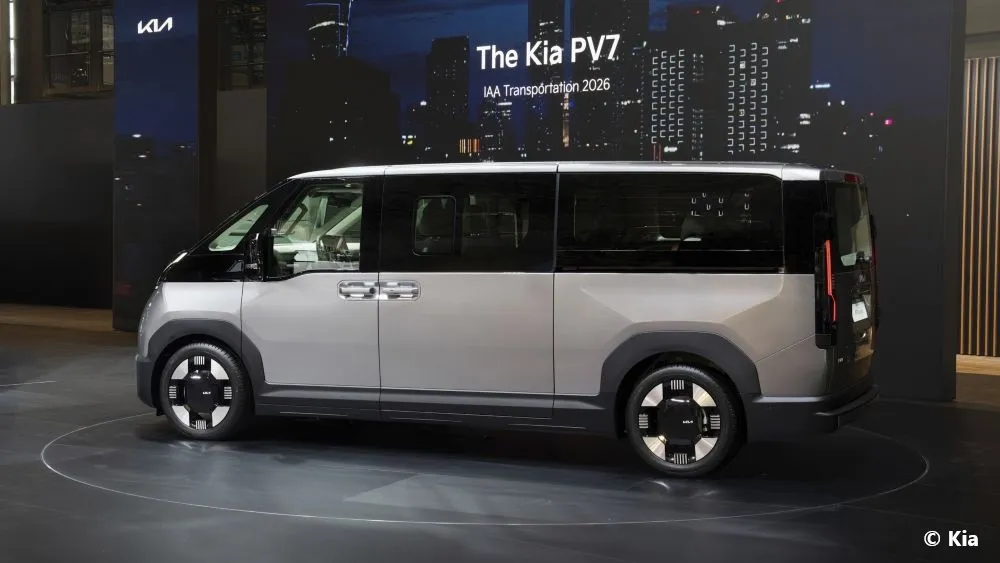
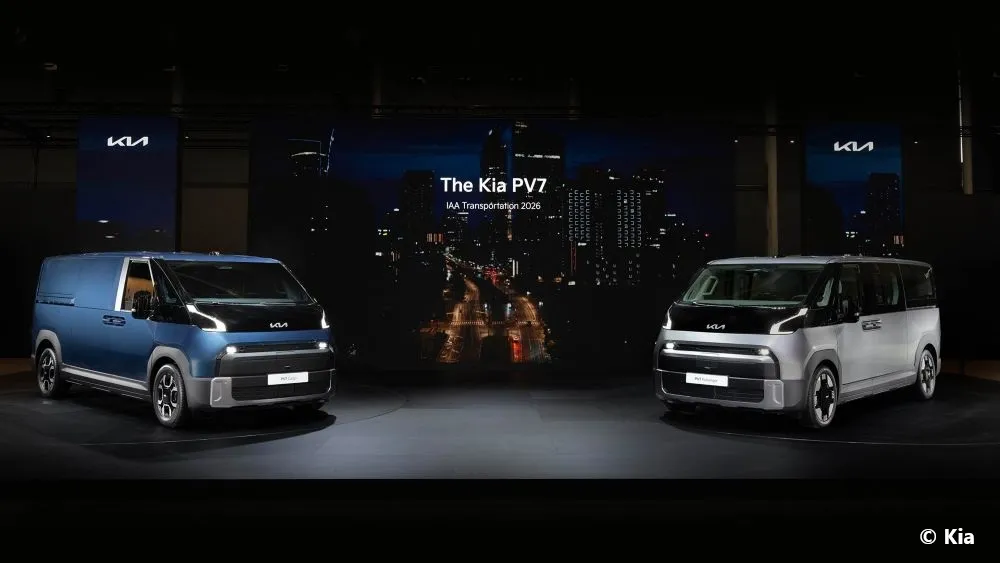
Continuing its push in the electric utility vehicle segment, Kia used the 2026 IAA Transportation show to unveil the PV7. Available in both Cargo and Passenger versions, the PV7 combines electric performance, interior flexibility, and connected technologies. Built on an 800-volt architecture, it enables faster charging than the PV5. Its larger size also provides more space and versatility for passenger transport and professional use. Highly customizable, its interior is designed to enhance daily productivity. The Cargo and Passenger versions shown in Hanover, set to launch in 2027, are just the first two of a much broader future PV7 lineup. In fact, Kia already plans to introduce numerous specialized variants, aiming for a total of 23 PV7 models in the end.
An 800 V architecture for more efficient charging
Like the PV5, the PV7 is built on the E-GMP.S platform designed for electric commercial vehicles. Depending on the configuration, it features an engine delivering up to 200 kW of power and 420 Nm of torque. This engine is powered by a battery with a capacity of either 71.5 kWh or 96.2 kWh. The Long Range Cargo version offers a range of over 460 km. Additionally, thanks to its 800-volt architecture, the PV7 is highly efficient for fast charging. It can charge its battery from 10% to 80% in about 25 minutes using a 350 kW DC charger, significantly reducing downtime. Moreover, for the first time in Kia’s lineup, the PV7 comes with dual charging ports. In addition to an AC/DC port at the front, Kia provides a second AC port on the rear side of the vehicle, offering greater flexibility in various parking scenarios.
Recharge.Larger dimensions than PV5 for a wider range of applications
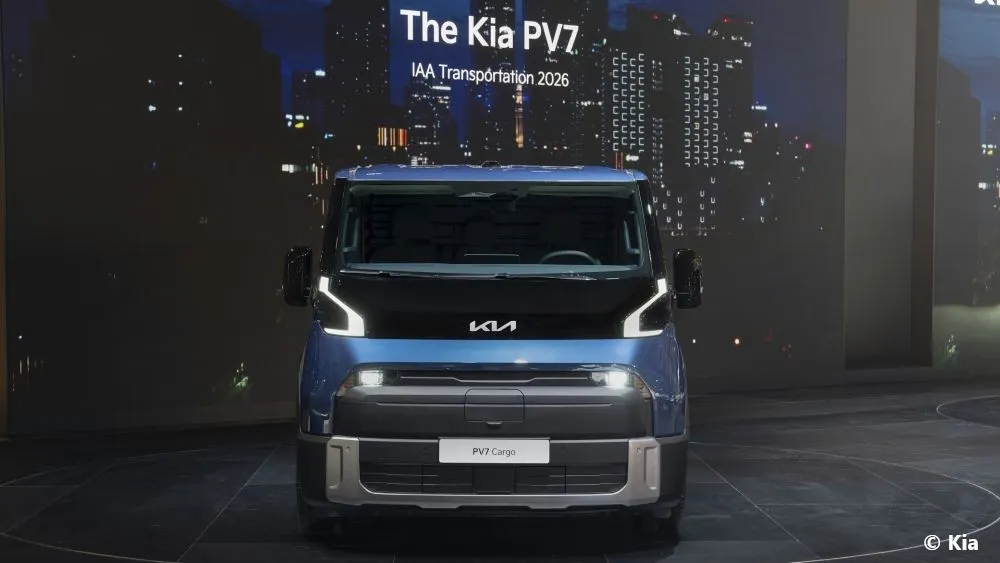
While PV5 focuses on urban flexibility, PV7 was designed to offer greater seating capacity. Its larger dimensions (5.35 meters in length) enable it to meet the needs of an even wider range of customers. PV7’s design combines robust, vertical proportions with a monovolume architecture and a horizontal roof line. At the front, PV7 retains the distinctive black hood introduced with PV5. The visual connection between the A-pillars and the daytime running lights reinforces its monovolume appearance. Kia’s signature lighting, concealed headlights, and lower protection elements contribute to a modern and distinctive look. The side profile is characterized by a floating roof. Finally, at the rear, the trunk lid and doors vary depending on the version, yet without compromising stylistic consistency.
A modular cabin designed to boost daily productivity
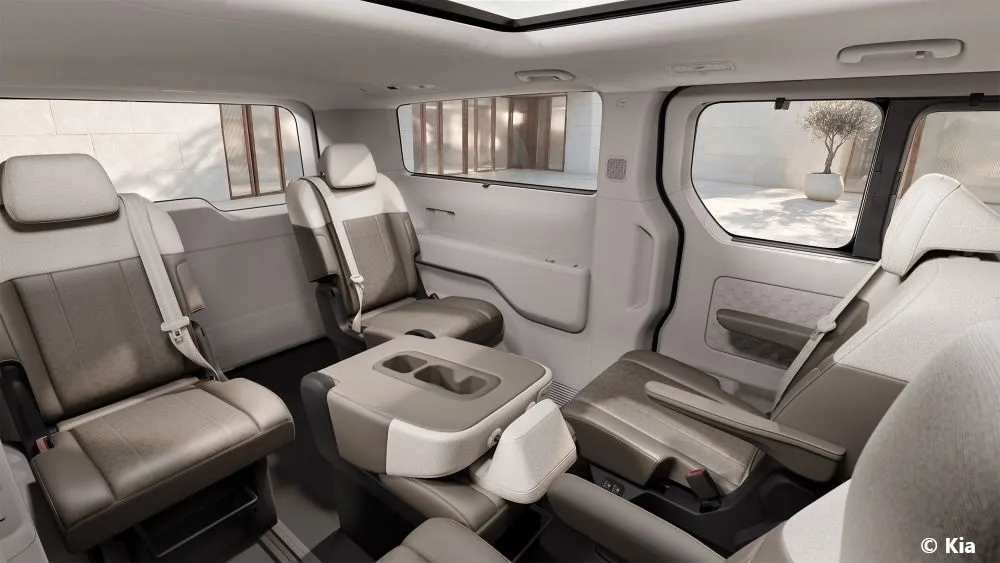
Based on the E-GMP.S platform, the PV7 features a flat floor that maximizes interior space and layout flexibility. It also comes equipped with solutions designed to improve daily productivity. Its cabin is tailored to meet the distinct needs of users in both Cargo and Passenger versions. Both versions combine practical storage solutions with user-centered technologies. 12.9-inch and 14.6-inch screens provide intuitive access to vehicle information and connected services. The PV7 Cargo version adopts a mobile workspace concept with a stacked dashboard and center console that maximizes available space. The PV7 Passenger version, on the other hand, focuses on comfort and elegance. It includes ambient lighting as well as a center console that can be transformed into a table.
The pauses create a more sophisticated atmosphere.A very extensive future PV7 lineup
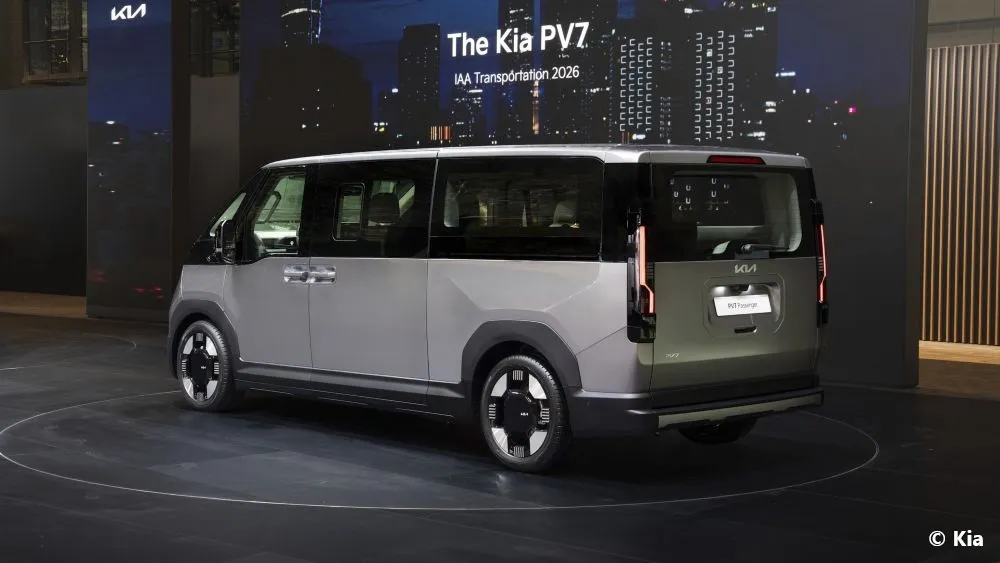
With the two PV7 variants presented in Hanover, Kia is targeting different audiences. The PV7 Cargo is primarily aimed at logistics, delivery services, and corporate fleets. Meanwhile, the PV7 Passenger is designed for shuttle services, rental companies, as well as large families. However, in its effort to meet a wide range of needs, Kia plans to go even further. In fact, the Korean brand is already considering launching 23 different variants. The full range will include Cargo L1H1, L2H1, and L2H2 versions, as well as Passenger L1H1 and L2H1 variants. Kia will also offer a chassis-cab version dedicated to customization. The EVO Plant in Korea and Kia’s PBV Conversion Center will handle the production of these various models. Additionally, Kia will rely on a network of regional partners specializing in this area.
isolated.